How to fix bare spots in a lawn without reseeding everything
Learning how to fix bare spots in a lawn without reseeding everything starts with knowing that most patchy lawns do not need a full reset.
In many cases, you can repair the damaged sections, help the healthy grass recover, and avoid turning the whole yard into a major project.
That is good news for beginner homeowners. Small or medium bare spots are often manageable with basic cleanup, light soil prep, and targeted repair instead of reseeding the entire lawn.
Why bare spots happen in the first place
Bare spots usually show up because something stressed the grass long enough for it to die back or thin out.
Sometimes the cause is obvious, like dog traffic or a worn path. Other times, the bare area is a clue that something underneath still needs attention.
Common causes of bare spots include
- heavy foot traffic
- pet urine or repeated pet wear
- mower scalping
- winter damage
- compacted soil
- poor drainage
- shade
- grub, insect, or disease damage
- drought stress
- piles of leaves or debris that smothered the grass
If you skip this step and only throw seed at the problem, the same spot may fail again.
How to fix bare spots in a lawn without reseeding everything
The simplest answer is to repair only the damaged areas and leave the healthy lawn alone.
That usually means:
- figuring out why the spot went bare
- cleaning out dead material
- loosening the surface so roots or seed can take hold
- patching the area with seed, sod, or plugs if needed
- protecting the repair while it establishes
This is the main idea behind how to fix bare spots in a lawn without reseeding everything. You are doing a targeted repair instead of a yard-wide renovation.
First decide whether the spot really needs seed
Not every bare-looking area needs to be reseeded.
Sometimes the grass is only slow to green up. In other cases, nearby grass may spread into the area if you remove the problem and give the lawn time.
Look closely before you patch
- Is the area truly bare soil, or just thin and pale?
- Is there matted dead grass covering new growth?
- Does the spot stay wet, shaded, or heavily used?
- Did you recently apply a pre-emergent that could block seed germination?
- Is the surrounding grass healthy enough to fill in over time?
If the spot is small and the surrounding lawn is strong, you may not need a full patch job right away.
When grass can fill in on its own
Some lawns recover naturally better than others.
Grasses that spread by underground stems or above-ground runners can sometimes creep into small open areas if the spot is not too large and the growing conditions improve.
A lawn may fill in on its own when:
- the bare spot is small
- the surrounding grass is dense and healthy
- traffic or pet damage has been reduced
- mowing height is healthy
- the soil is not badly compacted or waterlogged
This natural fill-in is less likely in larger patches or in lawns where the surrounding grass is already weak.
Start with cleanup and light soil prep
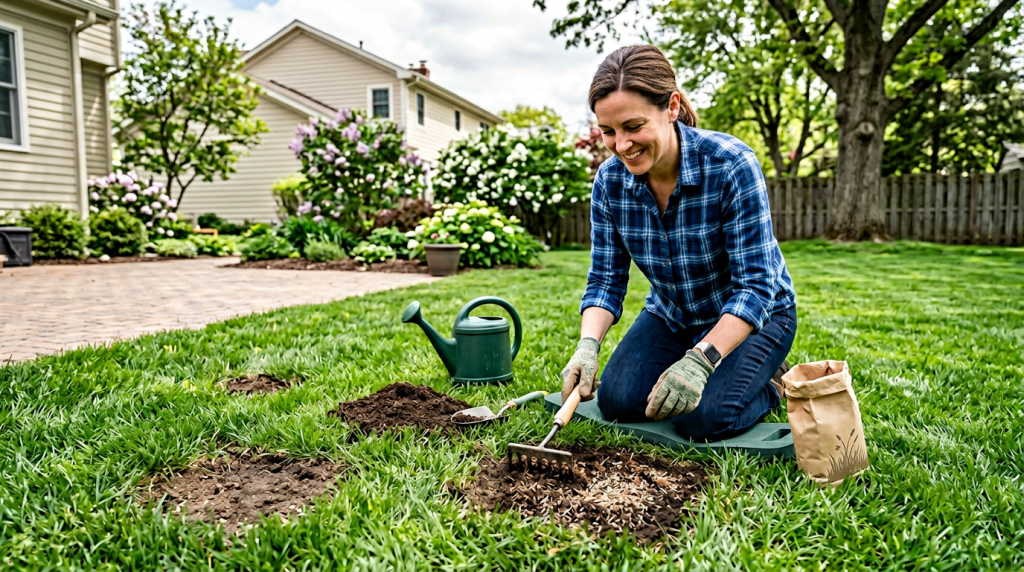
For most patch repairs, the first real job is not seeding. It is getting the area ready.
You want to remove anything dead or matted and loosen the top layer enough to help roots or seed make contact with the soil.
Basic prep steps for most bare spots
- rake out dead grass, leaves, and debris
- break up the crusted surface lightly
- loosen only the top layer of soil
- level out minor low spots
- remove rocks, sticks, and heavy thatch-like buildup
You do not need to dig a deep hole. For most lawn patching, light surface prep is enough.
The best repair options for patching bare spots
Once the area is prepped, the right repair method depends on the size of the spot and the condition of the lawn.
The most common repair choices are
- grass seed for small to medium bare spots
- sod patches for fast results in visible areas
- plugs or sprigs for some spreading grass types
- simple recovery without patching if the surrounding turf can fill in
Seed is often the cheapest option. Sod gives the fastest finished look. Plugs can make sense for some lawns that spread naturally.
When patch seeding is the best choice
Patch seeding works well for many ordinary bare spots, especially if the rest of the lawn is still in decent shape.
The biggest keys are matching the seed to the lawn, getting good seed-to-soil contact, and keeping the area evenly moist while it establishes.
Patch seeding works best when
- the spot is not too large
- the area can be watered regularly
- the soil surface has been loosened
- you can keep traffic off the patch
- the seed matches the lawn reasonably well
For many homeowners, patch seeding is the most practical middle ground between doing nothing and reseeding the whole yard.
If you are deciding whether spring patch seeding is worth the effort, our guide on spring overseeding for bare spots explains when it makes sense and when it is better to wait.
When a sod patch makes more sense
Sod can be a smart choice when you want quicker results or when the patch is too visible to leave bare for long.
It is also helpful when erosion is a concern or when seed would be harder to protect.
Sod patches make sense when
- the bare spot is highly visible
- you want a faster finished look
- the area washes out easily
- you need a repair that holds together quickly
- the patch is small enough to handle easily
Sod is usually more expensive than seed, but it can save time and reduce the waiting period.
Watch out for the real cause of the bare spot
Repairing the surface is only half the job.
If the same problem keeps coming back, the real fix may be changing the conditions that killed the grass in the first place.
Problems that often need to be corrected first
- dog traffic or repeated pet urine in the same area
- compacted soil from foot traffic
- poor drainage
- deep shade
- mowing too short
- too little water during dry periods
- repeated wear from kids, equipment, or a pathway
A repaired patch usually will not last if the original stress never changes.
If compacted soil may be part of the problem, read our guide on should you aerate a lawn in spring or fall to decide when loosening the soil makes the most sense.
Timing matters more than many beginners expect
You can patch a lawn in different seasons, but some times are more forgiving than others.
For many cool-season lawns, fall is often the easiest season for larger patch seeding because the weather is milder and weed pressure is usually lower. Spring can still work for smaller repairs, especially when you can water consistently and avoid weed-control conflicts.
Timing is usually better when
- temperatures are moderate
- the lawn is actively growing
- the area can stay evenly moist
- summer heat is not right around the corner
- you have not recently applied a standard pre-emergent
If you plan to seed, always think about what lawn products have already gone down.
The pre-emergent problem most homeowners miss
This catches a lot of people.
A standard pre-emergent is meant to stop seeds from sprouting. That is helpful for weeds, but it can also interfere with new grass seed in the repair area.
Before you patch with seed, check whether
- a crabgrass preventer was applied recently
- the product label includes waiting periods before seeding
- the repair area can be treated differently from the rest of the lawn
- you would be better off delaying seed until the right window
If pre-emergent is already in play, sod or a later repair plan may be more realistic than trying to force seed into the area.
Watering makes or breaks the repair
Most patch failures come down to watering.
Seeded areas usually need light, frequent moisture at first so the surface does not dry out. Sod needs enough water to root in without staying soggy.
Good watering habits for repaired spots
- keep the surface evenly moist during germination
- avoid flooding the patch
- check the spot more often in sun and wind
- reduce frequency gradually as the grass establishes
- do not let traffic pound wet soil into compaction again
Too little water slows establishment. Too much can rot things out or wash material away.
Protect the patch while it recovers
A repaired lawn spot is fragile at first.
Even a well-prepped patch can fail if kids, pets, mower wheels, or daily foot traffic keep crushing the area during establishment.
Help the patch succeed by
- limiting foot traffic
- keeping pets away as much as possible
- mowing around new growth carefully
- avoiding sharp mower turns over repaired sections
- waiting until the patch is established before treating it like the rest of the lawn
A little patience here saves a lot of rework later.
Safe DIY checks before you start
Most homeowners can handle small lawn patch repairs on their own.
Safe DIY checks include
- confirming the area is truly bare and not just slow to green up
- removing dead material before adding anything new
- loosening only the top layer of soil
- checking whether pre-emergent was used recently
- choosing between seed, sod, or simple recovery based on the spot
- making sure you can water the repair consistently
These checks help you choose the right fix without turning a small problem into a large project.
When to call a professional
Some bare spots are really signs of a bigger lawn issue.
It may be time for a pro when
- the same patches keep returning
- drainage problems leave the lawn soggy
- the soil is extremely hard and compacted
- large parts of the yard are bare
- disease or insect damage seems likely
- the lawn is mostly weeds and failing grass instead of a few isolated spots
- you are not sure whether to seed, sod, grade, or redesign the area
A lawn professional can help when patching is no longer the main issue and the problem is really drainage, shade, soil condition, or widespread damage.
The best practical approach for beginners
For most beginner homeowners, the smartest plan is simple.
Fix the cause first if you can. Then prep only the bare area, choose the repair method that fits the spot, and protect it while it establishes.
That approach is usually much easier than tearing up the whole lawn, and it often gives you a cleaner result with less cost and less frustration.
Final takeaway
The best answer to how to fix bare spots in a lawn without reseeding everything is to treat the lawn like a patch repair job, not a full renovation.
Most bare spots can be handled by cleaning up the area, loosening the surface, choosing a targeted repair method, and correcting the condition that caused the damage. When the rest of the lawn is healthy, you usually do not need to start over everywhere just to fix a few rough spots.