best lawn edger for homeowners with small yards
Choosing the best lawn edger for homeowners with small yards usually comes down to one simple question: do you want the easiest all-around tool, or the sharpest edge possible?
For most beginner homeowners with a small yard, the best choice is not a big dedicated gas edger. It is usually a lightweight cordless trimmer-and-edger combo that is easier to store, easier to use, and more affordable.
That matters because small-yard lawn care is usually about convenience. If the tool is too bulky, too loud, or too specialized, it often ends up sitting in the garage.
What a lawn edger actually does
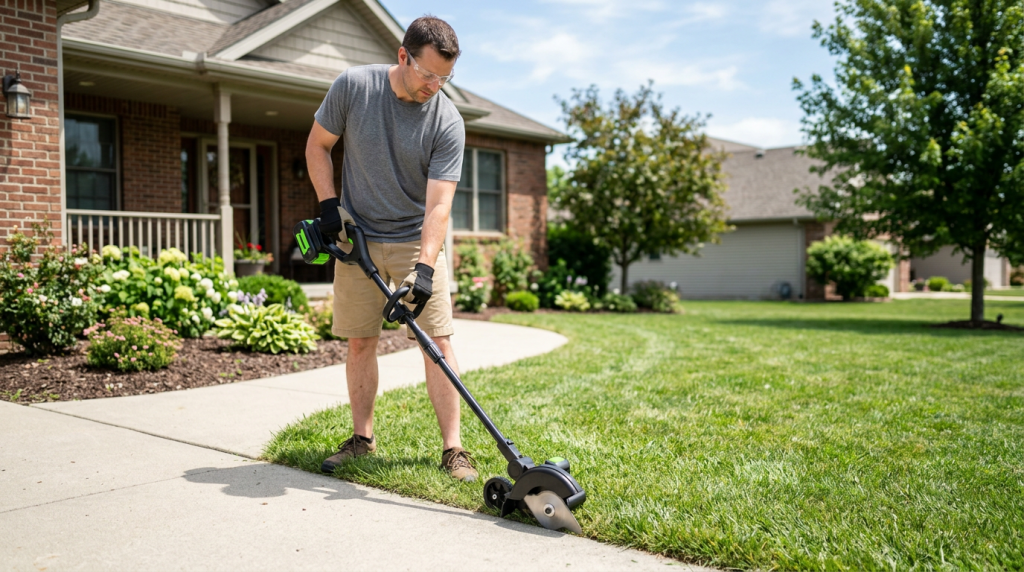
A lawn edger cuts a clean line where grass meets a hard surface like a driveway, sidewalk, or walkway.
That is different from a mower, which cuts the whole lawn surface, and different from a string trimmer, which cleans up around posts, beds, and edges the mower cannot reach.
In plain English:
- a mower cuts the lawn flat
- a trimmer cleans up around obstacles
- an edger creates a sharper border line
For a small yard, that sharp border can make the whole property look neater without adding much square footage to maintain.
Best lawn edger for homeowners with small yards
For most small-yard homeowners, the best overall option is a cordless string trimmer that also converts into an edger.
This type of tool usually makes more sense than a dedicated wheeled lawn edger because it can do two jobs with one purchase:
- trim around beds, fences, and trees
- edge along sidewalks and driveways
That is the most practical answer to best lawn edger for homeowners with small yards. A compact combo tool usually gives you better value, easier storage, and less hassle than a separate full-size edger.
Best overall pick: BLACK+DECKER 20V MAX LST522
For many homeowners, the BLACK+DECKER LST522 is the strongest overall pick for a small yard.
It is a cordless 12-inch trimmer and edger combo with two speed settings, an automatic line feed system, and battery-and-charger kit availability. That makes it especially beginner-friendly.
Why it stands out for small yards:
- light-duty design that fits normal home cleanup
- easy switch from trimming to edging
- no cord to drag around
- simple storage compared with a full-size dedicated edger
- good fit for sidewalks, short driveways, and basic curb appeal touch-ups
For a homeowner who wants one practical tool instead of a whole lawn equipment lineup, this is usually the safest recommendation.
Best for comfort and control: WORX GT 3.0 WG163
The WORX GT 3.0 is another very strong small-yard option, especially for homeowners who care about adjustability.
It has a telescoping shaft, adjustable handle, and a wheeled edging setup that can feel more guided and easier to control than simply tilting a trimmer by hand.
That makes it a good choice for:
- first-time homeowners
- people who want easier edging control
- smaller lawns with sidewalks or garden borders
- homeowners who do not want a heavy dedicated edger
For many small yards, this kind of tool feels easier to manage than a larger machine built for long runs of edging.
Best lightweight choice: RYOBI 18V ONE+ 10-Inch String Trimmer/Edger
If low weight matters most, the RYOBI 18V ONE+ 10-inch trimmer/edger is one of the most appealing options.
It is designed for small-yard use, and its lighter feel makes it easier to carry, turn, and store. That can matter a lot for homeowners who do not want yard tools that feel oversized for the property.
This type of option is best when:
- the yard is small
- edging jobs are short
- storage space is tight
- the homeowner wants something easy to handle
The smaller cutting size also helps keep the tool manageable, which is often more important than raw power in a small yard.
Best budget-friendly modern option: Greenworks 24V 12-Inch Trimmer/Edger
The Greenworks 24V 12-inch trimmer/edger is another smart fit for small properties.
It offers cordless convenience, a compact size, and a weight that stays manageable for typical light-duty edging. It is especially practical for homeowners who want something simple for short edging jobs without stepping into heavier and more expensive equipment.
This kind of tool works well when:
- the yard is small to medium-small
- edging is mostly along a short sidewalk or driveway
- you want cordless convenience
- you do not need heavy brush-cutting power
For many beginners, this size and style of tool is easier to live with than a larger dedicated lawn edger.
Best manual option: Fiskars Steel Long-Handle Edger
Not every homeowner needs a powered edger.
If your yard is very small, your edging needs are occasional, or you want the cleanest cut without batteries or gas, a manual long-handle edger can be a very smart choice.
The Fiskars Steel Long-Handle Edger is a good example of this type. It has a long handle, a foot platform, and a sharpened steel blade that slices into turf cleanly.
A manual edger makes sense when:
- the yard is very small
- you edge only once in a while
- you want no battery charging or fuel
- you prefer a simple hand tool
- you are re-cutting short sections rather than edging a large property
For a tiny yard, this can actually be the most sensible tool of all.
Why small yards usually do better with combo tools
A lot of homeowners assume a dedicated lawn edger is automatically the best tool. For a small yard, that is often not true.
A combo trimmer-and-edger usually wins because it:
- takes up less storage space
- costs less than buying two tools
- handles more yard tasks
- is easier for beginners to justify
- works well enough for normal home curb appeal
Small yards usually do not need a machine built for long commercial-style edging runs. They need a tool that gets used regularly without becoming a burden.
If you are still deciding whether a combo tool is enough or if you really need a dedicated edger, our guide on string trimmer vs lawn edger for first-time homeowners will help you make the right call.
When a dedicated wheeled edger makes sense
There are still cases where a dedicated edger is worth buying.
If your small yard has a long driveway edge, multiple walkways, or you care a lot about that crisp professional border, a dedicated cordless edger can give a cleaner result than a combo tool.
A dedicated edger makes more sense when:
- you edge often
- you want a deeper, more defined trench line
- your hardscape edges are a major visual feature
- you already own a matching battery system
But for most beginners with a small property, this is usually the second purchase, not the first one.
What matters most when buying an edger for a small yard
The best small-yard edger is usually the one that feels easy enough to grab and use often.
Focus on these features first
- low or manageable weight
- cordless convenience
- easy switch between trimming and edging
- simple line feed or blade setup
- compact storage
- comfortable handle position
- enough battery runtime for short jobs
For a small yard, convenience matters more than maximum power.
What to avoid
It is easy to buy too much tool for a small property.
Small-yard homeowners should be careful about
- heavy gas edgers
- oversized 40V or 60V tools for basic touch-up work
- bulky tools with awkward storage needs
- dedicated equipment that only does one job
- cheap tools that feel flimsy or hard to control
A large tool may sound impressive, but it often becomes frustrating when the yard only needs ten or fifteen minutes of edging at a time.
Cordless vs manual for a small yard
Both can work well. The better choice depends on how you want yard work to feel.
A cordless edger or trimmer-edger combo is usually better if you want:
- faster work
- less physical effort
- one tool for multiple jobs
- easier routine touch-ups
A manual edger is usually better if you want:
- the lowest cost
- no battery or charger
- simple storage
- an occasional sharp edge on a very small property
For many homeowners, the cordless combo tool is the best everyday answer, while a manual edger is the best simple-budget answer.
If lighter weight and easier handling matter most, read our guide on budget lightweight cordless weed whacker for seniors for more beginner-friendly cordless options.
Safe DIY checks before buying one
Most homeowners can choose the right edger by taking a quick look at the actual yard.
Safe DIY checks include
- measuring how much sidewalk or driveway edge you really have
- deciding whether you also need trimming around beds and trees
- checking how much garage or shed space you have
- thinking about whether tool weight matters for your comfort
- deciding whether you want one multi-use tool or one specialized tool
These checks usually make the right purchase much clearer.
Safe DIY use for beginners
Edging is a beginner-friendly job when done carefully.
Safer beginner habits include
- edging only on dry ground
- wearing eye protection
- keeping both hands on the tool
- starting on a less visible section first
- moving at a steady pace instead of forcing the cut
- keeping children and pets away from the work area
A small yard usually gives you enough room to learn without rushing.
When it makes sense to hire a professional
Sometimes the issue is not the tool. It is the condition of the edge itself.
A professional may be worth calling when
- the lawn edge is badly overgrown and has disappeared
- roots, rocks, or packed soil make edging difficult
- the property has steep slopes or tricky hardscape
- mobility or balance makes tool use unsafe
- you want the edges re-established before maintaining them yourself
Once a professional resets the borders, ongoing touch-up edging is usually much easier.
The best practical answer for most homeowners
If you want the simplest recommendation, here it is:
For most homeowners with small yards, the best lawn edger is a lightweight cordless trimmer-and-edger combo, with the BLACK+DECKER LST522 standing out as one of the best overall fits. It is practical, easier to store, and useful for more than just edging.
If you want the lowest-cost simple option for a very small yard, a manual tool like the Fiskars Steel Long-Handle Edger is also a very smart buy.
Final takeaway
The best lawn edger for homeowners with small yards is usually the one that matches the size of the job, not the one with the biggest motor.
For most beginners, that means a compact cordless combo tool that can trim and edge in one package. It saves space, saves money, and handles the kind of lawn cleanup small yards actually need. If your yard is tiny and you edge only occasionally, a manual edger may be all you need.