How to get rid of clover in a lawn
Knowing how to get rid of clover in a lawn starts with understanding why it appeared and whether you are dealing with a few isolated patches or a broader turf problem.
Small patches can often be removed by hand or treated selectively. If clover keeps returning, the better long-term fix is to improve lawn density, mowing, watering, and soil conditions so the grass competes more effectively.
The right approach depends on how much clover is present, how healthy the surrounding lawn is, and whether the underlying conditions are helping the weed spread.
Why clover shows up in Lawns
Clover is a broadleaf plant, not a grass. It spreads low to the ground and can fill in weak areas faster than turfgrass when conditions are not ideal for the lawn.
In a cool-season lawn, clover often shows up for a few simple reasons. The grass may be too thin to crowd it out. The soil may be low in nutrients. The lawn may be cut too short, which stresses the grass and lets more sunlight reach the soil surface. Compacted soil and patchy watering can also make it easier for clover to take hold.
Clover is especially common in lawns that have bare spots or weak growth after summer stress. If the lawn never fully thickens back up, clover often becomes the filler plant.
That is why long-term control is not just about killing clover. It is about helping the grass grow thick enough to hold its space.
How to identify clover before you treat it
Before you treat anything, make sure you are looking at clover and not a different lawn weed.
White clover is the type most homeowners notice in lawns. It grows low, spreads outward, and has leaves made up of three small leaflets. The flowers are usually small and white, though they can fade slightly pink or tan as they age.
Look for these signs
- Three rounded leaflets on each leaf
- A low, creeping growth habit
- Thin stems that spread across the soil surface
- Small white flower heads during active growth
- Patches that stand out against weak or thin grass
Some homeowners confuse clover with oxalis or other broadleaf weeds. If the weed has heart-shaped leaflets or bright yellow flowers, it may be something else. It is worth checking before using any weed killer.
Safe DIY checks before you treat clover
Before you pull, spray, or reseed anything, take a quick look at the lawn as a whole. That helps you treat the real problem instead of only the visible weed.
Check these items first
- Make sure you actually have a cool-season lawn such as fescue, Kentucky bluegrass, or perennial ryegrass
- See whether the clover is limited to a few spots or spread across large sections
- Look for thin grass, bare soil, or heavy shade in the same areas
- Check your mowing height to see if you have been cutting the lawn too short
- Notice whether the soil feels hard and compacted
- Look for drainage problems or areas that stay weak after heat or drought
- Read any lawn product label carefully before applying it to your grass type
These simple checks often tell you whether clover is the main issue or just a symptom of a weaker lawn.
How to Get Rid of Clover in a Lawn
The best approach is usually a mix of better lawn care, physical removal for small patches, and selective weed treatment only when needed. Once you understand how to get rid of clover in a lawn, the goal becomes simple: make the grass stronger than the weed.
Start with the lawn itself. A thicker lawn gives clover fewer places to spread.
Focus on these lawn-care fixes first
- Raise the mowing height so the grass can shade the soil better
- Water deeply instead of giving the lawn frequent light sprinkles
- Feed the lawn based on its needs instead of guessing
- Reseed thin or bare spots so clover does not keep moving back in
- Reduce compaction if the soil feels hard and the grass struggles to root
For many cool-season lawns, mowing a little higher makes a big difference. Taller grass blades help the lawn photosynthesize better, protect the soil, and compete more effectively with low-growing weeds like clover.
Watering also matters. A lawn that gets shallow, frequent watering often develops weaker roots. Deeper, less frequent watering usually helps cool-season grass root down and recover better.
If the lawn is thin, reseeding is often one of the most important steps. Clover loves open space. When you fill those weak areas with healthy grass, you take away the room clover needs.
How to remove small patches of clover
If you only have a few patches, you may be able to handle the problem without chemical treatment.
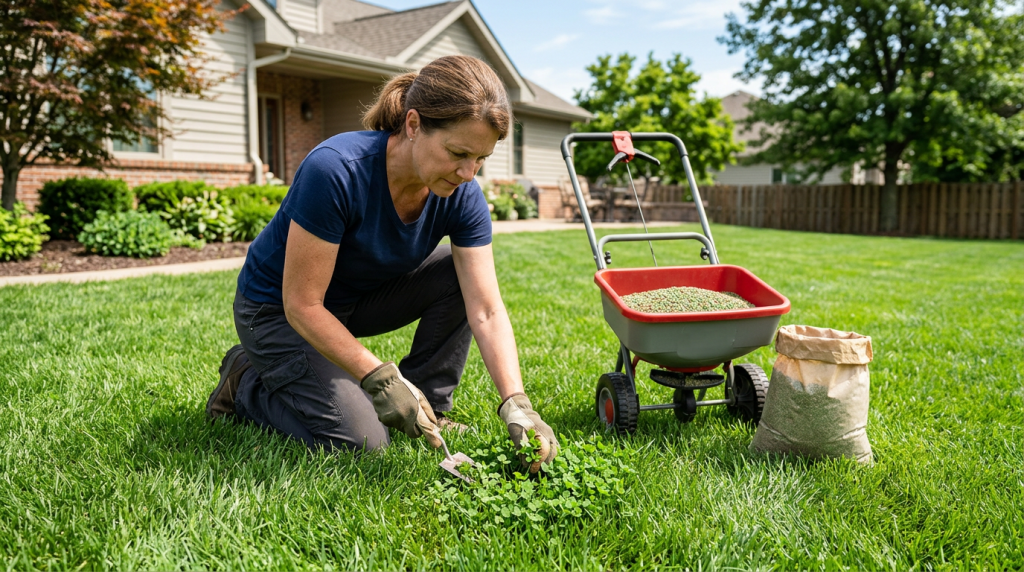
Hand-pulling works best when the soil is slightly moist. Clover has shallow roots compared with many larger weeds, but it can spread through creeping stems, so you want to remove as much of the plant as possible.
Use this small-patch approach
- Water lightly first if the soil is dry
- Pull or dig the clump slowly so more of the root system comes out
- Remove creeping stems that are spreading into nearby grass
- Loosen the soil if it is compacted
- Add grass seed to any bare area you create
- Keep the reseeded spot evenly moist until the new grass starts growing
This method works best when the infestation is light and the surrounding lawn is already fairly healthy.
If the grass around the patch is weak, the clover may return unless you reseed and improve the conditions that caused the problem in the first place.
When to use a weed killer for clover
Sometimes lawn-care improvements and hand removal are not enough, especially when clover has spread through multiple sections of the lawn. In that case, a selective broadleaf weed killer may be the next step.
A selective herbicide is a weed killer designed to target broadleaf weeds while leaving listed lawn grasses unharmed. That does not mean every product is safe for every lawn, so reading the label matters.
Follow these weed-control rules
- Choose a product labeled for clover control
- Make sure the label says it can be used on your grass type
- Spot-treat where possible instead of spraying the whole lawn
- Apply when the clover is actively growing
- Avoid spraying on windy days
- Do not treat a drought-stressed lawn unless the label allows it
- Follow the label for mowing and watering timing before and after treatment
- Repeat only if the label says a second treatment is allowed
Many homeowners make the mistake of grabbing the first weed product they see. That can damage the lawn or simply fail to control the clover well. The label is the final guide for where, when, and how to use the product.
It is also smart to keep kids and pets off treated areas for the amount of time listed on the product label.
If you are still deciding which kind of product is easier to control on scattered weeds, our guide on spray vs granular weed killer for spot treating lawns breaks down the practical difference.
The best time to reseed after clover control
If clover has left the lawn thin, reseeding is what helps prevent the weed from coming back.
For most cool-season lawns, early fall is the best time to reseed. The weather is usually cooler, the soil is still warm, and grass seed gets a better chance to establish without as much summer stress.
Spring can also work, but it is usually a little harder because young grass has to compete with warming temperatures and new weed pressure.
After clover is removed, strengthen the lawn this way
- Rake out dead plant material if needed
- Loosen the top layer of soil in bare spots
- Add seed that matches your existing cool-season lawn
- Keep the seedbed consistently moist while it germinates
- Avoid mowing new grass until it reaches a safe cutting height
- Resume normal mowing at a higher setting once the area fills in
A lawn that fills back in quickly is much less likely to give clover another easy opening.
If the lawn also has thin patches that need more than weed control, read our guide on how to fix bare spots in a lawn without reseeding everything for the next step.
Common mistakes that let clover come back
A lot of repeat clover problems come from treating the weed once and not fixing the lawn conditions behind it.
Avoid these common mistakes
- Cutting the lawn too short
- Ignoring bare or thin spots after removing weeds
- Using weed killer without confirming the grass type
- Treating only the clover and not the weak lawn around it
- Watering too often and too lightly
- Skipping fall lawn care in a cool-season yard
- Assuming one treatment will solve a long-term competition problem
Even when a weed killer works, clover can return if the lawn still has the same weaknesses it had before.
When to call a lawn care professional
Many clover problems are manageable for a homeowner, but some situations are better handled by a professional.
A professional may be the better choice when
- Clover covers a large part of the lawn
- You are not sure what grass type you have
- The lawn has severe compaction, drainage, or grading problems
- Previous treatments have failed more than once
- You want a soil test and a more detailed lawn recovery plan
- You are concerned about using herbicides safely around children, pets, or nearby planting beds
A professional can also help if the lawn needs a broader renovation instead of simple spot repair.
Final Thoughts
The best way to get rid of clover in a lawn is to match the control method to the size of the problem. Hand removal can work for small patches, while selective weed treatment may make more sense when clover is scattered across several areas.
For longer-term control, focus on strengthening the lawn through proper mowing, watering, feeding, and repair of thin spots. Clover is much easier to manage when healthy grass leaves it less room to spread.