Kitchen Sink Draining slowly: causes homeowners should check
Kitchen sink draining slowly is usually caused by food scraps, grease buildup, soap residue, a clogged sink strainer, garbage disposal issues, or a partial restriction in the drain line. The sink may still drain, but water moves slowly because something is narrowing the path.
Start with simple, safe checks before using stronger tools. Clear the strainer, look into the visible drain area, check the garbage disposal safely, and watch for clues that the problem may be farther down the line.
Quick Checks for a Kitchen Sink Draining Slowly
| What You Notice | Possible Cause | What to Check First | Beginner-Safe Next Step |
|---|---|---|---|
| Water drains slowly after dishes | Food scraps or sink strainer buildup | Basket strainer and drain opening | Remove debris and rinse with hot tap water |
| Sink drains slowly after greasy cooking | Grease and soap residue | Drain opening and water flow | Flush with hot tap water and avoid adding more grease |
| Disposal side drains slowly | Garbage disposal restriction | Disposal opening and reset status | Turn off power before checking |
| Both sink bowls drain slowly | Partial clog or deeper restriction | Other fixtures and under-sink area | Stop if water backs up or leaks appear |
Common Causes of a Kitchen Sink Draining Slowly
Kitchen sinks handle more debris than bathroom sinks. Even careful homeowners can end up with small bits of food, grease film, soap residue, and dish grime collecting inside the drain.
Food scraps are a common issue. Rice, pasta, coffee grounds, eggshell pieces, vegetable peels, and other small scraps can gather in the strainer, disposal, or drain opening. These may not fully block the pipe, but they can slow the water.
Grease is another major cause. Warm grease may go down the drain as a liquid, then cool and stick to the inside of the drain line. Soap and food residue can cling to that grease, creating a sticky layer that narrows the drain over time.
The sink strainer can also be part of the problem. A basket strainer or removable drain screen can collect food and grime underneath, even when the top looks clean.
If you have a garbage disposal, the disposal chamber may be holding food debris. A disposal can sound normal and still have buildup around the splash guard, grinding area, or drain outlet.
A slow kitchen sink can also come from the P-trap area or a partial drain restriction farther down the line. If both sink bowls are slow or nearby fixtures are affected, the problem may not be limited to the sink opening.
If the sink is slow but does not seem fully clogged, compare these checks with our guide to a kitchen sink drains slowly not clogged situation.
Safe First Checks for the Strainer, Drain, and Disposal
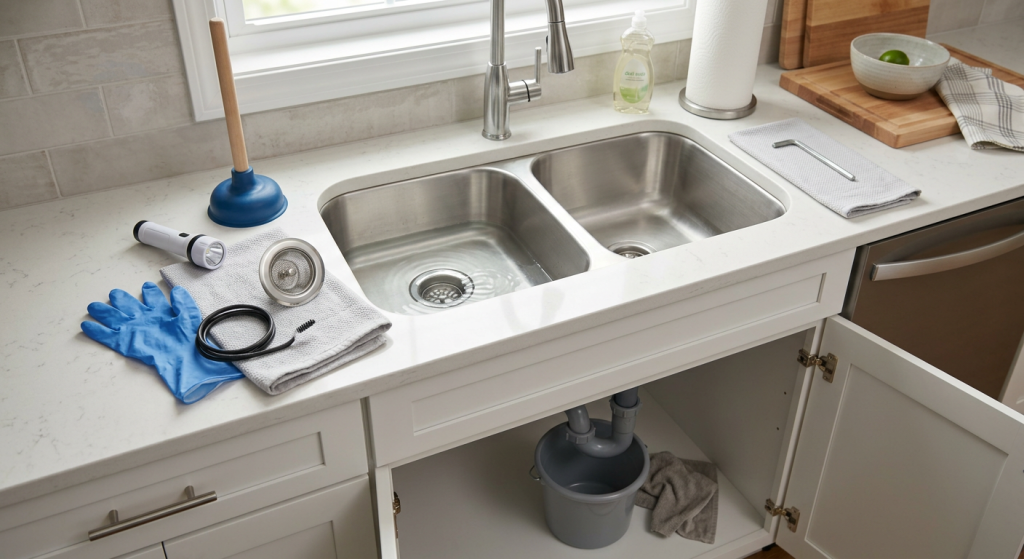
Before using tools, start with what you can see and clean safely. Put on gloves, clear the cabinet under the sink, and keep towels nearby. A small bucket is useful if you notice dripping below.
Helpful supplies for basic checks:
- Rubber gloves
- Old towels
- Small bucket
- Flashlight
- Sink strainer or replacement basket
- Paper towels or rags
- Mild dish soap
- Basic drain maintenance brush
- Garbage disposal wrench or tool made for your disposal model
Start with the sink strainer. Remove the basket or screen and clean it with warm water and dish soap. Wipe around the drain opening where food film can collect.
Use a flashlight to look into the visible drain area. Remove loose food debris near the top, but do not push scraps deeper into the drain. If the sink has standing water, scoop or bail out some water first so you can see what is happening.
If the sink has a garbage disposal, be careful. Turn off power before checking it. Depending on your setup, that may mean turning off the wall switch, unplugging the unit under the sink if it has a plug, or switching off the correct breaker. Never put your hand inside the disposal.
Safe disposal checks for beginners:
- Turn off power before looking into the disposal.
- Use a flashlight to inspect the opening.
- Remove loose visible debris only with tongs or pliers.
- Check whether the splash guard is holding food residue.
- Look for a reset button only if the disposal is not running.
- Use only the proper disposal wrench or tool for your model.
- Stop if the unit hums, jams, leaks, smells burned, or will not reset.
Do not attempt electrical repair or take the disposal apart. If the disposal is leaking, jammed, or not responding after a basic reset, stop and call a professional.
After cleaning visible debris, run hot tap water for a minute or two. This may help loosen soft soap and food residue. Do not pour boiling water into the sink, especially if you have older plumbing, plastic drain parts, or an unknown setup.
Why Liquid Drain Cleaner Should Not Be the First Choice
Liquid drain cleaner may seem like a quick fix, but it should not be your first move for a kitchen sink. These products may not fully clear grease, food, or disposal-related buildup. They can also leave harsh chemicals sitting in the sink if the drain remains slow.
That creates a safety problem. If you later plunge, snake, or inspect the drain, chemical water may splash or coat the tool. Drain chemicals can also be risky if mixed with other cleaners.
Avoid liquid drain cleaner when:
- The sink has standing water.
- You may need to use a plunger or hand drain snake.
- You have already used another cleaner.
- You smell strong fumes.
- There is a garbage disposal involved.
- Water is leaking under the sink.
- More than one fixture is draining slowly.
Never mix drain chemicals with bleach, vinegar, dish cleaners, or another drain cleaner. If chemical cleaner was already used and the sink is still slow, do not keep working over the drain. Call a plumber.
Before choosing a chemical product or tool, review this liquid drain cleaner vs drain snake comparison.
When a Plunger or Small Hand Drain Snake May Help
If the strainer, visible drain, and disposal area are clear, the sink may have a partial restriction below the opening. A small sink plunger or hand drain snake may help, but only after basic checks.
Use a plunger when water is draining slowly but not completely stopped. Use a small hand drain snake only when you suspect a local sink clog and there are no signs of a bigger drain problem.
Do not use either tool if liquid drain cleaner is in the sink. Also stop if you see leaking under the cabinet.
Before using tools, check that:
- The sink strainer and visible drain are clean.
- No chemical drain cleaner has been used.
- The garbage disposal is off and not jammed.
- The cabinet under the sink is dry.
- Other nearby fixtures are draining normally.
- You are comfortable stopping if resistance feels wrong.
For a small plunger, keep enough water in the sink to cover the cup. If you have a double-bowl sink, cover the other drain opening with a stopper or wet rag so pressure does not escape. Use short, controlled plunges. Do not slam the plunger hard, because harsh force can loosen under-sink connections.
For a small hand drain snake, feed the cable slowly into the drain. Turn the handle gently and stop if you hit firm resistance. Pull the cable back carefully and clean off any debris. A hand snake can help with soft buildup, but forcing it can damage parts or push the clog farther down.
If you are comfortable with very basic under-sink checks, a bucket, towels, gloves, and mild cleaning supplies can help you inspect for leaks around the P-trap area. Do not remove stuck, corroded, or unfamiliar plumbing parts. If the P-trap area appears loose, damaged, or leaking, stop.
Signs the Issue May Be Farther Down the Line
Sometimes the kitchen sink is not the whole problem. A partial restriction farther down the drain line can make the sink drain slowly even after the strainer and disposal are clean.
This is more likely when both sink bowls drain slowly, water backs up from one side to the other, or the slow drain returns soon after cleaning.
Watch for deeper drain warning signs:
- Both sides of a double sink drain slowly.
- Water backs up into the other sink bowl.
- The dishwasher drains into the sink.
- The sink gurgles after draining.
- Nearby fixtures also drain slowly.
- Bad odors come from the drain.
- Water leaks under the sink.
- The problem keeps returning.
If nearby drains are also slow, do not keep treating the sink as a simple clog. The restriction may be in a shared drain line, which is not a beginner repair.
Common Mistakes to Avoid
A slow kitchen sink is easy to make worse by rushing. The safest approach is to clear visible debris, avoid harsh chemicals, use gentle tools only when appropriate, and stop when the problem no longer looks local.
Avoid these common mistakes:
- Pouring grease down the drain
- Using liquid drain cleaner as the first step
- Mixing drain chemicals with other cleaners
- Reaching into a garbage disposal
- Checking a disposal without turning off power
- Forcing a hand snake through hard resistance
- Plunging aggressively enough to loosen pipes
- Ignoring water under the sink
- Treating a multi-fixture backup as a sink-only issue
A sink strainer can help prevent future scraps from reaching the drain. It is a simple tool, but it works best when emptied often and cleaned underneath.
When to Stop and Call a Plumber
Some slow kitchen sink drains can be improved with simple cleaning. Others need professional help, especially when the issue involves leaks, disposal problems, or a deeper drain restriction.
Call a plumber if:
- Water backs up into the other sink bowl.
- Both sides of the sink are slow.
- Nearby fixtures are also draining slowly.
- The sink gurgles often.
- You smell sewage from the drain.
- Water leaks under the sink.
- The garbage disposal leaks, jams, hums, or will not reset.
- A snake gets stuck or hits hard resistance.
- Liquid drain cleaner was used and the sink is still slow.
- You are not comfortable working around the drain or disposal.
Stopping early can prevent a simple slow drain from turning into a leak, damaged disposal, or larger plumbing problem.
Final Thoughts
Kitchen sink draining slowly is usually caused by food scraps, grease buildup, soap residue, strainer buildup, garbage disposal issues, or a partial drain restriction. Start with the simple checks: clean the strainer, inspect the visible drain, check the disposal safely, and flush with hot tap water.
Use gloves, towels, a bucket, and a flashlight so you can work carefully. A sink strainer, small plunger, hand drain snake, basic drain brush, and proper disposal tool can be helpful, but only when used gently and safely.
Avoid liquid drain cleaner as the first choice, never mix chemicals, and turn off power before checking a garbage disposal. If there is leaking, hard resistance, repeated slow draining, disposal trouble, or signs that the issue is farther down the line, stop and call a plumber.