
how to replace a toilet flapper: beginner homeowner guide
If you need to know how to replace toilet flapper parts, the basic job is to shut off the toilet’s water, drain the tank, remove the old flapper, install a compatible replacement, adjust the chain, and test the flush. Replacement makes sense when the flapper is warped, cracked, deteriorated, not sealing, or no longer lifting and closing properly.
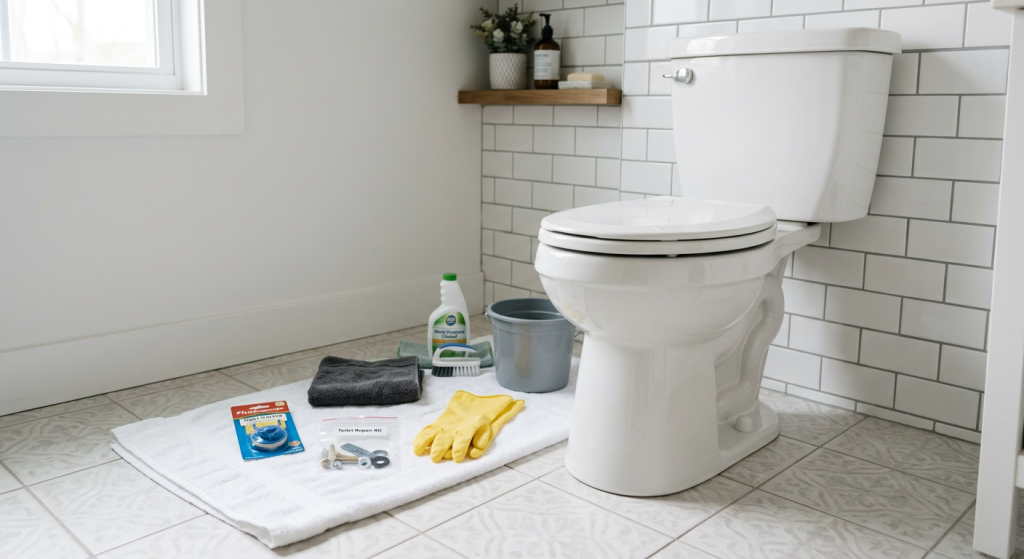
Confirm the Flapper Is Actually the Problem
The flapper sits over the flush-valve opening at the bottom of many toilet tanks. Pressing the toilet handle pulls a chain that lifts the flapper, allowing tank water to rush into the bowl. The flapper then closes so the tank can refill.
A flapper problem may cause several symptoms:
- The toilet periodically refills even when nobody has used it.
- Water slowly leaks from the tank into the bowl.
- The flapper looks warped, cracked, brittle, or deteriorated.
- The flapper does not sit flat over the flush-valve opening.
- The flapper lifts poorly or closes too quickly.
- The flapper does not close completely after flushing.
Check the chain before replacing the flapper. A disconnected chain or excessive slack can prevent the flapper from lifting correctly even when the flapper itself is still usable.
Likewise, a chain that is too tight can hold the flapper slightly open and create an internal leak.
If the toilet does not flush but the flapper appears normal, follow Toilet Not Flushing but Not Clogged: What to Check before assuming replacement is necessary.
A toilet that runs continuously can also have a fill-valve problem. The flapper controls water leaving the tank for the bowl, while the fill valve controls incoming water. Replacing the flapper will not correct an unrelated fill-valve failure.
Make Sure You Are Dealing With an Internal Leak
A failing flapper normally allows water to leak internally from the tank into the toilet bowl. It should not cause water to appear on the bathroom floor.
Stop before replacing the flapper if you find water:
- Around the tank bolts
- Behind the toilet
- Around the supply line or shutoff valve
- On the floor beneath the toilet
- Coming through a crack in the tank
Those symptoms indicate a different problem that should be traced separately.
A cracked tank is a stop condition. Do not continue using or working on damaged porcelain.
If everything outside the toilet is dry and the symptoms point toward the flapper, replacement is a reasonable beginner repair on many standard toilets.
Choose the Correct Replacement Flapper
Do not assume every toilet flapper is interchangeable.
Flappers vary by size, mounting style, flush-valve design, and toilet model. Even products labeled for broad compatibility may not fit every toilet correctly.
Before removing the old flapper, note how it attaches and how the chain connects to the flush lever. If possible, identify the toilet model and verify which replacement is compatible.
You can also compare the replacement directly with the existing flapper.
Pay attention to:
- Flapper diameter and overall size
- Location and style of the mounting points
- Shape of the sealing surface
- Chain attachment
- Flush-valve design
- Manufacturer compatibility information
Do not force an incorrectly sized flapper onto mounting points or assume that a part is suitable simply because it physically fits inside the tank.
A mismatched flapper may not seal properly or may affect how much water is released during a flush.
How to Replace Toilet Flapper Parts Safely
For a standard flapper attached to mounting ears or pegs near the flush valve, the replacement is usually straightforward. Toilet designs vary, however, so stop if your tank does not match the basic arrangement described here.
Step 1: Locate the Toilet Shutoff Valve
Find the fixture shutoff valve on the wall or floor near the toilet. It controls the water supplied to the tank.
Check its condition before turning it.
Do not force a valve that is stuck, heavily corroded, or already leaking. If the valve does not operate with normal hand pressure, stop rather than risking a larger water leak.
Step 2: Shut Off the Water
Close a normally operating shutoff valve gently.
Once the water is off, flush the toilet. This should empty most of the water from the tank into the bowl.
If the tank begins refilling normally despite the valve being closed, the water has not been successfully isolated. Do not continue removing parts until you can reliably control the water supply.
Step 3: Remove the Remaining Tank Water
Some water will usually remain at the bottom of the tank after flushing.
Use a sponge or absorbent towel to remove enough remaining water to work comfortably around the flapper and flush-valve opening.
There is no need to remove other tank hardware for an ordinary flapper replacement.
Step 4: Disconnect the Flapper Chain
Locate where the flapper chain connects to the toilet’s flush lever.
Disconnect the chain carefully. Note which attachment point was being used because this can help when setting up the replacement.
Avoid bending or forcing the flush lever, particularly if the components are old or corroded.
Step 5: Remove the Old Flapper
Many standard flappers attach to small ears or pegs on the overflow or flush-valve assembly.
Gently release the flapper from those mounting points and lift it out of the tank.
Other toilet designs may use a different attachment method. If the flapper does not release in the expected way, do not force it. Confirm how that particular model is designed to come apart.
Once removed, compare the old flapper with the replacement before proceeding.
Step 6: Inspect the Flush-Valve Opening
With the flapper removed, look at the surface where it normally seals.
Remove any loose debris that can be wiped away easily without damaging the components. The replacement flapper needs to sit evenly over this opening.
Do not scrape aggressively, dismantle the flush valve, or force brittle parts.
If you discover significant damage or deterioration in the flush-valve assembly itself, a new flapper may not solve the problem.
Step 7: Attach the New Flapper
Connect the replacement flapper to the appropriate mounting points according to its design.
Make sure it moves freely rather than binding against the overflow tube or another tank component.
Lower the flapper over the flush-valve opening. It should sit centered and make even contact with the sealing surface.
If the flapper obviously does not align with the opening or mounting points, stop and verify compatibility rather than forcing it into place.
Step 8: Connect and Adjust the Chain
Attach the new flapper’s chain to the flush lever.
With the flapper closed, the chain should generally have a small amount of slack.
Too much slack can prevent the handle from lifting the flapper far enough for a normal flush. The handle may move considerably before anything happens inside the tank.
Too little slack can hold the flapper slightly open. That can allow water to leak continuously from the tank into the bowl.
Avoid treating one exact chain measurement as universal because toilet mechanisms vary. The goal is enough slack for the flapper to close completely while still allowing the handle to lift it reliably.
Operate the handle gently while the tank is still empty to confirm that the flapper lifts freely and returns to its seat.
Step 9: Restore the Water Supply
Once the flapper and chain are positioned correctly, gently reopen the toilet shutoff valve.
Allow the tank to refill.
Watch the tank while it fills and check for anything unusual. The flapper should remain seated while the tank fills.
Also confirm that no external water leak has developed around the toilet or shutoff valve.
Step 10: Test the Flush
Flush the toilet and watch the mechanism.
Confirm that the chain lifts the flapper, the flapper opens freely, and tank water enters the bowl normally. The flapper should then close and remain seated while the tank refills.
After the tank reaches its normal water level, listen for continued water movement.
A successful replacement should leave the flapper closed and the toilet quiet once refilling is complete.
Fine-Tune the Chain if Necessary
If the new flapper does not operate correctly, inspect the chain before assuming the replacement part is defective.
If the handle moves significantly before the flapper begins to lift, the chain may have too much slack.
If the flapper cannot sit completely flat after the flush, the chain may be too tight.
Make small adjustments and test the movement again. Do not shorten the chain so aggressively that it pulls upward on the closed flapper.
Also make sure excess chain is not catching under the flapper or interfering with another tank component.
The goal is simple: the handle should lift the flapper reliably, and releasing the handle should allow the flapper to close completely.
What if the Toilet Still Runs?
If the toilet continues running after replacement, watch what is actually happening inside the tank.
Confirm that the new flapper is centered, compatible with the flush valve, and able to close completely. Check that the chain is not holding it open.
If the flapper is clearly sealed but water continues entering the tank or the fill valve does not shut off normally, the problem may be on the refill side instead.
Follow Toilet Fill Valve Not Shutting Off: What to Check First rather than continuing to adjust a flapper that is already sealing correctly.
Avoid replacing additional components without identifying which part is malfunctioning.
When to Call a Plumber
Stop and consider qualified plumbing help if the toilet shutoff valve will not turn normally, begins leaking when operated, or cannot reliably stop the water.
Professional help is also appropriate if tank components are severely corroded, the flush-valve assembly appears damaged, or the toilet uses a mechanism you cannot confidently identify.
Do not continue with a routine flapper replacement if the tank is cracked or water is leaking outside the toilet. Those conditions require separate diagnosis before the fixture is returned to normal use.
Final Thoughts
Learning how to replace toilet flapper parts is manageable for many beginner homeowners when the problem has been correctly diagnosed. Confirm that the flapper is deteriorated or failing to lift or seal, shut off and drain the tank, match the replacement carefully, and install it without forcing other components.
Pay particular attention to the chain adjustment and final test. The new flapper should lift freely, close completely, and remain sealed after the tank refills. If those functions are normal but the toilet still runs or malfunctions, troubleshoot the other tank components rather than continuing to adjust or replace the flapper.