Outlet Crackling Noise: When to Call an Electrician
An outlet crackling noise should be treated as a serious electrical warning sign, especially if the sound seems to come from the outlet, plug area, or inside the wall. Stop using that outlet right away. If something is plugged in and you can unplug it safely without touching heat, smoke, sparks, moisture, or damaged parts, unplug it. If you see smoke, flames, strong sparking, or smell burning, move away and call emergency services.
Do not open the outlet, remove the cover, test wires, or try to repair the outlet yourself. Crackling can point to arcing, poor contact, a worn outlet, a damaged plug, moisture, overload, or a wiring problem. The safest move is to stop use and call a licensed electrician before using the outlet again.
What an Outlet Crackling Noise May Mean
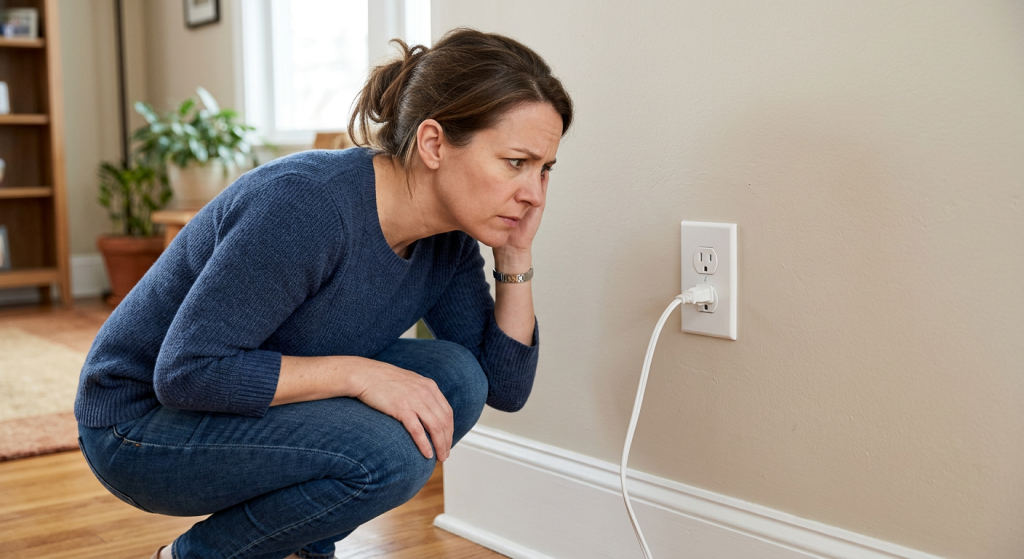
A crackling sound near an outlet is more concerning than a soft hum from a device. Outlets should not crackle, pop, sizzle, or make sharp electrical sounds during normal use.
Sometimes the sound may come from something plugged in, such as a charger, power strip, lamp, appliance, or electronic device. Other times, it may come from the outlet itself. If the sound seems to come from the wall, the outlet face, or the plug area, treat it as unsafe.
Crackling can happen when electricity is not flowing through a solid connection. It may also happen when a plug is damaged, a power strip is overloaded, moisture is present, or a device is failing. You do not need to diagnose the cause. You only need to notice the warning sign and stop using the outlet.
| Crackling clue | What it may mean | Safest next step |
|---|---|---|
| Crackling stops when device is unplugged | Device, plug, charger, or power strip may be the source | Stop using that item |
| Crackling continues near outlet | Outlet or wiring may be involved | Stop using the outlet |
| Crackling with heat or odor | Possible overheating or arcing | Call an electrician promptly |
| Crackling with smoke or sparks | Possible active electrical hazard | Move away and get urgent help |
Why Crackling Is More Serious Than a Small Click
A single small click from a switch, plug, or device is not the same as ongoing crackling. Crackling often sounds uneven, sharp, or electrical. It may come and go as a plug moves, a device runs, or a load changes.
That kind of sound can be linked to arcing. Arcing happens when electricity jumps across a gap or poor connection instead of flowing cleanly through the proper path. Arcing can create heat, sparks, and damage. It is not something a beginner should inspect or repair.
A crackling outlet may still appear to work. The light may stay on. The charger may still charge. The breaker may not trip. None of that proves the outlet is safe.
If you hear crackling from the outlet area, do not keep testing it. Stop using it and treat the noise as a warning sign.
Warning Signs That Mean Stop Using the Outlet
Any crackling from the outlet itself is enough reason to stop using it. Certain warning signs make the situation more urgent and should not be ignored.
Stop using the outlet if you notice any of these signs:
- Burning smell, smoke, or a hot plastic odor
- Sparks, flashes, popping, buzzing, or sizzling sounds
- Warm or hot outlet, wall plate, plug, cord, or nearby wall
- Scorch marks, brown stains, melted areas, or discoloration
- Loose plugs that wiggle, slip out, or do not fit firmly
- Moisture, dampness, water stains, flickering lights, or repeated breaker trips
Do not keep plugging the device back in to “see if it still crackles.” Repeated testing can make an unsafe connection worse.
A loose plug is also a concern. If the plug does not sit firmly in the outlet, the contact may not be secure. Poor contact can create heat and noise.
If the outlet is near a sink, damp floor, laundry area, garage, basement, outdoor wall, or any moisture source, use extra caution. Moisture can make electrical problems more dangerous.
If the outlet also smells hot or burnt, this guide on burning smell from outlet explains why odor near an outlet should be treated as a serious warning sign.
Safe Checks Homeowners Can Make
You can make a few safe observations without touching wiring or opening anything. These checks are not repairs. They are only meant to help you stop using the right item and explain the problem clearly to an electrician.
Start by stepping back and listening. Does the sound seem to come from the wall outlet, or from the device plugged into it? A failing charger, power strip, smart plug, lamp, or appliance can sometimes make noise. That does not make the situation harmless, but it may help you decide what to stop using.
If it is safe, turn off the connected device first. Then unplug it only if the plug, cord, and outlet are cool, dry, and undamaged. Do not touch anything that is hot, wet, smoking, sparking, melted, or visibly damaged.
Look only for outside clues you can see safely:
- A cracked, bent, loose, or darkened plug
- Frayed, pinched, melted, or damaged cord insulation
- Discoloration around the outlet slots or wall plate
- A plug that feels loose or slips out easily
- A power strip with too many devices connected
- A device that smells hot, buzzes, flickers, or shuts off
If one device causes crackling in more than one outlet, stop using that device. If more than one device causes crackling at the same outlet, stop using that outlet.
Do not move a questionable device to a power strip and keep using it. Do not use an extension cord as a workaround for a crackling outlet. If the wall outlet may be involved, adding more equipment can make the risk worse.
What Not to Touch or Try
A crackling outlet is not a safe beginner project. The problem may be hidden behind the cover, inside the outlet box, or farther back on the circuit. Looking at the outside of the outlet is not enough to know what is happening inside.
Do not remove the outlet cover plate. Do not pull the outlet from the wall. Do not tighten screws, move wires, test live parts, or use a multimeter on the outlet. Do not replace the outlet, replace a breaker, open the electrical panel, or try to trace wiring.
Also avoid quick fixes that only hide the warning sign. The goal is not to keep using the outlet. The goal is to stop use until a qualified person checks it.
Avoid these unsafe shortcuts:
- Plugging and unplugging the same device over and over
- Holding a loose plug in place so the device keeps working
- Using adapters to force a poor-fitting plug to work
- Running the outlet through a power strip or extension cord
- Covering damaged cords with tape and continuing to use them
- Ignoring crackling because the breaker has not tripped
A breaker that stays on does not mean everything is safe. Some electrical problems create heat, sound, or arcing before a breaker responds. Trust what you hear, smell, see, and feel from the outside.
If the sound stops after you unplug something, do not assume the outlet is safe. The plugged-in device may be the problem, or the outlet may have reacted badly under load. When in doubt, stop using both until they are checked.
When to Call an Electrician or Emergency Services
Call a licensed electrician if the crackling seems to come from the outlet, wall plate, plug area, or inside the wall. You should also call if the sound happens more than once, happens with more than one device, or comes with any warning sign.
When you call, describe the situation in simple terms. Say what was plugged in, whether the device was running, how long the crackling lasted, and whether it stopped after unplugging the device. Mention heat, burning smell, sparks, smoke, loose plugs, flickering lights, tripped breakers, moisture, or visible damage.
Call emergency services instead if:
- You see flames, smoke, or active burning
- The crackling is loud, sudden, or getting worse
- You smell strong burning or melting plastic
- The outlet, plug, wall plate, or wall is very hot
- You see repeated sparks or flashes
- You cannot safely unplug the device or move away from the hazard
For non-emergency situations, an electrician can safely inspect the outlet, device load, circuit, and hidden wiring. They can decide whether the outlet, device, power strip, or circuit needs repair or replacement.
Do not use the outlet again until a licensed electrician says it is safe. If the problem involves a device, charger, cord, or power strip, stop using that item too.
If the outlet makes a lower buzzing sound instead of sharp crackling, this guide on outlet making buzzing noise explains when that sound still means you should stop using the outlet.
Final Thoughts
An outlet crackling noise is not something to ignore, test repeatedly, or repair as a beginner. Crackling can point to arcing, poor contact, overload, moisture, a damaged plug, a failing device, or another electrical problem.
Stop using the outlet, unplug only if it is safe, and watch for heat, burning smells, sparks, smoke, discoloration, loose plugs, moisture, flickering lights, or breaker trips.
Do not open the outlet or touch wiring. Keep the area clear and call a licensed electrician before using the outlet again.