
storm windows vs replacement windows: which makes sense?
When comparing storm windows vs replacement windows, the condition of the existing window should drive the decision. Storm windows add a secondary glazed layer while keeping the original window, while replacement work renews failed glass, sash, frame components, or the entire window assembly.
A sound older window may benefit from a storm panel. Rot, active water intrusion, unstable glass, severe misalignment, or structural failure usually points toward repair or replacement instead.
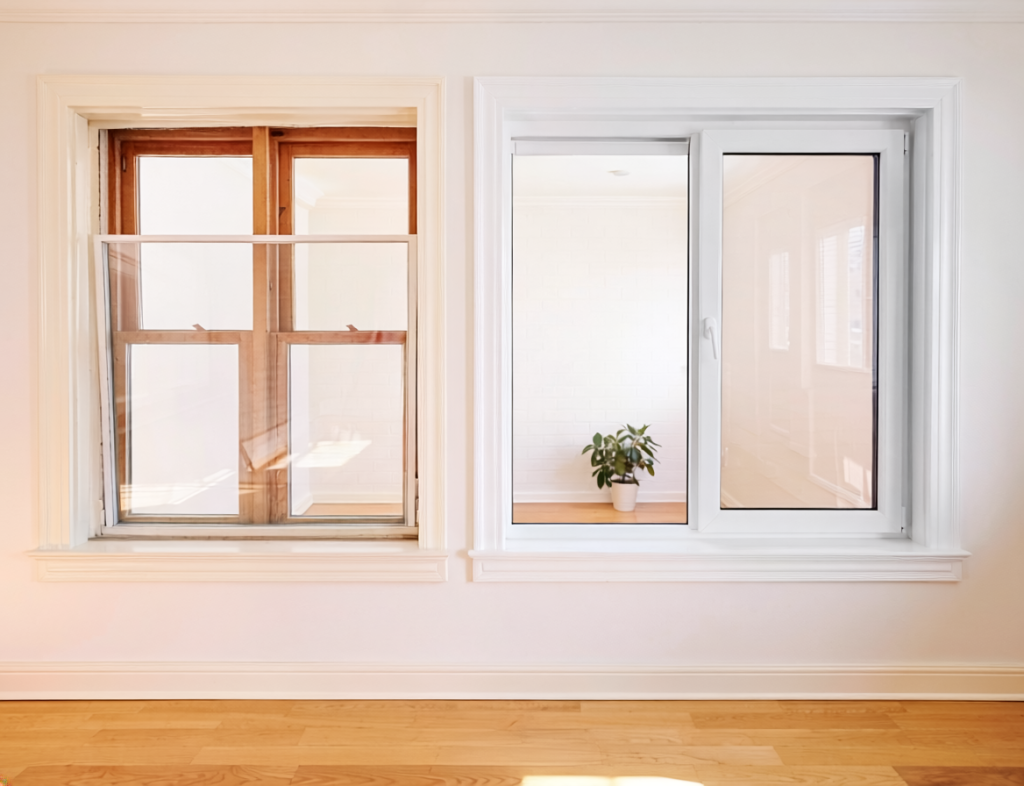
| Decision factor | Storm windows | Replacement windows |
|---|---|---|
| Existing window condition | Best when the original window is basically sound | Appropriate when components are damaged or failing |
| Project scope | Adds a secondary layer | Replaces glass, sash, frame components, or full assembly |
| Original appearance | Usually preserves existing window | May change proportions, trim, grids, or glass area |
| Installation disruption | Generally smaller project scope | Can involve more extensive removal and finish work |
| Window operation | May add panels, tracks, or removal steps | Can restore operation when the existing unit has failed |
| Best general use | Improving comfort around a serviceable window | Correcting failed or deteriorated window components |
How Storm Windows and Replacement Windows Differ
Storm windows and replacement windows are not equivalent projects. A storm window adds an interior or exterior secondary glazed layer while generally preserving the original sash and frame. Depending on the system, the storm panel may be removable or operable. Its main purpose is to add another layer between the living space and outdoor conditions around an otherwise serviceable window.
Homeowners considering removable room-side panels can learn more about interior storm windows, including common insert types and fit considerations.
Replacement work can involve several different scopes. A contractor might replace only a failed insulated-glass unit, replace a sash, install an insert or pocket replacement window, or remove the existing assembly for full-frame replacement. Those approaches solve different problems and should not be treated as interchangeable.
That distinction matters when deciding whether to replace windows or add storm windows. The project should address the actual defect rather than automatically moving to the largest possible scope.
Comfort, Drafts, and Window Performance
Storm windows can improve comfort around older windows that remain in usable condition. By adding another layer between the room and the original glass, they may reduce the sensation of cold glass, limit minor air movement, and make the area near the window feel more comfortable. Some systems may also reduce a degree of outside noise.
The results vary with the condition of the existing window, the storm-panel design, perimeter fit, installation quality, and outdoor conditions. Storm windows should not be expected to guarantee a particular level of energy savings or provide true soundproofing.
Replacement windows address a different set of problems. Depending on what is actually replaced, the project may improve operation, weather protection, glass performance, or failed sash and hardware components. That can make replacement the better choice when the original window no longer functions as intended.
Even so, a new window does not automatically solve every leak or draft around an opening. Water may be entering because of failed wall flashing, siding defects, roofing problems, or another surrounding construction issue. If the real defect lies outside the window assembly, replacing the window without correcting that condition may leave the original problem unresolved.
Existing Window Condition Is the Main Decision Factor
Before comparing brands, styles, or materials, inspect the condition of the existing window. The most important question is whether the current assembly is sound enough to keep.
A Storm Window May Be Practical When
A storm window can be a practical choice when the frame, sash, sill, and trim remain stable and the glass is safe. The window should open, close, and lock properly, and water should not enter during rain. Drainage also needs to function as intended.
In that situation, cold glass or minor drafts may be the primary concern rather than structural failure. A storm panel can then add another layer without removing the original window, which can be especially useful when the existing appearance is worth preserving.
The panel itself also needs to fit the way the window is used. Ventilation and emergency egress must remain usable, and the panel should be manageable enough to remove or operate safely when necessary.
Minor repairs may still make sense before adding a storm window. Adjusting hardware, replacing deteriorated weatherstripping, or correcting another localized defect can improve the original window and make a secondary storm layer more effective.
Repair or Replacement Should Be Evaluated When
A storm panel should not be used to conceal significant deterioration. Rot, severe warping, unstable or cracked glass, broken hardware, failed balances, hinges, cranks, or rollers all point to problems with the existing window itself.
The same is true when the sash is badly misaligned, water enters during rain, flashing or drainage has failed, or the opening shows signs of structural movement. Mold, hidden moisture damage, poor security, or a window that no longer operates correctly also deserve closer evaluation before any secondary panel is added.
A failed insulated-glass seal does not necessarily mean the entire window must be replaced. If the frame is still sound, replacing the insulated-glass unit or sash may be enough.
For a broader look at deterioration and replacement timing, see when to replace windows.
Cost, Disruption, Appearance, and Preservation
The storm window vs replacement window decision also involves project scope, disruption, and how much of the original window you want to preserve.
Storm windows generally involve a smaller project because the existing window stays in place. That can make installation less invasive and help preserve historic or decorative windows, along with their original trim, proportions, and surrounding finishes.
However, storm windows still require accurate measuring and proper installation. Some systems need seasonal removal and storage, and unusual or custom-sized openings can increase complexity. It is also too broad to assume storm windows are always the less expensive option. Product type, sizing, fabrication, installation requirements, and the condition of the existing window all affect the overall project.
Replacement windows involve a larger material and labor scope when major components or the full assembly are being changed. Depending on the installation, the work may affect interior trim, exterior trim, siding, wall finishes, flashing, or sealants.
Replacement can also alter the appearance of an older opening. Frame width, visible glass area, grid patterns, trim proportions, and other architectural details may differ from the original. That is especially important with historic or decorative windows, where preservation may be part of the project goal.
When appearance matters, it is worth determining whether the existing window can be repaired and retained before moving to full replacement.
Operation, Cleaning, Condensation, and Drainage
Daily use is another important part of the comparison. A storm-window system may add another panel, track, screen, or mounting system to the opening. Depending on the design, that can affect ventilation, cleaning, and how easily the original window can be reached.
Some storm panels need to be removed seasonally, which means they also require safe storage. Others add tracks or screens that must be cleaned and maintained along with the original window.
Moisture deserves particular attention. Condensation can form when humid indoor air reaches sufficiently cold glass. If a storm panel creates an enclosed space around the original window, periodically check for moisture between the layers. Recurring water on the sill, trim, or glass should not be ignored, and drainage openings must remain clear so water can leave the system as intended.
Replacement windows may improve operation when the old sash, hardware, or other components were failing. They can also provide new glass assemblies and weather seals. Even new windows, however, can develop room-side condensation when indoor humidity is high and exterior temperatures are low.
Replacement also does not guarantee that water intrusion will stop if the actual problem is failed flashing, siding, or another surrounding wall detail.
Regardless of which option is chosen, the installation should not block required emergency escape, conceal active water intrusion, interfere with drainage, prevent locks from operating, obstruct sensors, or interfere with necessary ventilation equipment.
Choosing the Right Project Scope
The choice is not always simply storm windows or replacement windows. In many cases, a smaller targeted repair may solve the problem without replacing components that are still serviceable.
Possible scopes range from weatherstripping, hardware, or sealant repair to insulated-glass replacement, sash replacement, a storm panel, an insert replacement, or full-frame replacement. Each level addresses a different type of failure.
For example, a window with a failed insulated-glass seal but a sound frame may need only glass or sash work. A serviceable older window that feels cold during winter may be a better candidate for a storm panel. A badly rotted or distorted window, on the other hand, may require a much larger project.
Questions to Answer Before Choosing
A short decision checklist can help narrow the scope:
- Is the frame, sash, and sill sound?
- Is the glass safe?
- Does water enter during rain?
- Does the sash operate and lock correctly?
- Are drainage paths functioning?
- Is preserving the original appearance important?
- Does the window need frequent ventilation?
- Can a storm panel be handled and stored safely?
- Could a targeted component repair solve the problem?
- Is professional diagnosis needed?
The goal is not to install the newest or largest product. Choose the smallest scope that safely corrects the actual failure.
Common Comparison Mistakes
One of the most common mistakes is comparing products before determining what is actually wrong with the existing window. A homeowner may start shopping for replacement windows when the real issue is deteriorated weatherstripping, failed hardware, or a localized glass problem.
The opposite mistake is assuming a storm window can compensate for damage it was never designed to repair. A secondary panel will not correct rot, active water intrusion, structural movement, or failed flashing.
Age alone is also a poor reason to replace a window. Some older windows remain serviceable and may respond well to repair or a properly selected storm system. Others have reached the point where replacement is justified because key components are failing.
Initial price should not be the only deciding factor either. Ventilation, emergency egress, panel weight, storage, drainage, condensation, maintenance, and the condition of surrounding construction all affect whether a particular solution makes sense.
It is equally important not to assume that replacement fixes every surrounding building defect. If the leak originates in siding, flashing, roofing, or the wall assembly, a new window may not correct it.
A useful comparison begins with diagnosis. Once the actual failure is known, storm windows, targeted repair, and replacement can be compared on the basis of what each option can realistically solve.
Safety and When to Call a Professional
Professional evaluation is appropriate when:
- Glass is cracked, loose, shifting, or unstable
- Water enters during rain
- The frame, sash, sill, trim, or surrounding wall is soft, rotten, warped, or damaged
- The window cannot open, close, lock, or remain secure
- Widespread mold or hidden moisture is present
- Flashing or drainage failure is suspected
- The opening is severely out of square
- Structural movement is visible
- Ladder, roof, or unsafe exterior access would be required
- The storm panel or window unit is too large or heavy to handle safely
- Major trim, siding, glazing, or wall materials must be removed
- Older lead-painted surfaces may be disturbed
- Emergency escape could be affected
- You cannot confidently identify the failed component
These conditions can involve more than a simple window-product decision and may require diagnosis before work begins.
Final Thoughts
Storm windows are best viewed as an added layer for sound existing windows. Replacement becomes more appropriate when glass, sash, frame components, or the complete window assembly has actually failed.
Sometimes a targeted repair is enough. Inspect the existing window first, identify the real defect, and choose the smallest project scope that safely corrects it.