water dripping between gutter and fascia
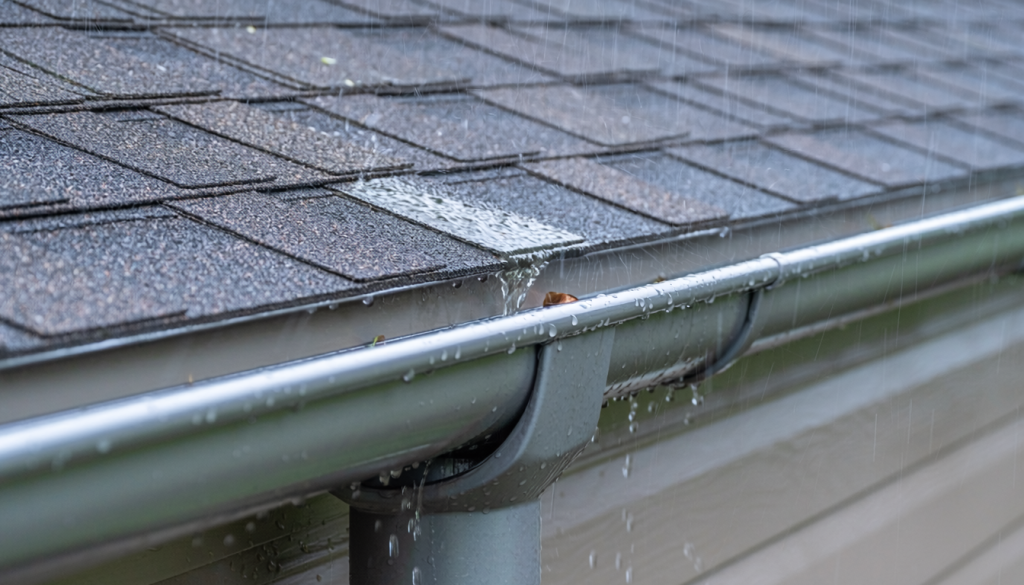
Water dripping between gutter and fascia usually means roof runoff is leaving its intended drainage path somewhere near the roof edge. Common causes include gutter overflow, poor gutter position, local sagging, separation from the fascia, drip-edge problems, damaged fascia, or runoff missing the gutter. A clogged gutter is common, but it is not the only explanation.
If water runs behind a gutter that is not visibly full, pay closer attention to gutter position, separation, and the relationship between the roof edge and gutter.
| What You Observe | Likely Cause | Best Clue |
|---|---|---|
| Water only during heavy rain | Marginal position, concentrated runoff, or partial restriction | Compare light-rain and heavy-rain behavior |
| Water behind one short section | Local sag, separation, or roof-edge issue | Check whether that section sits lower or farther from fascia |
| Gutter visibly separated from fascia | Attachment or fascia problem | Visible rear gap |
| Fascia staining or deterioration | Repeated wetting or failed support | Water marks, peeling paint, or damaged wood |
| Water behind gutter when gutter is not full | Position or drip-edge problem | Rear bypass without front overflow |
| Front and back overflow together | Gutter filling beyond capacity at that point | Water visibly near top of gutter |
| Overflow concentrated near downspout | Outlet or downspout restriction | Weak discharge or local backup |
| Water overshooting outer edge | Fast or concentrated roof runoff | Water passes beyond gutter instead of filling it |
Why Water Gets Between the Gutter and Fascia
Roof runoff is supposed to follow a simple path: off the roof surface, past the roof edge or drip edge, into the gutter, through the outlet, and down the downspout.
When water appears behind the gutter or between the gutter and fascia, it has left that intended path somewhere near the roof edge.
Sometimes the gutter is actually overflowing. In other cases, water never enters the gutter correctly. A section may sit too low or too far from the roof edge, the gutter may have pulled away from the fascia, or a local sag may create a gap where runoff slips behind it.
The drip edge and fascia condition also matter. Water can follow a poorly positioned or damaged roof-edge detail instead of dropping cleanly into the gutter. Repeated wetting can then damage the fascia and make the gutter attachment weaker over time.
Where the dripping starts, how long the affected section is, and whether the gutter is full when it happens are the strongest diagnostic clues.
First Rule Out Gutter Overflow
Before blaming gutter position or drip edge, determine whether the gutter is simply filling and spilling over.
From the ground, watch the problem area during rain when conditions are safe. If water rises high in the gutter and spills over both the front and rear edges, the gutter is likely overflowing rather than being bypassed by roof runoff.
Other clues include overflow at several points along the run, visible debris near the outlet, weak downspout discharge, or a problem concentrated close to a downspout.
If the gutter appears clean but is still filling and spilling, the broader guide to gutters overflowing but not clogged covers restrictions, slope, sagging, concentrated runoff, and other overflow causes in more detail.
The distinction matters because sealing or repositioning a gutter will not solve a drainage restriction that is causing the gutter to fill beyond its capacity.
When Water Bypasses a Gutter That Is Not Full
A different diagnosis becomes more likely when the gutter still has visible capacity, the downspout appears to be draining, and water consistently runs behind the gutter.
In that situation, look more closely at the physical relationship between the roof edge and the gutter.
The gutter may sit too low to catch runoff effectively, one section may have pulled away from the fascia, or the rear edge may no longer be positioned where water naturally drops from the roof.
A drip-edge problem can create a similar symptom. Instead of falling into the gutter, water may follow the roof-edge surface and continue behind it.
This is the central clue: if water is bypassing a gutter that is not full, the problem is less likely to be a simple clog and more likely to involve position, separation, local sagging, or roof-edge drainage details.
Check Gutter Position From the Ground
A gutter has to be positioned where roof runoff can enter it.
From a safe ground-level location, compare the problem section with nearby portions of the gutter. Look for a section that sits noticeably lower, appears farther from the roof edge, or has a visible gap behind the rear of the gutter.
Heavy rain often makes a marginal position more obvious. A gutter that catches most water during a light shower may allow faster runoff to pass behind or beyond it during an intense storm.
One low or separated section can also create a localized leak while the rest of the gutter performs normally.
Do not pull, push, bend, or attempt to realign elevated gutters as part of diagnosis. If the gutter position appears wrong, the goal at this stage is simply to document what you can see safely.
How Drip-Edge Problems Can Send Water Behind the Gutter
Drip edge is a roof-edge component intended to help direct runoff away from vulnerable roof-edge materials and toward the gutter.
If the drip edge is missing, damaged, positioned poorly, or does not project in a way that carries water toward the gutter, runoff can follow surfaces behind the gutter instead of dropping into it.
One especially useful clue is water repeatedly appearing behind a gutter that is not visibly full or overflowing.
The relationship between drip edge and gutter matters more than any one component viewed by itself. A gutter can be in otherwise reasonable condition yet still receive water poorly if the roof-edge drainage path is wrong.
Do not pry up shingles, bend flashing, or attempt to modify drip edge from a ladder. Roof-edge repairs require proper access and an understanding of how the roofing and gutter systems work together.
When the Gutter Is Pulling Away From the Fascia
A gutter that separates from the fascia creates a larger rear gap where water can miss the gutter or flow behind it.
Ground-level clues include a visible gap between gutter and fascia, one section hanging lower than the rest, a twisted gutter line, loose-looking attachment points, or a localized sag where water problems are concentrated.
If you suspect the gutter pulling away from the house, treat the separation itself as a separate attachment problem rather than trying to seal the gap.
The important question is why the gutter moved. Loose or failed attachment hardware, damaged supporting material, or deteriorated fascia may all be involved.
Do not attempt to refasten an elevated gutter without first knowing whether the supporting fascia is sound.
How Fascia Damage Can Contribute
Fascia often provides the supporting surface for gutter attachment. When it deteriorates, the gutter may no longer stay firmly positioned against the roof edge.
Repeated water bypass can contribute to peeling paint, staining, soft wood, rot, and loss of fastener holding strength.
This can create a worsening cycle. Water running behind the gutter damages the fascia, and weakened fascia then allows the gutter to separate farther, creating an even larger path for water.
Fascia damage can therefore be both a result of the original drainage problem and a cause of continued gutter movement.
From the ground, look for staining, peeling finishes, visible deterioration, or obvious separation. Do not probe questionable wood or attempt to refasten the gutter from a ladder.
Roof Runoff That Overshoots or Misses the Gutter
Not all gutter-edge water problems are true overflow.
Water that shoots beyond the front edge is overshooting the gutter. Water traveling behind the rear edge is bypassing it. A gutter that fills and then spills over is overflowing.
Those patterns point toward different causes.
Steep roof sections, roof valleys, concentrated runoff, and intense rainfall can send water toward one gutter section at high speed. If gutter position is marginal, some runoff may pass beyond the front edge or miss the rear edge rather than entering cleanly.
Do not assume gutter size is the problem immediately. Restrictions, gutter position, slope, sagging, and roof-edge geometry should be considered first.
Observing whether the gutter actually fills before water escapes is one of the simplest ways to separate overflow from overshooting or rear bypass.
Why Heavy Rain Can Reveal the Problem
Some roof-to-gutter problems remain hidden during light rainfall.
A gutter may be positioned just well enough to catch slower runoff but fail when water arrives more quickly. A small separation from the fascia, a modest sag, concentrated valley runoff, or a partial drainage restriction may become obvious only during a stronger storm.
Heavy rain is therefore a useful diagnostic clue, but it does not prove that the gutter is undersized.
Compare how the problem behaves during lighter and heavier rain. If water appears behind the gutter even during moderate rainfall while the gutter itself remains relatively empty, position or roof-edge drainage becomes more suspicious.
If the gutter visibly fills first, the diagnosis shifts back toward drainage restriction or overflow.
What Homeowners Can Safely Observe
Much of the useful diagnosis can be done from the ground.
Watch where the dripping begins and ends. Determine whether it is limited to one short area or extends across a larger section of gutter.
Notice whether the gutter is full when the leak occurs and whether water is also spilling over the front edge.
Compare light-rain behavior with heavy-rain behavior. Look for a visible gap behind the gutter, one section hanging lower than another, fascia staining, and the strength of downspout discharge.
Also distinguish between water overshooting the front edge and water slipping behind the rear edge.
Photos or video taken safely from the ground can help document the pattern for later evaluation. Do not climb a ladder during rain to get a closer look.
Common Mistakes
Avoid these common diagnostic mistakes:
- Assuming every rear leak means the gutter is clogged.
- Blaming drip edge before checking whether the gutter is actually overflowing.
- Treating a visible rear gap as merely cosmetic.
- Refastening gutters into questionable fascia without diagnosing the support.
- Blaming gutter size before considering position and drainage.
- Assuming heavy rain automatically proves inadequate capacity.
- Bending the gutter upward without determining why its position changed.
- Sealing visible gaps before identifying the actual water path.
- Climbing during rain to inspect the leak.
The goal is to identify where runoff leaves the intended path before choosing a repair.
When to Call a Professional
Professional evaluation is appropriate when:
- Water repeatedly bypasses a gutter that is not overflowing.
- The gutter has visibly separated from the fascia.
- A gutter section is sagging.
- Fascia appears damaged, soft, or rotten.
- Drip edge appears missing, damaged, or poorly positioned.
- Roof-edge materials require closer inspection.
- Leakage continues after normal gutter drainage is confirmed.
- The condition is getting worse.
- Diagnosis or repair would require ladder or roof access.
- Overhead electrical conductors are close to the work area.
Do not reposition elevated gutters, adjust gutter pitch, modify drip edge, pry roofing materials, or refasten gutters into questionable fascia without proper access and evaluation.
Final Thoughts
When water dripping between gutter and fascia appears, first determine whether the gutter is actually overflowing.
Then observe where the water travels, look for visible gutter separation or sagging, and consider whether gutter position or the roof-edge and drip-edge relationship is allowing runoff to bypass the gutter.
Water behind a clear gutter points more strongly toward position, separation, or roof-edge drainage details than toward a simple clog. If the affected components are elevated, damaged, or inaccessible, professional evaluation is the safer next step.