Gutter Pulling Away From the House
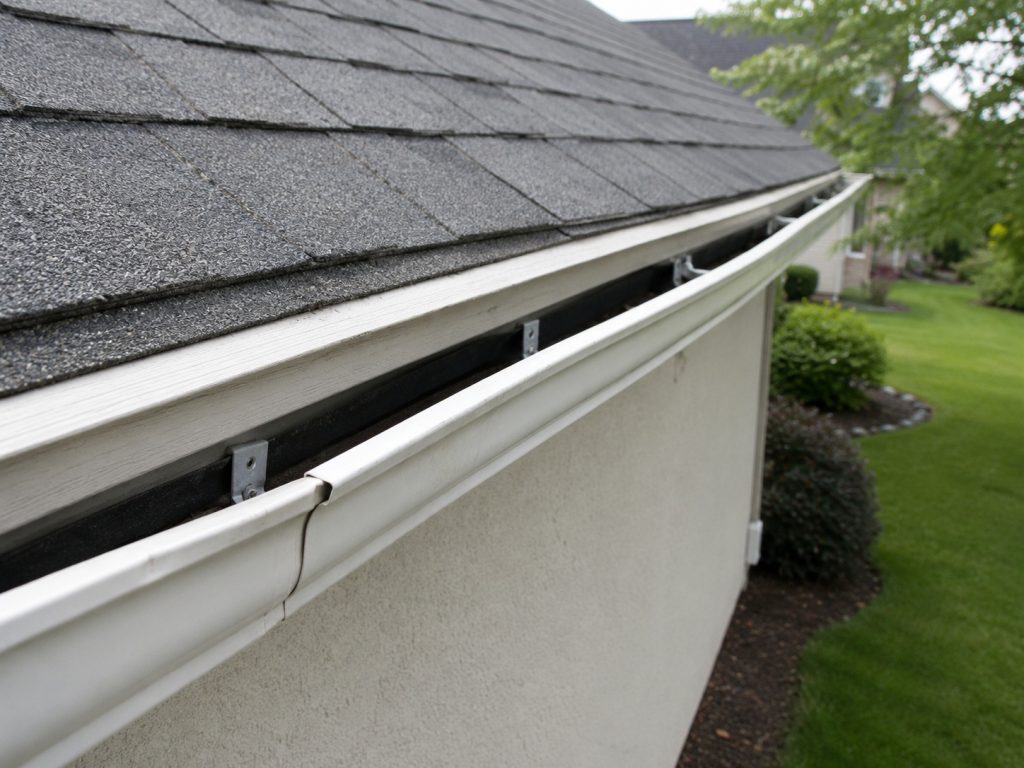
If you notice a gutter pulling away from house fascia, the visible gap is usually a symptom rather than the whole problem. Loose or failed hangers, fasteners losing their grip, deteriorated fascia, standing water, debris weight, snow or ice loading, poor support, improper installation, or storm damage can all cause a gutter to separate.
The lasting repair depends on identifying why the gutter lost secure support. Simply pushing it back into position or tightening one loose fastener may not solve the problem if the attachment point, fascia, drainage, or installation has failed.
| What You Observe | Likely Cause | What It Suggests |
|---|---|---|
| Small gap along one section | Loose hanger or fastener | A localized attachment point may be failing |
| Gutter sagging between hangers | Inadequate support or excess weight | The gutter may have developed a low spot |
| Fastener visibly pulling out | Failed fastener or mounting point | The fastener may no longer have a secure hold |
| Several loose attachment points | Fascia deterioration or installation problem | The problem may extend beyond one hanger |
| Stained or deteriorated fascia | Repeated moisture exposure | The mounting surface may be weakened |
| Standing water in a sagging section | Changed pitch or drainage restriction | Added water weight may worsen the sag |
| Separation worse after snow or heavy rain | Excess loading | Existing weak attachments may have been overstressed |
| Twisted or dented gutter after a storm | Impact or wind damage | The gutter or its attachments may have shifted |
| Repeated separation after previous repair | Unresolved support or fascia problem | The previous repair may have addressed only the visible gap |
Why Gutters Pull Away From the House
A gutter system has to remain firmly supported at the roof edge while maintaining enough slope to move water toward its outlets. When either support or drainage begins to fail, the other can be affected.
Attachment hardware may loosen, mounting points may lose holding strength, or the fascia supporting the gutter may deteriorate. Extra weight from water, debris, snow, or ice can then place more stress on weakened attachments. In other cases, inadequate support or poor installation allows the gutter to sag gradually.
These problems can reinforce one another. A loose hanger may allow a low spot to develop. That low spot can hold water, and the added weight puts more strain on the remaining hangers and fasteners. As the gutter sags farther, drainage worsens and separation can increase.
That is why the visible space between the gutter and the house should be treated as a clue. The important question is what caused the gutter to lose support.
Loose Hangers and Failed Fasteners
Gutter hangers and their fasteners secure the gutter to its supporting structure. If a hanger becomes loose, bends, breaks, or pulls away from its mounting point, one section may begin moving outward or downward.
A screw or older spike may also back out. In some cases, the fastener itself is not the main problem. The mounting hole may have enlarged, the material behind it may have weakened, or the attachment point may no longer provide enough holding strength.
From the ground, you may notice a rear gap between the gutter and fascia, a localized sag, one end sitting lower than the other, or an attachment point that is no longer flush. The gutter line may also appear uneven.
Simply tightening a loose fastener is not necessarily a durable solution. If the fastener is pulling from a failed mounting point or deteriorated fascia, it may fail again.
Because evaluating and replacing elevated gutter hardware normally requires ladder access, homeowners should limit inspection to what can be safely observed from the ground.
Why Fascia Condition Matters
Many gutter systems are attached to fascia at the roof edge. That makes fascia condition an important part of diagnosing a gutter that is separating from the house.
Look from the ground for staining, peeling or blistered paint, cracking, visible deterioration, or wood that appears rotten or damaged. Several fasteners failing in the same area or a gutter repeatedly separating after being refastened can also suggest that the supporting material is no longer providing a dependable hold.
Repeated moisture exposure may gradually weaken wood fascia. If you are also seeing water dripping between gutter and fascia, that moisture problem deserves attention because it may contribute to deterioration around the attachment area.
Once fascia has lost structural holding strength, attaching the gutter back into the same damaged location is unlikely to create a durable repair. The supporting material needs to be evaluated rather than treating the gutter gap by itself.
Excess Weight From Water and Debris
Gutters are designed to carry runoff, but accumulated material can add substantial weight. Packed leaves, sediment, roof granules, and other debris may increase the load carried by the hangers and fasteners.
Standing water is particularly important because it can be both a cause and a symptom of trouble. Water remaining in one section may indicate a low spot, changed pitch, or drainage restriction. Its weight then places additional stress on the attachments.
This can create a repeating cycle:
- Poor drainage allows water to remain in the gutter.
- Standing water adds weight.
- The added weight increases sagging.
- Increased sagging makes drainage worse.
A gutter that is pulling away should therefore be evaluated for more than loose hardware. If standing water or heavy debris is contributing to the load, correcting only the attachment problem may allow the same failure to develop again.
Snow and Ice Loading
Snow and ice can place additional stress on gutter attachments, especially if those attachments were already loose or weakened.
A separation that appears after snowfall, becomes worse after freeze-and-thaw cycles, or remains sagged after ice has melted may indicate that winter loading contributed to the problem. Several nearby attachment points may shift instead of a single hanger failing.
Do not attempt to pull ice from elevated gutters, strike frozen gutters, climb to remove ice, or work beneath hanging ice. Ice and snow can release unexpectedly, and a gutter that is already separating may be unstable.
Once conditions are safe, the gutter can be observed from the ground for permanent sagging, changed alignment, or attachment movement that remains after the ice is gone.
Poor Pitch and Drainage Problems
A gutter that has lost its intended slope may no longer drain completely toward the downspout. At the same time, failing attachments can cause the gutter to sag and create low spots that interfere with drainage.
You may notice water remaining in one area after rainfall or a section that looks noticeably lower than the adjoining gutter. As more water collects there, its weight can increase the load on the hangers and make separation worse.
A support problem can create poor drainage, or a drainage problem can add enough weight to accelerate an existing attachment weakness.
The gutter should not simply be forced back into position or its pitch adjusted from a ladder without determining why the support changed.
Improper Installation or Inadequate Support
Some gutter separation develops because the original installation did not provide adequate support.
Hangers may be spaced poorly for the installation, attachment points may be weak, fasteners may have been installed into unsuitable material, or the gutter may not have been aligned correctly.
Ground-level clues can include sagging between attachment points, several weak-looking sections, repeated separation, or trouble that appeared relatively soon after installation. The gutter may also look uneven even though the visible fascia appears reasonably sound.
There is no single hanger-spacing measurement that applies to every gutter system, building, climate, and installation. A contractor can evaluate whether the support arrangement and attachment locations are appropriate.
Storm or Impact Damage
Gutters can also separate suddenly rather than gradually. Falling tree limbs, wind-driven debris, a ladder leaned against the gutter, or another impact may bend the gutter or damage several attachments at once.
Clues include new denting, twisting, several nearby attachment failures, or a noticeable change in gutter pitch after a storm or impact. One section may pull outward while adjacent sections remain properly positioned.
If a damaged gutter appears unstable or partially detached, keep people away from the area beneath it. Do not try to push the section back into place from below.
What Homeowners Can Safely Observe From the Ground
You can gather useful information without climbing a ladder. From a safe location, look at the overall gutter line and compare the damaged area with surrounding sections.
Useful observations include:
- The approximate length of the separation
- Whether the gap is localized or widespread
- Whether the gutter is sagging downward or pulling outward
- Visible loose attachment points
- Fascia staining or deterioration
- Standing water in a low section
- Twisted or dented gutter material
- Separation near a corner or downspout
- Changes that appeared after rain, snow, wind, or a storm
- Evidence that water has been getting behind the gutter
Photos taken safely from ground level can also help a gutter contractor, roofer, or qualified repair professional understand the location and extent of the problem.
Do not climb for a better view. If determining the cause requires access to hangers, fascia, or the roof edge, leave that inspection to someone equipped to work safely at height.
Common Mistakes
Several quick fixes can make a gutter look better temporarily without correcting the reason it separated.
Common mistakes include:
- Assuming every loose gutter needs only a tighter fastener
- Pushing a sagging section back into place without finding the cause
- Ignoring deteriorated fascia
- Ignoring standing water
- Reinstalling fasteners into the same weak mounting location
- Treating repeated separation as an isolated hanger failure
- Standing beneath an unstable gutter
- Using a ladder simply to inspect the hangers
- Repairing attachments without considering drainage
- Assuming the entire gutter system automatically needs replacement
A reliable repair starts with diagnosis. The gutter, attachments, supporting fascia, and drainage behavior may all need to be considered.
Repair Versus Replacement — Keep Brief
A localized attachment problem may be repairable when the gutter section remains in good condition, the supporting fascia can provide a sound mounting surface, drainage can be restored, and the damage is limited.
More extensive evaluation may make sense when several areas are failing, the gutter is badly twisted, deterioration is widespread, repeated repairs have not lasted, or the overall system no longer drains correctly.
Those conditions do not automatically mean replacement is required. For a broader look at when to replace gutters, evaluate the extent of the damage rather than judging the system by one loose attachment point alone.
When to Call a Professional
Professional evaluation is appropriate when the fascia appears rotten or structurally damaged, several hangers or fasteners are failing, or the gutter is substantially sagging or twisted.
You should also call for help if standing water remains because the gutter’s pitch has changed, separation followed significant snow, ice, wind, or impact, or the gutter appears unstable.
Any inspection or repair requiring ladder or roof access should be handled by someone equipped to work safely at height. Professional help is especially important when overhead electrical conductors are nearby or when structural wood repair may be necessary.
Final Thoughts
A gutter pulling away from the house often involves more than one loose fastener. Hanger failure, weakened mounting points, deteriorated fascia, excess weight, drainage problems, inadequate support, and storm damage can all contribute to separation.
The goal is to determine why the gutter lost secure support rather than simply closing the visible gap. Fixing only the symptom may allow the gutter to sag or pull away again.
Homeowners can safely observe the gutter line, fascia condition, visible gaps, standing water, and storm damage from the ground. When diagnosis or repair requires access to elevated attachments, fascia, or the roof edge, professional evaluation is the safer approach.