how to lubricate a garage door
If you are learning how to lubricate garage door hardware, focus on accessible moving parts such as metal hinge pivots and compatible roller bearings, using a light lubricant intended for garage-door hardware. Keep the tracks clean rather than greasy, use only a small amount of lubricant, and wipe away excess when you finish.
Lubrication is maintenance, not repair. Close the door before you begin, keep your hands clear of pinch points, and never loosen or adjust springs, cables, bottom brackets, or other high-tension hardware. If the door is crooked, unusually heavy, off track, or mechanically damaged, stop and arrange professional service.
| Garage-door part | Lubricate? | What to know |
|---|---|---|
| Hinges | Usually | Apply lightly at metal pivot points |
| Roller bearings | When design allows | Lubricate exposed bearing areas, not indiscriminately |
| Roller stems | Usually | Lightly lubricate where the stem moves in the hinge |
| Torsion spring surface | Sometimes | Light surface application only if permitted |
| Tracks | No | Keep running surfaces clean and dry |
| Nylon roller wheels | Usually no | Do not saturate the nylon surface |
| Lift cables | No | Inspect only; damaged cables require service |
| Opener rail | Model-specific | Follow the opener manual |
What You Need to Lubricate a Garage Door
Routine lubrication does not require a large tool kit. Gather:
- Garage-door-specific lubricant or another lubricant approved for your door
- Light silicone-based spray when appropriate
- Clean rags or shop towels
- A soft cloth or brush for removing loose dirt
- Eye protection if the lubricant label calls for it
- Gloves if recommended by the product instructions
Avoid assuming that one lubricant works for every component. Garage doors and openers use different roller materials, spring systems, and drive mechanisms.
Heavy grease is usually a poor choice for exposed parts when it creates thick buildup that collects dirt. General-purpose oils that leave sticky or gummy residue can cause similar problems. A garage-door-specific product or a suitable light lubricant is generally easier to apply sparingly.
Step 1: Close the Door and Disconnect the Opener if Required
Start with the garage door fully closed. Do not perform routine lubrication beneath a partially raised or unstable door.
Check the door and opener maintenance instructions before beginning. Disconnect electrical power when the manufacturer requires it for the maintenance you are performing.
Take a moment to look for obvious damage before touching anything. Stop if you see a broken or separated spring, frayed cable, crooked door, bent hardware, damaged track, or roller that appears to be coming out of its track.
Springs, cables, and bottom brackets are connected to a system that operates under substantial tension. Do not loosen fasteners or manipulate these parts while attempting to lubricate the door.
Step 2: Clean Dirt From Moving Parts
Lubricant works better when it is applied to the intended moving point rather than over layers of dirt.
Use a dry or slightly damp cloth to remove dust, cobwebs, and loose grime from accessible hinges, roller areas, and tracks. Pay particular attention to debris in the tracks that could interfere with roller movement.
Do not coat the track running surfaces with lubricant. Tracks generally need to remain clean rather than greasy. Excess lubricant can catch dirt and create a messy buildup that does not correct bent, damaged, or misaligned tracks.
If you find a track that is visibly bent or pulling away from its mounting position, treat that as a repair issue rather than trying to lubricate around it.
Step 3: Lubricate the Hinges
Metal hinges are one of the simplest places to apply routine lubrication.
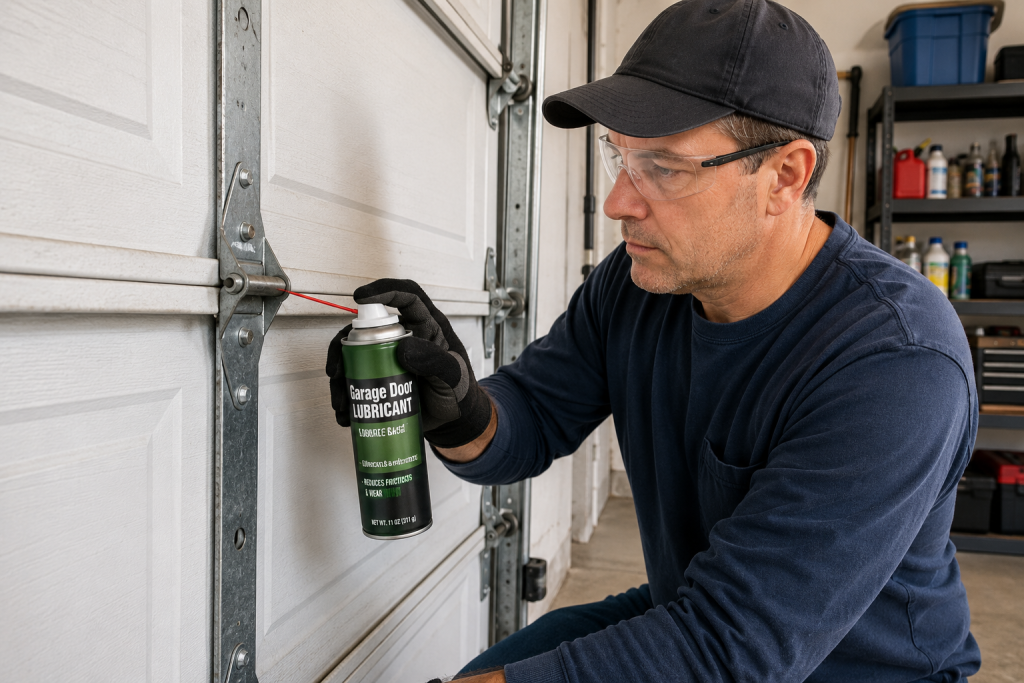
Place a small amount at each accessible metal hinge pivot where two pieces move against each other. You do not need to soak the entire hinge or spray the surrounding door panel.
After application:
- Wipe away drips and overspray.
- Keep lubricant off painted surfaces when the product instructions call for it.
- Keep your fingers away from the joints between door sections.
- Do not loosen hinge hardware simply to get lubricant into the pivot.
If a hinge is cracked, severely bent, pulling away from the door, or otherwise damaged, lubricant will not correct the problem. Have damaged hardware evaluated instead of continuing to operate the door.
Step 4: Lubricate Roller Bearings and Stems
Garage-door rollers vary, so look at their design before spraying anything.
Metal rollers with accessible bearings may allow a small amount of lubricant at the bearing area. Some nylon rollers also contain exposed bearings that can be lubricated, while sealed rollers may need little or no direct lubrication.
Do not saturate the nylon wheel itself. Also avoid spraying lubricant along the track in an attempt to make the wheel slide more easily. The roller should roll through a clean track.
A roller stem may benefit from a light application where it moves within the hinge or roller carrier. This is another place where a small amount is enough.
Stop and seek repair if a roller is:
- Cracked or visibly broken
- Seized instead of rolling
- Badly worn
- Loose in its mounting hardware
- Coming out of the track
Roller replacement is different from routine lubrication and may involve door hardware that should not be disturbed by a beginner.
Step 5: Lubricate Bearing Plates if Appropriate
Some sectional garage doors have bearing plates or bearings at the ends of the torsion shaft above the door.
These may be lubrication points on certain door systems, but access and maintenance requirements vary. Only apply lubricant where the component is readily accessible, clearly identified as a maintenance point, and permitted by the door manufacturer’s instructions.
Do not loosen bearing plates, shaft supports, spring brackets, set screws, or nearby hardware.
If reaching a bearing requires working around spring hardware or putting yourself in an awkward position, skip it and have the door serviced professionally.
Step 6: Lubricate the Torsion Spring Surface Carefully
A torsion spring is usually mounted on a shaft above the closed garage door. It remains a high-tension component even when the door is not moving.
Never loosen set screws, winding cones, brackets, shaft hardware, or the spring itself. Never attempt to change its tension as part of lubrication.
If the door manufacturer’s maintenance instructions permit spring lubrication, you can apply a light surface coating from a safe standing position without touching or manipulating the spring. Some door manufacturers include light spring lubrication as routine maintenance to reduce friction or noise.
Do not overapply the lubricant. Wipe any drips that reach safe, non-tensioned surfaces, and clean overspray from the garage floor so it does not create a slip hazard.
If the spring is broken, visibly separated, heavily corroded, distorted, or otherwise damaged, do not lubricate it. Stop using the door and call a garage-door professional.
Extension-spring systems also contain high-tension components along the sides of the door. Do not touch or lubricate extension springs or related hardware when doing so requires working around cables, pulleys, brackets, or tensioned components.
Step 7: Check the Opener Rail or Drive System
Do not automatically spray lubricant on the garage-door opener.
Chain-drive, belt-drive, and screw-drive systems can have different maintenance requirements. Some opener components use a specific lubricant, while others require little or no added lubrication. LiftMaster, for example, specifies particular grease for certain opener applications and directs owners to verify compatibility with the specific model.
Check your opener manual before applying anything to:
- Chains
- Belts
- Screw drives
- Rails
- Trolleys
- Internal drive components
Never assume that a product that is appropriate for door hinges is also suitable for the opener mechanism.
If the opener is struggling even though the door itself moves normally, follow the basic checks in Garage Door Opener Not Working: What to Check rather than adding more lubricant.
What Parts Should You Not Lubricate?
More lubricant does not make a garage door work better. Some components should stay clean, dry, or untouched.
Do not routinely lubricate:
- Track running surfaces: Remove dirt and debris instead.
- Safety sensors: Keep the lenses clean and leave their electronics dry.
- Lift cables: Visually inspect them; do not coat or manipulate them.
- Opener belts: Apply nothing unless the opener manufacturer specifically requires it.
- Door panels: Lubrication provides no benefit to the panel surface.
- Electrical components: Keep lubricants away from controls, wiring, motors, and sensors.
- Nylon roller surfaces: Do not saturate the nylon wheel unless its specific design calls for a product there.
Weatherstripping is also separate from hardware lubrication. If a manufacturer allows a treatment for a particular rubber or vinyl seal, use only a product compatible with that material.
What Kind of Lubricant Should You Use?
Start with the recommendations for your specific garage door. Appropriate choices commonly include a garage-door-specific lubricant or a light silicone-based product intended for compatible moving hardware.
The important rule is to use the right product in a small amount at the correct location.
Avoid choosing a product solely because it feels thick or slippery. Heavy grease and products that collect dust can leave exposed hardware dirty and gummy. Likewise, do not spray a general-purpose product over every moving part without checking material compatibility.
How Often Should You Lubricate a Garage Door?
There is no need to lubricate the door simply because a fixed amount of time has passed. Follow the maintenance interval specified by the door manufacturer and consider the conditions in your garage.
Inspect the door when new squeaking or friction develops. High-use doors and garages exposed to moisture, road salt, dust, or large seasonal temperature changes may need attention sooner than lightly used doors in protected environments.
Excessive lubrication is unnecessary. If hardware remains wet with lubricant or drips after application, you have likely used more than needed.
When Lubrication Will Not Fix the Problem
A squeak caused by dry hinge or bearing movement may improve after lubrication. Mechanical failure will not.
Lubrication will not fix:
- A broken or separated spring
- Frayed, loose, or damaged cables
- An off-track door
- Bent or severely damaged tracks
- A seized or broken roller
- Loose or damaged structural hardware
- An unbalanced door
- An opener motor or drive failure
- Severe grinding or popping noises
- Crooked or jerky door movement
Do not repeatedly cycle a door that continues binding after basic maintenance. Persistent resistance can place additional stress on the opener and door hardware.
When to Call a Garage Door Professional
Stop routine maintenance and arrange professional service if you see a spring or cable problem, significant track damage, an unstable door, or another condition involving high-tension hardware.
Call for service if:
- A spring is broken or separated.
- A lift cable is loose, broken, or frayed.
- The door has come off its track.
- The door hangs or moves crooked.
- The door is unusually heavy.
- The door drops or moves unpredictably.
- You hear severe grinding, banging, or popping.
- Hardware is visibly bent or damaged.
- Binding continues after appropriate lubrication.
- The opener struggles with an otherwise mechanically sound door.
- The work would require adjusting spring tension or bottom brackets.
These problems require diagnosis or repair rather than additional lubricant. High-tension spring and cable repairs should be performed by trained garage-door technicians.
Final Thoughts
Good garage-door lubrication is targeted and light: keep the tracks clean, lubricate appropriate hinge pivots and compatible bearing points, follow manufacturer guidance for springs and opener components, and wipe away excess.
If noise comes with a heavy, crooked, binding, damaged, or unstable door, stop treating it as a lubrication problem. Springs, cables, tracks, balance problems, damaged rollers, and severe mechanical faults are reasons to call a garage-door professional.