
how to get rid of fruit flies: find the source and stop them
How to get rid of fruit flies starts with finding the food or fermenting organic material that is allowing them to reproduce. Remove that source, clean nearby residue, store vulnerable foods more carefully, and monitor whether the adult flies decline. Traps can reduce visible numbers, but they usually will not solve the problem if spoiled produce, sticky residue, trash, recycling, or another breeding source remains.
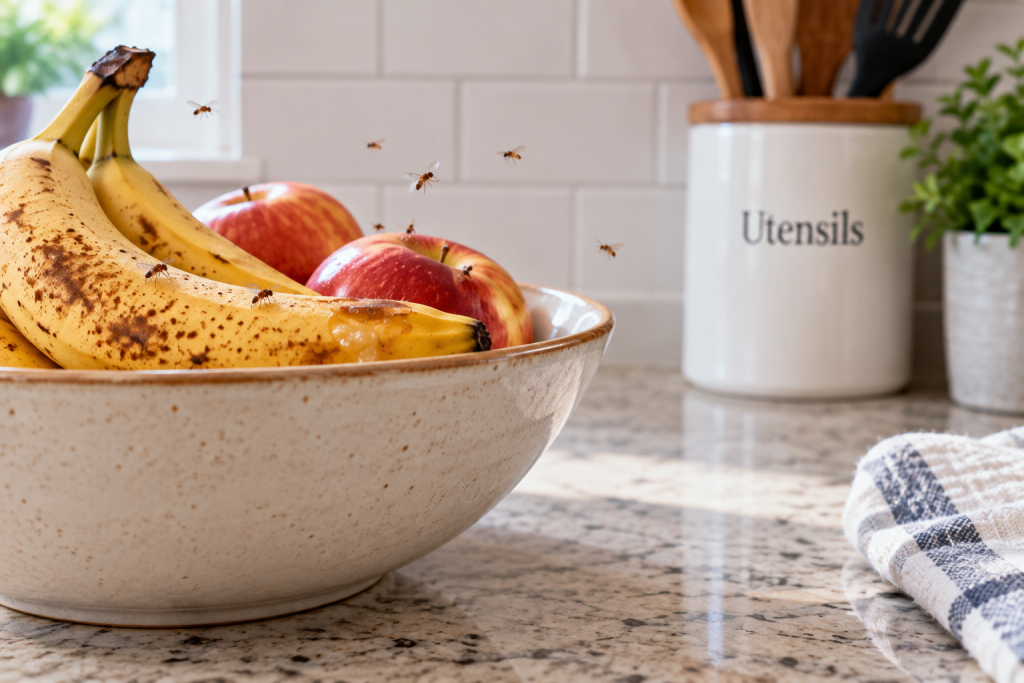
What Fruit Flies Are Attracted To
Fruit flies are drawn to fermenting or decaying organic material. In a kitchen, that often means overripe produce, spilled drinks, food waste, or residue that has been overlooked rather than an obviously dirty room.
Common attractants include:
- Overripe or damaged fruit
- Fermenting produce
- Spilled juice
- Wine or beer residue
- Sugary drink residue
- Food waste
- Trash and recycling
- Compost
- Sticky organic residue
- Produce stored out of sight
A fruit-fly problem can develop in an otherwise clean home if one small source remains available long enough.
Start by Finding the Source
The visible adult flies are usually only the most noticeable part of the problem. Lasting control depends on locating the material they are feeding on or reproducing around.
Start where the flies are most active. If most of them hover around one counter, cabinet, trash area, or produce bowl, inspect that area before cleaning the entire kitchen at random.
Check the obvious sources first
Look closely at:
- Fruit bowls
- Produce bags
- Onions and potatoes stored in cabinets
- Trash cans
- Recycling bins
- Compost containers
- Empty bottles and cans
- Spilled beverages
- Forgotten food
- Food residue beneath or beside appliances
- Mop buckets or cleaning containers with organic residue
You are looking for fermenting, leaking, decaying, or sticky organic material.
Look beyond the countertop
Do not stop after removing the fruit bowl. A damaged piece of produce may be hidden beneath other items, inside a grocery bag, at the back of a pantry shelf, or in a cabinet where onions or potatoes are stored.
Also check beneath accessible appliances and around trash or recycling areas for dried spills, sticky liquid, or food residue.
Check Produce Carefully
Room-temperature produce deserves a close inspection because fruit flies can be attracted to bruised, split, leaking, or overripe items.
Check bananas, apples, peaches, tomatoes, onions, potatoes, and other produce kept outside the refrigerator.
Lift items rather than inspecting only what is visible from above. Fruit can leak underneath other produce, and onions or potatoes may deteriorate inside bags without being noticed.
Discard produce that is spoiled or actively decaying. If an item is still usable but very ripe, refrigerate it when appropriate for that food or use it promptly.
One overlooked piece of produce can keep activity going after the rest of the kitchen has been cleaned.
Check Trash, Recycling, and Compost
Removing a trash bag does not always remove the source. Sticky residue can remain on the sides or bottom of the container, beneath the liner, or on the floor nearby.
Inspect for:
- Liquid or food residue inside the bin
- Sticky bottles and cans
- Food packaging with residue
- Spills beneath or behind containers
- Compost pails that are not being emptied often enough
Wash contaminated containers using normal household cleaning methods suitable for the surface. Rinse recycling when practical and remove residue from the surrounding area.
Do not mix household cleaning chemicals. Use one appropriate cleaner at a time and follow its directions.
Clean the Source Area
Once you find a likely source, remove it and clean the immediate area so fermenting residue does not remain behind.
Discard spoiled food, wipe sticky surfaces, clean spills, and wash containers that held leaking or decaying material.
Pay attention to seams, corners, bin bottoms, shelf edges, and the floor around the source. The goal is to physically remove the food and organic residue, not to apply stronger chemicals.
What About Kitchen Drains?
Small flies near a sink do not automatically mean the drain is the source.
Fruit flies may feed around residue near sink areas. However, flies that repeatedly seem to emerge directly from a drain may be a different pest, such as drain flies.
Fruit flies are typically small and associated with fruit, fermentation, beverages, and food residue. Drain flies are usually more fuzzy or moth-like and are commonly linked with organic buildup in wet drain areas.
Before treating a drain as the source, make sure the insect and activity pattern actually fit.
If the flies seem to be emerging directly from a drain and look fuzzy or moth-like, see our guide on how to get rid of drain flies safely.
Reduce Food Sources While the Problem Clears
After the main source is removed, temporarily make other food sources harder for the remaining adult flies to reach.
Useful steps include:
- Refrigerating ripe produce when appropriate
- Discarding overripe fruit
- Covering or securely storing produce
- Wiping beverage spills promptly
- Emptying food waste more frequently
- Cleaning sticky recycling residue
- Managing compost containers closely
This does not require a perfectly sterile kitchen. The aim is to remove easy-to-ferment and sugary sources.
Can Fruit Fly Traps Help?
Traps can help catch adult flies and show whether activity is declining after the source has been removed.
What traps cannot do is remove spoiled produce, clean recycling residue, or eliminate another hidden breeding source. If adult flies keep appearing in large numbers, adding more traps is less useful than inspecting again for material you may have missed.
Treat trapping as a supporting tool rather than the main solution.
If you want to compare trap options, our fruit fly trap guide explains the main types, where they fit best, and what they can and cannot do.
How Long Does It Take to Get Rid of Fruit Flies?
Fruit flies may remain visible for a while after the main source has been removed. Adult flies already present do not disappear the moment the food or breeding material is cleaned up.
What matters is the trend. Activity should decline as the source disappears and no new material supports the problem.
If the number of flies stays high or rebounds, inspect again. Another piece of produce, sticky container, food spill, compost source, or other organic material may still be available.
Avoid expecting an overnight result or relying on a fixed timeline.
Why Fruit Flies Keep Coming Back
Recurring fruit flies usually mean the source has not been fully eliminated or a new source has appeared.
Common reasons include:
- Hidden produce remains
- Trash or recycling residue was missed
- A beverage spill was not fully cleaned
- Compost remains accessible
- Ripe produce is continually left exposed
- Another food source is present
- The insect is not actually a fruit fly
Repeated recurrence is a reason to diagnose again rather than immediately use stronger pest-control products.
Fruit Flies vs. Other Small Flying Pests
Fruit flies vs. drain flies
Fruit flies are commonly associated with fruit, fermentation, beverages, and food residue. They are typically small and often tan or brownish.
Drain flies tend to look fuzzy or moth-like and are more strongly associated with wet organic buildup in drains or similar damp areas.
If the flies appear to come directly from a drain, reconsider the source before continuing fruit-fly control.
Fruit flies vs. fungus gnats
Small flies concentrated around houseplants may be fungus gnats instead.
Fungus gnats are associated with moist potting soil rather than fermenting kitchen food. If activity is strongest at plant pots, inspect the soil and watering conditions instead.
A Practical Fruit Fly Control Sequence
Step 1: Find where activity is greatest
Watch where the flies gather most often. Use that area as the starting point for your inspection.
Step 2: Inspect produce and food sources
Check fruit bowls, produce bags, pantry vegetables, forgotten food, and any material that is bruised, leaking, fermenting, or decaying.
Step 3: Check trash, recycling, and compost
Inspect containers as well as their contents. Look for sticky residue, spills, bottles, cans, and food waste.
Step 4: Remove spoiled or fermenting material
Discard the food or organic material supporting the activity instead of simply moving it elsewhere.
Step 5: Clean nearby residue
Wipe spills, wash contaminated containers, and clean the surfaces beneath or around the source.
Step 6: Store vulnerable foods more securely
Refrigerate ripe produce when appropriate, cover food, and reduce access to sugary or fermenting material.
Step 7: Use traps only as support
Use an appropriate trap if you want to reduce adult numbers or monitor whether activity is declining, but keep focusing on source removal.
Step 8: Reinspect if activity stays high
Return to hidden produce, recycling, trash, spills, compost, pantry storage, and other overlooked areas if the flies do not decline.
When Persistent Activity Needs a Closer Look
Reconsider the diagnosis if activity continues despite a thorough source inspection and cleanup.
A closer look is especially useful when flies seem to emerge from drains, cluster around houseplant soil, continue in large numbers without an obvious food source, or appear to be associated with material you cannot safely access.
If you cannot locate the source or confidently identify the insect, professional pest identification can help prevent repeated treatment of the wrong problem.
Final Thoughts
The most reliable way to get rid of fruit flies is to find the fermenting food or organic material supporting them and remove it. Clean the surrounding residue, store vulnerable foods more carefully, manage trash and recycling, and watch whether adult activity declines.
Traps can help with the flies you see, but source removal is what stops the cycle. If activity stays high, inspect again before reaching for stronger control methods—the remaining source may simply be somewhere you have not checked yet.