
basement wall sealer: when it helps, when it doesn’t, and how to choose
A basement wall sealer can help protect sound concrete or masonry, reduce minor moisture movement in some conditions, and create a cleaner or more finished surface. It cannot reliably fix active water seepage, groundwater pressure, recurring leaks through cracks or joints, or structural foundation problems.
Before choosing a product, determine whether the wall is simply damp or whether liquid water is actually entering the basement. That distinction matters more than the label on the can.
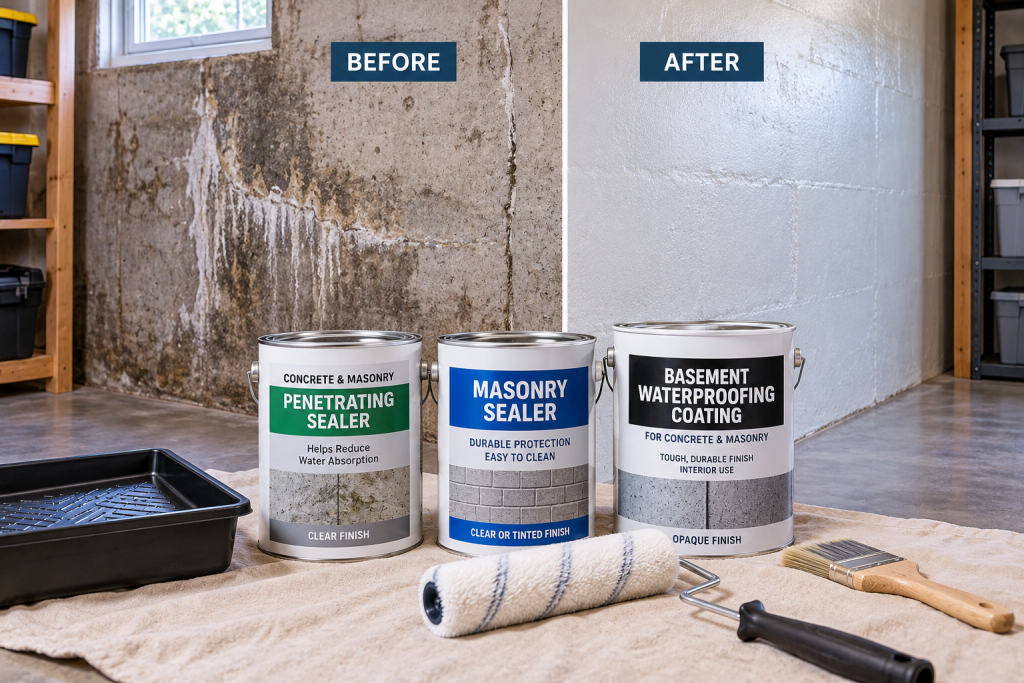
| Wall condition or goal | Product approach to consider | Main limitation |
|---|---|---|
| Bare masonry, natural appearance desired | Penetrating treatment | Not intended to hide defects or stop active leaks |
| Sound wall, clear or decorative surface film desired | Film-forming sealer | Adhesion and trapped moisture can be concerns |
| Sound porous masonry, opaque waterproofing finish desired | Masonry waterproofing coating | Surface preparation and moisture conditions are critical |
| Peeling paint or recurring efflorescence | Diagnose and prepare first | New coating may fail over an unstable surface |
| Active seepage or water through cracks | Diagnose water source | A coating is not the primary repair |
Identify the Moisture Source Before Sealing the Wall
A basement wall can look damp for several reasons. Humid indoor air may condense on a cool wall, moisture vapor may move through masonry, or liquid water may be entering from the soil side of the foundation.
Those conditions should not automatically receive the same treatment.
A wall sealer may be reasonable when the masonry is structurally sound, and the goal is limited moisture resistance, surface protection, easier cleaning, or a particular appearance.
It is the wrong starting point when you see:
- Water actively dripping or running from the wall
- Recurring seepage through cracks or joints
- Water entering where the wall meets the floor
- Significant water after rain
- Standing water in the basement
- Cracks accompanied by displacement, bowing, or other movement
Those symptoms call for diagnosis of the water-entry or structural problem before coating the surface.
Do not work around standing water when electrical outlets, appliances, wiring, panels, or other energized equipment may be involved. Stay out of the water if electrical safety is uncertain.
If the wall is actively damp or showing recurring seepage, see our guide to water seeping through a basement wall for common entry paths and next steps before choosing a coating.
The Main Types of Basement Wall Sealers and Coatings
The word “sealer” is used broadly, so two products sold for masonry can behave very differently. Look at what the product is designed to do rather than relying on the word on the front label.
Penetrating masonry treatments
Penetrating products soak into porous masonry instead of leaving a thick visible coating on top. Depending on their chemistry and intended use, they may reduce liquid-water absorption while allowing much of the wall’s natural texture and appearance to remain visible.
These treatments can make sense when you have bare, compatible concrete or masonry and want protection without an opaque painted finish.
They are not universal basement waterproofers. A penetrating treatment should not be expected to bridge meaningful cracks, cover damaged surfaces, or stop active groundwater from entering through a foundation wall.
Compatibility is especially important. Some penetrating treatments require bare, absorbent masonry and will not penetrate correctly through paint, previous film-forming sealers, or other surface treatments.
Film-forming sealers and coatings
Film-forming products create a layer on the surface of the wall. Depending on the product, the finish may be clear, tinted, or opaque.
The surface film can change appearance, make the wall easier to clean, and provide a degree of surface protection. The tradeoff is that the coating depends heavily on adhesion to the material beneath it.
If that surface is dusty, deteriorated, contaminated, damp beyond the product’s limits, or covered with weak old paint, the new film may peel or delaminate from the underlying material.
Film-forming products also vary widely in how readily water vapor can pass through them. Never assume that a clear or thin-looking coating is automatically “breathable.” Check the manufacturer’s information for the specific product.
Waterproofing-style masonry coatings
Waterproofing-style coatings are generally thicker, opaque products specifically intended for concrete or masonry exposed to moisture. Some are designed for below-grade basement walls and may carry manufacturer claims based on defined test conditions.
They can be appropriate on a properly prepared, compatible wall when the moisture conditions fall within the product’s intended use.
They should not be treated as a cure-all. Even a product marketed for waterproofing has substrate, preparation, moisture, and application requirements. If water is actively flowing through a crack, joint, or foundation defect, coating over the inside surface may not address the cause.
Painted Versus Bare Masonry Changes Your Options
Bare concrete or concrete block gives you the widest range of product choices because a compatible treatment can bond to or penetrate the masonry itself.
A previously painted basement wall adds another layer to the decision.
Penetrating treatments generally cannot do their intended job through an existing paint film. Some surface coatings may be approved over sound existing paint, but the new coating is only as secure as the old coating underneath it.
Inspect painted walls for:
- Peeling or blistering
- Flaking material
- Chalky or powdery surfaces
- Repeated mineral deposits
- Areas where paint releases easily
- Damp spots beneath or around failed coating
If the old paint is losing adhesion because moisture is moving through the wall, covering it with another product does not correct that condition.
Avoid aggressive sanding or grinding of an older unknown coating simply to prepare the wall. Surface preparation can create significant dust, and older coatings may require additional precautions. Follow the product instructions and use professional help when the existing material cannot be safely identified or prepared.
Concrete Block and Poured Concrete Behave Differently
Concrete block walls contain many mortar joints and tend to have a more textured, porous surface. Product application and coverage can therefore differ substantially from a smoother poured-concrete wall.
The mortar joints also deserve attention because they may reveal moisture patterns or deterioration that are less obvious on the face of the block.
Poured concrete usually has fewer joints and may be smoother and less absorbent. Very smooth or previously treated concrete may not provide the surface profile or porosity required by certain coatings.
Do not assume a product labeled for “concrete” is automatically suitable for every block, mortar, poured-concrete, painted, or previously sealed surface. Check the approved substrates and preparation requirements on the current technical information.
Surface Condition Can Determine Whether the Sealer Works
Even an appropriate basement wall sealer can fail when applied over an unsuitable surface.
The wall generally needs to be sound enough to hold the treatment. Loose material, dirt, dust, oils, deteriorated coatings, and other contamination can interfere with adhesion or penetration.
Efflorescence is another important clue. These white or crystalline mineral deposits form when moisture moving through masonry carries soluble salts to the surface.
Removing the visible deposit does not necessarily remove the moisture source.
If efflorescence quickly returns, especially after wet weather, determine why moisture continues moving through the wall before applying another coating. Continuing moisture and mineral movement can interfere with finishes and may lead to recurring coating failure.
The same principle applies to peeling paint. If the old coating failed because the wall remained wet, scraping loose paint and applying a new coating may only restart the cycle.
Breathability and Moisture Vapor Matter
Masonry can contain and transmit moisture even when you cannot see liquid water.
Some penetrating treatments are designed to repel liquid water without creating a continuous surface film, allowing water vapor to continue moving through the masonry. Some specialized coatings also have defined vapor-permeability characteristics.
Other coatings create a more restrictive barrier.
Neither approach is automatically correct for every basement. The right choice depends on the wall construction, moisture source, existing treatments, and the product’s intended use.
Be cautious with vague marketing terms such as “breathable,” “waterproof,” or “moisture resistant.” Look for the manufacturer’s description of the product’s actual use, compatible substrates, and limitations rather than assuming those terms mean the same thing across brands.
How to Choose a Basement Wall Sealer
Start with the wall rather than the product shelf.
Decide whether the wall is actually suitable for coating
The wall should not have unresolved active seepage, substantial deterioration, or structural movement.
A wall that becomes slightly damp or shows limited vapor-related moisture may be a reasonable candidate for certain products. A wall with water running through it needs a different diagnosis.
Identify the existing surface
Determine whether you have bare poured concrete, bare concrete block, painted masonry, or masonry that may already contain a clear treatment.
That information immediately eliminates products that require a bare absorbent surface.
Decide what appearance you want
If you want the masonry to retain its natural look, a compatible penetrating or clear treatment may be preferable.
If you want a uniform finished basement appearance, an opaque masonry coating may make more sense.
Remember that appearance and moisture performance are separate considerations. A product that gives you the preferred finish still needs to be suitable for the wall conditions.
Compare the technical information
Before buying, check the manufacturer’s current documentation for:
- Approved wall materials
- Whether existing paint is allowed
- Whether bare masonry is required
- Moisture-condition limitations
- Surface-preparation requirements
- Interior and below-grade suitability
- Vapor-related characteristics when relevant
- Required ventilation and safety precautions
- Compatibility with any planned topcoat
Do not substitute specifications from a similar-looking product. Formulations and approved uses can differ even within the same brand.
When a Basement Wall Sealer May Be a Reasonable Choice
A sealer or coating is most defensible when the wall is sound, the moisture source is understood, and the product is being asked to perform a job it was actually designed to do.
Good candidates may include a bare masonry wall needing surface protection, a mildly damp wall within the limits of a compatible masonry coating, or a basement where the main goal is a cleaner finished appearance after moisture problems have been addressed.
A sealer can also be useful as part of a broader moisture-management approach, but it should not be expected to compensate for water continuously reaching the foundation.
When to Skip the Sealer and Investigate Further
Do not make another coating your first response when you have:
- Active water seepage
- Recurring water after rain
- Water entering through a crack
- Groundwater appearing at the wall-floor joint
- Repeated coating failure
- Persistent or rapidly returning efflorescence
- Significant wall deterioration
- Bowing, displacement, or changing foundation cracks
A waterproofing professional may be appropriate for recurring water entry or conditions involving foundation drainage and groundwater.
Cracks associated with movement, displacement, or other structural symptoms deserve evaluation by an appropriate foundation or structural professional rather than a DIY coating repair.
When using any basement coating, also follow the label for ventilation, personal protection, ignition precautions, and other safety requirements. Products can differ significantly in solvents, fumes, and handling requirements, so do not assume the precautions for one sealer apply to another.
If the moisture problem appears broader than the wall surface itself, compare the main basement waterproofing options before treating a sealer as the primary fix.
Final Thoughts
A basement wall sealer works best when you choose it for a specific, realistic purpose: protecting compatible masonry, reducing limited moisture movement within the product’s capabilities, or providing the finish you want on a sound wall.
Start by identifying the moisture source, wall material, existing finish, and surface condition. Then compare products based on compatibility and limitations rather than choosing whichever one makes the strongest waterproofing claim. If water is actively entering the basement or the foundation shows structural movement, diagnose that problem before putting a coating over it.