Best Furnace Filters for Homeowners: How to Choose the Right One
The best furnace filters are not always the most expensive ones on the shelf, and choosing the right filter for your home is usually more about fit, airflow, and everyday needs than buying the highest rating you can find.
That is where many homeowners get tripped up.
A furnace filter looks simple, but it plays an important role in how your heating and cooling system works. The wrong filter can lead to weak airflow, more dust problems, and extra strain on your HVAC system. The right filter can help keep the system cleaner while still allowing air to move the way it should.
This guide breaks the decision down in plain English. You will learn what a furnace filter does, how filter types differ, what MERV ratings actually mean, and how to choose the best option for your home without overbuying.
What a furnace filter actually does
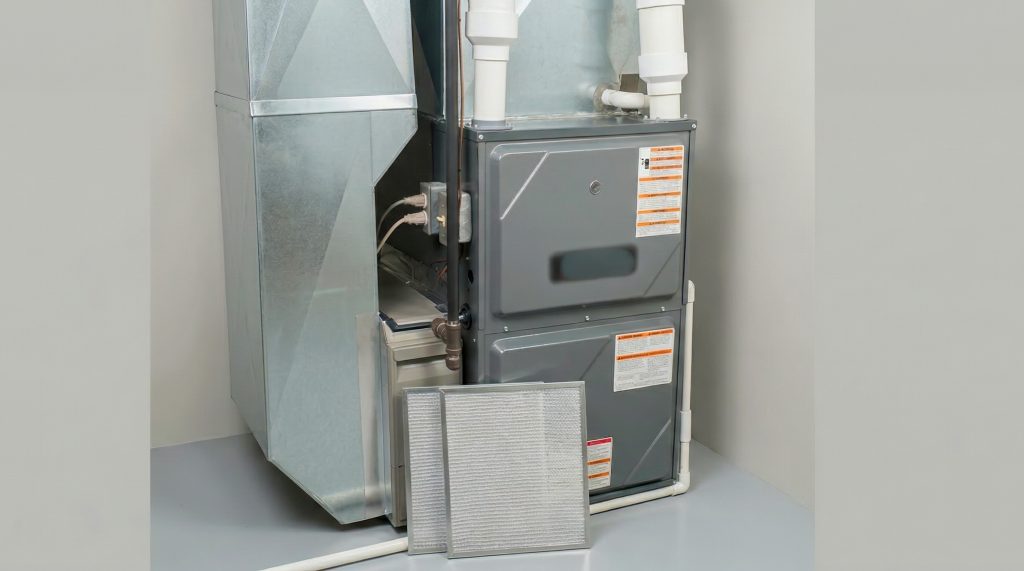
A furnace filter catches dust, lint, pet dander, and other airborne particles as air moves through your HVAC system.
In most homes, the filter is there first to protect the equipment. It helps keep dirt from building up on important internal parts like the blower and evaporator coil. Those parts need to stay reasonably clean for the system to work well.
A furnace filter can also help with indoor air cleanliness, but that depends on the type of filter you use and whether your system can handle it properly.
Many homeowners assume the filter’s job is mainly to “clean the air.” That is only part of the story. The bigger day-to-day job is protecting the system while allowing enough airflow for heating and cooling.
Keeping airflow and internal parts cleaner can also support long-term system performance, which is one reason regular filter changes matter when you are thinking about how long a furnace usually lasts.
That is why the best filter is not always the one that traps the tiniest particles. If it restricts airflow too much, it can create other problems.
Why the correct filter size matters
Size matters more than many homeowners realize.
A filter that is too small may let air slip around the sides instead of passing through the filter material. That means less protection for the system.
A filter that is too large may not fit properly at all, and forcing it into place can damage the frame or leave gaps.
Most filters are labeled with nominal sizes like 16x20x1 or 20x25x1. Those numbers are usually rounded. The actual size may be slightly different.
Before buying replacements, check the size printed on the current filter. It is also smart to look at the filter slot or measure the old filter if the printed label is hard to read.
Thickness matters too. A 1-inch filter and a 4-inch filter are not interchangeable unless your system is designed for that depth.
Using the correct size helps the filter seal better, fit better, and perform the way it is supposed to.
Fiberglass vs pleated filters
Homeowners usually run into two common filter styles: fiberglass and pleated.
Fiberglass filters are typically the cheaper option. They are usually flat, light, and basic. They catch larger particles, but they do not do much for finer dust or dander.
Pleated filters use folded material to create more surface area. That usually lets them catch more particles than a basic fiberglass filter. In many homes, pleated filters are the more practical choice because they do a better job without being overly complicated.
That said, not every pleated filter is automatically better for every system. Some are designed to trap much smaller particles, and that can also make airflow more restrictive if the system is not built for it.
In simple terms, the difference usually looks like this:
- Fiberglass filters are basic and low-cost.
- Pleated filters usually capture more dust and common household particles.
- Fiberglass filters often allow easier airflow, but they offer less filtration.
- Pleated filters are often a better everyday balance for homeowners, especially in homes with pets or more dust.
- Very restrictive pleated filters are not always the best choice for older or airflow-sensitive HVAC systems.
For many households, a standard pleated filter is the sweet spot.
Understanding MERV ratings in plain English
MERV stands for Minimum Efficiency Reporting Value.
That sounds technical, but the simple version is this: a MERV rating tells you how effectively a filter captures different sizes of airborne particles.
In general, a higher MERV rating means finer filtration. The filter can trap smaller particles than a lower-rated one.
But higher is not automatically better.
A filter that captures more particles can also make it harder for air to move through the system. If the furnace or air handler is not designed for that level of resistance, airflow can drop.
Low airflow can lead to comfort problems and can also put extra strain on the equipment.
Here is a practical way to think about common MERV ranges:
- MERV 1 to 4: very basic filtration, often found in simple fiberglass filters
- MERV 5 to 8: basic to moderate filtration, often a reasonable choice for many homes
- MERV 8 to 11: stronger everyday filtration, often used in homes that want more dust control
- MERV 11 to 13: better particle capture, but not every system should use it without checking airflow needs first
For many homeowners, the right answer is not the highest MERV available. It is the highest MERV your system can handle without airflow problems.
Why you should not automatically buy the highest MERV filter
This is one of the most common furnace filter mistakes.
It is easy to assume that the highest-rated filter must be the best one for every home. In reality, some HVAC systems are designed to work well with moderate filtration, not highly restrictive filters.
If airflow becomes too restricted, you may notice problems like:
Too much filter restriction can contribute to issues like:
- Weak airflow at vents
- Rooms that feel harder to heat or cool
- A furnace that runs hotter than it should
- An air conditioner that struggles with airflow
- More system strain over time
- Shorter filter life if the filter loads up quickly
This does not mean higher-MERV filters are bad. It means they need to match the equipment and the home’s needs.
If you are unsure what your system can handle, check the equipment manual or ask an HVAC professional before jumping to a much higher MERV level.
When a basic filter is enough
Some homes do just fine with a simpler filter.
If your main goal is protecting the equipment, your home does not have unusual dust or pet issues, and nobody is specifically trying to improve particle capture, a basic pleated filter in a moderate MERV range is often enough.
A basic option may also make sense if you have an older HVAC system that is sensitive to airflow restriction.
A more basic filter may be enough when:
- The system has no known airflow issues
- You mostly want to protect the furnace and AC equipment
- Your home has average dust levels
- You do not have multiple indoor pets
- No one in the home is relying on higher filtration for comfort reasons
- Your HVAC contractor has advised against highly restrictive filters
For many households, “good enough and consistent” works better than “high performance on paper.”
When a higher MERV filter may make sense
A higher MERV filter may be worth considering if your system can handle it and your household has a reason for wanting better everyday filtration.
Homes with pets, heavier dust, or homeowners who want better capture of smaller airborne particles often look at higher-rated pleated filters.
That said, it is still important to stay realistic. A furnace filter is not a cure-all. It may help reduce some particles moving through the system, but it will not solve every indoor air issue and should not be treated like a medical device.
A higher MERV filter may make sense when:
- Your HVAC system is designed to handle it
- You want better everyday dust and particle capture
- You have pets that add dander and hair to the home
- Your home tends to collect noticeable dust
- You have discussed airflow compatibility with an HVAC professional
- You are using the filter as part of a broader indoor air quality plan, not the only solution
For many homes, moving from a very basic filter to a moderate pleated filter makes more sense than jumping straight to the highest rating on the shelf.
Best furnace filters for different homeowner needs
When people search for the best furnace filters, they are usually looking for the right category, not just a random product name.
For most homeowners, general filter types are more helpful than brand-specific recommendations.
Best furnace filters by category
Best overall for most homeowners
A pleated filter in a moderate MERV range is usually the best overall choice for most homes.
This type of filter gives you better everyday particle capture than a basic fiberglass filter while still being practical for many residential systems. It is often a good balance of protection, performance, and availability.
Best budget option
A low-cost fiberglass filter or an entry-level pleated filter can work as a budget option, depending on your system and priorities.
If budget is your top concern, a basic filter may be acceptable for short-term equipment protection. But many homeowners find that an affordable pleated filter is a better long-term value because it usually captures more dust without costing dramatically more.
Best for allergies or better air filtration
A higher-MERV pleated filter may make sense for homes that want stronger particle capture, but only if the HVAC system can handle it.
This is where homeowners need to be careful. A better filtration goal is reasonable. Automatically buying the most restrictive filter is not.
Best for homes with pets
A pleated filter in the moderate to moderately high range is often a practical choice for homes with pets.
Pet hair and dander can add up quickly. A better pleated filter may help capture more of that material before it builds up inside the system. The key is changing the filter often enough, because pet homes tend to load filters faster.
Common mistakes homeowners make when buying furnace filters
Buying the wrong filter is easy because the packaging can make everything sound like an upgrade.
Common furnace filter buying mistakes include:
- Buying the wrong size
- Assuming the highest MERV rating is always best
- Forgetting to check whether the system can handle a more restrictive filter
- Choosing only by price without thinking about airflow or household needs
- Replacing a pleated filter with a very basic fiberglass filter without understanding the tradeoff
- Ignoring the filter thickness
- Waiting too long to replace a dirty filter
- Installing the filter backward instead of following the airflow arrow
- Buying in bulk before confirming the filter actually fits well
A little extra attention at the store can save a lot of frustration later.
How often to check and replace a furnace filter
There is no one replacement schedule that fits every home.
A basic rule is to check the filter regularly and replace it when it is visibly dirty or loaded with dust. Homes with pets, more occupants, or heavier HVAC use often need more frequent changes.
Many 1-inch filters need attention more often than thicker media filters, but actual timing depends on the filter type, the season, and how much air is moving through the system.
A practical homeowner routine looks like this:
- Check the filter about once a month
- Replace it when it looks dirty or airflow seems reduced
- Check more often during heavy heating and cooling seasons
- Check more often if you have pets, renovation dust, or wildfire smoke concerns in your area
- Do not rely only on the date printed on the package
A regular check matters more than chasing a perfect calendar rule.
How to know you may have the wrong filter
Sometimes the filter choice itself creates clues.
If you recently switched filters and started noticing weaker airflow, rooms that are not heating or cooling evenly, or a system that seems to run differently, the filter may be too restrictive or not fitting correctly.
A clogged or overly restrictive filter can also contribute to airflow problems, so our guide on furnace blowing cold air may help if your system is running but heat output feels weak.
A filter that stays almost spotless for a long time can also be a clue that it is very basic or that air is bypassing around it because of a bad fit.
Signs your filter choice may need a second look include:
- Airflow at the vents feels weaker than usual
- The filter loads up very fast
- The filter does not fit snugly in the slot
- The HVAC system seems to run longer after a filter change
- Dust problems are not improving at all with a better filter
- The filter frame bends or collapses in use
When in doubt, take the old filter with you when buying replacements and stick close to the system’s intended size and reasonable filtration level.
Conclusion
Choosing the right furnace filter does not have to be complicated. For most homeowners, the best option is a properly sized pleated filter that offers a good balance between filtration and airflow.
The most expensive filter is not always the smartest choice. A filter that fits correctly, matches your system, and gets replaced on time is usually better than a high-rated filter that restricts airflow or gets ignored for months.
If you are unsure where to start, a moderate pleated filter is often the most practical everyday choice. From there, you can adjust based on your home, your pets, your dust levels, and what your HVAC system can comfortably handle.