Can You Plug an Air Conditioner Into an Extension Cord?
Can you plug an air conditioner into an extension cord? In most cases, no. The safer standard is to plug an air conditioner directly into a properly rated wall outlet. Only use an extension cord if the air conditioner manufacturer specifically allows it and the cord is heavy-duty, grounded, appliance-rated, and matched to the unit’s electrical needs.
Air conditioners draw a lot of power, especially when the compressor starts. Thin extension cords, power strips, cube taps, adapters, and damaged cords can overheat and create fire risks. If the cord, plug, outlet, or wall feels warm, smells burnt, buzzes, sparks, flickers lights, or trips a breaker, stop using the setup right away.
This is not a DIY wiring project. If the air conditioner cannot safely reach the right outlet, call a licensed electrician.
Can You Plug an Air Conditioner Into an Extension Cord?
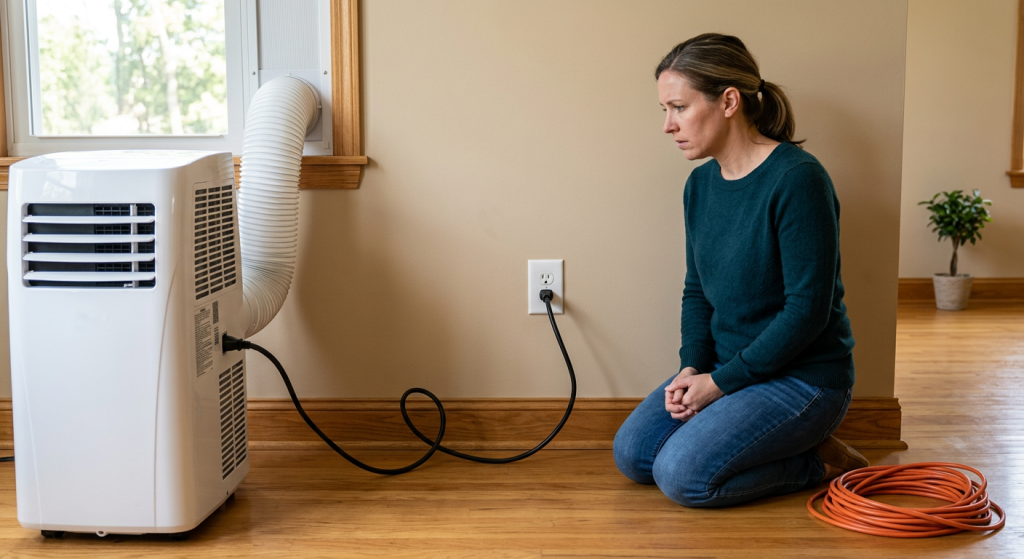
Most air conditioners should plug directly into a wall outlet. That is the safest setup because the unit’s power cord is designed for the appliance, and the outlet should be matched to the electrical load.
An extension cord adds another connection point and more wire length. That can increase heat, especially if the cord is too thin, too long, damaged, or not rated for the appliance. With a high-draw appliance like an air conditioner, that extra heat matters.
Some manuals may allow a specific type of temporary extension cord. Others may clearly say not to use one. Always follow the manufacturer’s manual and the label on the unit. If the manual says not to use an extension cord, do not use one.
If the air conditioner does not reach the outlet, do not solve the problem with a random cord from the garage. Do not use a power strip or adapter. Move the unit to a safer outlet if possible, or ask an electrician about safer options.
| Setup type | Risk level | Safest next step |
|---|---|---|
| Directly into proper wall outlet | Lowest common risk | Use if outlet and cord stay cool |
| Heavy-duty appliance cord allowed by manual | Higher temporary risk | Use only if properly rated and watched closely |
| Thin household extension cord | High risk | Do not use |
| Power strip, cube tap, or adapter | Very high risk | Do not use |
Why Air Conditioners Need Extra Electrical Caution
Air conditioners are high-draw appliances. They use more power than many small household items, and they often need extra power when the compressor starts. That startup load can stress weak cords, loose outlets, poor connections, and overloaded circuits.
Window air conditioners, portable air conditioners, and larger room units can all create electrical demand that small cords are not built to handle. Even if the unit turns on, the setup may still be unsafe. A cord can heat up slowly behind furniture, under a rug, or near curtains before anyone notices.
The size of the air conditioner also matters. A small bedroom unit may draw less power than a larger unit cooling a living room, but both still deserve caution. Do not assume “small” means safe with any extension cord.
The outlet matters too. A loose outlet, cracked wall plate, warm plug, buzzing sound, or repeated breaker trip is a warning sign. The air conditioner may be exposing a problem that was already there.
A breaker that trips is not just annoying. It means the circuit is overloaded or reacting to a problem. Do not keep resetting it and trying again.
Extension Cord and Power Strip Risks
Extension cords are not all the same. A thin indoor cord made for lamps is not safe for an air conditioner. Long cords can add resistance and heat. Damaged cords can expose wires or create poor contact. Loose plug connections can heat up while the air conditioner runs.
Power strips are even more concerning. Many are made for electronics, chargers, lamps, or light office use. They are not meant for high-draw appliances. Plugging an air conditioner into a power strip can overload the strip, heat the plug, or trip the breaker.
Cube taps and multi-outlet adapters are also unsafe for this use. They let you plug more items into the same outlet, but they do not increase the outlet’s safe capacity. Adding more devices can make the problem worse.
Do not use these with an air conditioner:
- Thin household extension cords
- Power strips or surge protectors
- Cube taps or multi-outlet adapters
- Two-prong adapters or plug converters
- Damaged, cracked, frayed, or taped cords
- Cords run under rugs, furniture, doors, or bedding
Do not bypass a grounded plug to make it fit an older outlet. If the plug does not fit the outlet, stop. The plug shape is part of the safety design. Forcing it to work removes protection and can create a serious hazard.
If a manual allows a temporary extension cord, the cord should be grounded, heavy-duty, appliance-rated, and matched to the air conditioner’s label. Keep it as short as practical and fully visible so you can notice heat or damage. But direct wall outlet use is still the safer standard.
If you are comparing power products for lighter electronics, this guide on surge protector vs power strip explains the difference and where each one fits safely.
Safer Checks Before Using an Air Conditioner
Before running an air conditioner, make a few simple checks from the outside. These checks do not involve opening outlets, testing wires, or doing electrical work.
First, read the air conditioner label and manual. Look for the required voltage, amperage, and any warnings about extension cords. If the manual says to plug directly into a wall outlet, follow that.
Next, look at the outlet and plug. The plug should fit firmly. It should not sag, wiggle, or fall out. The wall plate should not be cracked, scorched, loose, or discolored. The cord should not be pinched, frayed, melted, or taped.
Check for safe outside clues:
- The unit can reach the outlet without stretching the cord
- The plug fits firmly and fully into the outlet
- The outlet, plug, and cord stay cool during use
- The lights do not flicker when the unit starts
- The breaker does not trip when the air conditioner runs
- The area around the cord is dry, open, and uncovered
If you use a portable air conditioner, keep the cord where you can see it. Do not hide it under rugs or behind heavy furniture. Heat trapped around a cord can make a bad setup worse.
If the air conditioner has its own built-in safety plug, do not bypass it. Do not cut it off, replace it, or use an adapter to defeat it. If the safety plug trips, follow the manufacturer’s guidance and stop using the unit if the problem repeats.
Warning Signs That Mean Stop Using It
Stop using the air conditioner setup if anything seems hot, damaged, loose, noisy, or unstable. Heat and odor are especially important because they may mean the cord, plug, outlet, or device is overloaded.
Stop using the setup if you notice:
- Warm or hot plug, cord, outlet, wall plate, or nearby wall
- Burning smell, melting plastic odor, smoke, or discoloration
- Buzzing, crackling, popping, sparks, or flickering lights
- Breaker trips when the air conditioner starts or runs
- Plug feels loose, slips out, or wiggles in the outlet
- Cord is frayed, pinched, cracked, melted, or covered
If the plug or outlet is hot, do not keep touching it to check. Turn off the air conditioner if you can do so safely. Unplug it only if the plug and outlet are cool, dry, and undamaged. If you see smoke, sparks, melting, or active burning, move away and call emergency services.
Do not keep trying the air conditioner in the same outlet. Do not move it to a power strip. Do not try a longer cord. Do not reset the breaker over and over.
A repeated warning sign means the setup is not safe.
If the air conditioner makes the breaker trip, this guide on breaker keeps tripping explains when repeated trips mean you should stop and call an electrician.
When to Call an Electrician
Call a licensed electrician if the air conditioner cannot reach a proper wall outlet without an unsafe cord setup. You should also call if the outlet feels warm, the plug fits loosely, the breaker trips, lights flicker, or you notice buzzing, burning smells, sparks, discoloration, or damage.
The electrician can check whether the outlet, circuit, and air conditioner load are safe for use. They can also tell you whether the room needs a different outlet location, a dedicated circuit, or another safe correction. That is not something to guess at with cords or adapters.
Call an electrician before using the air conditioner again if:
- The outlet or plug gets warm or hot
- The breaker trips when the unit runs
- The plug does not fit firmly
- The air conditioner requires a cord to reach power
- You smell burning or see discoloration
- The outlet is old, damaged, loose, or near moisture
When you call, explain the air conditioner type, where it is plugged in, whether an extension cord was used, and what warning signs you noticed. Mention breaker trips, heat, smell, flickering, buzzing, or damaged cords.
If there is smoke, fire, strong burning smell, or active sparking, leave the area and call emergency services instead of waiting for a regular appointment.
Final Thoughts
Most air conditioners should be plugged directly into a properly rated wall outlet. Extension cords, power strips, cube taps, and adapters can overheat when used with high-draw appliances.
Use the manual and label as your guide. If the manufacturer does not allow an extension cord, do not use one. If temporary cord use is allowed, the cord must be grounded, heavy-duty, appliance-rated, and matched to the unit.
Stop using the setup if you notice heat, burning smell, buzzing, sparks, flickering, tripped breakers, loose plugs, or damaged cords. If the air conditioner cannot safely reach the right outlet, call a licensed electrician instead of forcing an unsafe setup.