Dethatching vs Aeration: What’s the Difference?
Dethatching vs aeration comes down to the problem your lawn actually has. Dethatching removes excess thatch from above the soil, while core aeration relieves compaction by pulling small plugs of soil from the lawn.
A lawn can have one problem, the other, or both at the same time. Thick thatch often feels spongy, while compacted soil tends to feel hard and may drain poorly.
The right treatment depends on whether buildup above the soil or compaction below it is causing more of the trouble.
What thick thatch actually means
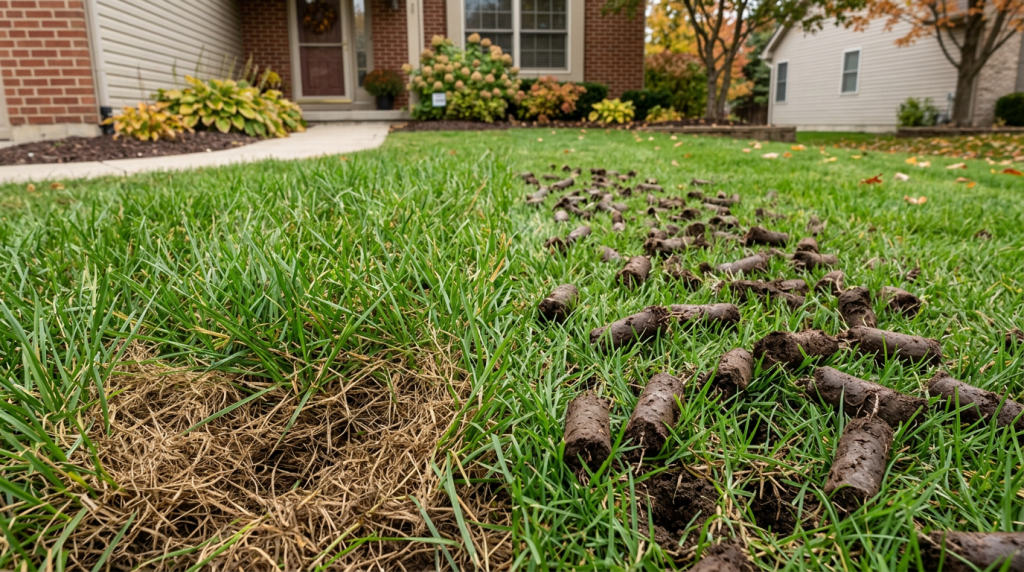
Thatch is the layer of dead and partly broken-down stems, roots, and other plant material that builds up between the green grass and the soil surface.
A little thatch is normal. In fact, a thin layer is not usually a problem. Trouble starts when thatch gets too thick and begins blocking water, air, and nutrients from moving into the soil the way they should.
In plain terms, thick thatch is usually a thatch layer that is more than about half an inch thick. At that point, grass roots may start growing into the thatch layer instead of growing down into the soil.
That can make the lawn more likely to suffer during heat, drought, and general stress.
Dethatching vs Aeration: What Each One Does
When comparing dethatching vs core aeration for thick thatch, the biggest difference is how each method works.
Dethatching is a more aggressive process. It uses a machine with vertical blades or tines to pull up and tear through the thatch layer so it can be removed from the lawn.
Core aeration is gentler. It uses hollow tines to remove small plugs of soil from the ground. This improves air flow, water movement, and root growth while also helping microbes break down some thatch over time.
Here is the simple difference
- Dethatching directly removes thick thatch
- Core aeration mainly relieves soil compaction
- Dethatching is rougher on the lawn
- Core aeration is usually easier for a lawn to recover from
- Dethatching creates a lot of loose debris that must be cleaned up
- Core aeration leaves soil plugs on the lawn that usually break down naturally
If your main problem is a heavy thatch layer, dethatching is often the more direct solution. If your main problem is hard, compacted soil, core aeration is usually the better first move.
Does Core Aeration Reduce Thatch?
Core aeration can help reduce mild to moderate thatch over time, but it does not directly remove a heavy thatch layer the way dethatching does.
By pulling soil plugs to the surface, core aeration can improve air movement and soil conditions that support natural decomposition of organic material. That makes it useful when compaction and moderate thatch occur together.
If the lawn has a clearly thick, dense thatch layer, dethatching is usually the more direct treatment.
Which one is usually better for thick thatch?
If the lawn truly has thick thatch, dethatching is usually the better tool because it removes more of the built-up material.
That said, some lawns do better with core aeration first or with a combination of both methods over time. Core aeration is often the better choice when the lawn has both mild to moderate thatch and compacted soil.
For many homeowners, the real answer is not “always dethatch” or “always aerate.” It is closer to this:
Use this rule of thumb
- Choose dethatching when the thatch layer is clearly thick and spongy
- Choose core aeration when the soil is hard and compacted, even if some thatch is present
- Consider both when you have a thick thatch layer and obvious compaction problems
- Avoid guessing if you are not sure what the lawn is dealing with
A lawn can have both problems at the same time. That is why a quick inspection matters before renting equipment.
Safe DIY checks before you decide
Before doing anything, take a small sample from the lawn so you can see what is happening below the grass blades.
Use a hand trowel or flat shovel to cut a small wedge out of the turf. Look at the layer between the green grass and the soil.
Check these things first
- Measure the brown, fibrous layer between the grass and soil
- See whether that layer is thin or clearly thicker than about half an inch
- Press on the lawn to see if it feels soft and spongy underfoot
- Push a screwdriver into the soil to see whether the ground feels hard and compacted
- Check whether water seems to run off instead of soaking in
- Look for shallow roots sitting mostly in the thatch layer
- Confirm that the grass is actively growing before doing major lawn work
These checks are safe for most homeowners and can help you avoid using the wrong machine.
Signs dethatching is the better choice
Dethatching is usually the better option when the built-up layer itself is the main issue.
Dethatching makes more sense when
- The thatch layer is thicker than about half an inch
- The lawn feels bouncy or spongy when you walk on it
- Water seems to hit the surface and move away instead of soaking down
- The grass has shallow roots and dries out quickly
- You can see a dense mat of old stems and roots above the soil
- The lawn is healthy enough to recover from a rougher treatment
Because dethatching is more aggressive, it can leave the lawn looking messy or thin for a while. That is normal, but it means timing matters.
Signs core aeration is the better choice
Core aeration is usually the better pick when the lawn is struggling more from compaction than from a heavy thatch layer.
Compaction means the soil has been pressed so tightly that water, air, and roots have a harder time moving through it.
Core aeration is often better when
- The soil feels hard and dense
- Rain or irrigation tends to puddle or run off
- Grass roots seem shallow even where thatch is not very thick
- The lawn gets heavy foot traffic
- The thatch layer is present but not extremely thick
- You want a less damaging treatment than dethatching
Core aeration can also help prevent future thatch problems because it improves the conditions that allow organic material to break down more naturally.
When you may need both
Some lawns with thick thatch also have compacted soil. In that case, one treatment may not fully solve the problem.
A lawn with heavy buildup above the soil and hard soil below it can struggle from both directions. The upper layer blocks water and air from getting in, while the compacted soil below makes it harder for roots to grow deeper.
You may need both if
- The thatch layer is thick and the soil is also hard
- The lawn feels spongy on top but firm underneath
- Water does not soak in well
- The grass has been declining for several seasons
- The lawn has a long history of heavy traffic or poor drainage
In tougher cases, homeowners sometimes start with core aeration to improve the soil and then dethatch if the thatch layer still needs more direct removal. In other cases, a lawn care professional may recommend the reverse order based on the grass type and lawn condition.
Best time to do this in a cool-season lawn
For most cool-season lawns, late summer to early fall is the best time for dethatching or core aeration.
That is usually when cool-season grasses are actively growing again and can recover more quickly. This includes common lawn grasses such as fescue, Kentucky bluegrass, and perennial ryegrass.
Spring can also work for core aeration in many lawns, but fall is often the safer and more reliable window for heavier work, especially if dethatching is needed.
The best timing is usually
- Late summer to early fall for the strongest recovery
- Spring for some aeration jobs if the lawn is actively growing
- Not during hot summer stress
- Not when the lawn is dormant or already badly weakened
Doing aggressive lawn work at the wrong time can leave the turf thin and vulnerable.
If timing is the part you are still unsure about, our guide on should you aerate a lawn in spring or fall will help you decide which season makes the most sense.
Safe DIY dethatching steps
If you decide dethatching is the right move, make sure the lawn is actively growing and able to recover.
A rented dethatching machine can be effective, but it can also be rough on the turf if used too deeply.
Follow these basic DIY steps
- Mow the lawn a little shorter than usual before starting
- Mark sprinkler heads, shallow lines, and hidden obstacles
- Set the machine to remove thatch without gouging deeply into the soil
- Make one careful pass first and check the results
- Rake up and remove the loosened debris
- Water and fertilize appropriately for recovery if needed
- Overseed thin areas if the lawn opens up too much
Expect a lot of debris. That is one reason dethatching feels like a bigger job than many homeowners expect.
Safe DIY core aeration steps
Core aeration is usually more forgiving, but it still works best when the soil is slightly moist rather than rock hard or muddy.
The goal is to pull out real soil plugs, not just punch holes.
Follow these basic DIY steps
- Water lightly a day or two ahead if the soil is very dry
- Use a true core aerator with hollow tines
- Avoid spike sandals or spike rollers
- Make multiple passes if the lawn is heavily compacted
- Leave the plugs on the lawn to break down naturally
- Overseed afterward if the lawn is thin
- Keep up with normal mowing and watering while the lawn recovers
For many homeowners, core aeration is the easier job to handle without overdoing it.
If the lawn ends up thin or patchy after cleanup, read our guide on how to fix bare spots in a lawn without reseeding everything for the next repair step.
Common mistakes to avoid
A lot of lawn damage happens because the method was wrong, the timing was wrong, or the lawn was too stressed to handle the work.
Avoid these common mistakes
- Dethatching a lawn that does not actually have thick thatch
- Using spike tools and calling it aeration
- Doing major lawn work during hot summer weather
- Setting a dethatcher too aggressively
- Ignoring soil compaction while focusing only on the thatch layer
- Failing to clean up loosened dethatching debris
- Skipping overseeding when the lawn becomes thin afterward
The biggest mistake is treating every lawn the same. Thick thatch, compacted soil, and general thin turf can look similar at first, but they are not fixed the same way.
When to call a professional
Some lawns are too stressed, too uneven, or too heavily compacted for a simple weekend rental to be the best answer.
A professional may be the better choice when
- You are not sure whether the problem is thatch, compaction, or both
- The lawn has a very heavy thatch layer across a large area
- The turf is already thin and weak
- The yard has slopes, obstacles, or irrigation parts that make machine use risky
- You want the lawn aerated, dethatched, and overseeded as part of one recovery plan
- You are not confident using rental equipment without damaging the lawn
A professional can also help if the lawn may need renovation instead of basic maintenance.
Final thoughts
When homeowners compare dethatching vs core aeration for thick thatch, the most practical answer is that dethatching is usually better for removing a truly heavy thatch layer, while core aeration is better for relieving compaction and improving overall soil conditions.
If the lawn has thick thatch, dethatching is often the stronger correction. If the soil is tight and the thatch is only moderate, core aeration may be the smarter first step. And if both problems are present, you may need a combination approach.
The best results usually come from matching the method to the actual problem, using the right timing, and giving the lawn time to recover afterward.