door draft stoppers: types, pros, and best uses
A door draft stopper is a removable or temporary barrier placed along the bottom of a door to reduce floor-level airflow. It can improve comfort and may also reduce visible light, dust movement, and a small amount of odor or noise. It is not the same as a permanently installed door sweep, and it will not repair worn weatherstripping, a damaged threshold, poor alignment, or water intrusion.
Any draft stopper for door use should fit the opening without interfering with normal opening, closing, locking, security, or emergency exit.
| Draft-stopper type | Best general use | Main limitation |
|---|---|---|
| Fabric door snake | Simple temporary draft control | Usually needs repositioning |
| Weighted draft stopper | Wider or slightly uneven floor-level gaps | Bulk can interfere with foot traffic |
| Twin-sided under-door guard | Doors where a moving blocker fits properly | Clearance and flooring can cause drag |
| Rigid or foam under-door blocker | Consistent gaps and smooth travel | Foam can flatten and rigid parts may catch |
| Adhesive temporary blocker | Door-face mounting without permanent hardware | Adhesive may affect finishes |
| Rolled towel or blanket | Very short-term use | Shifts easily and can become a trip hazard |
What a Door Draft Stopper Does
A draft stopper creates a removable barrier along the bottom edge of a closed door. By filling part of the open space near the floor, it can slow drafts and improve comfort in rooms where cold or warm air moves beneath the door.
Some products may also reduce visible light and dust movement, and dense materials may provide minor odor or noise reduction. They should not be presented as airtight, soundproof, pest-proof, or guaranteed energy-saving products. Their performance depends on the product length and thickness, the size of the gap, material density, floor surface, placement, and how the door moves.
A removable blocker is primarily a temporary comfort measure. It differs from a permanently installed bottom seal and from the weatherstripping used along the top and sides of the door. For a closer look at those permanent sealing systems, see door sweep vs weatherstripping.
Common Door Draft Stopper Types
Fabric Door Snakes
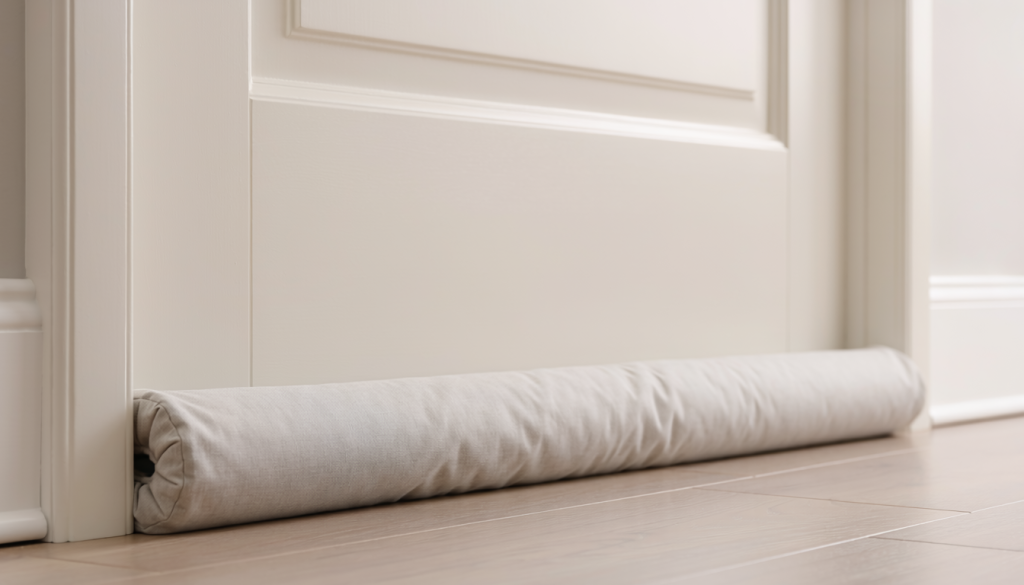
A fabric door snake is a long soft tube placed against the bottom of a closed door. It may be filled with fiberfill, fabric scraps, synthetic beads, sand, or another dense material that helps it stay in position.
These products are simple to move, store, and reposition. Because the body is flexible, it can follow minor irregularities in the floor better than a rigid blocker.
The main drawback is that most fabric snakes remain on the floor when the door opens. They may need to be pushed back into place after each use. They can also collect dust and pet hair, absorb moisture, or become a trip hazard if left in a walking path.
For homemade versions, avoid food-based fillings in locations where pests, humidity, or spills could become a problem.
Weighted Draft Stoppers
Weighted draft stoppers use heavier filling to help the product remain against the door rather than shifting easily. They can be useful across wider openings or where a lightweight fabric tube moves out of position too readily.
Weight alone does not create a better seal. The stopper still needs to be long and thick enough for the opening without becoming so bulky that it interferes with foot traffic or door operation.
Cleaning and drying are also important. A heavy absorbent product placed near a damp exterior entry or basement floor can retain moisture if it is not allowed to dry.
Twin-Sided Under-Door Draft Guards
Twin-sided guards typically have two foam or fabric-covered sections connected by material that passes beneath the door. When properly fitted, the two sides move with the door, so they usually do not need to be repositioned every time the door opens.
The convenience comes with more fit requirements. Door thickness, available clearance, carpet, raised thresholds, floor transitions, and friction can all affect operation. A unit that works well on smooth hard flooring may bunch, twist, or drag on thicker carpet.
These products are not suitable for every exterior entry door. If they create resistance or interfere with threshold components, another style is a better choice.
Rigid and Foam Under-Door Blockers
Some under-door products use foam tubes, semi-rigid channels, or a combination of flexible and rigid components. They can move with the door when the gap and flooring remain fairly consistent.
Foam can flatten, tear, or shift over time. A semi-rigid channel may work poorly where floor height changes during the swing of the door.
Do not cut, reshape, or otherwise modify these products unless the manufacturer’s directions specifically allow it.
Adhesive or Hook-and-Loop Temporary Blockers
Temporary blockers can also mount to the face of a door. Many resemble a flexible skirt and attach with removable adhesive, hook-and-loop strips, magnets, or a similar system.
These products avoid having a loose object on the floor, but the mounting surface matters. Weak paint, stain, or other finishes can be damaged when adhesive is removed, and some adhesives may release prematurely on dusty, damp, or textured surfaces.
The blocker also needs enough floor clearance to move freely without interfering with an existing sweep. Stop using it if it begins folding underneath the door, catching on the floor, or changing normal door operation.
Homemade Temporary Options
A rolled towel or folded blanket can provide short-term draft control when nothing else is available. It is inexpensive and easy to reposition.
The limitations are substantial. These makeshift blockers shift easily, seal inconsistently, can collect moisture, and usually require repositioning after the door is opened. They may also create a trip hazard.
Treat them as temporary measures rather than substitutes for a properly fitted product or a permanent repair.
How to Choose the Correct Draft Stopper
Identify the Door Location
The right type depends partly on where the door is located. An interior bedroom door has different concerns from a basement or utility door, a door between conditioned and unconditioned spaces, or an exterior entry.
Exterior doors require particular attention to threshold clearance, drainage, weather exposure, security, and prompt emergency exit. A bulky floor-level blocker that is acceptable at a rarely used interior door may be a poor choice at a frequently used exterior entrance.
Measure the Usable Door Width
Measure the actual width where the stopper will sit rather than estimating from appearance. A floor-level product should reach close to both lower corners so that it does not leave large openings at either side.
A stopper that is too short can leave obvious gaps. One that is too long may bunch against the jamb or extend into a walking path.
Accurate measurement is especially important for connected or twin-sided products because excess length can interfere with movement.
Check the Gap and Flooring
Inspect the clearance with the door closed and as it swings. The distance between the door and flooring can change during movement, especially around rugs, raised transitions, thresholds, or uneven floors.
Hard flooring generally produces less friction than plush carpet. Low-pile carpet may work with some moving guards, while thick carpet can cause bunching or excessive drag.
A stationary fabric snake may be easier to use where clearance changes significantly. Any under-door product designed to move with the door must travel freely without requiring extra pulling or pushing.
Consider How Often the Door Is Used
A stationary draft snake may be perfectly practical at a rarely used doorway. At a busy entrance, repeatedly repositioning it can become inconvenient and may encourage people to leave it in an unsafe location.
Moving guards can be more convenient, but they still need to be tested carefully for friction and door operation.
Everyone in the household should be able to use the door normally, including children, older adults, guests, and anyone with limited mobility.
Consider Moisture and Cleaning
Exterior entries, basements, and utility areas may expose a draft stopper to rain, snow, wet shoes, pet hair, dust, or humidity.
Look for washable covers, quick-drying materials, and fillings appropriate for the environment. A product that cannot be cleaned easily may become unpleasant or difficult to maintain in a high-traffic doorway.
Do not leave an absorbent stopper pressed against wet, rotten, moldy, or heavily stained wood or flooring. Those conditions require attention beyond temporary draft control.
Benefits and Limitations
A removable door draft blocker can be useful when a quick and reversible comfort measure is needed. It usually requires little or no permanent alteration, can be removed for cleaning or storage, and may be moved between rooms.
Potential benefits include:
- Quick temporary draft control.
- Little or no permanent alteration.
- Easy removal for cleaning or storage.
- Improved floor-level comfort.
- Reduced light or dust movement.
- Portability between rooms.
The limitations are equally important. A draft stopper does not repair a torn or missing sweep, incorrect threshold height, door alignment problems, or worn perimeter weatherstripping. It also cannot stop active water intrusion.
Other limitations include:
- Some products need frequent repositioning.
- Fabric can collect moisture and debris.
- Floor-level products can create trip hazards.
- Noise and odor reduction are limited.
- Bulky products may interfere with normal door movement.
Using a Draft Stopper Safely
Place a floor-level stopper so it lies flat and stable rather than extending into a walking path. Keep it away from hinges, locking hardware, heaters, and other hot surfaces.
Do not cover drainage features or interfere with adjustable threshold components. After installing any moving under-door product, open and close the door several times with normal pressure.
Remove the product if it folds underneath the door, prevents full latching, catches on flooring, or creates an unstable surface where someone could trip. You should not need to pull or push the door harder than normal to overcome friction from a draft blocker.
Avoid stacking several blockers to fill a large gap. A large or uneven opening may indicate that the door, sweep, threshold, or frame needs attention.
Wet products should be removed and dried rather than left against flooring or wood. Extra caution is appropriate at emergency exits, where a temporary comfort product must never slow prompt door operation.
When a Permanent Repair Is Better
Temporary draft control can make sense when a permanent repair is planned for later, a renter cannot alter the doorway, seasonal comfort is the main concern, or the product is being used at a rarely opened interior door.
A permanent repair deserves consideration when the door sweep is torn or missing, perimeter weatherstripping is worn, threshold contact is incorrect, the door sags or rubs, the slab is warped, or gaps are large enough that latching becomes unreliable.
If you are unsure which part of the doorway is causing the problem, review how to fix a drafty door before relying on a temporary blocker.
Draft stoppers should also never be used to hide water intrusion, soft sill or frame material, mold, widespread staining, or other signs of deterioration. Those conditions require diagnosis and repair.
Common Draft-Stopper Mistakes
One common mistake is buying by appearance without measuring the opening. A decorative stopper may look substantial but still be too short or too thick for the door.
Flooring is another frequent source of problems. A product that moves freely on wood or tile may catch on carpet, rugs, or raised transitions. Twin-sided products are particularly sensitive to clearance and friction.
Absorbent products should not be left in damp locations, and a wet stopper should not remain pressed against wood or flooring. Adhesive products also need finish compatibility because removal may damage weak paint or stain.
Do not expect a draft stopper to provide full soundproofing or odor control. Avoid blocking drainage or threshold movement, and do not stack multiple products in an effort to create a tighter seal.
Most importantly, do not assume every exterior door can accept a moving under-door guard. The door and threshold still need to operate normally.
Safety and When to Call a Professional
Remove the draft stopper immediately if the door becomes hard to open, difficult to close, unable to latch or lock normally, or slower to use in an emergency.
Professional evaluation is appropriate when:
- The bottom gap is severely uneven.
- The door slab or frame is badly warped.
- Hinges, framing, stops, or hardware require major alteration.
- The threshold is loose, cracked, rotten, corroded, or unstable.
- Water enters during rain.
- Soft or deteriorated wood is present.
- Widespread staining, mold, or concealed moisture is visible.
- Structural movement is apparent.
- Glass is cracked, loose, shifting, or unstable.
- You cannot determine whether the problem involves the sweep, threshold, weatherstripping, alignment, frame, or water-management system.
Do not remove a heavy door, dismantle glass components, alter structural framing, or disturb questionable older coatings as part of a draft-stopper project. Older painted doors and frames may require lead-safe methods if permanent repairs would disturb those surfaces.
Final Thoughts
A removable door draft stopper can improve comfort when it fits the opening, flooring, and way the door is used. Fabric snakes, weighted stoppers, moving under-door guards, and temporary mounted blockers each work best in different situations.
Measure carefully, keep normal door movement and security intact, and pay particular attention to trip hazards and emergency exit operation. Treat a draft stopper as temporary comfort control rather than a substitute for repairing worn seals, threshold problems, alignment issues, water intrusion, or damaged materials.