Electrical Outlet Sparks When Plugging In: When to Stop and Call a Pro
An electrical outlet sparks when plugging in a device because electricity is making contact as the plug enters the slot. A tiny blue spark that happens once, lasts a split second, and disappears right away can sometimes be normal, especially if the device is already switched on.
But not every outlet spark is normal. A large, bright, loud, repeated, smoky, or hot spark should be treated as a warning sign. Stop using that outlet, unplug the device if you can do so safely, and call a licensed electrician.
This is not a repair situation for beginners. Do not open the outlet, remove the cover plate, test wires, or try to fix the outlet yourself. Your job is to observe the warning signs, stop using unsafe equipment, and hand the problem off when the spark looks wrong.
Why an Electrical Outlet Sparks When Plugging In
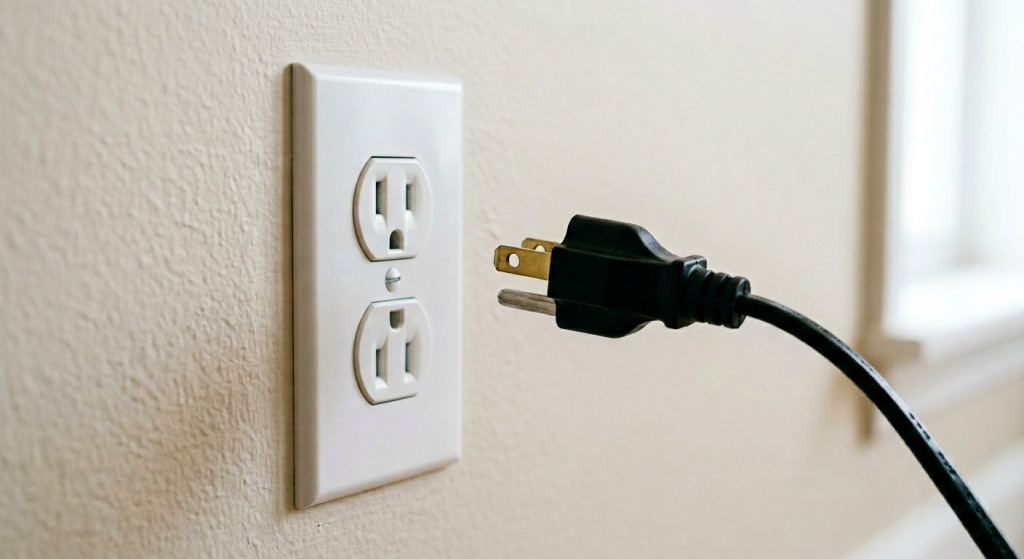
A small spark can happen when the metal prongs of a plug get close enough to the outlet contacts for electricity to jump across the tiny gap. This can happen very quickly as the plug is being inserted.
You may notice it more with devices that start drawing power right away. Examples include lamps that are already switched on, small appliances, chargers, vacuums, or tools. The outlet is not “creating” extra electricity. It is making contact with a device that is ready to use power.
That said, sparking should not be ignored just because it happens fast. Outlets wear out. Plugs can loosen. Cords can become damaged. Moisture, dust, heat, and age can all make electrical problems more serious.
The key question is not just, “Did I see a spark?” The better question is, “What kind of spark was it, and did anything else seem wrong?”
| Spark type | What it may mean | Safest next step |
|---|---|---|
| Tiny blue spark once | Device may have been switched on | Turn device off before plugging in when possible |
| Large or bright spark | Possible outlet, plug, or load problem | Stop using that outlet |
| Repeated spark every time | Possible worn outlet or loose contact | Call an electrician |
| Spark with smoke, heat, smell, or sound | Possible overheating or arcing | Stop use and get professional help |
When a Small Spark May Be Normal
A tiny spark may be normal when it is brief, quiet, and happens only at the moment the plug enters the outlet. This is more likely when the device is already turned on, because it asks for power as soon as the prongs make contact.
For example, plugging in a lamp with the switch already on may create a small flash. A vacuum, fan, or charger may do the same. The spark should be small, quick, and gone immediately.
Even then, it is smart to change the habit. When possible, turn the device off before plugging it in. This lowers the sudden demand at the moment of contact and may reduce small sparks.
A normal-looking spark should not leave marks, make noise, smell burnt, or happen with a loose plug. The outlet should not feel warm afterward. The plug should fit firmly without slipping out.
If the spark changes over time, gets brighter, starts happening more often, or comes with any other warning sign, stop treating it as normal.
Warning Signs That Mean Stop Using the Outlet
Some outlet sparks are not harmless. They can point to worn contacts, a damaged plug, a failing outlet, overheating, or another electrical issue inside the wall. You do not need to diagnose which one it is. You only need to know when to stop.
Stop using the outlet if you notice any of these signs:
- The spark is large, bright, orange, or white
- The spark happens repeatedly with the same outlet
- You hear popping, crackling, buzzing, or sizzling
- You smell burning, melting plastic, or a rubber-like odor
- The outlet, wall plate, plug, or cord feels warm or hot
- You see smoke, scorch marks, discoloration, cracks, or moisture
A loose plug is also a warning sign. If the plug slides out easily, wiggles a lot, or does not feel secure, stop using that outlet. Loose contact can create heat and arcing.
Do not keep testing the outlet to “see if it happens again.” Repeatedly plugging in the same device can make a bad connection worse. Once you see a serious warning sign, the safest move is to leave that outlet alone until a licensed electrician checks it.
If the outlet also smells hot or burnt, this guide on burning smell from outlet explains why odor near an outlet should be treated as a serious warning sign.
Safe Checks Homeowners Can Make
You can make a few safe observations without touching wiring or taking anything apart. These checks are not meant to repair the problem. They help you decide whether the issue may be tied to the device, the plug, or the outlet.
Start with the device. Was it switched on when you plugged it in? If so, turn it off before plugging it in next time, when the device allows that. Many small sparks happen because the device is ready to draw power immediately.
Next, look at the plug and cord. Do this while the device is unplugged and in good light. You are only checking for visible damage.
Look for obvious damage before using the device again:
- Bent, darkened, loose, or damaged plug prongs
- Cracked plug housing
- Frayed, cut, pinched, or melted cord insulation
- A cord that feels stiff, brittle, or unusually warm
- Burn marks near the plug or outlet
- Moisture near the outlet, plug, floor, counter, or wall
If the cord or plug is damaged, stop using that device. Do not tape over damaged insulation and keep using it. Do not bend prongs back and assume the plug is safe. Replace the damaged cord or device according to the manufacturer’s guidance, or have it handled by a qualified repair person.
Also notice where the outlet is located. Kitchens, bathrooms, garages, laundry areas, basements, outdoor walls, and damp rooms deserve extra caution because moisture can raise the risk.
If the device works normally in another outlet but one specific outlet keeps sparking, stop using that outlet and call an electrician.
What Not to Touch or Try
This is where many homeowners get into trouble. A sparking outlet can look like a small problem, but the unsafe part may be hidden behind the wall. That is not something to explore without proper training.
Do not remove the outlet cover. Do not pull the outlet out of the wall. Do not stick tools, testers, or metal objects into the outlet. Do not use a multimeter on the outlet unless you are trained to do so safely. Do not tighten wires, replace the outlet, replace a breaker, or open the electrical panel.
Also avoid “workarounds.” Do not use an adapter to force a plug to fit. Do not run the same device through a power strip if the wall outlet is sparking. Do not keep using an extension cord as a permanent fix.
Avoid these unsafe shortcuts:
- Covering a damaged cord with tape and continuing to use it
- Plugging a high-power device into a questionable outlet
- Ignoring sparks because the breaker has not tripped
- Using a loose outlet because “it still works”
- Resetting safety devices over and over without finding the cause
- Spraying cleaners or liquids near an outlet
A breaker that does not trip is not proof that everything is safe. Some dangerous conditions can create heat before a breaker responds. Trust the warning signs you can see, hear, smell, and feel from the outside.
When to Call an Electrician
Call a licensed electrician when the spark is large, recurring, noisy, smoky, or connected to heat, discoloration, looseness, moisture, or damage. You should also call if one outlet behaves differently from others in the same room.
Use clear, simple language when you contact the electrician. Say what happened, what you plugged in, whether the device was switched on, whether the spark repeated, and what warning signs you noticed. Mention smells, sounds, heat, smoke, loose plugs, or scorch marks.
Call an electrician promptly if:
- The outlet sparks every time you plug something in
- The outlet feels warm or has burn marks
- The plug fits loosely or falls out
- You hear buzzing, popping, or crackling
- You smell burning or see smoke
- The problem happens near moisture or water
Stop using the outlet while you wait. If there is active smoke, fire, or a strong burning smell, leave the area and call emergency services.
For normal service calls, the electrician can inspect the outlet, wiring, device load, and circuit safely. They can also tell you whether the outlet needs repair, replacement, or a larger electrical correction. That is their job, not yours.
If you hear buzzing, popping, or crackling from the outlet area, this guide on outlet making buzzing noise explains when to stop using the outlet and call a pro.
Final Thoughts
A tiny, brief spark at the exact moment you plug in a switched-on device can sometimes happen. But an electrical outlet sparks when plugging in should never be ignored if the spark is large, repeated, loud, hot, smoky, or tied to damage.
The safest homeowner response is simple: turn devices off before plugging them in when possible, check plugs and cords for visible damage, stop using questionable outlets, and call a licensed electrician when warning signs appear.
Do not open the outlet or try to repair wiring yourself. With electrical problems, stopping early is usually the safest and cheapest move.