Furnace Blowing Cold Air? 9 Common Causes and What to Check First
Furnace blowing cold air can be caused by something simple, but it can also point to a heating problem that is not safe to troubleshoot on your own.
In many homes, the issue comes down to a thermostat setting, a dirty filter, restricted airflow, or a power problem. In other cases, the furnace is not making heat because of an ignition, gas, or internal component issue.
Start with the safe homeowner checks first. If you smell gas, hear hissing, notice burning smells, or see signs of scorching, stop and contact an HVAC professional.
Furnace Blowing Cold Air: Common Causes
When a furnace seems to be blowing cold air, one of two things is usually happening. Either the system is not producing heat, or the blower fan is running when the furnace is not actively heating.
The blower is the fan that pushes air through the ductwork and out through the vents. If the heat source is not working, that fan can still move air through the house, and the air may feel cool or completely cold.
Common reasons include:
- thermostat settings that are wrong
- a dirty air filter
- restricted airflow
- overheating that shuts the burners off
- a pilot light or ignition problem
- a blocked condensate drain on a high-efficiency furnace
- the gas supply being off
- a tripped breaker or switched-off furnace power
- a short burst of cool air during startup that is normal
The safest approach is to check the easy items first before assuming the furnace needs repair.
Check the thermostat first
The thermostat is the best place to begin because small setting mistakes are easy to miss.
Make sure it is set to Heat, not Cool. Then check the fan setting. If the fan is set to On, the blower can run all the time, even when the furnace is not heating. That often makes it look like the furnace has failed when it has not.
For most homes, the fan should be set to Auto. That tells the blower to run only when the furnace is actually in a heating cycle.
Raise the thermostat a few degrees above the current room temperature and give it a few minutes to respond. If your thermostat uses batteries, weak batteries can also cause strange behavior.
Safe DIY checks
- confirm the thermostat is set to Heat
- switch the fan from On to Auto
- raise the set temperature a few degrees
- replace thermostat batteries if the display is dim or unresponsive
If the thermostat stays blank, does not respond, or still does not seem to communicate with the furnace, the problem may be electrical or related to thermostat wiring. That is usually a job for a pro.
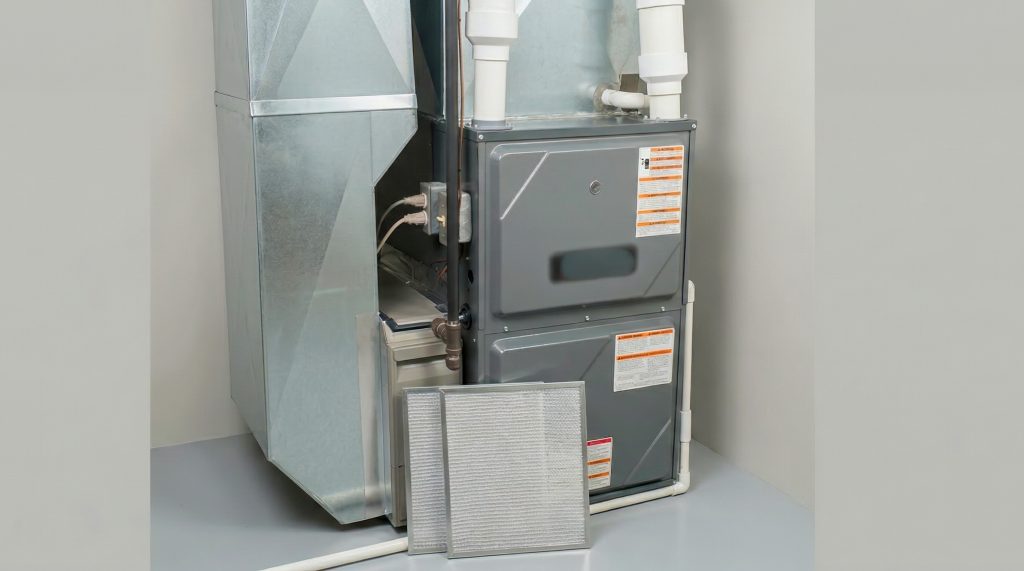
Check the air filter
A clogged filter is one of the most common reasons a furnace stops heating the way it should.
The filter catches dust and other particles before they move through the system. When it gets packed with debris, airflow drops. Low airflow can make the furnace run too hot.
When that happens, a safety control may shut the burners off to protect the unit. The blower may keep running, though, which leaves you feeling cool air at the vents instead of warm air.
Turn the furnace off before removing the filter. Hold the filter up to the light. If it looks heavily coated with dust, replace it.
Most disposable filters have an airflow arrow printed on the frame. Install the new filter in the same direction.
Safe DIY checks
- turn the furnace off first
- remove the filter
- inspect it for heavy dust buildup
- replace it if it looks dirty
- install the new filter in the correct airflow direction
Check for airflow problems
The furnace also needs good airflow through the rest of the system, not just through the filter.
Supply vents deliver heated air into the rooms. Return vents pull air back to the furnace so it can be heated again. If too many vents are blocked by furniture, rugs, boxes, or dust buildup, the system may struggle to run properly.
You may notice weak airflow, rooms that stay cold, short heating cycles, or a blower that seems to run longer than normal.
Safe DIY checks
- make sure supply vents are fully open
- check that return vents are not blocked
- move furniture, rugs, and storage away from vents
- replace the filter if you have not already done it
If airflow still seems weak after those checks, do not open the furnace cabinet or start testing internal parts. That is a good point to call a technician.
Know when overheating is the problem
An overheating furnace will often shut the burners down as a safety measure.
When that happens, the blower may continue to run so the furnace can cool off. From your side of the vents, that can feel like the furnace is randomly blowing cold air.
A common pattern is this: the furnace starts, warms briefly, then stops heating too soon. The house may never reach the temperature you set, and the system may cycle on and off more often than normal.
Poor airflow is a frequent cause of overheating, but it is not the only one. Internal parts can also be involved.
Start with these safe checks
- replace a dirty filter
- open closed supply vents
- make sure return vents are clear
- stop troubleshooting if the problem keeps happening
If the furnace repeatedly overheats, a technician may need to inspect the limit switch, blower motor, duct system, or other internal components.
Check for power issues
Sometimes the problem is more basic than homeowners expect.
A furnace can lose full power, have inconsistent power, or get shut off by a nearby service switch. In some cases, the blower still runs even though the heating side of the system is not working correctly.
Check the electrical panel for a tripped breaker. Then check the furnace power switch, which often looks like a regular wall switch mounted on or near the unit.
Safe DIY checks
- inspect the breaker panel
- reset a tripped breaker one time
- make sure the furnace power switch is on
If the breaker trips again, stop there. Repeated trips can point to an electrical fault that needs professional diagnosis.
Check the condensate line on a high-efficiency furnace
High-efficiency furnaces create condensation during normal operation. That water drains away through a condensate line.
If the line becomes clogged or kinked, the furnace may shut down the heating cycle for safety reasons. In some cases, the blower still runs, which can leave the air from the vents feeling cold.
You may notice water near the unit, a visible drain tube that looks pinched, or a furnace that starts but does not stay in a normal heating cycle.
Safe DIY checks
- look for standing water near the furnace
- inspect the visible drain tube for an obvious kink
- check your owner’s manual for basic maintenance guidance
Do not take apart the drain assembly unless you know your specific system well. If the issue is not obvious, call an HVAC company.
Professional-only issues
Some causes of cold air are outside safe DIY territory, especially for beginners.
Pilot light or ignition problems
Older furnaces may use a standing pilot light. Newer furnaces usually rely on an electronic ignition system.
If the pilot is out or the ignition system does not light the burners, the blower may still run without the furnace actually producing heat.
If your owner’s manual says it is safe to do so, you may be able to look through the proper viewing area to see whether a pilot light is present. Do not remove panels just to investigate, and do not guess with gas-related components.
Repeated clicking, failed startup attempts, or a furnace that starts and shuts right back down can all point to an ignition problem that needs service.
Gas supply problems
A gas furnace cannot make heat without fuel.
Sometimes the shutoff valve has been turned off. In other cases, there may be a larger gas supply problem. While some homeowners can identify the valve position with confidence, this is not an area to experiment with.
If you are not completely sure what you are looking at, leave it alone and call a professional.
Stop and get help right away if:
- you smell gas
- you hear hissing near the furnace or gas line
- you see scorch marks, soot, or signs of burning
- the pilot light will not stay lit
- the ignition system keeps trying and failing to start
Anything involving gas, flame, or repeated ignition failure belongs in professional hands.
When cool air is normal
Not every brief burst of cool air means something is wrong.
Some furnaces push slightly cool or room-temperature air for a short time during startup while the system warms up. The blower may also continue running briefly after a heating cycle ends.
What matters is whether the air turns warm and whether the house actually heats up. If the airflow becomes warm after a minute or two and the room temperature rises normally, the system may be working as expected.
If the air stays cold and the home never reaches the thermostat setting, there is likely a problem that needs attention.
When to call an HVAC professional
Call an HVAC professional when the safe checks do not solve the problem or when the issue involves anything that could be unsafe.
It is time to call if you notice:
- a gas smell or suspected gas leak
- repeated shutdowns
- a breaker that trips again
- loud banging, screeching, or grinding sounds
- a pilot light that will not stay lit
- repeated ignition failure
- water around the furnace that keeps coming back
- an older furnace with frequent heating problems
It is also completely reasonable to stop after checking the thermostat, filter, vents, and power. Many homeowners do not want to go any farther than that, and that is a smart limit.
How to help prevent furnace problems
A little routine maintenance can prevent a lot of cold-air complaints.
Changing the filter on schedule, keeping vents open, and paying attention to odd noises or weak airflow can help you catch problems before they turn into a no-heat call.
Good habits include:
- changing the filter regularly
- keeping supply vents open
- keeping return vents clear
- watching for weak airflow or short cycling
- replacing thermostat batteries before heating season if needed
- scheduling routine furnace maintenance
Preventive maintenance will not stop every repair, but it can reduce the chances of the furnace quitting when you need heat the most.
Conclusion
If your furnace is blowing cold air, begin with the safe basics.
Check the thermostat, filter, vents, breaker, and visible power switch first. Those are common problems, and many homeowners can inspect them without taking anything apart.
Once the issue involves gas, ignition, repeated electrical trouble, or internal furnace parts, stop troubleshooting and bring in a professional.
The goal is not to guess your way through a furnace repair. It is to rule out the simple causes, protect your safety, and know when expert help makes the most sense.