
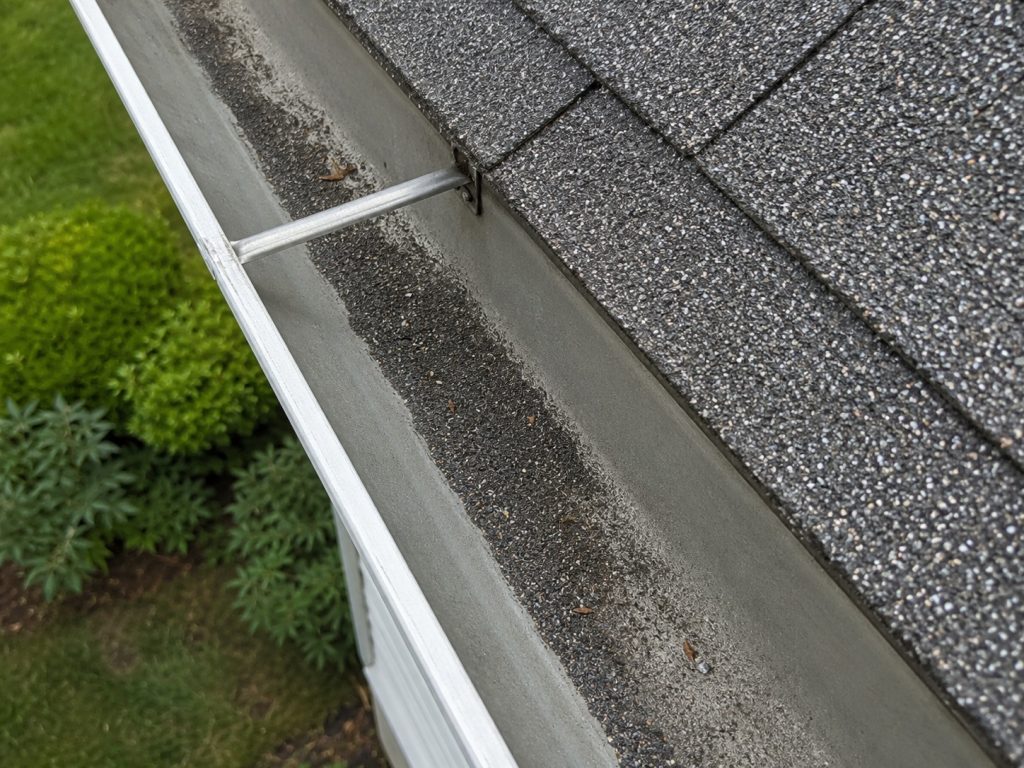
granules in gutters: should you be concerned?
Finding granules in gutters does not automatically mean an asphalt-shingle roof is failing. Small amounts can be normal, especially when shedding is light and fairly consistent.
Concern increases when the amount suddenly rises, shedding becomes progressively heavier, granules appear concentrated below one area, loss follows severe weather, or shingles also look bald, cracked, curled, missing, or badly deteriorated. Amount, timing, distribution, roof condition, and accompanying symptoms matter more than the mere presence of granules.
| What You Observe | What It May Mean | Concern Level |
|---|---|---|
| Small amount on a newer roof | Loose excess granules | Often lower concern if the amount decreases |
| Light gradual accumulation | Normal or age-related shedding | Monitor for change |
| Noticeably increasing accumulation | Accelerating surface wear | More concerning |
| Large amount after a storm | Weather-related shedding or impact | Deserves closer evaluation |
| Granules concentrated below one roof area | Localized wear or damage may be present | More concerning if repeated |
| Heavy granules plus bald-looking shingles | Significant surface loss | Higher concern |
| Granules with cracked or curling shingles | Broader shingle deterioration | Higher concern |
| Granules with missing shingles or obvious storm damage | Possible significant roof damage | Professional evaluation appropriate |
Beginner homeowners should evaluate roof symptoms from the ground only. Do not walk on the roof, climb a ladder for inspection, rub or scrape shingles, lift roofing materials, perform roof-level hail inspection, remove shingles, or work near overhead electrical lines.
What Roof Granules Are and Why They Matter
Asphalt shingles have mineral granules embedded in their exposed surface. These granules help protect the asphalt from sunlight and weather exposure while also contributing to durability and appearance.
Some loose granules naturally wash from the roof into gutters and downspouts. Their presence alone does not prove the shingles are failing.
Granule loss becomes more meaningful when enough material has disappeared to leave darker, smoother, or bald-looking areas on the shingle surface. That can indicate that the protective surface is becoming worn or damaged.
The key is to evaluate granules in the context of the roof’s overall condition rather than treating every loose particle as a warning sign.
Is Some Granule Loss Normal?
Yes. Limited granule shedding can be normal.
A few granules appearing periodically are different from suddenly finding much larger amounts than usual. What matters most is whether the pattern is relatively stable or noticeably changing.
Light, gradual accumulation may simply reflect routine weathering. Increasing or unusually heavy shedding deserves more attention, particularly if other roof symptoms appear at the same time.
Roof age provides useful context, but it should not determine the diagnosis by itself. A newer roof can experience abnormal shedding, and an older roof may still be functioning adequately despite some gradual granule loss.
Why New Shingles May Shed Granules
New asphalt shingles can release loose excess granules associated with manufacturing, handling, transportation, and installation.
Rain may wash some of these particles into gutters during the early period after the roof is installed. If the amount gradually decreases and the visible roof surface remains uniform from the ground, the shedding is generally less concerning.
However, a newer roof should not be assumed healthy simply because some early shedding is expected. Heavy, increasing, or localized granule loss deserves evaluation regardless of roof age.
Aging and Long-Term Granule Loss
Sunlight, heat, rain, wind, and repeated temperature changes gradually weather asphalt shingles. As the material ages, the bond holding surface granules can weaken.
Older shingles may shed more granules while also becoming brittle, cracked, or otherwise deteriorated. When increasing granule loss appears with roof shingle curling, cracking, or other visible wear, the combination provides more useful information than granules alone.
Physical abrasion can also accelerate granule loss. Foot traffic, tools, branches, or other contact with the roof surface may loosen additional material.
That is one reason homeowners should not walk on the roof to investigate granule shedding. Roof access adds fall risk and can cause further surface damage.
Storm and Impact Damage
Heavy rain and strong wind can wash loose granules from asphalt shingles. Severe weather may therefore make existing loose material more noticeable in gutters.
Hail or other impact can damage the shingle surface more directly. A sudden increase in granules after severe weather deserves more attention, especially if you can also see missing shingles, displaced roofing, bald-looking areas, debris impact, or other obvious changes from the ground.
A storm-related increase does not by itself reveal the extent of damage. Some of the material may have already been loose before the storm, while other loss may result from direct impact.
Do not climb onto the roof to search for hail marks, rub shingles to test the surface, or lift roofing materials. A roofing professional can evaluate suspected impact damage safely.
How Much Granule Loss Is Concerning?
There is no useful universal household measurement that proves a roof has failed.
One handful, one cup, or a certain depth of granules in a gutter cannot reliably diagnose roof condition. The amount collected depends on roof size, gutter design, rainfall, cleaning frequency, and how runoff moves across the roof.
A better approach is to look for a meaningful change from the home’s normal pattern.
Concern increases when accumulation becomes noticeably heavier, a large amount appears after severe weather, shedding continues to increase, granules repeatedly collect below the same general roof area, or bald patches become visible.
Other signs of shingle deterioration make the granule loss more important.
There is also no single numeric threshold that determines when a roof needs replacement. The condition of the shingles and the pattern of change matter more than a measured quantity of loose granules.
Why the Pattern Matters
Location can be nearly as useful as quantity.
Granules distributed across several gutters may reflect general shedding across a larger part of the roof. Repeatedly finding noticeably more material at one location may suggest that wear or damage is concentrated in a particular area.
However, gutters can move granules horizontally before they reach a downspout. A pile at one downspout does not prove that damaged shingles are directly above that outlet.
Timing matters as well. Slow accumulation over a long period suggests a different situation from a sudden increase following hail, strong wind, or another weather event.
Watching for changes over time can help reveal whether the pattern is stable, gradually increasing, or abruptly different.
Other Roof Symptoms That Increase Concern
Granules become more meaningful when they appear with other visible changes.
Dark or bald-looking patches may indicate areas where the protective granule layer has been significantly reduced. Cracked, curled, missing, or displaced shingles suggest broader roofing deterioration or damage.
Uneven areas, obvious storm-related changes, and impact from branches or debris also deserve attention.
Interior moisture adds another important clue. If heavy weather is followed by visible water intrusion, the separate problem of a roof leak after heavy rain should be evaluated rather than assuming granule loss alone explains the leak.
The combination of several symptoms usually provides more useful information than any one sign by itself.
What Homeowners Can Safely Observe From the Ground
A useful preliminary assessment can be made without climbing.
From a safe ground-level location, note whether granules appear at one downspout or several and whether the amount seems to be increasing over time. Also consider whether the change followed a storm.
Look at visible shingles for bald or patchy areas, missing or displaced sections, broad color differences, or obvious impact and debris damage.
Safe photographs taken from the same location can help document changes from one month or season to another.
Do not climb ladders, lean from windows, or use poles or tools to reach roof surfaces. Those methods add risk without providing a reliable diagnosis.
Common Mistakes
One common mistake is assuming that any granules in gutters mean the roof needs replacement. Some shedding can be normal.
The opposite mistake is dismissing a sudden increase simply because some granule loss is expected. A clear change in quantity, location, or timing can provide useful evidence that roof conditions have changed.
Homeowners should not walk on the roof, rub or scrape shingles, lift them, or attempt their own hail-damage inspection. These actions may damage the roofing and create unnecessary fall risk.
Another mistake is judging roof condition from granules alone. Cracking, curling, bald areas, missing shingles, storm damage, and other visible conditions should also be considered.
Do not use one handful or one pile as a replacement threshold, and do not assume that the location of a downspout identifies the exact source area on the roof.
When to Call a Roofing Professional
Professional evaluation is appropriate when granule loss becomes noticeably heavier, shedding changes suddenly, or large amounts appear after hail or other severe weather.
A roofer should also evaluate bald-looking roof areas, shingles that appear cracked, curled, missing, or badly deteriorated, repeated granule buildup that seems concentrated below one area, or increasing shedding on an older roof.
Interior leakage is another reason to seek professional evaluation.
If a proper inspection would require roof or ladder access, leave that work to someone equipped to perform it safely.
The purpose of the inspection is to determine whether the shedding reflects normal loose granules, aging, localized damage, storm damage, or broader deterioration. Granules alone do not prove that roof replacement is necessary.
Final Thoughts
Granules in gutters are a condition to interpret in context, not an automatic sign of roof failure.
Small amounts can be normal. The strongest reasons for concern are a noticeable increase, sudden heavy shedding, storm-related changes, localized repeated buildup, bald shingles, cracking, curling, missing shingles, or other visible deterioration.
Homeowners should observe safely from the ground and have a roofing professional evaluate significant or changing conditions.