Home AC Running but Not Cooling the House? Causes and Fixes to Try First
Home AC running but not cooling the house is a frustrating problem, especially when the system sounds normal but the rooms still feel warm and humid.
An air conditioner works by pulling heat from inside your home and releasing it outdoors. When that process gets interrupted, the system may keep running without lowering the temperature the way it should.
Some causes are simple and safe to check. Others need tools, testing, or professional repair. HVAC just means heating, ventilation, and air conditioning.
Home AC running but not cooling the house: why it happens
When an AC runs without cooling well, the problem usually falls into one of a few categories. The system may not be moving enough air, it may not be removing heat properly, or the cooled air may not be reaching the rooms the way it should.
Sometimes the issue is basic, like the thermostat, a clogged filter, or blocked vents. In other cases, the problem may involve a frozen coil, dirty outdoor coils, low refrigerant, failing electrical parts, or leaking ductwork.
The smartest approach is to start with the easiest safe checks first.
Check your thermostat settings first
This is the quickest place to begin because thermostat settings are easy to overlook.
Make sure the thermostat is set to Cool and not Heat or Fan. Then lower the temperature setting a few degrees below the current room temperature.
Fan mode can also be misleading. If the fan is set to On, the blower may keep pushing air through the vents even when the AC is not actively cooling. That can make it seem like the system is working when it is really just circulating room-temperature air.
If your thermostat uses batteries, replace them if the screen looks weak, blank, or inconsistent. Also check that a programmed schedule did not change your settings back.
What to check at the thermostat
- Set the mode to Cool
- Lower the target temperature a few degrees
- Make sure the fan is set to Auto instead of On
- Replace thermostat batteries if needed
- Check that a schedule is not overriding your changes
If the thermostat looks right and the house still is not cooling, move on to the airflow checks.
Replace a dirty air filter
A clogged air filter is one of the most common causes of weak cooling.
The filter catches dust, lint, and pet hair before they enter the system. When it gets too dirty, airflow drops. That can make the AC run longer, cool less effectively, and in some cases contribute to a frozen indoor coil.
Pull the filter out and hold it up to the light. If it looks packed with dust or very little light passes through, replace it.
Be sure the replacement filter is the right size and install it in the correct airflow direction.
Signs your air filter may be the problem
- Airflow from vents feels weak
- The AC runs for long stretches without catching up
- Certain rooms feel warmer than usual
- The filter looks gray, dusty, or clogged
- Dust seems to build up faster indoors
Changing the filter will not solve every cooling problem, but it is one of the easiest homeowner fixes and often helps.
Make sure vents and registers are open and unobstructed
Even if the AC is making cool air, your home will still feel uncomfortable if that air cannot move well through the house.
Supply vents send cooled air into rooms. Return vents pull indoor air back into the system so it can be cooled again. Both need to stay open and clear.
Walk through the house and check visible vents. Look for closed louvers, furniture placed in front of vents, rugs covering returns, or heavy dust buildup.
Airflow problems to look for
- Closed or partly closed supply vents
- Furniture blocking vents
- Curtains hanging over vents
- Rugs or storage items covering return vents
- Dust buildup on vent covers
This step may not fully fix the problem, but it can improve comfort and reduce strain on the system.
Inspect the outdoor condenser unit
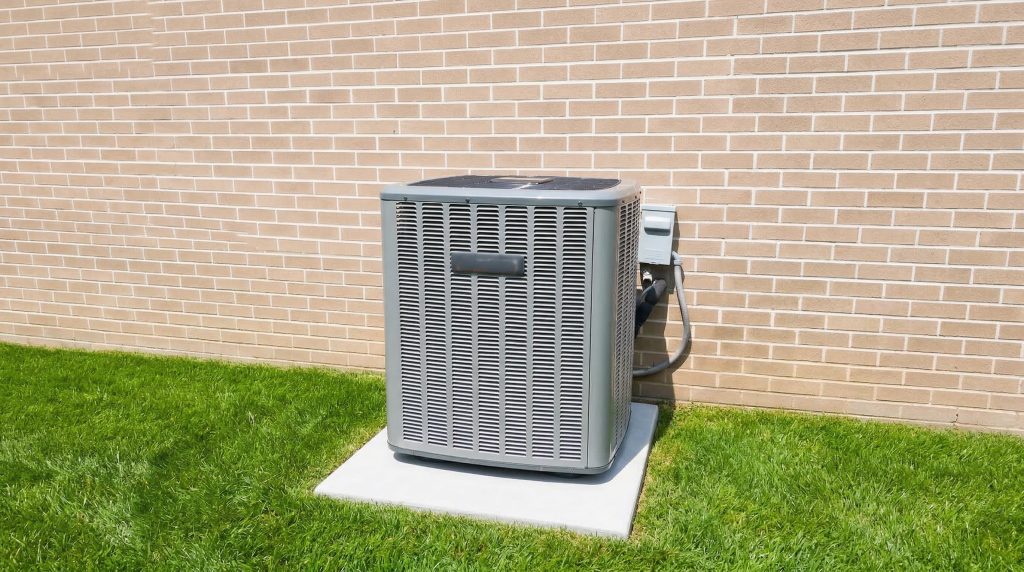
The outdoor unit releases the heat removed from inside your house. If that unit is dirty, blocked, or not operating properly, the AC may keep running without cooling well.
Go outside while the system is on. In many cases, you should hear the unit running and see the fan spinning on top.
Look around the unit for leaves, weeds, grass clippings, or other debris that could restrict airflow. Also check whether the outside fins look heavily coated with dirt.
If the unit is not running at all outside, that points to a different problem. In that situation, it helps to troubleshoot why the outside AC unit is not turning on.
Safe outdoor unit checks
- Remove loose debris around the unit
- Trim plants back to create open space
- Make sure the top fan appears to be spinning
- Look for visible dirt on the outer fins
- Listen for unusual buzzing, clicking, or humming
Do not open the cabinet or reach inside the unit while it is operating.
Look for a frozen evaporator coil
A frozen evaporator coil can stop normal cooling even while the system continues to run.
The evaporator coil is the indoor part of the AC system that absorbs heat from the air in your home. When it freezes, airflow and heat transfer both suffer.
You may not be able to see the coil itself without opening parts of the system, which is not a beginner task. But there are clues that often point in this direction.
Weak airflow, warm air from vents, water near the indoor unit, or frost on refrigerant lines can all suggest freezing.
If you suspect this issue, switch the thermostat from Cool to Off and set the fan to On to help thaw the system. Then check the filter and vents, since airflow problems often play a role.
A frozen coil is not something to ignore. Even if the system works again after thawing, the underlying cause still needs attention.
Check for dirty condenser coils
The condenser coils are in the outdoor unit, and their job is to release heat outdoors.
When those coils get coated with dirt, dust, pollen, or yard debris, the system becomes less efficient. That can leave the AC running longer while the house stays warmer than it should.
From the outside, you may notice the fins look dusty or matted with grime. A gentle surface rinse with the power off can sometimes help, but it needs to be done carefully.
High-pressure spraying can bend fins and create more problems.
When cleaning may help
- The outdoor coil surface looks dusty or dirty
- Grass clippings or fluff are stuck to the fins
- The unit has not been cleaned in a long time
- Plants or debris are crowding the airflow around it
If the coil looks heavily clogged or you are unsure how to clean it safely, schedule professional service instead.
Low refrigerant or a refrigerant leak
Refrigerant is the substance that carries heat through the AC system.
In normal operation, refrigerant does not get used up. If the level is low, there is usually a leak somewhere in the system.
Low refrigerant can lead to longer run times, weaker cooling, ice buildup, higher energy bills, or hissing sounds near the equipment.
This is not a DIY repair. Refrigerant work requires training, proper tools, and correct handling procedures.
If low refrigerant is the problem, the real fix is finding and repairing the leak, then charging the system correctly.
Electrical or capacitor problems
Some cooling problems come from failing electrical parts rather than airflow or refrigerant issues.
One common example is a bad capacitor. A capacitor helps motors start and run properly. If it is weak or failing, the AC may hum, struggle to start, or run only part of the system without cooling the house well.
Other possible issues include contactors, wiring problems, breakers, or other electrical components.
You might notice the indoor blower running while the outdoor unit does not fully start, or the system may cycle in odd ways.
This is not beginner DIY work. Shut the system off and call for help if you notice burning smells, repeated breaker trips, or loud electrical buzzing.
Leaky ductwork or airflow issues
In many homes, cooled air travels through ducts hidden in attics, crawl spaces, basements, or walls.
If those ducts leak, part of the cooled air may escape before it reaches your living spaces. That can make some rooms feel comfortable while others stay too warm.
Airflow problems can also come from dirty blower components, poorly sized ducts, or closed dampers. A damper is a flap inside the duct system that helps direct airflow.
Clues that ducts or airflow may be the issue
- Some rooms stay much warmer than others
- Airflow feels weak from several vents
- Energy bills are higher than expected
- Hidden areas near duct runs feel unusually cool
- You hear rattling or air leakage in walls, attics, or crawl spaces
Duct problems usually need a professional inspection, especially when the ductwork is hard to access.
Your AC may be too small, too old, or struggling in extreme heat
Sometimes the system is running normally, but it cannot quite keep up with conditions.
An air conditioner that is too small for the house may run for long periods during hot weather and still fall behind. Older systems can also lose efficiency over time, especially if maintenance has been inconsistent.
Even a healthy AC may struggle to hold your ideal temperature during the hottest part of an extreme heat wave.
That does not automatically mean replacement is necessary. But if cooling problems happen often, the system is older, and repair issues are starting to add up, it is reasonable to ask whether repair still makes sense.
What you can safely fix yourself
There are several homeowner-level checks that are usually safe and practical before calling for service.
These steps may solve the problem or at least narrow down what is going on.
Safe DIY steps
- Check thermostat mode, temperature setting, and batteries
- Replace a dirty air filter
- Open blocked vents and registers
- Clear debris around the outdoor unit
- Let the system thaw if you suspect ice
- Check the breaker once for a trip
Use basic safety judgment. Turn power off before handling filters or rinsing around the outdoor unit. Do not open electrical panels or attempt refrigerant repairs.
When to call an HVAC professional
Some problems need measurements, electrical testing, or system diagnosis that homeowners should not try on their own.
Call a professional if you notice any of these
- The outdoor unit is not working correctly
- Ice keeps returning after thawing
- You suspect low refrigerant or a leak
- The breaker trips repeatedly
- You smell burning or hear strong electrical buzzing
- Airflow is very weak throughout the house
- The AC runs constantly and still cannot cool well
A technician can test airflow, inspect coils, check electrical parts, and confirm whether refrigerant or duct issues are involved.
How to prevent AC cooling problems in the future
You cannot prevent every AC problem, but regular care can reduce the chances of losing cooling during hot weather.
The goal is to keep airflow strong, keep the outdoor unit clear, and catch smaller issues before they turn into bigger repairs.
Good habits that help
- Check the air filter regularly and replace it when dirty
- Keep vents open and unobstructed
- Keep plants and debris away from the outdoor unit
- Watch for early warning signs like weak airflow or long run times
- Schedule routine AC maintenance
- Pay attention to unusual sounds, smells, or water around the system
These simple habits can improve performance and help you spot trouble sooner.
Conclusion
If your home AC running but not cooling the house problem shows up, start with the simple checks first.
Look at the thermostat, filter, vents, and outdoor unit before assuming the whole system has failed. Those steps are easy, safe, and sometimes enough to solve the issue.
If they do not help, the problem may involve a frozen coil, dirty condenser coils, low refrigerant, electrical faults, duct leakage, or an aging system.
A calm step-by-step approach helps you rule out basic causes, avoid unsafe DIY work, and know when it is time to bring in an HVAC professional.