
LED Light Flickers When Turned Off: Causes and Safe Fixes
LED light flickers when turned off because a small amount of current may still be reaching the bulb, the bulb may not match the dimmer or switch, or the fixture may have an issue that needs attention. In many cases, the flicker is annoying more than dangerous, especially with certain LEDs, smart switches, illuminated switches, or older dimmers.
If an LED light flickers when turned off and you also notice buzzing, heat, a burning smell, sparks, discoloration, or repeated failure, stop using the switch or fixture and call a licensed electrician.
This guide covers beginner-safe checks only. Do not remove switch covers, open fixtures, touch wires, test live wiring, replace switches, replace breakers, or open your electrical panel.
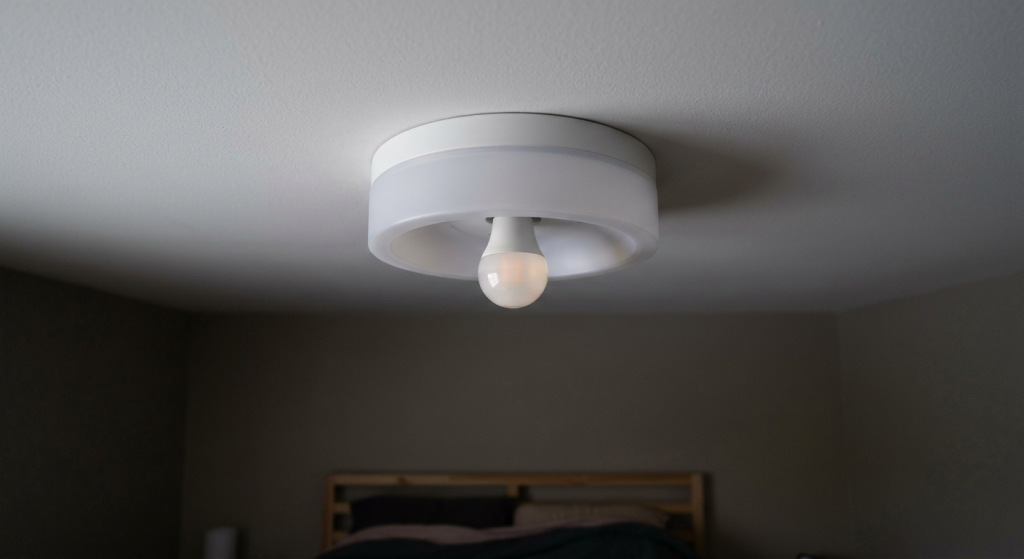
| What you notice | Safe first check | What it may mean | What to do next |
|---|---|---|---|
| One LED flickers after shutoff | Try a different compatible bulb | Bulb design or compatibility issue | Replace bulb if safe |
| Flicker happens on a dimmer | Check bulb and dimmer compatibility | LED and dimmer mismatch | Use compatible parts or call for help |
| Switch has a tiny light or smart control | Note the switch type | Small current may pass through | Call if it bothers you or repeats |
| Buzzing, heat, smell, sparks, or discoloration | Stop using it | Possible electrical fault | Call an electrician |
LED Light Flickers When Turned Off: Start With Safety
An LED that flashes, glows, or flickers after the switch is off can be confusing. The light is supposed to be off, so any glow may feel like something is wrong. Sometimes it is caused by how sensitive LED bulbs are. LEDs can react to tiny amounts of current that older incandescent bulbs would not show.
That does not mean every flicker is harmless. The safe approach is to look for warning signs first, then check simple outside causes. A normal switch or fixture should not smell burned, feel hot, spark, buzz loudly, or show scorch marks.
Do not keep flipping the switch repeatedly to see if the flicker changes. That can hide the pattern and does not fix the cause.
Stop using the switch or fixture if you notice:
- Burning smell, smoke, sparks, or popping
- Heat at the switch, fixture, or wall plate
- Buzzing, crackling, or sizzling sounds
- Brown, black, or melted-looking discoloration
- Flickering that gets worse over time
- More than one fixture or outlet affected
If any of these signs are present, leave the light off if you can do so safely and call a licensed electrician.
Check the Bulb, Fixture, and Dimmer Compatibility
Start with the bulb because it is the safest and simplest item to rule out. If the fixture is easy to reach, turn the switch off and let the bulb cool. Then try a different LED bulb that is known to work properly in another fixture.
Use a bulb that matches the fixture’s rating and purpose. Do not use a bulb with a higher wattage equivalent or actual wattage than the fixture allows. Also check whether the bulb is labeled dimmable if the switch is a dimmer. A non-dimmable LED on a dimmer can flicker, glow, or behave unpredictably.
Dimmer compatibility is a common cause of LED flicker after shutoff. Older dimmers were often designed for incandescent bulbs. LED bulbs use much less power, so an older dimmer may not interact with them cleanly. The result can be flickering, faint glowing, buzzing, or lights that do not dim smoothly.
Smart switches can also be involved. Some smart switches need a tiny amount of power to keep their electronics active. Illuminated switches, which have a small locator light in the switch, may also allow a small current that an LED bulb can react to.
Safe compatibility checks homeowners can make:
- Try a known-good LED bulb if the fixture is safe to reach
- Confirm the bulb is approved for the fixture
- Use dimmable LED bulbs only with dimmer switches
- Notice whether the switch is a dimmer, smart switch, or illuminated switch
- Check whether the flicker started after changing bulbs
- Stop if the fixture is loose, wet, damaged, or hot
If a different compatible bulb stops the flicker and there are no warning signs, the issue may have been the bulb. If the flicker continues, do not open the switch or fixture to investigate.
If the bulb keeps failing instead of only flickering, this guide on why a light bulb keeps burning out can help you compare bulb, fixture, and voltage warning signs.
Why LED Bulbs Can Flicker After Power Is Off
LED bulbs are more sensitive than older bulbs. They need very little energy to glow or flash. Because of that, a small current that would have gone unnoticed with an incandescent bulb may be enough to make an LED flicker after the switch is off.
This can happen with certain dimmers, smart switches, timers, motion controls, illuminated switches, or fixture designs. Some of these devices are built to pass a tiny amount of current for their own features. The LED may store that small charge and release it as a brief flash.
The fixture itself can also play a role. Some fixtures, especially those with built-in electronics or multiple bulbs, may not work well with every LED bulb. If only one bulb in a multi-bulb fixture flickers, the bulb may be the weak point. If every bulb in the fixture flickers, the switch, dimmer, fixture, or wiring may deserve more attention.
A loose bulb can also create odd behavior. If the bulb is not seated properly, the connection may be inconsistent. Only check this when the fixture is safe to reach, the bulb is cool, and there are no warning signs.
It also helps to notice whether the flicker is a faint glow, a quick flash every so often, or rapid repeated flickering. A faint glow from one LED may point toward compatibility. Repeated flickering, buzzing, heat, or worsening behavior is more concerning.
Do not treat hidden wiring as a homeowner troubleshooting step. If the safe bulb and compatibility checks do not explain the issue, the next step is professional diagnosis, not opening the wall.
Warning Signs That Mean Stop Using the Light
An LED flickering after shutoff is sometimes a compatibility annoyance. But certain symptoms move the problem into safety territory.
Buzzing is one warning sign. A faint hum from some dimmer setups can happen, but loud buzzing, crackling, sizzling, or popping is not something to ignore. If the sound comes from the switch, fixture, or wall, stop using the light.
Heat is another concern. A switch plate, dimmer, fixture, or bulb area that feels hot should not be treated as normal. Some dimmers may feel slightly warm during use, but flickering combined with heat deserves a professional look.
A burning smell is always a stop sign. So are sparks, smoke, scorch marks, melted-looking plastic, or brown and black discoloration. Do not remove the cover or fixture to see what is behind it. The visible warning sign is enough.
Moisture also changes the situation. If the flickering LED is in a bathroom, kitchen, laundry room, basement, garage, porch, or any damp area, do not use the switch or fixture if the area is wet.
Repeated failure matters too. If bulbs burn out quickly, flicker gets worse, or the light behaves differently from day to day, stop guessing. That may point to a fixture, switch, connection, or wiring issue that is not safe to diagnose from the outside.
If the flickering happens while the light is on or affects more than one light in the room, this guide on lights flicker in one room explains other causes and warning signs.
What Homeowners Should Not Touch
A flickering LED can make it tempting to remove the switch cover, check the dimmer, or pull down the fixture. Do not do that. This article is about safe observation, not electrical repair.
Do not remove switch covers. Do not open switch boxes. Do not remove hardwired fixtures. Do not touch wires, terminals, screws, wire connectors, or anything inside an electrical box. Do not test live wiring with a meter unless you are trained to do so.
Do not replace the switch as a guess. That includes standard switches, dimmers, smart switches, motion switches, three-way switches, fan controls, and timer switches. The wiring can vary, and replacing the wrong part can create a shock or fire hazard.
Do not open the electrical panel, replace breakers, increase amperage, install new circuits, or work on hardwired fixture wiring. If the problem is inside the wall, ceiling box, fixture, switch box, or panel, it belongs with a licensed electrician.
Be especially cautious in older homes or homes with previous electrical work. Old wiring, damaged insulation, missing grounds, mixed wiring types, or older dimmer setups can make a simple flicker more complicated.
When to Call an Electrician
Call a licensed electrician when the flicker continues after trying a compatible bulb, when more than one fixture is affected, or when the switch or fixture shows any warning sign. You should also call if the light is controlled by a dimmer, smart switch, timer, or multi-location switch and you are not sure what is compatible.
Call an electrician if you see or suspect:
- Burning smell, sparks, heat, buzzing, or discoloration
- Repeated flickering after changing the bulb
- More than one fixture or outlet affected
- Moisture near the switch, fixture, or wall
- Bulbs failing unusually fast
- A smart switch, dimmer, or fixture that behaves unpredictably
When you call, explain what you noticed. Mention whether the LED glows faintly, flashes occasionally, or flickers repeatedly. Also mention whether the switch is a dimmer, smart switch, illuminated switch, timer, or standard switch.
That information helps the electrician check the right parts without you opening anything.
Final Thoughts
When an LED light flickers when turned off, the cause may be the bulb, fixture, dimmer, smart switch, illuminated switch, small current leakage, or a hidden wiring issue. Sometimes the problem is only an LED compatibility annoyance. Other times, it is a safety warning.
Start with safe checks only. Try a compatible bulb if the fixture is easy to reach, notice the switch type, and watch for patterns.
Stop using the light if you notice buzzing, heat, burning smell, sparks, discoloration, moisture, repeated flickering, or more than one fixture affected. Hidden wiring problems are not beginner DIY repairs, so call a licensed electrician when the cause is not simple and visible.