Patio Drainage Problems: Warning Signs Before Water Damages Your Yard
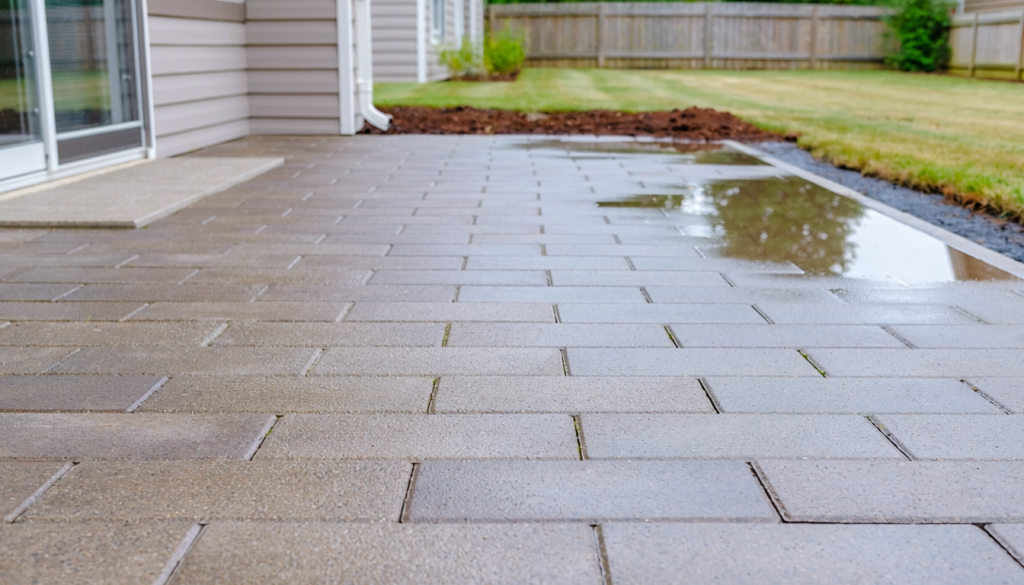
Patio drainage problems often begin with small clues, such as a puddle that lasts longer than usual, washed-out joint sand, or soggy soil along the patio edge. Checking these signs after rain can help you catch erosion, slippery surfaces, and patio movement before they become more difficult to address.
Begin with observation and simple maintenance rather than major changes. Recurring standing water, runoff moving toward the house, widespread settlement, or continued erosion usually requires evaluation by a qualified drainage or hardscape professional.
| Drainage warning sign | Possible cause | First step |
|---|---|---|
| Water pools after ordinary rain | Low spot, settling, blocked path, or poor slope | Note the location and how long the water remains |
| Water flows toward the house | Incorrect slope, concentrated runoff, or blocked drain | Keep the area clear and arrange evaluation if it recurs |
| Patio edges are eroding | Concentrated water flow or poor soil support | Identify where the water enters the area |
| Joint sand repeatedly washes out | Runoff channels, pressure washing, or paver movement | Correct minor water sources before replacing sand |
| Pavers are sinking or shifting | Base movement, erosion, or poor drainage | Mark the affected area and monitor changes |
| Soil remains soggy beside the patio | Low ground, downspout discharge, or overwatering | Check nearby water sources from dry ground |
Why Patio Drainage Matters
A patio should direct rainwater away without creating persistent puddles, eroding the surrounding soil, washing material from paver joints, or sending runoff toward the house. Water that repeatedly collects in one place can also encourage algae, moss, insects, and seasonal movement.
A small puddle that disappears soon after rain is different from standing water that returns after ordinary storms or remains for long periods. The duration, location, and frequency of the problem matter more than one isolated wet spot.
No patio surface should be assumed to be waterproof. Pavers, concrete, joints, edges, and the underlying base all interact with surrounding soil and drainage. Surface cleaning alone cannot correct a failed slope, washed-out base, or major runoff problem.
Check the Patio After Rain
Observe the patio during or shortly after an ordinary rain, but remain in a safe, nonslippery location. Do not walk through flooded areas, flowing water, algae-covered surfaces, or icy spots.
Watch where water enters the patio. It may come from direct rainfall, nearby roofs, downspouts, higher ground, irrigation, planters, or adjacent walkways.
Follow the visible direction of flow across the surface. Note where water slows, changes direction, forms channels, or collects in depressions.
Check how long puddles remain after the rain stops. Photographs taken from the same location can help you compare changes between storms.
Look carefully for runoff moving toward the house, collecting near doors, or soaking the soil beside the foundation. Inspect the patio perimeter for erosion, displaced mulch, exposed edge material, and consistently damp ground.
Common Signs of Patio Drainage Problems
Standing water is the most obvious warning sign, but drainage issues can affect the patio in several ways.
Green algae or moss often develops where surfaces remain damp or shaded. These areas can become slippery, especially during rain or morning dew.
Repeated mud or soil deposits show that water is carrying material from somewhere else. On paver patios, washed-out joint sand may collect in small piles or form streaks along runoff paths.
Pavers may begin to sink, rock, or spread apart when supporting material moves or erodes. Concrete patios may develop low spots, cracks, or visible slab movement.
Other signs include edge erosion, water stains near the house, persistently soggy soil, and damage that worsens after freezing weather. Several symptoms occurring together may indicate a larger base, slope, or site-drainage problem rather than routine surface wear.
A regular paver patio maintenance routine can help you track washed-out joints, slippery growth, edge movement, and recurring low spots between storms.
Water Flowing Toward the House
Runoff moving toward the house is a concern because repeated water accumulation may affect doors, siding, soil, foundation areas, or lower-level spaces. The source and extent of the problem should be identified before attempting a repair.
From a safe location, observe the patio’s apparent slope direction. Look for low areas near doors and places where water collects along the house.
Check whether downspouts discharge onto or beside the patio. Also look for damp soil, staining, erosion, and debris blocking visible drain openings.
Do not remove siding, open foundation components, excavate beside the house, or attempt structural waterproofing as part of a homeowner inspection.
When water repeatedly flows toward the house or remains near the foundation, contact a qualified drainage, hardscape, or foundation professional. Prompt evaluation is especially important when moisture reaches doors, walls, or interior areas.
Standing Water on the Patio
Standing water can result from a small localized depression, uneven settling, blocked drainage paths, or surface buildup. It may also indicate failed base material, an inadequate original slope, or concentrated runoff from a roof or downspout.
Sweeping leaves, soil, and debris from the patio may reopen a minor blocked path. Moving a planter that drains onto one spot or repositioning an accessible above-ground downspout extension may also reduce a simple, concentrated water source.
Routine maintenance is unlikely to solve puddles caused by broad settlement, an incorrect patio slope, base failure, or water entering from surrounding ground.
Monitor how often the puddle forms and how long it remains. Recurring deep water, expanding low spots, or water that remains long after nearby surfaces dry should be professionally evaluated.
Downspouts and Roof Runoff
A downspout that discharges directly onto a patio can create a concentrated stream strong enough to move joint sand, stain surfaces, erode edges, and contribute to settlement.
Look for overflowing gutters only from the ground. Do not climb a ladder during rain or stand beneath falling water to investigate.
Check whether a splash block or loose, above-ground extension has shifted out of position. When the part is accessible from dry, level ground, it may be possible to reposition it according to its intended use.
Watch where the discharged water travels. A solution that moves water off the patio but sends it toward the foundation, a retaining wall, or a neighboring property may create a different problem.
Buried-drain installation, gutter access, trenching, and excavation are outside the scope of basic patio maintenance.
Patio Edge Erosion
Patio edges depend on stable surrounding material and, for many paver installations, properly installed edge restraints. Repeated water flow can wash supporting soil away.
Look for exposed edge material, pavers spreading outward, widening perimeter joints, and soil that has pulled away from the patio. Mulch, gravel, or landscape material may also be displaced after storms.
Small channels forming beside the patio show where water repeatedly travels. Photograph these channels before disturbing them so the flow pattern can be evaluated.
Continuing erosion may weaken edge support and contribute to loose or moving pavers. Do not excavate the perimeter or replace buried restraints without understanding why the soil is washing away.
Joint Sand Washing Out
Paver joints should not repeatedly empty after normal rainfall. Signs of joint-sand loss include shallow or open joints, loose sand collecting on the patio, and narrow runoff channels across the surface.
Ant activity may also disturb joint material, although insects are not always the primary cause. As joints lose support, nearby pavers may begin to shift or rock.
Adding more sand without correcting concentrated runoff may provide only a temporary result. The replacement material can wash out again during the next storm.
Regular joint sand and polymeric sand are not interchangeable in every installation. Joint width, paver type, drainage, existing materials, and product requirements affect which option is appropriate. Extensive or repeated loss should be evaluated before the joints are refilled.
Sinking or Uneven Pavers
Rocking pavers, raised corners, and sunken areas can create trip hazards and collect water. Keep people away from severely uneven sections until the condition is addressed.
One isolated paver may have a localized bedding or joint issue. When the surrounding surface remains stable and drainage appears normal, the problem may be suitable for separate minor repair guidance.
Widespread settlement is different. Several low areas, long depressions, or movement that returns after a previous repair may point to base failure, erosion, or a larger drainage problem.
Do not remove large patio sections or attempt to rebuild a failed base without professional planning. Resetting the visible surface will not provide a durable correction when supporting material continues to move.
When the problem is limited to one or two stable units rather than broad settlement, follow the localized guidance for uneven patio pavers.
Soggy Soil Beside the Patio
Soil that remains soggy beside the patio may be receiving repeated runoff from the surface, a downspout, irrigation, or nearby planters. Compacted soil and naturally low ground may also drain slowly.
Persistent wetness can contribute to erosion, insects, plant stress, and movement around the patio edge. Mud may then wash back onto the patio during later storms.
Check irrigation schedules and visible planter drainage. Move portable items that repeatedly release water onto the same location.
Avoid digging, adding large amounts of fill, or changing the grade without understanding where the water will go. Larger soil and drainage corrections may affect the patio, foundation, retaining walls, or nearby properties.
Simple Preventive Steps Homeowners Can Take
Keep preventive work limited to minor tasks that are accessible from safe, dry ground.
Safe first steps include
- Sweep leaves, soil, and debris from the patio surface and joints.
- Clear accessible drain openings without entering drains or confined spaces.
- Move planters that repeatedly discharge onto one location.
- Reposition loose, above-ground downspout extensions when safely accessible.
- Remove leaves blocking visible surface water paths.
- Monitor how long puddles remain after ordinary rain.
- Mark or photograph recurring problem areas for comparison.
These steps can remove simple obstructions and help identify patterns. They do not correct failed bases, widespread settlement, poor site grading, or foundation drainage.
Do not dig trenches, install underground drains, cut concrete, lift large patio areas, or redirect major runoff without professional planning.
Patio Pavers vs Concrete Patio Drainage
Paver patios often reveal drainage problems through joint-sand loss, loose units, edge spreading, and localized settlement. Water may follow joints or collect where supporting material has moved.
Concrete patios may show cracks, low spots, surface scaling, or movement between slab sections. Water can collect along cracks or in depressions.
Both materials can direct runoff toward the house or surrounding landscape. The visible surface does not reveal the full condition of the base, soil, drainage path, or buried components.
Repeated or widespread problems may require evaluation regardless of whether the patio is made from pavers or concrete.
Freeze-Thaw and Seasonal Drainage Damage
Water that remains in low spots can freeze during cold weather, creating slippery ice and placing additional stress on joints, cracks, and patio edges.
Seasonal freezing and thawing may contribute to heaving, cracking, joint loss, and movement where supporting soil remains wet. Existing drainage problems often become more noticeable after winter.
Inspect the patio in fall before freezing weather begins. Clear leaves, observe drainage after rain, and note areas that remain wet.
Do not walk across icy or flooded sections to inspect them. Evaluate visible changes from stable ground and arrange professional help when the patio has shifted significantly.
When to Call a Professional
Minor cleaning and observation cannot correct every drainage problem.
Arrange professional evaluation when
- Water repeatedly flows toward the house.
- Standing water remains for long periods.
- Large patio areas are sinking or heaving.
- Patio edges continue to erode.
- Joint sand repeatedly washes out.
- Drainage problems return after minor maintenance.
- Water affects doors, foundations, retaining walls, or neighboring property.
- Work requires excavation, grading, buried drains, or major rebuilding.
A hardscape contractor may be appropriate for patio movement and failed edges. A landscape-drainage or qualified site professional can assess runoff and grading concerns. Foundation-related moisture or structural symptoms may require a foundation specialist or other qualified building professional.
Final Thoughts
Recognizing patio drainage warning signs early can help limit erosion, slippery growth, joint-sand loss, patio movement, and water accumulation near the house. Check the surface and surrounding soil after ordinary rain, document recurring wet areas, and keep visible drainage paths free of debris.
Simple preventive maintenance may resolve a blocked surface path or movable water source. Recurring standing water, widespread settlement, continued erosion, or runoff toward the foundation requires professional evaluation rather than major DIY drainage work.