Smart Thermostat Compatibility Guide: What Works With your HVAC System?
Buying a smart thermostat is easier when you know what your heating and cooling system can actually support. This smart thermostat compatibility guide is meant to help homeowners figure out whether a smart thermostat will work with their HVAC system before they buy, not after they have already opened the box and removed the old thermostat.
That matters because compatibility is not just about whether the thermostat fits on the wall. It is about whether the thermostat can properly control your system’s heating, cooling, fan, power needs, and extra features. Some homes are a very easy match for a smart thermostat. Others need a closer look at wiring, staging, control boards, or system type before a good decision can be made.
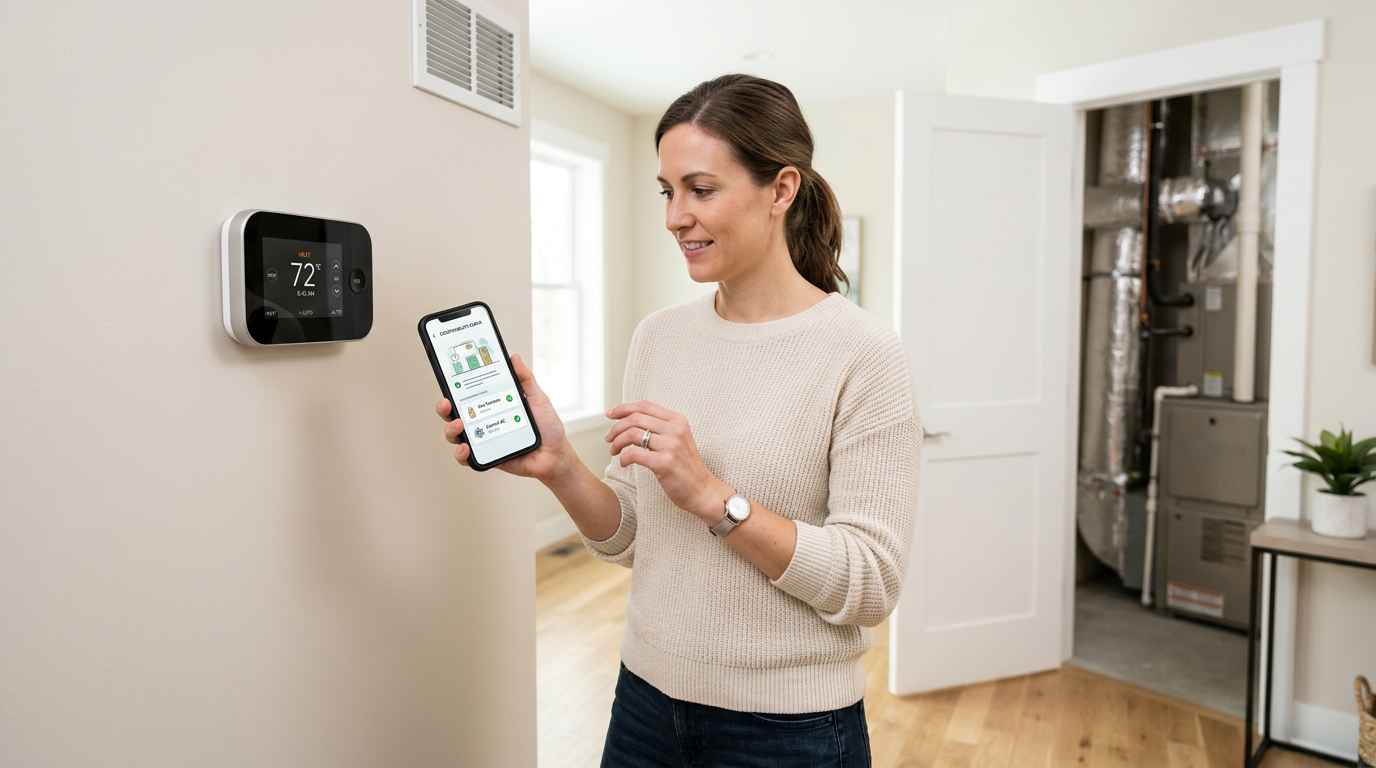
What compatibility means with a smart thermostat
In this context, compatibility means the thermostat can safely power up, connect to the right wires, and control the heating and cooling equipment the way it was designed to operate.
A thermostat can look compatible at first and still be the wrong fit. It might turn on, but not manage auxiliary heat correctly. It might work on a basic furnace and AC system, but not on a heat pump. It might seem fine until the battery drains, the Wi-Fi drops, or the system starts short cycling.
A smart thermostat has to match more than the wall wiring. It has to match the type of HVAC system in the home.
Compatibility usually depends on these factors
- System type
- Thermostat wiring
- Number of heating and cooling stages
- Whether a C-wire is present or needed
- Whether the home has a zone panel or control board
- Whether the system uses standard thermostat terminals or a proprietary control setup
- Whether the thermostat manufacturer lists your setup as supported
Why not every smart thermostat works with every HVAC system
This is the most important thing to understand before buying.
Not every smart thermostat works with every HVAC system. Some thermostats are built for common 24-volt residential systems and work well in many homes. Others are only a good fit for certain system types. Some systems use communicating or brand-specific controls that do not work well with standard replacement thermostats at all.
In plain English, one thermostat may be perfect for your neighbor’s home and still be the wrong choice for yours.
That is why product listings that say “works with most systems” should be treated as a starting point, not a guarantee.
Conventional furnace and AC systems
A conventional furnace and central air conditioning system is usually the easiest setup for smart thermostat compatibility.
In this kind of system, the furnace typically handles heat and the air conditioner handles cooling. The thermostat tells the system which mode to run and when to run the fan. Many smart thermostats are designed around this kind of standard low-voltage setup.
These systems often use familiar thermostat terminals like R, W, Y, G, and sometimes C.
Homeowners with a basic conventional system should usually check for:
- One or two stages of heating
- One or two stages of cooling
- A standard 24-volt thermostat setup
- A connected C-wire or a thermostat that supports an approved alternative
- No unusual control modules or proprietary wiring
If your home has a basic furnace and AC setup, you usually have the widest range of smart thermostat choices.
If your main concern is thermostat power and wiring on a standard system, our guide on do you need a C-wire for a smart thermostat can help you sort that out before you buy.
Heat pump systems
Heat pump systems need more careful compatibility checks.
A heat pump does not work like a standard furnace and AC system. The same outdoor equipment is usually involved in both heating and cooling. The thermostat often has to manage a reversing valve, and many systems also have auxiliary heat or emergency heat.
That means the thermostat has more to control, and the wrong match can create confusing results. A system may cool when it should heat, bring on backup heat too often, or fail to use the system stages correctly.
Heat pump wiring often includes terminals like O, B, O/B, AUX, W2, or E. Those details matter.
Homeowners with a heat pump should verify:
- The thermostat specifically supports heat pumps
- The thermostat supports auxiliary heat if the system has it
- The thermostat supports emergency heat if the system uses it
- The thermostat supports the correct number of stages
- Any no-C-wire claim also applies to heat pump setups, not just conventional systems
Heat pumps are common, but they are not a plug-and-play thermostat situation in every home.
If your system is a heat pump, our guide on best thermostat for heat pump can help you narrow down what type of thermostat makes the most practical sense.
Multi-stage systems
A multi-stage system can run at more than one output level. Instead of being only on or off, it may have a lower stage and a higher stage.
This can apply to conventional systems, heat pumps, or both. Some homes have two-stage cooling. Some have two-stage heating. Some heat pumps have more than one stage plus backup heat.
A thermostat has to support the number of stages your system uses. If it does not, the system may still run, but it may not run the way it was designed to.
Staging affects things like:
- How steadily the home heats and cools
- How often the equipment cycles on and off
- How often backup heat is used
- How comfortable the home feels during larger temperature changes
- How much control the installer has over system behavior
If you know your system is multi-stage, that should be one of the first things you check before buying any thermostat.
Dual-fuel systems
A dual-fuel system usually combines a heat pump with a furnace. The heat pump handles heating and cooling in milder conditions, and the furnace takes over or assists when outdoor temperatures drop far enough.
This kind of system can be very effective, but it also raises the thermostat compatibility stakes. The thermostat must know how to manage both parts of the system correctly.
A thermostat that supports a simple heat pump may not necessarily support a dual-fuel setup the right way.
Dual-fuel homeowners should verify:
- The thermostat specifically supports dual-fuel operation
- It can manage the correct stages of heat and cooling
- It can work with the furnace as alternate heat
- It supports the equipment logic your system needs
- It is approved for your exact setup by the thermostat maker
If your home has both a heat pump and a furnace, slow down before buying. That is not a system type to guess on.
Zoned systems and control boards
A zoned HVAC system uses dampers, panels, or control boards to manage temperatures in different areas of the home. Instead of one thermostat controlling the whole house the same way, multiple thermostats or zone controls may be involved.
This is where compatibility gets more complicated. A thermostat may be compatible with your heating and cooling equipment but still have issues with the zoning panel or control interface between the thermostat and the equipment.
Some zoning systems also have stricter C-wire requirements or special wiring rules.
Zoned systems may involve:
- A zone control panel near the furnace or air handler
- Multiple thermostats in the home
- Dampers that open and close for different areas
- Equipment interface modules
- Extra wiring or power requirements
If you have more than one thermostat in the house, or you know the home has a zone panel, check that panel as part of your compatibility review.
Communicating and proprietary systems
Some HVAC systems use communicating controls instead of standard thermostat terminals. These systems may use labeled terminals such as 1, 2, 3, 4, DATA, or other proprietary connections. In some homes, the manufacturer’s own thermostat is an important part of how the system operates.
These systems are often more advanced, but they are also less flexible when it comes to swapping in a universal smart thermostat.
A standard smart thermostat may not be a good replacement, even if it looks close enough at first glance.
Warning signs you may have a communicating or proprietary system
- Unusual terminal labels instead of standard R, C, W, Y, and G
- Brand-specific wall controls already installed
- A high-end variable-speed or premium HVAC system
- Wiring labels such as DATA or numbered terminals
- Installer paperwork that refers to communicating controls
In many of these cases, the best control may be the equipment maker’s own thermostat or control rather than a general smart thermostat.
Why wiring, system type, staging, C-wire, and control boards all matter
Homeowners often focus on the thermostat faceplate and app features, but the important part is what is happening behind the wall and at the equipment.
System type tells you how the thermostat needs to control the equipment. Wiring tells you what connections are actually present. Staging tells you how many heating and cooling levels the thermostat must support. A C-wire affects whether the thermostat can stay powered reliably. Control boards and zone panels can change how everything connects together.
That is why compatibility should be checked as a whole, not one detail at a time.
A thermostat can fail the compatibility test for several different reasons even when the wall wiring looks normal.
Safe homeowner checks before buying
Homeowners can do a basic compatibility check without becoming HVAC experts. The goal is to inspect and document, not to start guessing or moving wires around.
Before buying a thermostat, take these safe steps
- Turn off power to the HVAC system before removing the thermostat faceplate
- Take a clear photo of the existing thermostat wiring
- Look at terminal labels, not wire colors
- Write down whether the home has a conventional system, heat pump, dual-fuel setup, or zoning
- Check whether there is a wire connected to C
- Look for an unused spare wire behind the thermostat wall plate
- If you can safely access the equipment, compare the thermostat wiring to the control board or zone panel
- Look for unusual labels such as O/B, AUX, E, DATA, or numbered terminals
- Use the thermostat manufacturer’s compatibility checker before buying
Wire color alone does not tell you what a wire does. The terminal label is what matters.
Guidance for simple conventional systems
If your home has a basic furnace and AC system with standard low-voltage wiring, you are usually in the easiest category.
Many smart thermostats are built for this kind of setup. In a lot of homes, compatibility comes down to checking staging, confirming power requirements, and making sure the thermostat supports your exact wiring.
A simple conventional system is often the easiest fit when:
- You have one thermostat for the whole home
- The wiring uses standard terminals
- The system is one-stage or two-stage
- There is no zone panel
- The thermostat maker confirms compatibility
This is the group of homeowners most likely to have a smooth DIY thermostat replacement.
Guidance for heat pump homeowners
Heat pump homeowners need to pay closer attention to details.
The thermostat must support the way the heat pump switches between heating and cooling, and it must also handle auxiliary or emergency heat correctly if those features are part of the system.
Heat pump buyers should verify:
- System type
- Reversing valve wiring
- Auxiliary heat support
- Emergency heat support
- Number of stages
- C-wire or other power requirements
If any of those details are unclear, the safest move is to verify them before you buy.
Guidance for advanced or proprietary systems
If your home has zoning, dual-fuel equipment, communicating controls, premium variable-speed equipment, or other advanced features, the thermostat decision should be more careful.
The more advanced the HVAC system is, the less likely it is that a generic “works with most systems” claim will be enough.
More advanced homeowners should watch for:
- Brand-specific controls
- Special interface modules
- Zone panels
- Numbered or data terminals
- More than two heating stages or cooling stages
- Non-standard wiring layouts
These are the setups where a contractor or manufacturer compatibility tool is especially valuable.
Common homeowner mistakes when checking compatibility
Most thermostat problems begin with a bad assumption, not a bad thermostat.
Common compatibility mistakes include:
- Assuming every smart thermostat works with every HVAC system
- Looking at wire colors instead of terminal labels
- Forgetting to identify whether the home has a heat pump
- Ignoring auxiliary or emergency heat
- Buying based on app features before checking system type
- Overlooking zone panels or equipment interface modules
- Assuming a thermostat that powers on is fully compatible
- Replacing a communicating thermostat with a standard one without checking first
- Treating “works with most systems” as a guarantee
Thermostat wiring should not be guessed at. If the setup seems unusual, that usually means it needs a closer look.
Smart Thermostat Compatibility Guide: what to verify before you buy
A simple decision process helps avoid most thermostat buying mistakes.
Verify these points before choosing a thermostat
- What type of HVAC system you have
- Whether the system is conventional, heat pump, dual-fuel, zoned, or communicating
- How many heating and cooling stages the system uses
- Whether a C-wire is connected or another approved power option is available
- Whether a zone panel or control board is part of the setup
- Whether the thermostat is listed as compatible by the manufacturer
- Whether the thermostat supports any special functions your system uses
A practical recommendation for most homeowners
- If you have a basic conventional furnace and AC system, a standard smart thermostat is often a realistic option
- If you have a heat pump, check heat pump support and backup heat support first
- If you have dual-fuel, zoning, or advanced staging, choose only from thermostats that clearly support those features
- If you have numbered terminals, data wires, or a brand-specific control, verify compatibility very carefully before replacing anything
- If you are not sure what system you have, identify that first before comparing thermostat models
Conclusion
A smart thermostat can be a great upgrade, but only when it actually matches the HVAC system in your home. The safest way to shop is to treat compatibility as a full-system question, not just a wall wiring question.
Check your system type, staging, power needs, control boards, and thermostat terminals before you buy. That extra effort can save you from installation problems, return hassles, and a thermostat that never controls the system the way it should.