What Does Open Neutral Mean on an Outlet? What Homeowners Should Know
If your tester reading has you wondering what does open neutral mean on an outlet, the direct answer is this: the outlet may have a problem with the neutral path, and you should stop using that outlet until an electrician checks it. Do not try to repair the neutral wire, replace the outlet, open the box, or troubleshoot live wiring yourself.
A plug-in outlet tester can warn you that something may be wrong, but it cannot fully diagnose the circuit from the outside. An open neutral reading can be serious because the neutral is part of the normal path electricity uses when a device is plugged in. If that path is broken or unreliable, devices may not work correctly, may behave unpredictably, or may point to a wiring condition that needs professional repair.
What Does Open Neutral Mean on an Outlet?
An “open neutral” reading usually means the tester is not detecting a complete neutral path at the outlet. In simple terms, the outlet may not have the normal return path that allows a plugged-in device to operate the way it should.
That does not mean you can tell the exact problem just by looking at the tester. The issue could be at the outlet, somewhere else on the same circuit, in a connection, or in another part of the wiring system. A homeowner cannot safely confirm that from the outside.
The phrase what does open neutral mean on an outlet can sound like a simple definition question, but the safe answer is action-based: stop using the outlet and call an electrician. An open neutral is not a cosmetic issue, and it is not something to “try and see if it still works.”
| Tester reading | What it may mean | Safest next step |
|---|---|---|
| Open neutral | Possible problem with the neutral path | Stop using the outlet and call an electrician |
| Open ground | Possible missing or faulty equipment ground | Avoid relying on grounded protection and call a pro |
| Open hot | Outlet may not have power or may have a wiring issue | Do not troubleshoot inside the outlet; get help |
| Hot/neutral reverse or other fault | Possible unsafe wiring condition | Stop using the outlet and schedule electrical service |
Even if nearby outlets still work, take the reading seriously. Electrical problems can affect one receptacle, part of a room, or multiple outlets on the same circuit.
What an Outlet Tester Can and Cannot Tell You
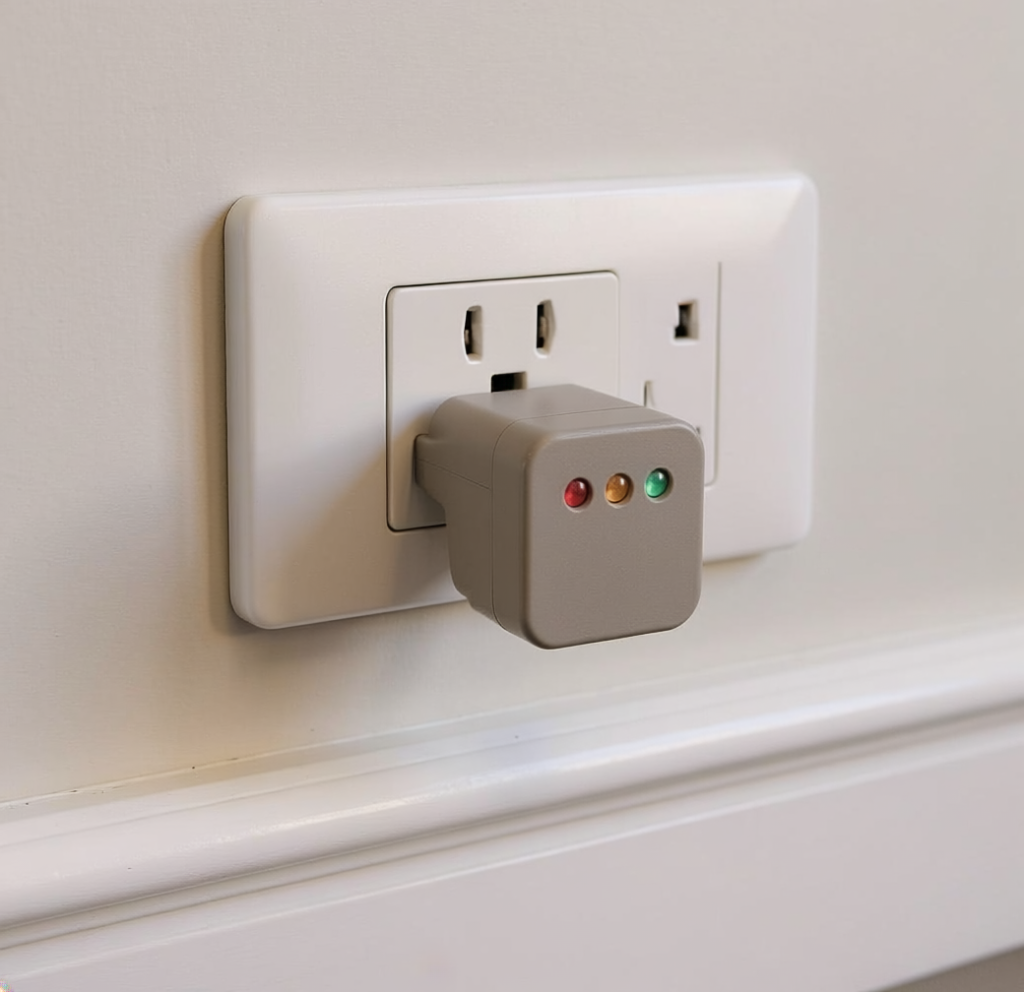
A plug-in outlet tester is a small tool that plugs into a standard receptacle. It uses indicator lights to show common wiring warnings. Many models have a simple chart printed on the tool so you can match the light pattern to a basic reading.
For homeowners, this is useful because it can flag a possible issue without opening anything. You plug the tester in, read the lights, and use the chart to understand the warning. That is the safe limit of the tool.
A tester can suggest a problem, but it cannot explain everything happening behind the wall. It cannot show whether a wire is loose, damaged, disconnected, incorrectly connected, or affected somewhere else on the circuit. It also cannot replace the tools and training an electrician uses to test wiring safely.
A basic outlet tester may also give confusing results when the wiring condition is unusual. That is another reason not to treat the reading as a repair instruction. If the outlet tester says open neutral, the tester has done its job by warning you. The next step is not to open the outlet. The next step is to stop using it and get professional help.
If you buy an outlet tester for general homeowner use, look for a model with clear indicator lights, an easy-to-read chart, a GFCI test button, a safety listing, an easy-grip body, and instructions written for non-electricians. A non-contact voltage tester can also be part of a homeowner safety kit, but it should not be used to justify opening electrical boxes or touching wiring.
If your tester shows an open ground warning instead, this guide on outlet tester open ground explains what that reading may mean and when to call an electrician.
Why an Open Neutral Reading Matters
An open neutral reading matters because the neutral is part of the normal operating path for many household circuits. When that path is not right, the outlet may not power devices correctly. In some cases, devices may not turn on at all. In other cases, they may flicker, reset, hum, run oddly, or behave in a way that is hard to explain.
That is why what does open neutral mean on an outlet is not just a vocabulary question. It is a safety warning. The outlet may look normal, but the tester is telling you the circuit may not be behaving normally.
This can be especially concerning for electronics, chargers, computers, televisions, routers, small appliances, and anything with controls or circuit boards. Some devices are sensitive to poor or unstable electrical conditions. Others may appear to work for a while but still be connected to an unsafe or unreliable outlet.
An open neutral can also create confusion because nearby outlets may still seem fine. One lamp working in the room does not prove the questionable outlet is safe. A device turning on briefly does not prove the neutral path is reliable.
Do not use the outlet as a test spot for expensive electronics. Do not plug in a surge protector and assume it solves the problem. A surge protector is not a neutral repair, and it cannot make a faulty outlet safe.
The safest assumption is simple: if a plug-in outlet tester shows open neutral, the outlet needs professional evaluation before normal use continues.
Safe Checks Homeowners Can Make
There are a few safe things you can do from the outside of the outlet. These steps are only for observation and communication. They are not repair steps.
Safe outside-only checks include:
- Read the tester’s chart again to confirm the light pattern matches “open neutral.”
- Try the tester on a different dry, undamaged outlet to make sure the tool lights up normally elsewhere.
- Look from the outside for obvious damage, such as cracks, scorch marks, looseness, or discoloration.
- Unplug devices from the outlet until it has been checked.
- Note whether nearby outlets, lights, or devices are acting strangely.
- Write down where the open neutral reading appears so you can explain it to the electrician.
Keep these checks simple. Do not remove anything. Do not loosen screws. Do not take off the cover plate. Do not try to inspect the outlet box.
If the outlet is in a kitchen, bathroom, laundry room, garage, basement, outdoor area, or anywhere damp, be extra cautious. Moisture and outlet problems are a bad mix. Stop using the outlet and call a pro.
You can also check whether your tester has a clear, readable design. If the chart is confusing or worn off, replace the tester with a homeowner-friendly model. The best tool for a beginner is not the most complicated one. It is the one you can read correctly and use without opening electrical parts.
If you want a safe tool-use refresher before relying on any electrical tester, this guide on how to use a non contact voltage tester explains what homeowners can and cannot learn from outside-only checks.
What Not to Touch or Try
An open neutral warning is not a DIY repair invitation. Neutral problems can involve energized parts, shared wiring conditions, loose connections, or circuit issues that are not visible from the outside.
The safest line for homeowners is clear: plug-in testing and outside observation only.
Do not try these electrical fixes or checks:
- Do not remove the outlet cover.
- Do not pull the outlet from the wall.
- Do not touch wires, terminals, screws, or exposed conductors.
- Do not replace the outlet as a guess.
- Do not repair, splice, or reconnect a neutral wire.
- Do not open the electrical panel or replace breakers.
Also do not use adapters, extension cords, or power strips as a workaround. Moving the problem downstream does not fix the outlet. It may only hide the warning while devices remain connected to an unsafe condition.
Avoid using a multimeter on the outlet or circuit unless you are trained to do so safely. This article is about beginner-safe interpretation of a tester reading, not live electrical troubleshooting.
If the outlet feels hot, smells burnt, buzzes, sparks, trips a breaker, shows damage, or is near water, stop using it right away. Do not keep testing it repeatedly to see if the reading changes. A changing or confusing reading is another reason to call an electrician.
When to Call an Electrician
Call an electrician when an outlet tester says open neutral, especially if the outlet powers anything important, expensive, or regularly used. This includes computers, TVs, routers, chargers, refrigerators, microwaves, power tools, office equipment, and small appliances.
You should also call if the same open neutral reading appears on more than one outlet, if lights flicker in the area, if devices behave oddly, or if the home has older wiring. Older homes can have wiring changes, mixed outlet types, or previous repairs that are hard to understand from the outside.
Call a pro right away if you notice:
- Heat, smoke, sparks, buzzing, or a burnt smell
- Scorched, cracked, loose, or damaged outlet parts
- Breakers tripping when devices are plugged in
- Several outlets with the same warning
- Flickering lights or devices turning on and off unexpectedly
- Any outlet issue near moisture or outdoors
When you call, you do not need to diagnose the circuit. Say something simple: “My plug-in outlet tester says open neutral at this outlet.” Then explain which room it is in, whether other outlets show the same reading, and whether you noticed heat, smell, buzzing, flickering, or breaker trips.
An electrician can safely inspect the outlet, test the circuit, check related connections, and decide what repair is needed. That may involve opening devices or panels, but that work belongs to a qualified professional.
Final Thoughts
If you are asking what does open neutral mean on an outlet, the safe answer is that the outlet may have a problem with the neutral path and should not be used until an electrician checks it. A plug-in outlet tester can help you spot the warning, but it cannot fully diagnose or repair the circuit.
Do not open the outlet, touch wires, replace parts, or try to repair a neutral yourself. Unplug devices, avoid using the outlet, and call a pro.
The goal is not to become an electrician. The goal is to recognize the open neutral reading early, avoid unsafe DIY work, and get the outlet checked before the problem becomes more serious.