Weed and Feed vs Pre-Emergent for Spring Lawns
Choosing weed and feed vs pre emergent for spring lawns gets much easier once you know what problem you are actually trying to solve.
These two products are not the same thing, even though they often sit near each other at the store and both get marketed as spring lawn fixes. One is mainly about preventing certain weeds before they sprout. The other is usually about feeding the lawn while treating weeds that are already growing.
For most beginner homeowners, the best choice comes down to one question: Are you trying to stop future weeds, or kill weeds you can already see?
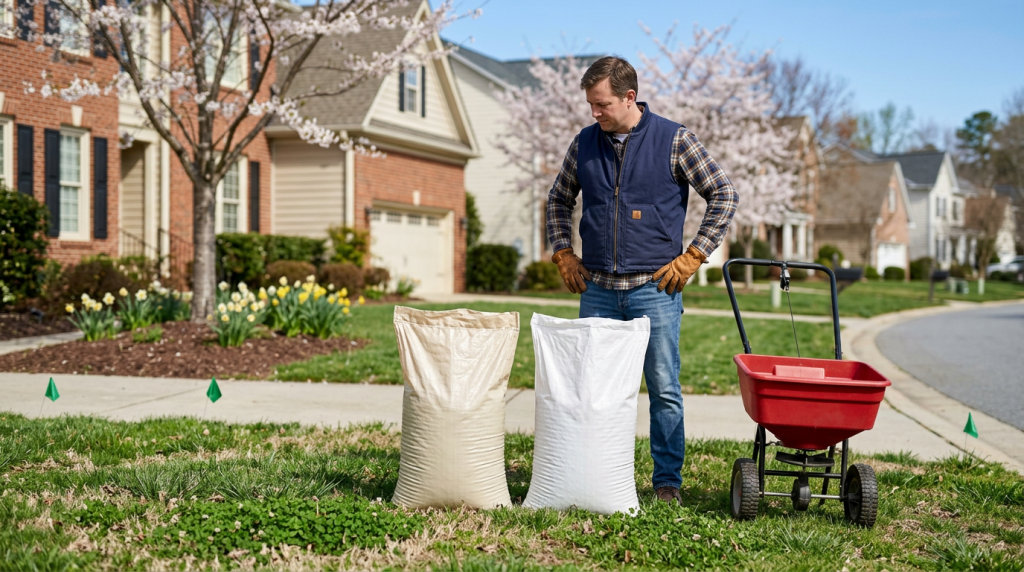
The simple difference between the two
A pre-emergent is a weed preventer. It creates a barrier near the soil surface that stops certain weed seeds as they begin to sprout. In spring, homeowners usually use it to help prevent crabgrass and other annual grassy weeds.
A weed and feed is usually a combination product. It contains:
- fertilizer to feed the grass
- a weed killer for weeds that are already growing
Most spring weed and feed products are designed for broadleaf weeds, which are weeds like dandelions, clover, chickweed, and plantain. Broadleaf means the weed has wider leaves instead of grass-like blades.
So the short version is this:
- Pre-emergent helps stop future weed germination
- Weed and feed usually treats visible weeds and adds fertilizer at the same time
Weed and feed vs pre emergent for spring lawns: which one is better?
There is no single winner for every lawn.
The better choice depends on what kind of weed problem you have, what your lawn looked like last year, and whether your grass is already established.
In general:
- choose pre-emergent if crabgrass or other annual grassy weeds were a big problem before
- choose weed and feed if you already have visible broadleaf weeds across the lawn
- choose neither right now if you plan to seed the lawn or your lawn is new and still getting established
A lot of homeowners buy weed and feed thinking it covers everything. It usually does not. In many cases, it will not prevent crabgrass unless the label specifically says it includes a crabgrass preventer.
That label check matters more than the product name on the front of the bag.
What pre-emergent is best for
Pre-emergent works best when you are trying to prevent weeds before they start.
In spring, this usually means stopping weeds like crabgrass before soil temperatures warm enough for germination. Once crabgrass is up and growing, a basic pre-emergent is usually too late.
Pre-emergent is often the better choice when:
- crabgrass showed up last summer
- your lawn is already established
- you are not planning to seed this spring
- you want prevention more than cleanup
This type of product usually needs to be watered into the soil after application so it can form the protective barrier where seeds are germinating.
That is one of the big differences between pre-emergent and weed and feed. Pre-emergent needs to reach the soil. A broadleaf weed killer usually needs to reach the weed leaves.
If crabgrass is the main weed you are trying to stop, our guide on when to apply crabgrass preventer before first spring mow will help you time it more accurately.
What weed and feed is best for
Weed and feed is mainly about convenience.
It can make sense when your lawn has visible broadleaf weeds and you were already planning to fertilize. Instead of making two separate applications, the product combines them.
It is usually most useful when:
- you can already see broadleaf weeds across much of the lawn
- the lawn is established and actively growing
- you want one bag to handle feeding and weed control together
- you are not trying to seed right away
Many weed and feed products work best when the weed leaves are slightly damp from dew or light moisture so the granules stick to the leaves. That is how the herbicide gets absorbed.
This is where beginners often get frustrated. They spread the product on a dry lawn, then wonder why the weeds did not respond very well.
Why weed and feed is not always the best spring answer
Weed and feed sounds like an easy all-in-one fix, but it has a few limits.
The biggest one is timing. The best time to fertilize a lawn is not always the same as the best time to control weeds. When you combine both jobs into one product, you give up some flexibility.
Another issue is coverage. If you only have a few scattered weeds, spreading weed killer across the entire lawn may be more than you need.
Common downsides of weed and feed
- it may not target the exact weeds causing the problem
- fertilizer timing may not be ideal for your lawn
- it can be less precise than spot-treating weeds
- many products do not control grassy weeds like crabgrass
- some products can stress certain grass types if used at the wrong time
That does not mean weed and feed is always a bad choice. It just means it is not the automatic best choice for every spring lawn.
If you only have a few visible weeds instead of a lawn-wide problem, read our guide on spray vs granular weed killer for spot treating lawns before treating the whole yard.
When neither product is the right move
Sometimes the best spring decision is to skip both products for now.
This is especially true when the lawn is thin, newly seeded, or clearly struggling from a deeper problem like compacted soil, poor mowing, drainage trouble, shade, or pet damage.
If you use a pre-emergent before seeding, you may block new grass from sprouting. If you use weed and feed on a tender new lawn, you can interfere with establishment or risk injury.
Hold off on both products if
- you plan to seed or overseed this spring
- the lawn is brand new
- the grass is too thin to compete well anyway
- you are not sure what weeds you actually have
- the lawn is under stress from heat, drought, or poor drainage
In those situations, the real fix may be lawn repair, not another bag of product.
How to tell which weed problem you have
This is where beginner homeowners can make the best decision.
Look at the weed itself.
If the weed looks like a coarse grass and usually shows up later in spring or summer, you may be dealing with crabgrass or another grassy weed. That points more toward pre-emergent timing for prevention.
If the weed has wider leaves and you can already see it in spring, you may be dealing with a broadleaf weed like:
- dandelion
- clover
- chickweed
- plantain
- henbit
Those weeds are more in the weed-and-feed category, although spot treatment is often a better choice when the problem is small.
The most important label warning most homeowners miss
Not every weed and feed product is built the same way.
Some contain a post-emergent broadleaf herbicide. Others include a pre-emergent crabgrass preventer. A few may combine fertilizer with ingredients that work differently than you expect.
That means you should never assume the bag does what another bag did last year.
Check the label for these details
- whether it controls existing weeds or prevents new weeds
- which weeds it actually lists
- whether it is safe for your grass type
- whether the lawn must be established first
- whether the product should be watered in or left on the weed leaves
- whether seeding must be delayed after application
This matters even more with warm-season lawns, where some herbicides can damage turf during spring green-up.
Safe DIY checks before you choose a product
A homeowner can usually handle the basic decision safely with a few simple checks.
Do these checks first
- identify whether your main problem is visible weeds or future weeds
- confirm your lawn is established, not newly seeded
- check whether the weeds are broadleaf or grassy
- read the label to make sure the product matches your grass type
- look at the weather so rain, watering, and temperature fit the label directions
- avoid using more than the label rate
It also helps to ask yourself whether the lawn really needs fertilizer at the same time. Sometimes the smartest move is using a separate weed product or a separate fertilizer instead of forcing both into one spring application.
Safe DIY use for pre-emergent
If you decide pre-emergent is the right fit, success mostly depends on timing and even coverage.
Good DIY habits for pre-emergent
- apply before target weeds germinate
- spread it evenly with the correct spreader setting
- water it in if the label requires that step
- do not apply it where you plan to seed unless the label clearly allows it
- keep mowing at a healthy height so the lawn stays thicker
A healthy, dense lawn makes pre-emergent work better because fewer weeds get the open space they need.
Safe DIY use for weed and feed
If you decide weed and feed is the better match, pay attention to how the weed killer part is supposed to work.
Good DIY habits for weed and feed
- apply only to an established lawn
- make sure the weeds are actively growing
- apply when weed leaves are damp if the label says the granules need to stick
- avoid mowing too close right before application if the label warns against it
- follow watering directions carefully, because some products should not be watered right away while others may differ
- do not use it as a substitute for identifying the actual weed problem
For a lawn with only a handful of dandelions or clover patches, spot treatment can be a cleaner and more targeted choice than broadcasting weed and feed everywhere.
When to call a professional
Some lawn problems look simple from the sidewalk but are more complicated up close.
Bring in a pro when
- you are not sure whether the weed is grassy or broadleaf
- the lawn is more weeds than grass
- you want to seed and control weeds at the same time
- you have a warm-season lawn and are unsure about spring herbicide safety
- the lawn has repeated crabgrass problems even after using pre-emergent correctly
- drainage, compaction, or shade seem to be the real issue
A lawn professional can help you decide whether the problem is weed pressure, timing, grass type, or a bigger lawn health issue.
The best practical choice for most beginners
For most beginners, the smartest approach is simple.
Use pre-emergent when your main spring goal is to prevent crabgrass and similar annual weeds before they start.
Use weed and feed when you already have visible broadleaf weeds across an established lawn and want the convenience of fertilizing at the same time.
Skip both when the lawn is newly seeded, badly thinned out, or clearly needs repair first.
That is the real answer to weed and feed vs pre emergent for spring lawns. The better product is the one that matches the stage of the weeds, the condition of the lawn, and the job you are actually trying to do.
Final takeaway
Pre-emergent and weed and feed are not interchangeable spring lawn products.
Pre-emergent is usually the right pick for weed prevention, especially for crabgrass. Weed and feed is usually the better fit for existing broadleaf weeds plus fertilizer, but only when the lawn is established and the label matches your grass and weed problem.
Before you buy anything, look at the weeds, think about whether you are seeding, and read the label closely. A calm, simple plan almost always works better than throwing the biggest spring lawn bag you can find at the problem.