
When to Apply Crabgrass Preventer
Knowing when to apply crabgrass preventer can save you from a lawn full of weedy patches later in the season.
The big thing to know is that your first spring mow is not the best timing signal by itself. Crabgrass preventer works best when you apply it before crabgrass seeds germinate, which usually means watching soil temperature and spring weather, not just grass height.
For most homeowners, the sweet spot is when soil temperatures are getting close to 55 degrees Fahrenheit and staying there. In many yards, that happens around the same general time as the first few spring mows, but not always. A warm early spring can push crabgrass ahead of your mowing schedule, while a cool spring can delay it.
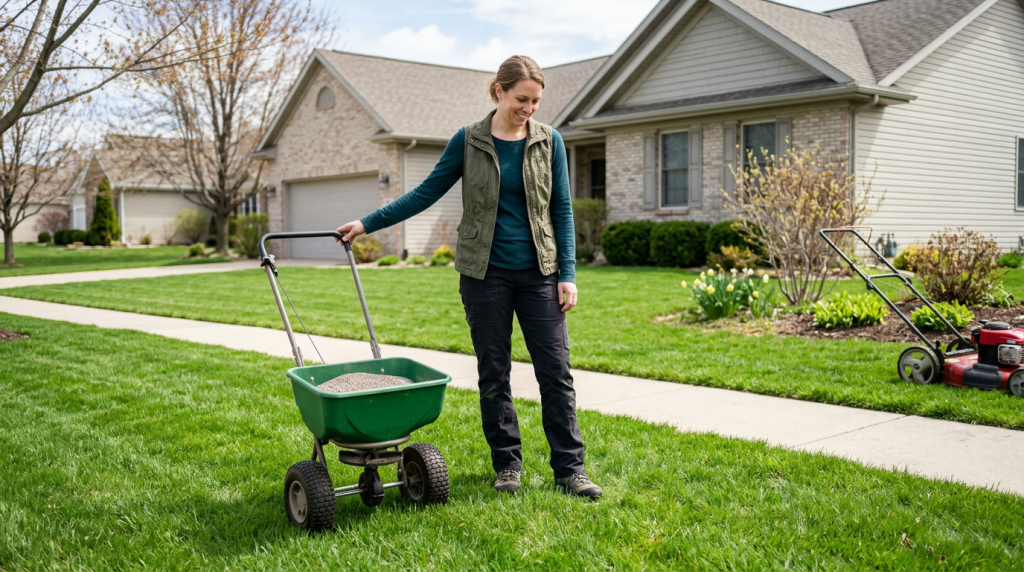
What crabgrass preventer actually is
Crabgrass preventer is a pre-emergent herbicide. That sounds technical, but the idea is simple.
It creates a barrier near the top of the soil that stops crabgrass seedlings right as they begin to sprout. It does not kill mature crabgrass that is already up and growing.
That is why timing matters so much. If you wait until you can clearly see crabgrass, a preventer is usually too late.
When to apply crabgrass preventer
The best answer is this: apply it before crabgrass germinates, not based on mowing alone.
A good target is when soil temperatures are approaching 55 degrees Fahrenheit for several days in a row. That is the point when crabgrass starts waking up in many lawns.
So where does mowing fit in?
Your first spring mow may happen:
- a little before the best application window
- right around the best application window
- after the best application window in a warm spring
That is why you should not wait for the first mow as your only signal. In a lot of yards, the right timing is just before or around early spring mowing season, but the real cue is the soil warming up.
If you are still wondering when to apply crabgrass preventer before first spring mow, think of it this way: mow timing tells you your lawn is growing, but soil temperature tells you when crabgrass is about to start.
The easiest timing signs homeowners can watch
You do not need to be a lawn expert to get this mostly right.
Use these simple cues together
- Soil temperatures are getting close to 55 degrees Fahrenheit
- The weather has shifted into a steady spring warm-up
- Early spring shrubs like forsythia are blooming or starting to fade
- Your lawn is waking up, but crabgrass is not visible yet
A simple soil thermometer can help, but many homeowners also use local weather-based soil temperature tools online. That gives you a better signal than the calendar alone.
Why the calendar can fool you
One of the most common lawn mistakes is using the same weekend every year for crabgrass preventer.
Spring does not move on the same schedule every year. One year may stay cold well into April. Another year may warm up fast in March.
That means a calendar-only approach can cause two problems:
- Too early: the product starts breaking down before the full crabgrass germination period
- Too late: some crabgrass has already started, so prevention is weaker
A slightly early application is usually better than a late one, but you still want to stay reasonably close to the true spring warm-up.
Safe DIY checks before you apply anything
Before spreading any product, make sure your lawn is a good candidate for a standard crabgrass preventer.
Check these first
- Your lawn is established, not freshly seeded
- Crabgrass was a real problem last year or has been a repeat issue
- You know the product is labeled for lawns
- You have read the label for watering, rate, and grass-type limits
- The lawn surface is dry enough to spread evenly
- Heavy rain is not about to wash product where it should not go
A lot of beginners skip the label because all lawn products can look similar on the shelf. That is where many problems start.
When spring seeding changes the plan
This is one of the biggest points homeowners miss.
Most crabgrass preventers do not just stop crabgrass. They also interfere with new grass seed trying to sprout. So if you plan to seed thin or bare areas in spring, a standard crabgrass preventer can work against you.
That means you usually need to choose between these two goals:
- stopping crabgrass with a standard pre-emergent
- planting new grass seed right away
Some products are labeled for use at seeding, but you should only use those when the label clearly says so.
If your lawn is thin, bare, and patchy in many places, it may be smarter to focus on improving the lawn first instead of just applying preventer. A thick lawn is one of the best long-term defenses against crabgrass.
If you are also trying to patch thin areas this season, read our guide on spring overseeding for bare spots before you decide how to handle the lawn.
How to apply crabgrass preventer the right way
Good timing helps, but correct application matters too.
Follow this basic process
- Mow first if the lawn is overgrown, but do not scalp it
- Apply the product evenly with a properly adjusted spreader
- Avoid overlapping passes too heavily
- Water it in if the label says to do that
- Keep people and pets off the lawn as directed on the label
- Store leftover product safely and dry
Watering in is a big one. Many crabgrass preventers need rainfall or irrigation soon after application so the barrier moves into the top layer of soil where germination happens.
What to do with mowing after application
Many homeowners worry that mowing right after applying will ruin the treatment.
In most cases, normal mowing is not the main issue with a crabgrass preventer. What matters more is that the product reaches the soil and is watered in as directed.
A good practical approach is this:
- mow before application if the grass needs it
- apply the product evenly
- water it in if the label requires it
- go back to normal mowing after that
Try not to cut the lawn too short in spring. Short mowing, often called scalping, lets more sunlight hit the soil and can make crabgrass problems worse. For many cool-season lawns, a taller mowing height helps shade the soil and gives your grass an advantage.
If you are not sure how high or how soon to mow in early spring, our guide on first spring lawn mow tips for northern homeowners will help you avoid common mistakes.
Common mistakes that lead to poor results
Most crabgrass failures come down to timing, lawn condition, or application errors.
Avoid these common mistakes
- Waiting until crabgrass is already visible
- Using first mow as the only timing signal
- Applying a standard preventer to a newly seeded lawn
- Forgetting to water in a product that needs it
- Mowing too short all spring
- Treating a thin, weak lawn like product alone will fix it
- Applying more than the label allows
It also helps to remember that no product can fully make up for a stressed lawn. Thin turf, compacted soil, poor mowing habits, and bare spots all give crabgrass room to move in.
Lawn care habits that help prevent crabgrass naturally
Crabgrass likes open space, sunlight at the soil surface, and weak competition. A healthy lawn makes life harder for it.
Focus on these basic habits
- Mow high enough for your grass type
- Water deeply and less often instead of light daily sprinkling
- Feed the lawn appropriately for the season and grass type
- Repair thin spots before they turn into bare soil
- Reduce traffic damage in soft spring lawns
You do not need a perfect lawn to cut down on crabgrass. You just need a lawn dense enough to crowd it out.
When it makes sense to call a lawn professional
A homeowner can usually handle timing and application on a normal lawn. But some situations are better left to a pro.
Call a professional when
- More than a small section of the lawn is thin, bare, or mostly weeds
- You are not sure whether the weed is actually crabgrass
- You want to seed and control weeds at the same time but do not know the safest option
- Your property is near water, drainage areas, or other places where product use needs extra care
- You have used preventer before and still get heavy crabgrass every year
- The lawn may need renovation instead of another simple treatment
A pro can help you decide whether the real issue is weed pressure, mowing habits, drainage, shade, compacted soil, or poor grass coverage.
Final takeaway
The best time to apply crabgrass preventer is before crabgrass germinates, which usually means when soil temperatures are nearing 55 degrees Fahrenheit, not simply when it is time for the first spring mow.
For most homeowners, the easiest rule is to watch the weather, check soil temperature if possible, and get the product down just before or around that early spring warm-up. Then water it in if the label says to, mow at a healthy height, and avoid using a standard crabgrass preventer where you plan to seed new grass.
Get the timing close, keep the lawn thick, and you give crabgrass a much harder place to start.