First Spring Mow Tips for Northern Homeowners
These first spring lawn mow tips for northern homeowners will help you start the season without stressing your grass or making extra work for yourself later.
The first mow of the year feels simple, but it sets the tone for the rest of spring. Cut too early, too short, or on wet ground, and you can leave your lawn looking rough just as it starts waking up.
For most northern lawns, the goal is not a perfect first cut. It is a clean, gentle start that protects cool-season grass and keeps growth moving in the right direction.
For most beginner homeowners, the safest approach is to start a little higher, make a clean cut, and avoid taking off too much at once. In many northern lawns with common cool-season grass, that means a first spring mow in the 3 to 4 inch range is a smart starting point.
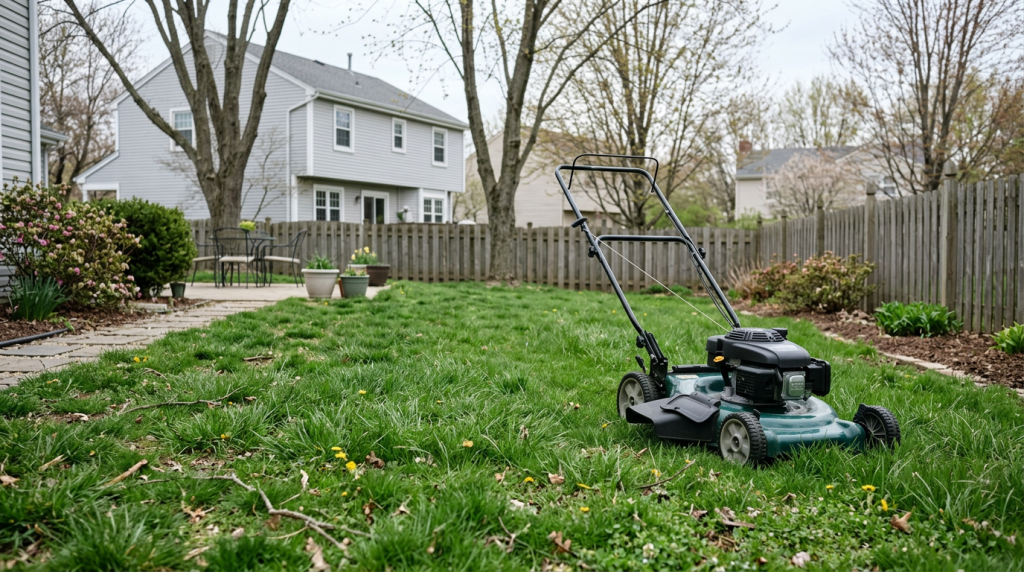
Why the first spring mow matters
Most northern homeowners have cool-season grass. That means grass types like Kentucky bluegrass, fescue, and perennial ryegrass that grow strongest in cool weather, especially in spring and fall.
Because of that spring growth spurt, your first mow matters more than it might seem. A rough first cut can:
- tear grass blades with a dull mower
- leave ruts in soft ground
- remove too much green growth at once
- open the lawn up to more weeds later
A good first mow does the opposite. It keeps the lawn neat, protects the grass plant, and helps the yard fill in more evenly.
First spring lawn mow tips for northern homeowners
The biggest mistake is mowing just because the weather feels nice for the first time.
Your lawn is ready for its first mow when the grass is actively growing, the soil surface is firm enough to walk on without sinking, and the lawn is dry enough for a clean cut.
You do not need to rush. Northern lawns often wake up unevenly, especially after snow, shade, and long cold periods. Waiting a little longer is usually better than mowing too early.
How to tell when your lawn is ready
Do not use the calendar as your only guide. Look at the lawn itself.
Your lawn is usually ready when
- the grass is tall enough to need trimming
- the lawn looks green and actively growing, not flat and dormant
- the ground feels firm underfoot instead of soggy
- the grass blades are mostly dry
- there is no frost or frozen surface left in the lawn
If the yard still feels spongy or leaves footprints easily, hold off. Mowing wet, soft ground can compact the soil and leave wheel marks that take time to recover.
Start with the right mower height
For most northern lawns, the first mow should be on the higher side, not cut down aggressively.
A lot of beginners think a short cut will keep them from mowing again too soon. In reality, cutting too low in spring can weaken the lawn and make room for weeds.
A mowing height around 3 – 4 inches is a safe target for many northern home lawns. Some grass types do well a little above or below that, but a taller cut is usually the safer choice than scalping.
Scalping means cutting the grass extremely short so the lawn looks shaved. That can stress cool-season grass and expose the soil to more sunlight, which helps weeds like crabgrass.
If you are not sure how high to set the deck for that first cut, our guide on best mower height for first spring mow breaks it down in plain English.
Follow the one-third rule
This is one of the easiest lawn rules to remember.
Do not remove more than one-third of the grass blade in a single mowing. In plain English, that means if the lawn got too tall, do not cut it all the way down at once.
If the lawn is too tall, do this instead
- raise the mower deck for the first pass
- mow again a few days later if needed
- lower the height gradually until you reach your normal setting
This is much easier on the grass than taking a huge amount off in one cut.
Do not mow a wet lawn
Wet spring lawns are common in northern areas, and they cause a lot of first-mow problems.
Wet grass clumps, tears more easily, and can clog the mower deck. Wet soil also makes it easier to leave tracks, slip on slopes, and compact the ground.
Wait to mow if the lawn has any of these signs
- visible dew that is still heavy on the grass
- muddy spots
- soft soil that squishes underfoot
- standing water in low areas
- clumps of matted snow mold or wet leaves
Dry grass gives you a cleaner cut and a safer mowing job.
Check the lawn before you start
Spring lawns often hide branches, stones, pine cones, and other debris that winter left behind.
A quick yard walk can prevent damage to your mower and protect you from flying debris.
Before the first mow, check for
- sticks and fallen limbs
- rocks or gravel near driveways and edges
- pet toys, hoses, and yard tools
- thick leaf piles or matted debris
- low branches that may interfere with mowing
If the lawn has heavy leaf cover or winter debris, remove that first. Grass needs light and air to recover well in spring.
Make sure the mower blade is sharp
A sharp blade cuts grass cleanly. A dull blade rips the tips instead.
Torn grass can look white or ragged after mowing, and it puts more stress on the plant. That is the last thing you want during early spring growth.
Signs your mower blade may be dull
- the lawn looks frayed instead of neatly cut
- grass tips turn brown shortly after mowing
- the mower seems to tear or drag through the grass
- you did not sharpen the blade last season
If your mower also needs fuel system work, oil service, or repair, that may be more than a simple DIY tune-up for some homeowners.
Bag or mulch the first cut?
For most normal spring lawns, mulching the clippings is fine.
Mulching means the mower chops grass clippings into smaller pieces and drops them back into the lawn. Those clippings break down and return nutrients to the soil.
But the first spring mow is not always a normal mow. If the lawn is wet or overgrown, clippings can pile up and smother the grass underneath.
Mulch the clippings when
- the grass is dry
- the lawn is not overly tall
- the mower cuts cleanly
- clippings are falling in a light, even layer
Bag or rake up clumps when
- the clippings are thick and matted
- the lawn was too tall at the time of mowing
- the grass was damp and left piles behind
- diseased grass is a concern in affected areas
You do not need to bag every spring mowing. Just avoid leaving heavy clumps sitting on the lawn.
If you are still deciding what to do with the clippings, read our guide on bagging vs mulching grass clippings in spring for the practical pros and cons.
Mow in a steady pattern, not a rush
The first mow of the season is not the time to race through the yard.
Go at a steady pace and pay attention to corners, slopes, and soft spots. This helps you avoid scalping high spots and rutting low areas.
Changing your mowing direction from time to time can also help reduce repeated wheel tracks and keep the grass from leaning the same way every cut.
What not to do on the first spring mow
A lot of lawn problems start with avoidable first-day mistakes.
Skip these common mistakes
- mowing while the lawn is still soggy
- cutting the grass too short
- removing more than one-third of the blade
- using a dull mower blade
- trying to mow over sticks, cones, or heavy leaf debris
- forcing the mower through thick, wet clumps
- assuming every area of the yard is ready at the same time
Shady spots, low areas, and north-facing parts of the yard often wake up later than the sunnier parts.
Simple DIY checks that are safe for most homeowners
Most first spring mowing prep is beginner-friendly and safe when done carefully.
Safe DIY checks include
- walking the lawn to remove debris
- checking whether the ground is dry enough to support mowing
- adjusting mower height higher instead of lower
- inspecting the blade for visible wear
- cleaning out dry grass buildup with the mower safely off and disconnected as appropriate
- mowing slowly and evenly on the first pass
These steps help most homeowners get through the first mow without much trouble.
What may be better left to a professional
Sometimes the issue is not the mowing itself. It is the condition of the lawn or the machine.
Bring in a pro if you notice
- severe winter damage across large sections of the lawn
- deep ruts, standing water, or drainage problems
- recurring snow mold or heavy disease damage
- large bare areas that are not greening up
- a mower that smokes, leaks fuel, stalls, or feels unsafe to use
- steep areas where mowing feels unstable or risky
A lawn care pro or small-engine repair shop can help when the problem goes beyond normal spring upkeep.
What to do after the first mow
Once the first cut is done, do not assume every other mowing should happen on a fixed weekly schedule.
Spring growth in northern lawns can change fast depending on rain, temperature, and sun exposure.
After the first mow, keep doing these basics
- mow often enough that you follow the one-third rule
- keep the mower height in a healthy range
- avoid mowing when the grass is wet
- leave light clippings on the lawn when they are not clumping
- watch for thin areas, weeds, and drainage problems as the season develops
This is also a good time to pay attention to whether your lawn is thickening up well or showing signs that it may need more than mowing alone.
Final takeaway
The best first spring lawn mow tips for northern homeowners are simple: wait until the lawn is truly ready, keep the mower height on the higher side, use a sharp blade, and never hack off too much at once.
A calm first mow is better than an early aggressive one. When you cut dry grass at a healthy height and avoid stressing soft spring soil, your lawn has a much better chance of filling in strong for the rest of the season.