Bagging vs Mulching Grass Clippings in Spring
Understanding bagging vs mulching grass clippings in spring gets a lot easier once you know that most lawns do not need every clipping hauled away.
Many homeowners bag clippings automatically because it looks cleaner or feels more finished. But in most normal spring mowing situations, mulching is the better default.
That said, bagging still has its place. When the lawn is too wet, too tall, clumpy, or dealing with a possible disease problem, removing clippings can be the smarter move.
The simple difference between bagging and mulching
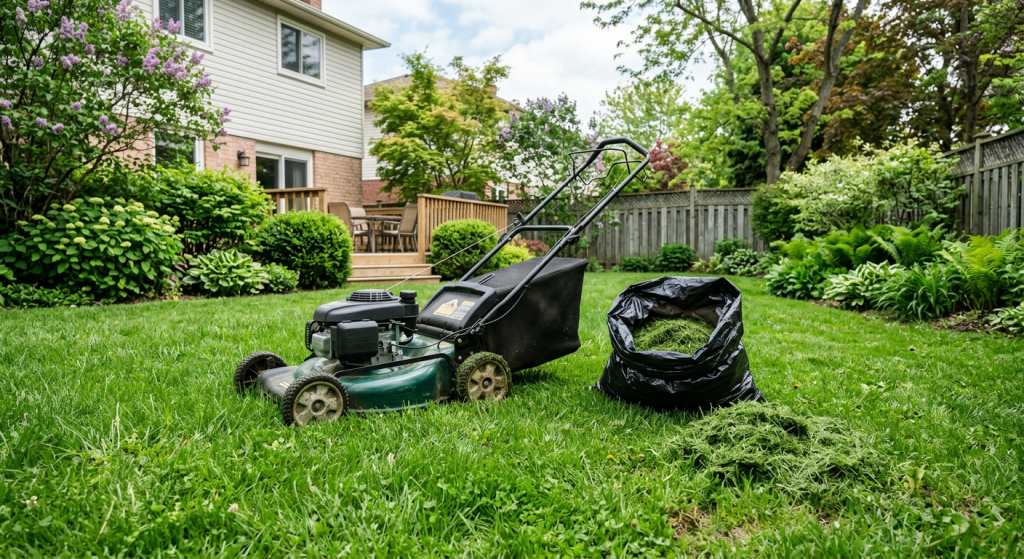
Bagging means your mower collects the clippings so you can throw them out, compost them, or use them elsewhere if they are safe to reuse.
Mulching means the mower chops the clippings into smaller pieces and drops them back onto the lawn.
Those small clippings break down fairly quickly and return some nutrients to the soil. They do not just sit on top forever when mowing is done properly.
Bagging vs mulching grass clippings in spring
For most beginner homeowners, mulching is usually the better first choice in spring as long as the lawn is dry, not overgrown, and being mowed often enough.
Bagging becomes more useful when conditions are messy or the clippings are likely to smother the grass.
A practical way to think about it is this:
- Mulch when the lawn is healthy, dry, and cut regularly
- Bag when clippings are heavy, wet, or part of a larger lawn problem
So if you are stuck on bagging vs mulching grass clippings in spring, start with mulching as your normal setting and switch to bagging only when the lawn gives you a reason.
Why mulching is usually better for spring lawns
Spring lawns often grow fast, especially when the weather is cool and rainy. That means you may mow more often than you do in summer.
When you mulch short, dry clippings back into the lawn, you save time and return some nutrients right where the grass can use them.
Mulching usually helps by
- reducing yard waste
- saving time compared with emptying bags
- returning nutrients to the lawn
- helping clippings break down into the soil surface
- avoiding the extra mess of hauling bags around the yard
For a lawn that is being mowed correctly, mulching is often the easiest and most practical option.
Mulching does not usually cause thatch
This is one of the biggest lawn myths.
Thatch is a layer of tough, slow-to-break-down plant material near the soil surface. It is not mainly caused by normal grass clippings.
Short grass clippings break down much faster than the stems and roots that make up true thatch. So when homeowners leave light clippings on the lawn after regular mowing, they are usually not creating a thatch problem.
The real issue is not mulching itself. The real issue is leaving behind thick, wet clumps that sit on top of the grass.
When bagging makes more sense
Bagging is not wrong. It is just not necessary every time.
There are plenty of spring situations where collecting clippings is the cleaner and safer choice.
Bag clippings when
- the grass is too tall and the mower leaves heavy piles
- the lawn is wet and clippings are clumping together
- you missed a mowing and had to remove a lot at once
- there may be an active lawn disease issue
- the lawn is covered with debris mixed into the clippings
- the mower is not mulching the clippings finely enough
Heavy piles of clippings can block sunlight and airflow to the grass underneath. That is when you want them off the lawn.
When mulching makes more sense
Mulching works best when the lawn is in a normal mowing rhythm.
That usually means the grass is dry, not overly tall, and you are following the one-third rule. The one-third rule means you should not remove more than one-third of the grass blade in a single mowing.
Mulch clippings when
- the grass is dry
- the lawn is being mowed often enough
- clippings are short and scattered lightly
- the mower blade is sharp
- the lawn is not showing signs of an active disease problem
In that situation, the clippings usually settle down into the turf and disappear quickly.
Spring conditions that change the answer
Spring is not always neat and predictable.
Lawns may be soggy from rain, uneven from early growth, or growing so fast that one missed mowing creates a mess. That is why the best choice can change from week to week.
A lawn that is perfect for mulching one Saturday may need bagging the next time because the grass got too tall or stayed damp.
Spring conditions that often push you toward bagging
- frequent rain
- heavy morning dew
- fast growth between mowings
- soft ground that causes uneven cutting
- areas of the lawn that stay shady and damp longer
This is why it helps to treat bagging and mulching as tools, not fixed rules.
If you are still figuring out the first mow of the season, read our guide on first spring lawn mow tips for northern homeowners for a fuller early-season checklist.
What to do when clippings clump on the lawn
Clumps are a sign that the clipping layer is too heavy to leave in place.
This usually happens because the lawn was mowed too late, mowed while wet, or cut with a dull blade that did not process the grass cleanly.
If clippings are clumping, do this
- bag the next mowing
- rake up thick piles left on the lawn
- wait for drier conditions before mowing again
- mow more often going forward
- make sure the mower blade is sharp
You do not need to panic over a few scattered clumps. Just do not leave thick mats sitting on the grass.
If spring growth is getting ahead of you, our guide on how often should you mow your lawn in spring will help you time your cuts better.
Is bagging better when weeds are present?
Sometimes, but not always.
Bagging can help remove some seed heads or weed material, but it is not a complete weed-control strategy. If your lawn is full of weeds, the bigger issue is usually mowing height, lawn density, soil conditions, or a separate weed-control need.
Bagging may make sense when the lawn is full of mature weeds that are shedding seed, but it is not a magic fix by itself.
What about lawn disease?
This is where homeowners should be more careful.
In many normal situations, leaving clippings on the lawn is fine. But if you suspect an active lawn disease, clipping removal may sometimes be the safer choice, especially when the mower is likely to move infected debris around.
The hard part is that lawn problems are easy to misread. Brown patches, thin areas, and pale spots are not always caused by disease.
Possible disease signs that deserve caution
- spreading brown or straw-colored patches
- fuzzy or mold-like growth in damp conditions
- repeated damage in the same areas
- patches that grow worse even with normal mowing and watering
- unusual discoloration that does not match dry or scalped grass
If you think disease may be active, bagging is often the safer temporary move until you know what you are dealing with.
Can you compost or reuse bagged clippings?
Yes, but do it carefully.
Bagged clippings can often go into a compost pile or be used elsewhere in the yard. But you need to think about what has been on that lawn recently.
Be careful reusing clippings if
- the lawn was treated with herbicides
- the clippings contain lots of weeds or seed heads
- the material is wet and likely to mat into a slimy layer
- the lawn may have an active disease problem
Wet clippings can also smell bad fast if they are piled too thickly. Thin layers work better than big, soggy heaps.
Safe DIY checks before choosing bag or mulch
Most homeowners can make the right choice with a few simple checks before mowing.
Safe DIY checks include
- looking at lawn height before mowing
- checking whether the grass is dry
- making sure the mower blade is sharp
- seeing whether the yard is likely to leave clumps
- watching for possible disease symptoms
- checking whether the mower is set up properly for bagging or mulching
These small checks usually tell you more than the label on the mower ever will.
What may be better left to a professional
Sometimes the clipping question is really a sign of a bigger lawn issue.
It may be time for a pro if
- the lawn has large diseased areas you cannot identify
- the yard stays wet for long periods after rain
- the mower is not cutting evenly or safely
- the lawn is more weeds than grass
- thick clumps happen even when you mow on time and the grass is dry
- you are dealing with major lawn renovation or drainage problems
A lawn care professional can help figure out whether the real issue is disease, mower setup, compaction, or poor lawn health.
The best practical rule for beginners
If you want the simplest answer, use this one:
Mulch clippings during normal spring mowing, and bag only when the lawn is too wet, too tall, too clumpy, or showing signs of a bigger problem.
That approach keeps things easy and avoids unnecessary extra work.
Final takeaway
The best answer to bagging vs mulching grass clippings in spring is that mulching is usually the better everyday choice, while bagging is the better cleanup choice when conditions are messy.
For most lawns, short dry clippings can stay on the grass without causing trouble. But when the lawn is wet, overgrown, heavily clumped, or possibly diseased, bagging becomes the smarter move. The goal is not to follow one rule every time. It is to match your mowing method to the condition of the lawn that day.