Best Mower height for First Spring Mow
Finding the best mower height for first spring mow starts with one simple rule: do not cut your lawn shorter than it needs to be.
A lot of homeowners set the mower too low on the first cut because they want the yard to look clean fast. That usually causes more problems than it solves.
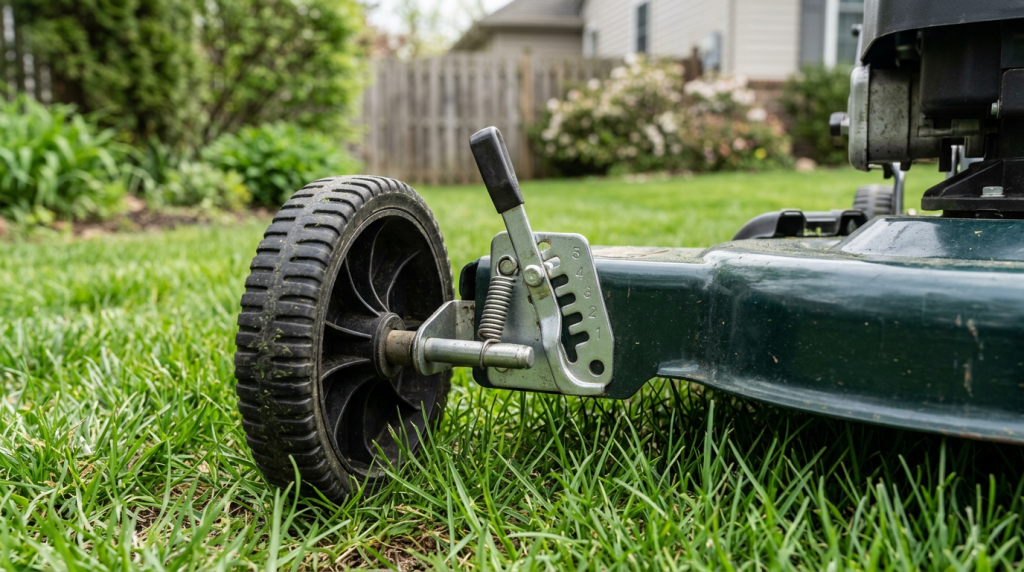
For most beginner homeowners, the safest approach is to start a little higher, make a clean cut, and avoid taking off too much at once. In many lawns, that means a first spring mow around 3 – 4 inches is a smart starting point, especially for common cool-season grasses.
If you want the full early-season mowing checklist, our guide on first spring lawn mow tips for northern homeowners covers the bigger picture beyond deck height alone.
Why mower height matters so much in spring
Your lawn is just coming out of winter stress.
Grass may look uneven, matted, pale, or patchy at first. That does not mean it needs a very short cut. In fact, cutting too low early in the season can weaken the lawn when it is just starting to grow again.
A proper mowing height helps the lawn:
- keep more leaf area for growth
- shade the soil better
- reduce weed pressure
- recover more smoothly from winter
- avoid the scalped look many beginners accidentally create
Scalping means cutting the grass so short that the lawn looks shaved down and thin. That can stress the grass and expose bare soil.
Best mower height for first spring mow
The best answer depends on your grass type, but for many northern home lawns, a first mowing height in the 3 to 4 inch range is a very safe target.
That is especially true for common cool-season grasses such as:
- Kentucky bluegrass
- tall fescue
- fine fescue
- perennial ryegrass
These grasses are common in northern and transition-zone lawns. They usually do better when kept on the taller side instead of cut short.
For many warm-season grasses, the mowing height may be lower, but beginners should still be careful not to scalp the lawn unless that mowing style matches the grass type and local recommendations.
If you are unsure what grass you have, starting higher is usually safer than starting lower.
A simple height guide for beginners
You do not need to memorize a complicated chart to get the first mow right.
Use these practical starting points
- Most cool-season lawns: about 3 to 4 inches
- A safe default for many northern beginners: about 3.5 inches
- Warm-season lawns: often lower than cool-season lawns, but the right setting depends on the species
If the lawn is very overgrown, do not try to force it down to your final target in one pass. Make the first cut higher, then come back later if needed.
Why starting higher usually works better
A higher first cut is more forgiving.
It protects the grass plant, helps the yard stay greener, and lowers the chance of tearing or scalping uneven spots. It also helps shade the soil, which can make it harder for weeds to get established.
Homeowners often think a lower cut means less mowing. In reality, cutting too low can create more lawn stress and more visible problems.
Starting too low can lead to
- brown or pale scalped patches
- weaker root growth
- more weed pressure
- clumps of heavy clippings
- slower recovery after mowing
The first mow should be about helping the lawn settle into spring, not forcing it into a summer look on day one.
Follow the one-third rule
Even the right mower height can cause problems if the grass is too tall when you cut it.
The one-third rule means you should not remove more than one-third of the grass blade in a single mowing. In plain English, do not chop a tall lawn way down all at once.
For example, if you want to maintain the lawn at about 3 inches, it is better to mow before it gets much past 4.5 inches.
If the lawn is too tall, do this instead
- raise the mower deck for the first pass
- mow again a few days later if needed
- lower the height gradually until you reach your normal setting
This keeps the lawn from getting shocked by a harsh first cut.
If you are also trying to figure out how often to cut once spring growth takes off, read our guide on how often should you mow your lawn in spring.
How to tell if your mower is set too low
Many homeowners do not realize the mower height is wrong until after they finish.
Signs the mower height is too low
- the lawn looks patchy right after mowing
- you can see stems, crowns, or thin brown areas
- high spots in the yard look shaved down
- clippings are thick and heavy
- the lawn looks worse instead of cleaner
If that happens, raise the deck for the next mowing and let the grass recover.
What to do if you do not know your grass type
This is common, especially for newer homeowners.
You do not need to identify every grass blade before the first mow. You just need a safe plan.
A simple beginner approach
- set the mower around 3.5 inches
- mow only when the lawn is dry enough for a clean cut
- avoid removing too much at once
- watch how the lawn responds after mowing
- adjust slightly later if needed
That approach works well for many home lawns and avoids the biggest beginner mistake, which is mowing too short too early.
Mower height and wet spring lawns
Even the best mower height for first spring mow will not save you from problems if the lawn is still wet and soft.
Wet grass bends instead of cutting cleanly. Soft ground also makes the mower sink, which changes the real cutting height and causes uneven results.
Wait to mow if the lawn feels
- soggy underfoot
- muddy in low spots
- slick from heavy dew
- soft enough to leave wheel marks or footprints
A dry lawn gives you a more accurate cut and makes your mower setting work the way it should.
Should the first mow ever be lower than normal?
Sometimes homeowners hear that the first spring cut should be lower than usual.
That idea can apply in certain situations, but it is not the safest blanket advice for beginners. If the lawn is matted from winter or uneven from early growth, a slightly lower cleanup cut may be used in some lawns. But going too low too early often causes more harm than good.
For most beginner homeowners, it is better to aim for a healthy, moderate height instead of trying to force an aggressive reset.
If your lawn is warm-season turf that is normally managed lower, local conditions and grass type matter much more than general online advice.
Safe DIY checks before the first mow
Most homeowners can handle the first mowing setup themselves with a few careful checks.
Safe DIY checks include
- making sure the mower deck is set high enough
- checking that the blade is sharp
- walking the yard for sticks, stones, and debris
- waiting until the grass is dry
- mowing one small test area first to see how the lawn responds
That test strip can tell you a lot before you mow the whole yard.
When to call a professional
Sometimes the real issue is not mower height. It is the lawn condition, the machine, or both.
Bring in a pro when
- the yard is badly rutted, bumpy, or full of soft spots
- the mower is not adjusting height correctly
- the blade is damaged or unsafe to service yourself
- the lawn has major winter kill or large dead areas
- you are dealing with a specialty turf or a steep slope that feels unsafe
A professional can help if the lawn needs more than a normal first cut.
The best practical first-mow approach
If you want the simplest answer, here it is.
For many beginner homeowners, especially with common cool-season grass in northern areas, the best first spring mowing height is usually in the 3 to 4 inch range. That gives you a safer, healthier cut without pushing the lawn too hard.
Then pay attention to what the lawn tells you. If it looks clean, even, and healthy, you are probably in the right range. If it looks scalped or stressed, raise the mower a little.
Final takeaway
The best mower height for first spring mow is usually a little higher than most beginners expect.
A good first cut is not about making the lawn as short as possible. It is about protecting the grass, following the one-third rule, and starting the season with a clean, low-stress mow. For many northern home lawns, especially cool-season lawns, the safer place to begin is usually in the 3 to 4 inch range.