
How to overseed a lawn
Learning how to overseed a lawn can help thicken thin grass, repair bare areas, and improve an existing lawn without starting over from scratch.
The basic process is to prepare the existing turf, spread compatible grass seed, improve seed-to-soil contact, and keep the surface consistently moist while the new grass germinates.
Timing matters. Spring overseeding can work for smaller repairs, but larger projects may perform better during a more favorable seeding window, depending on your grass type, climate, and lawn conditions.
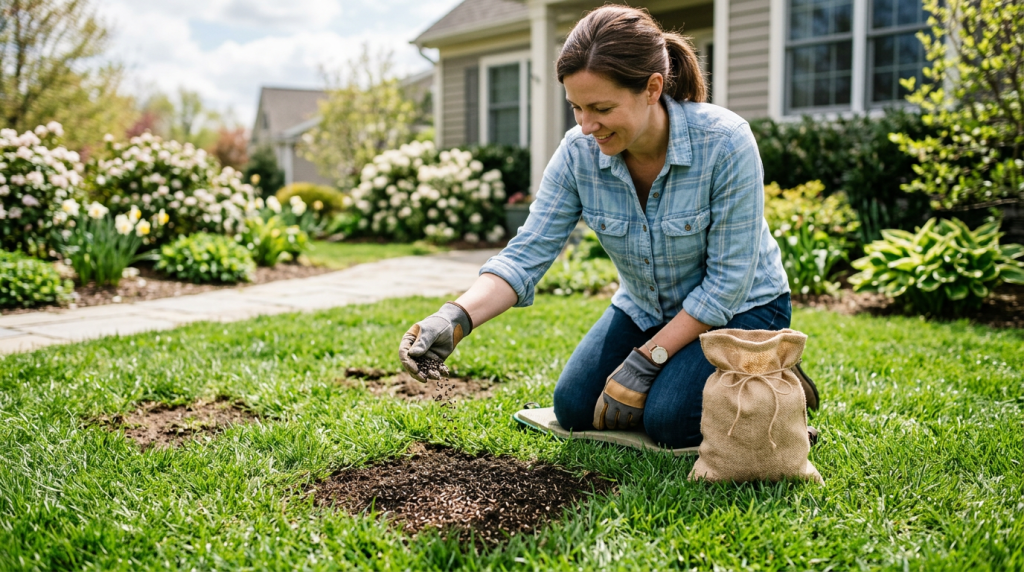
What overseeding means in plain English
Overseeding means spreading new grass seed into an existing lawn instead of starting over from bare soil.
When you do this for bare spots, you are trying to help new grass fill in open areas before weeds take over. That can improve how the lawn looks and help the grass compete better through the rest of the season.
In simple terms, it is a repair job, not a full reset.
When Should You Overseed a Lawn?
If you only have a few small or medium bare spots, spring overseeding is often worth trying. It can help thicken those areas, reduce muddy patches, and give weeds less room to move in.
But there is a limit to how much spring seeding can solve.
For many cool-season lawns, fall is usually the better time for major overseeding or large repair work. Spring seedlings have to compete with weeds, rising temperatures, and summer stress much sooner.
That means spring overseeding is usually worth it when:
- the bare spots are limited in size
- you can seed early enough in the season
- you can keep the area consistently moist
- the rest of the lawn is mostly healthy
It is usually less worth it when the lawn needs a full renovation.
Why spring seeding can be harder than fall seeding
Spring seems like the obvious time to plant grass because everything else is greening up. But grass seed has a tougher road in spring than many homeowners expect.
New seedlings need time to germinate, root in, and strengthen before summer heat arrives. At the same time, spring is also when many lawn weeds are ready to move into thin areas.
Spring seeding is harder because of
- stronger weed competition
- warmer weather coming soon after germination
- the need for regular watering
- less time for new roots to mature before summer stress
- possible conflicts with crabgrass preventer
That does not mean spring seeding never works. It just means you should treat it as a targeted repair, not a miracle fix.
When spring overseeding makes the most sense
Spring patching works best when you catch the problem early.
If the weather is still mild, the soil is workable, and the damaged spots are easy to water, you have a reasonable chance of success.
Spring overseeding is a good fit when
- the bare spots are small or scattered
- the lawn is mostly healthy aside from those patches
- you can keep foot traffic off the area
- you can water lightly and regularly during germination
- you are not planning to apply a standard pre-emergent to that same area
This is especially practical for spots damaged by snow mold cleanup, pet traffic, light winter kill, or small areas thinned by foot traffic.
When it may not be worth it
Sometimes the bare spots are really a sign of a bigger lawn problem.
If half the yard is thin, weeds are everywhere, or the soil stays soggy for days, adding seed alone may not fix much. In those cases, spring overseeding can turn into extra work with disappointing results.
Spring overseeding may not be worth it when
- large sections of the lawn are bare
- the lawn has major weed pressure
- the area has poor drainage
- there is heavy shade and grass never grows well there
- the soil is badly compacted
- summer heat is close and the seed would be going down late
If the problem is large enough, waiting for a better seeding window or solving the root cause first is usually the smarter move.
The biggest issue most homeowners miss: pre-emergent
This is one of the most important spring lawn decisions.
Many homeowners want to seed bare spots and apply crabgrass preventer at the same time. In many cases, those two goals do not work together.
A standard pre-emergent is designed to stop seeds from sprouting. That includes weed seeds, but it can also interfere with new grass seed.
Before you seed, check this first
- whether you already applied a crabgrass preventer
- whether the product label allows seeding afterward
- how long the label says to wait before seeding
- whether you are treating the whole lawn or just certain areas
If you already put down a standard pre-emergent, overseeding may need to wait. This is one of the main reasons small spring bare spots are sometimes better managed with temporary patience and a fall repair plan.
If you are also trying to stop crabgrass this spring, our guide on when to apply crabgrass preventer will help you avoid a common timing conflict.
How to tell if a bare spot is seedable
Not every bare area should be seeded right away.
You want to make sure the spot has a fair chance of supporting grass. If the area is constantly soggy, deeply shaded, or packed hard like concrete, seed may struggle no matter how good it is.
A bare spot is more likely to respond when
- it gets enough sun for grass to grow
- the soil drains reasonably well
- the area can be lightly loosened
- the spot is not constantly worn down by pets or traffic
- there is still healthy grass around it
That last point matters because a mostly healthy lawn gives the new seed a better environment to join.
How to Overseed a Lawn Step by Step
For small areas, the process is simple and beginner-friendly.
The goal is to get seed into contact with loose soil, then keep it moist while it germinates.
Follow these basic steps:
- Mow the existing grass so seed can reach the soil more easily.
- Rake away dead grass, leaves, and loose debris.
- Loosen thin or bare areas lightly so the seed can contact the soil.
- Choose grass seed that is compatible with the existing lawn and growing conditions.
- Spread the seed evenly over the areas being overseeded.
- Lightly rake or work the seed into the surface without burying it deeply.
- Add a very light layer of suitable seed cover if needed.
- Water gently so the surface stays consistently moist during germination.
- Limit foot traffic while the seedlings become established.
- Wait until the new grass is tall enough before mowing it for the first time.
Do not bury the seed deeply. Grass seed needs good soil contact, but it also needs light and air.
If your problem is broader than a few small patches, read our guide on how to fix bare spots in a lawn without reseeding everything for more repair options.
Choosing the Right Grass Seed for Overseeding
This part matters more than many beginners realize.
The best patch seed is usually one that matches the rest of the lawn as closely as possible. A different grass type may grow at a different speed, color, or texture and make the repair stand out.
A simple beginner approach is to choose
- a seed mix suited to your region
- a grass type that matches the sun or shade in that spot
- a quality seed blend instead of the cheapest bag on the shelf
- a repair mix only if the label clearly fits your lawn type and goals
If you know your lawn is mostly fescue, try to stay in that family. If you do not know your grass type, choose a reputable regional lawn seed mix rather than guessing wildly.
Watering is what makes or breaks the job
Most spring overseeding failures are not really seed failures. They are watering failures.
New grass seed needs steady surface moisture during germination. That usually means light, frequent watering at first, not heavy soaking once in a while.
During early germination, aim for
- lightly moist soil, not puddles
- short watering sessions as needed
- more frequent checks during windy or warm weather
- less water once the seedlings are up and starting to root
Once the new grass is established, you can slowly shift toward deeper and less frequent watering.
mowing and Foot traffic after seeding
Freshly seeded spots need some protection.
Do not let people, pets, or equipment keep pounding the area while the seed is trying to establish. Mowing also needs a little patience.
After spring overseeding, do this
- keep foot traffic off the patch as much as possible
- avoid scalping the surrounding lawn
- wait until the new grass is tall enough before mowing
- use a sharp mower blade when you do mow
- avoid turning the mower sharply over new seedlings
This helps the new grass stand up and root in without getting ripped out.
Safe DIY checks before you start
Small spring patch seeding is usually a reasonable DIY project.
Safe DIY checks include
- confirming the area is truly bare and not just slow to green up
- checking whether a pre-emergent was already applied
- loosening only the top layer instead of digging deeply
- choosing a seed mix suited to the site
- making sure you can water the area regularly
- keeping the repair area lightly protected from traffic
For a few small spots, this is well within reach for most homeowners.
When to call a professional
Some lawn problems look like simple bare spots but are actually symptoms of something larger.
It may be time for a pro when
- the bare areas keep coming back in the same places
- drainage problems leave the soil soggy
- the soil is badly compacted or full of surface roots
- the lawn has widespread disease or insect damage
- more than a small portion of the yard needs repair
- you are not sure whether the area should be seeded, sodded, or redesigned
A professional can help you decide whether the real fix is seeding, grading, drainage work, soil improvement, or a different planting choice.
The best practical answer for beginners
For most beginners, the simple answer is this:
Spring overseeding is worth it for small bare spots you can water and watch closely. It is usually not the best answer for a lawn-wide repair project, especially in cool-season lawns where fall gives new grass a better chance.
That makes spring overseeding for bare spots a good repair tool, but not always the best long-term renovation strategy.
Final takeaway
Spring overseeding can absolutely be worth it when the problem is limited and the timing is early enough.
If you have a few bare patches, no recent pre-emergent conflict, and a realistic plan for watering, spring seeding can help those areas recover. But if the lawn has widespread damage, major weed pressure, or underlying soil problems, a bigger fix or a fall seeding plan will usually give you better results.