When to Aerate a Lawn
Knowing when to aerate lawn depends on your grass type, soil condition, and whether the lawn is actively growing enough to recover.
Cool-season lawns are usually best aerated in fall, while warm-season lawns are generally better aerated in late spring or early summer. Spring can still work for some cool-season lawns when compaction is severe and the grass is growing strongly.
The most important rule is to aerate during the lawn’s active growth period, not while it is dormant, drought-stressed, waterlogged, or under heavy heat stress.
What lawn aeration actually does
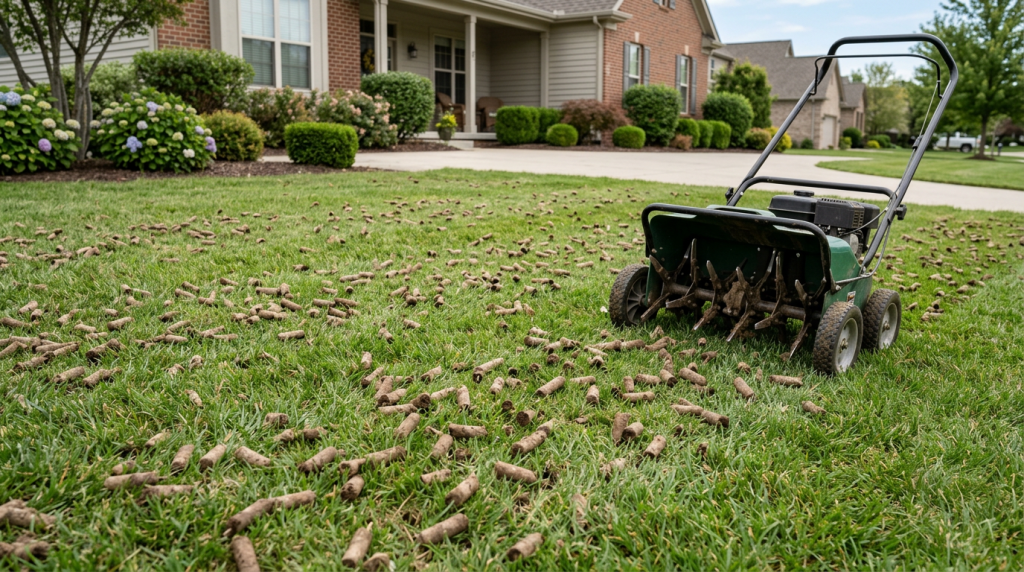
Lawn aeration usually means core aeration. That is the process of pulling small plugs of soil out of the ground so air, water, and nutrients can move more easily into the root zone.
The root zone is the area in the soil where grass roots grow. When that area gets too hard or compacted, the lawn can struggle even if you water and mow it correctly.
Aeration can help loosen compacted soil, improve drainage, support deeper rooting, and make it easier for grass to grow thicker.
Aeration is often helpful when your lawn has these problems
- Hard, compacted soil
- Heavy foot traffic
- Water puddling or running off instead of soaking in
- Thin grass that does not thicken well
- A lawn that feels weak even with regular care
- Areas where roots stay shallow
If you are also trying to decide whether the lawn really needs aeration or a more direct thatch fix, read our guide on dethatching vs aeration .
Should You Aerate a Lawn in Spring or Fall?
When people ask should you aerate a lawn in spring or fall, the real answer is that both can be correct, but fall is often the better overall choice for cool-season lawns.
Cool-season lawns include grasses like tall fescue, Kentucky bluegrass, and perennial ryegrass. These grasses grow best in cooler weather, especially in spring and fall. Because fall usually brings cooler temperatures, fewer weed problems, and strong root growth, it is often the ideal time to aerate.
Spring is still a possible option, especially if the lawn is compacted and needs help. But spring aeration can sometimes line up with weed pressure, fast top growth, and other lawn tasks that compete for attention.
Warm-season lawns are different. Grasses like bermudagrass and zoysiagrass usually respond best when aerated in late spring or early summer, while they are actively growing.
Why fall is usually the best time
For many homeowners, fall gives the lawn the easiest recovery window.
The weather is usually cooler. The grass is no longer under peak summer heat stress. In many areas, there is also more reliable moisture, which helps the lawn recover after the aerator passes through.
Fall is also a strong time for root growth in cool-season lawns. That matters because aeration is really about helping the root system, not just the surface of the grass.
Fall is often best because it gives you these advantages
- Cooler weather for less lawn stress
- Better recovery conditions for cool-season grass
- A good window for overseeding
- Improved root growth going into winter
- Less heat-related damage than summer
- Better chance of thickening the lawn before next year
If your lawn is thin as well as compacted, fall is especially helpful because aeration and overseeding often pair well together.
When spring aeration makes sense
Spring can still be a good choice in the right situation.
If your lawn has compacted soil, poor drainage, or winter damage, spring aeration may help the grass recover while it is actively growing. It can also be useful if you missed the fall window and do not want to leave the lawn struggling for another full season.
Still, spring is often the second-best choice for cool-season lawns rather than the first-best choice.
Spring aeration can make sense when
- The lawn is badly compacted after winter
- You missed fall aeration
- The grass is actively growing and not heat-stressed
- You are trying to improve water movement in the soil
- The lawn needs help before summer stress arrives
Spring can work, but timing matters. Aerating too early while the lawn is still slow to grow can delay recovery. Aerating too late can leave the lawn heading into summer before it fully bounces back.
Grass type changes the answer
The best time to aerate depends heavily on what kind of grass you have.
Cool-season grasses usually do best with fall aeration, though spring can also be acceptable. Warm-season grasses usually do best when aerated later, once warm weather growth is underway.
In simple terms
- Cool-season lawns usually do best with fall aeration
- Cool-season lawns can sometimes be aerated in spring
- Warm-season lawns are usually better aerated in late spring or early summer
- Dormant or stressed lawns should not be aerated aggressively
If you do not know your grass type, that is one of the first things to figure out before renting equipment.
Safe DIY checks before you decide
Before you aerate, look at the lawn itself instead of choosing a season by habit.
A few simple checks can tell you whether aeration is actually needed and whether the lawn is in shape to recover.
Check these things first
- Push a screwdriver into the soil to see if the ground feels hard
- Watch whether water runs off or puddles after rain or watering
- Look for thin grass in high-traffic areas
- Check whether the lawn feels soft and rooted well or weak and shallow
- Confirm whether you have a cool-season or warm-season lawn
- Make sure the grass is actively growing before aerating
- Think about whether you plan to overseed at the same time
These are safe DIY checks for most homeowners and can help prevent unnecessary lawn work.
When not to aerate
Even a helpful lawn practice can be the wrong move at the wrong time.
Aerating a stressed lawn can leave it looking rougher without giving it the conditions it needs to recover.
Avoid aerating in these situations
- During extreme summer heat
- When the lawn is dormant
- When the soil is waterlogged
- When the lawn is already badly stressed from drought
- Right after applying products that are meant to stay undisturbed near the soil surface
- When you are not sure whether compaction is actually the problem
A lawn should be growing well enough to recover from the holes and surface disruption.
Aeration and overseeding: why fall often wins
One reason fall often comes out ahead is that it works so well with overseeding.
Overseeding means spreading new grass seed into an existing lawn to thicken it. Core aeration creates holes in the soil that help seed-to-soil contact, which can improve establishment.
That is a big reason many homeowners choose fall for aeration. You can relieve compaction and improve lawn density in the same general window.
Fall is a strong combo season for aeration and overseeding because
- Cool-season grass seed usually establishes well then
- The lawn is recovering from summer stress
- Weed competition is often lower than in spring
- Soil conditions often support better root growth
- The lawn has time to strengthen before the next hot season
If your lawn is thin, patchy, and compacted, fall may give you the best overall value from one project.
If thin patches are part of the problem too, our guide on how to fix bare spots in a lawn without reseeding everything will help you plan the next repair step.
Common mistakes homeowners make
Many lawn problems come from good intentions paired with bad timing.
Avoid these common aeration mistakes
- Aerating because it sounds helpful without checking for compaction
- Choosing spring by default when fall would be better for the lawn
- Aerating during heat stress
- Using spike tools instead of true core aeration
- Aerating a lawn that is not actively growing
- Forgetting to overseed a thin lawn after aeration
- Not identifying the grass type first
The biggest mistake is treating every lawn the same. Season, grass type, and lawn condition all matter.
Safe DIY aeration tips
If you are handling the job yourself, core aeration is usually the method to use. That means pulling actual soil plugs, not just poking holes with spikes.
Keep these DIY tips in mind
- Aerate when the soil is slightly moist, not bone dry or muddy
- Use a true core aerator with hollow tines
- Mark sprinkler heads and shallow lines before starting
- Make overlapping passes in compacted areas
- Leave the soil plugs on the lawn to break down naturally
- Water and mow normally afterward unless you are also seeding
- Pair the job with overseeding if the lawn is thin
These are generally safe DIY steps for homeowners who are comfortable using rental equipment.
When to call a professional
Some lawns are better handled by a lawn care pro, especially if the problem goes beyond simple compaction.
A professional may be the better choice when
- You are not sure what grass type you have
- The lawn has severe compaction across a large area
- The yard has slopes, irrigation parts, or tight spaces that make equipment tricky
- The lawn also has heavy thatch, drainage issues, or large bare sections
- You want aeration, overseeding, and a full recovery plan done together
- You do not want to risk damaging the lawn with rental equipment
A professional can also help you decide whether aeration alone is enough or whether the lawn needs broader repair work.
Final Thoughts
The best time to aerate a lawn is during the grass type’s strongest active-growth period. For cool-season lawns, fall is usually the preferred window, while warm-season lawns are generally better aerated in late spring or early summer.
Spring aeration can still make sense when a cool-season lawn is badly compacted and actively growing. Whatever the season, avoid aerating a dormant, drought-stressed, waterlogged, or heat-stressed lawn that cannot recover well afterward.