Best sprinkler for low water pressure
The best sprinkler for low water pressure is usually a smaller, adjustable sprinkler that can water evenly without needing a strong blast of water to work well. For many homeowners, that means choosing a compact oscillating sprinkler, a spinning sprinkler, or a multi-pattern turret sprinkler instead of a large-impact model that needs more force.
Low water pressure can make lawn watering frustrating. The spray may look weak, coverage may fall short, and one side of the yard may stay dry while the other gets too much water. That often leads homeowners to think the sprinkler is broken when the real issue is that the sprinkler style does not match the pressure available at the hose bib.
The good news is that some sprinklers handle lower pressure better than others. The best choice depends on your yard size, the shape of the area you are watering, and how weak the water pressure actually is.
What low water pressure means in simple terms
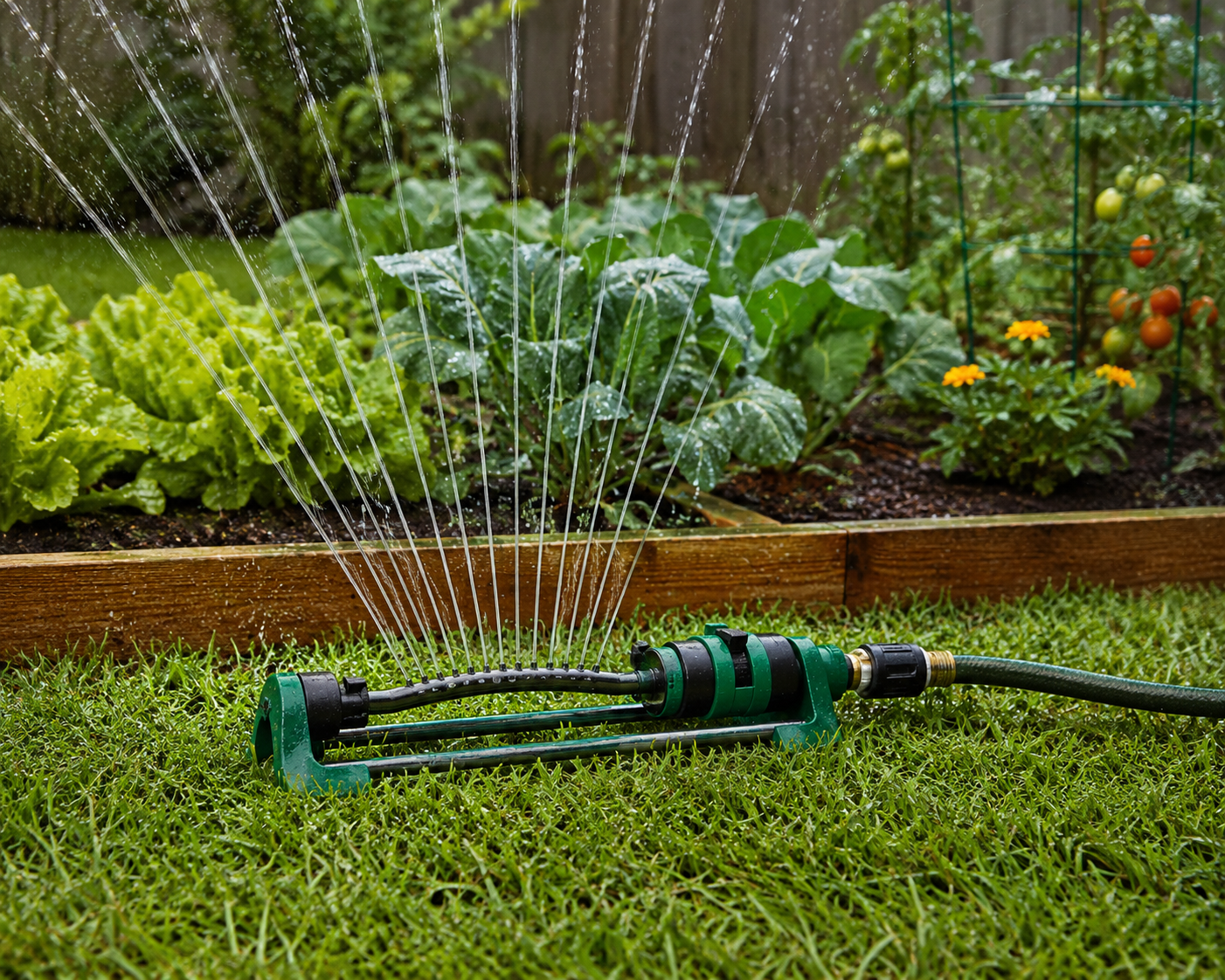
Low water pressure means the water coming out of your outdoor faucet does not have enough force to push a sprinkler the way it was designed to run.
In real life, that can show up in a few common ways. The sprinkler may not rotate correctly. An oscillating sprinkler may fail to sweep fully from side to side. A spray pattern may look short and uneven instead of wide and steady.
Low pressure is often more noticeable with larger sprinklers because they are trying to cover more area with the same weak water supply.
Signs you may be dealing with low water pressure
- The sprinkler barely moves or moves very slowly
- The spray falls short of the advertised coverage
- Water puddles near the sprinkler instead of reaching outward
- The pattern looks uneven or patchy
- Indoor water pressure also feels weak
- The problem gets worse when more than one fixture is running
If those signs sound familiar, the sprinkler style matters a lot.
Best sprinkler for low water pressure: our top picks
The best sprinkler for low water pressure is usually one that keeps coverage controlled instead of trying to throw water a long distance. These are the homeowner-friendly options that make the most sense.
Best overall: Melnor MiniMax Turbo Oscillating Sprinkler
For many homeowners, this is the safest all-around choice.
It gives you the control of a full-size oscillating sprinkler in a smaller format, which is helpful when pressure is not strong. It is also adjustable, so you can narrow the pattern and avoid wasting water on the driveway or sidewalk.
That matters with low pressure because forcing water across a big area usually leads to weak performance. A compact sprinkler with adjustable range is often easier to dial in.
Why this is a strong overall pick
- Compact design is easier to manage with weaker pressure
- Adjustable width and range help you match the yard size
- Works well for small and medium lawn sections
- Good fit for new seed, narrow strips, and general yard watering
- Easier to fine-tune than many basic sprinklers
This is the best starting point for homeowners who want one sprinkler that can handle a variety of everyday jobs.
Best for more control: Melnor 4,500 Sq. Ft. Turbo Oscillating Sprinkler with Flow Control
If you want more adjustment options, this is one of the better choices.
Flow control is especially useful when pressure is not ideal. It gives you more control over how much water the sprinkler is pushing, while the pattern controls help you reduce the watering area to something your system can actually support.
That is important because with low pressure, reducing the watering zone often works better than trying to force one sprinkler to cover the whole yard at once.
This is a good fit if you want
- More control over spray width and range
- Better adjustment for different lawn sections
- A sprinkler that can be narrowed for low-pressure use
- An oscillating style for rectangular areas
- A more flexible option for changing yard needs
This is often the better pick when your water pressure is not terrible, but it is not strong enough to run a large sprinkler at full reach.
Best for very weak pressure and smaller areas: Dramm ColorStorm Spinning Sprinkler
For smaller spaces and gentler watering, this is one of the most practical options to consider.
A spinning sprinkler usually needs less dramatic throw distance than a big impact model, and this one is often a good match for homeowners dealing with weaker systems. It is also known for working at lower pressure than many larger sprinklers.
Because it covers a smaller area, it can make better use of the water you actually have.
This sprinkler makes sense when
- Your water pressure is noticeably weak
- You are watering a smaller section of lawn
- You want gentler coverage
- You do not need a long throw distance
- You prefer a simple sprinkler that is easy to move
If your pressure is low enough that larger sprinklers struggle to function, a smaller spinning sprinkler can be the smarter answer.
Best for irregular shapes: Dramm ColorStorm Turret Sprinkler
A turret sprinkler is a good option when low pressure and awkward yard shapes make watering harder.
Instead of trying to spray a wide lawn pattern every time, a turret sprinkler lets you choose from several spray patterns. That can help you water more efficiently by matching the pattern to the area instead of wasting water on unused coverage.
For low-pressure setups, smaller and more focused patterns often perform better than large sweeping sprays.
A turret sprinkler is a smart choice when
- You have flower beds, side yards, or oddly shaped patches
- You want multiple spray pattern options
- Your yard does not need one large rectangular spray
- You want something simple and beginner-friendly
- You are trying to make weak pressure go farther
This type is usually better for targeted watering than for covering a broad, open lawn all at once.
Best for narrow lawns and smaller rectangles: GARDENA ZoomMaxx Oscillating Sprinkler
This is a good option when you need precise control over a smaller or narrow lawn area.
A sprinkler like this can be especially helpful with low pressure because it allows you to water a more realistic section of yard instead of trying to cover a large area poorly. It is also useful for homeowners who want a more controlled rectangular pattern without stepping up to a larger oscillating unit.
This is a good fit for homeowners who need
- Controlled watering in small or medium areas
- Better performance in narrow lawn sections
- More precise adjustment
- A compact sprinkler that does not feel oversized
- Better efficiency in limited spaces
For small lawns, smaller coverage is often an advantage, not a drawback.
What type of sprinkler usually works best with low pressure?
In many homes, smaller adjustable sprinklers work better than large, high-throw models.
That is because low pressure limits how far and how strongly water can move. A sprinkler that demands a lot of force may underperform from the start.
These sprinkler types usually work best
- Compact oscillating sprinklers
- Spinning sprinklers
- Multi-pattern turret sprinklers
- Small-area rectangular sprinklers
- Adjustable sprinklers that let you shrink the coverage zone
These sprinkler types are often harder to run on weak pressure
- Large impact sprinklers
- Tall tripod sprinklers
- Sprinklers designed for very wide coverage
- Multi-head hose systems that split weak flow too many ways
For many homeowners, the winning move is not finding the biggest sprinkler. It is choosing one that asks less from the water supply.
How to choose the right sprinkler for your yard
The best choice depends on the size and shape of the area you need to water.
A small front lawn, a narrow side yard, and a few dry patches in the back all call for different sprinkler styles. When pressure is weak, it usually helps to think smaller and more targeted.
Match the sprinkler to the space this way
- Use a compact oscillating sprinkler for rectangular lawn sections
- Use a spinning sprinkler for smaller open areas
- Use a turret sprinkler for irregular shapes or mixed uses
- Use a smaller adjustable sprinkler instead of a large full-yard model
- Water one section at a time instead of trying to cover everything at once
This usually gives better coverage than one oversized sprinkler struggling to do too much.
If you are mostly watering garden beds instead of lawn sections, our guide on soaker hose vs drip irrigation for vegetable gardens may be a better fit than forcing a sprinkler to do the job.
Safe DIY checks before you buy a new sprinkler
Before replacing your sprinkler, make sure low pressure is really the problem.
Sometimes the issue is a kinked hose, a partially closed faucet, a clogged washer screen, or too many devices connected at once.
Check these things first
- Fully open the outdoor faucet
- Make sure the hose is not kinked or crushed
- Remove and inspect any hose-end filter screens or washers
- Try the sprinkler with no timer or splitter attached
- Test a shorter hose if you normally use a long one
- Run the sprinkler when no other major water fixtures are in use
- Check whether the sprinkler works better in a smaller coverage setting
These are safe DIY checks for most homeowners and can sometimes solve the problem without buying anything new.
If a long or awkward hose setup may be part of the problem, read our guide on best garden hose for homeowners with small yards before replacing the sprinkler itself.
A quick pressure test homeowners can do
If you want a clearer answer, you can check your outdoor water pressure with a simple hose-bib pressure gauge.
This tool threads onto the outdoor faucet and gives you a rough reading of water pressure. It will not diagnose everything, but it can help confirm whether the pressure is unusually low.
A basic pressure check can help you see whether
- The issue is likely the sprinkler or the water supply
- Your pressure seems weak compared with normal residential use
- The problem is isolated to one faucet
- You should troubleshoot the hose setup before buying a new sprinkler
This is a safe DIY check and a good way to avoid guessing.
Common mistakes homeowners make with low-pressure watering
A lot of watering frustration comes from trying to make the wrong sprinkler do the wrong job.
Avoid these common mistakes
- Buying the largest sprinkler on the shelf
- Expecting one sprinkler to cover the whole yard with weak pressure
- Using a long hose and splitter setup that reduces performance
- Ignoring clogs, kinks, or faulty hose timers
- Watering a wide area when a smaller zone would work better
- Assuming the sprinkler is bad when the faucet pressure is the real issue
The best sprinkler for low water pressure usually succeeds by keeping the watering area realistic.
When the problem is not the sprinkler
Sometimes the real issue is a plumbing or water-supply problem.
If pressure is weak everywhere, indoors and outdoors, a different sprinkler may not fix much. The same is true if one outdoor faucet is damaged or partially blocked.
A professional may be the better choice when
- Water pressure is low throughout the house
- Only one outdoor faucet has very poor flow
- You suspect a pressure regulator problem
- You use a well system and pressure has changed noticeably
- The hose bib leaks, rattles, or does not open fully
- You have repeated low-pressure problems that simple checks did not solve
That kind of issue is usually better handled by a plumber or well-system professional.
Final thoughts
The best sprinkler for low water pressure is usually a smaller, adjustable model that focuses on even coverage instead of maximum distance. For many homeowners, a compact oscillating sprinkler like the Melnor MiniMax is the best place to start. If you want more control, the larger Melnor flow-control model is a strong option. For very weak pressure or smaller areas, a spinning sprinkler like the Dramm ColorStorm can be a better fit, while turret sprinklers help with odd shapes and targeted watering.
In most cases, success comes from matching the sprinkler to the water you actually have. A smaller, more adjustable sprinkler often waters better than a bigger one that never gets enough pressure to work correctly.