Soaker Hose vs Drip Irrigation: Which Is Better?
Soaker hose vs drip irrigation comes down to simplicity, precision, layout, and how much control you want over where the water goes.
A soaker hose is usually easier and cheaper to set up, while drip irrigation gives you more precise watering and is easier to expand across multiple beds or different plant spacings.
Both can work well for vegetable gardens, raised beds, flower beds, and other planting areas, but the better choice depends on how permanent and complex your watering setup is.
Soaker Hose vs Drip Irrigation: The Quick Answer
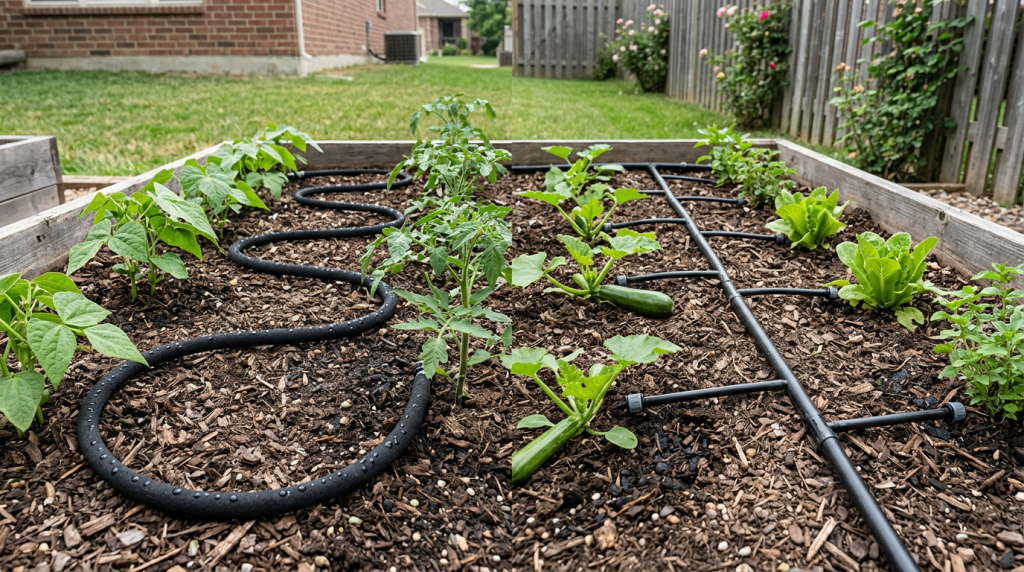
A soaker hose is a porous hose that slowly leaks water along its full length. It works best when plants are spaced fairly evenly in rows or beds.
Drip irrigation uses tubing and small outlets called emitters. An emitter is the small part that releases water at a controlled rate near each plant. This system gives you more control over where the water goes.
Choose a soaker hose if:
- You want the simplest setup
- You have a small garden with straight rows
- Your plants are spaced fairly evenly
- You want a lower upfront cost
- You do not mind replacing the hose sooner than drip parts
Choose drip irrigation if:
- You want to water each plant more precisely
- Your beds have mixed plant spacing
- You want easier expansion later
- You plan to add a timer for more consistent watering
- You want a neater system in raised beds or permanent garden spaces
How a Soaker Hose Works
A soaker hose looks like a regular garden hose, but water seeps out slowly through the hose wall. Instead of spraying water into the air, it wets the soil along the hose.
This makes it useful for vegetable rows, narrow beds, and simple layouts. You snake the hose around the bed, turn the water on gently, and let the soil absorb moisture slowly.
The biggest strength of a soaker hose is simplicity. There are fewer parts, less planning, and less measuring.
The biggest weakness is that it waters everywhere along the hose, even in spots where you may not need water.
How Drip Irrigation Works
Drip irrigation uses a main tube with smaller tubes or built-in emitters placed near each plant. Water moves slowly through the system and comes out in a more controlled way.
This is helpful when your vegetables have different spacing. For example, tomatoes, peppers, lettuce, cucumbers, and herbs often do not sit in one straight, evenly spaced row.
Drip irrigation also makes it easier to avoid watering empty spaces. That can save water and reduce weed growth between plants.
A few common terms are worth knowing:
Basic drip irrigation terms
- Emitter: the small outlet that releases water near the plant
- Pressure regulator: a fitting that lowers water pressure so the system works properly
- Filter: a part that helps catch debris before it clogs the system
- Mainline tubing: the larger tube that carries water through the bed
- Micro tubing: smaller tubing that branches off to individual plants
Which One Is Better for Vegetable Gardens?
There is no single winner for every garden. The best choice depends on your setup.
For a basic backyard vegetable patch with a few rows, a soaker hose often wins on ease. You can get it running quickly without much planning.
For raised beds, irregular planting layouts, or gardeners who want better control, drip irrigation usually wins on performance. It lets you place water where it is needed instead of soaking the whole route of the hose.
When people compare soaker hose vs drip irrigation for vegetable gardens, the real difference is simplicity versus precision.
Water Efficiency
Both systems are usually more efficient than sprinklers because they water near the soil instead of throwing water through the air.
A soaker hose is still fairly efficient, but it can waste water in unused spaces if the hose runs through areas without plants. It also becomes less even if the hose is too long, laid on a slope, or supplied with too much pressure.
Drip irrigation is usually the more efficient option because it can target individual plants or exact planting zones. That is especially helpful in beds with different crops and different spacing.
If reducing water use is one of your main goals, drip irrigation usually has the edge.
Plant Health and Disease Control
One of the biggest benefits of both systems is that they help keep water off the leaves. Wet leaves can increase the chance of some plant disease problems, especially in crowded gardens.
This matters for vegetables like tomatoes, cucumbers, squash, and peppers. Watering near the root zone means water gets where the plant needs it most.
That said, neither system is magic. If you overwater, let foliage stay crowded, or keep the soil soggy, disease problems can still show up.
Good habits for healthier plants
- Water the soil, not the leaves
- Water early in the day when possible
- Use mulch to help hold soil moisture
- Give plants enough spacing for airflow
- Check the soil before watering again
- Remove badly diseased leaves when needed
Ease of Installation
A soaker hose is easier for most beginners. You connect it to the faucet, lay it through the bed, and adjust the flow until the soil gets moist without puddling.
Drip irrigation takes a bit more setup. You usually need tubing, connectors, a pressure regulator, and often a filter. Some kits are beginner-friendly, but there are still more parts to assemble.
If you want the fastest, least intimidating setup, a soaker hose is easier.
If you do not mind a little assembly in exchange for more control, drip irrigation is worth the effort.
Cost Differences
A soaker hose usually costs less to start. That makes it appealing for new gardeners who want a simple solution without buying a full kit.
Drip irrigation usually costs more upfront because of the extra parts. But it can be the better value over time if you keep the garden for several seasons and want to expand the system.
The long-term cost depends on how permanent your garden is. A simple seasonal bed may do just fine with a soaker hose. A garden you plan to grow year after year often justifies a drip system.
Durability and Maintenance
Soaker hoses are simple, but they do wear out. Sun exposure, kinks, cracking, and uneven seepage can become problems over time.
Drip irrigation has more parts that can clog or loosen, but individual parts are often easy to replace. A well-set-up drip system can be easier to maintain neatly over time than several older soaker hoses.
Both systems need regular checks. You should look for leaks, dry spots, clogged sections, and loose fittings.
Simple maintenance checks
- Run the system and look for puddles
- Check for dry areas where water is not reaching roots
- Make sure connections are snug
- Flush lines if the system allows it
- Replace cracked hoses or damaged tubing
- Adjust placement as plants grow larger
Soaker Hose vs Drip Irrigation for Different Uses
A soaker hose works best in simple layouts where plants are spaced fairly evenly, and the hose can run along rows, borders, or planting beds without much customization.
Drip irrigation is usually better when plant spacing changes, multiple beds need different watering patterns, or you want to deliver water more precisely to individual plants or zones.
A soaker hose is often a good fit for:
- Straight garden rows
- Foundation plantings
- Narrow flower beds
- Simple vegetable beds
- Homeowners who want the easiest setup
Drip irrigation is often a better fit for:
- Raised beds
- Mixed plant spacing
- Multiple garden zones
- Permanent planting areas
- Homeowners who want more control and future expansion
Best Choice for Raised Beds
Drip irrigation is usually the better fit for raised beds.
Raised beds often have tighter planting plans, mixed crops, and permanent edges that make it easier to secure tubing neatly. Drip systems also make it easier to direct water exactly where you want it in a small space.
A soaker hose can still work in a raised bed, especially if the bed is simple and planted in rows. But it is usually less precise.
If you plan to build multiple raised beds over time, drip irrigation is often the smarter long-term setup.
If you are still deciding whether a raised bed is the right setup in the first place, our guide on raised bed vs in-ground garden for small backyards will help you choose the better layout.
Best Choice for In-Ground Rows
Soaker hoses work very well in traditional in-ground rows.
If your vegetable garden is laid out in simple lines and your crops are evenly spaced, a soaker hose can be a very practical answer. It is quick to move, quick to replace, and easy to understand.
Drip irrigation still works in in-ground gardens, but it shows its biggest advantages when the layout is more permanent or more complex.
Best Choice for Beginners
For most true beginners, a soaker hose is easier to learn with.
It has a smaller learning curve, lower starting cost, and fewer parts to troubleshoot. You can focus on learning how your soil dries out and how often your vegetables actually need water.
Once you know your garden better, moving to drip irrigation becomes much easier.
A lot of homeowners start with soaker hoses, then upgrade to drip irrigation when they expand the garden or add raised beds.
How to Decide Based on Your Garden
The best system becomes clearer when you look at your layout, budget, and goals.
A soaker hose is probably better when:
- Your garden is small
- Your rows are straight or simple
- Most plants are spaced similarly
- You want the easiest setup possible
- You want the lower-cost option right now
Drip irrigation is probably better when:
- Your garden has several beds or mixed layouts
- Plant spacing changes from crop to crop
- You want more exact watering control
- You plan to automate watering with a timer
- You want a system that is easier to expand later
Safe DIY Checks Before You Buy or Install Anything
Both systems are beginner-friendly, but a few simple checks can prevent frustration.
Safe DIY checks
- Measure your garden beds before buying hose or tubing
- Check where your outdoor faucet is located
- Look for obvious trip hazards in walking paths
- Make sure hoses will not be pinched by sharp bed edges
- Test how quickly your soil drains after watering
- Plan where mulch will go so it does not block fittings
- Read the kit directions before cutting any tubing
It also helps to water in the morning when possible. That gives the soil time to absorb moisture and helps leaves dry faster if they get splashed during setup.
If you are also building out the rest of your watering setup, read our guide on best garden hose before buying more hose than you really need.
When It Makes Sense to Call a Professional
Most homeowners can install a basic soaker hose or simple drip kit on their own. But some irrigation projects are better left to a pro.
Call a professional if:
- You want a permanent buried irrigation system
- You need plumbing changes beyond a normal hose connection
- You are adding multiple watering zones
- Your water pressure is unusually high or inconsistent
- You need backflow protection based on local rules
- You are dealing with leaks you cannot trace or stop
A professional irrigation installer or plumber can help if the project moves beyond a simple garden setup.
Common Mistakes to Avoid
The wrong watering habits can cause problems no matter which system you choose.
Avoid these common mistakes
- Running the water too fast and causing runoff
- Leaving the system on without checking soil moisture
- Putting hoses or emitters too far from plant roots
- Letting hoses kink or twist sharply
- Using extra-long runs without checking for uneven watering
- Ignoring clogged spots or leaks
- Watering on a fixed schedule without noticing rain or cooler weather
Runoff means water moves across the surface instead of soaking in. When that happens, the roots may still stay too dry even though the bed looks wet.
Final Thoughts
A soaker hose is usually the better choice when you want a simple, low-cost system for evenly spaced plants and straightforward beds. Drip irrigation is usually better when you want more precise watering, easier expansion, and better control over different plants or watering zones.
For many homeowners, the decision comes down to simplicity versus precision. Small, simple planting areas often work well with a soaker hose, while more permanent or complex gardens usually benefit from drip irrigation.