landscape fabric vs mulch for weed control in flower beds
Landscape fabric vs mulch for weed control in flower beds is a common question because both can slow weed growth, but they work very differently over time.
For most beginner homeowners, mulch is usually the better long-term choice in flower beds with shrubs, perennials, and other living plants. Landscape fabric can help in some situations, but it often creates maintenance problems later, especially once soil and debris build up on top of it.
That does not mean landscape fabric is always wrong. It just means it is often overused in spots where mulch alone would be simpler, healthier for the bed, and easier to maintain.
Landscape Fabric vs Mulch for Weed Control in Flower Beds: Quick Answer
If you want the simple answer, use mulch for most planted flower beds around the house.
A good mulch layer helps block sunlight from reaching weed seeds, slows down moisture loss, and improves the look of the bed. It also breaks down over time and supports healthier soil.
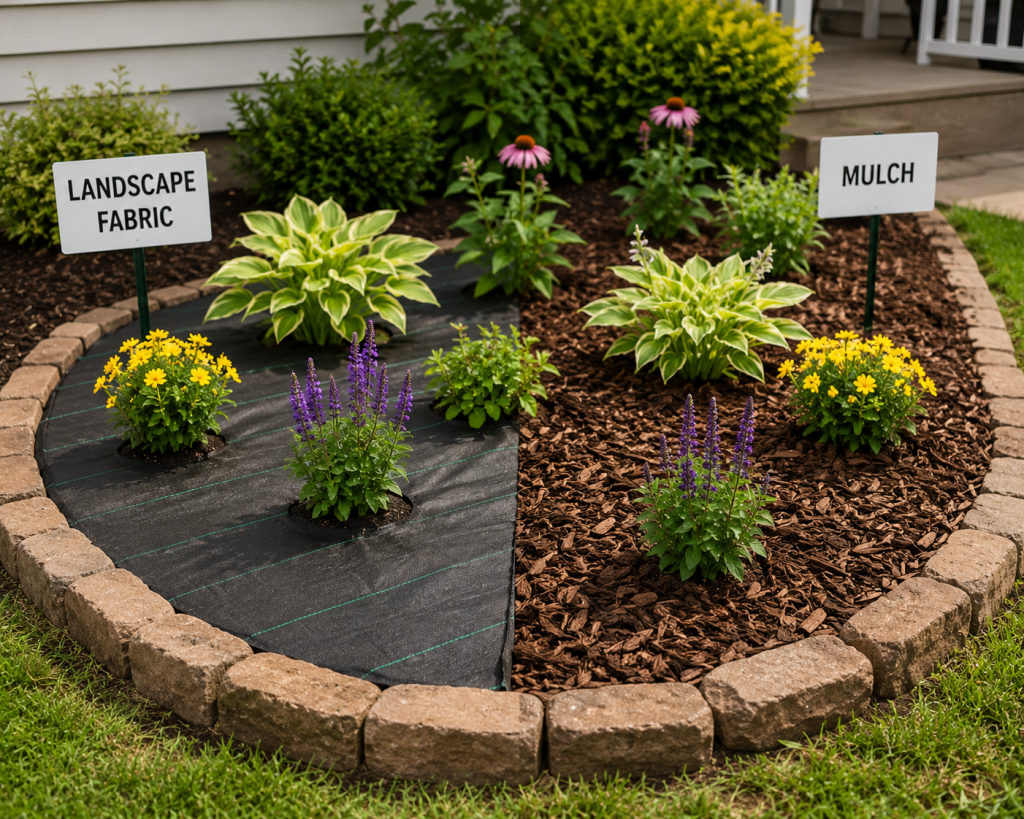
Landscape fabric is a sheet material placed over the soil to block weeds. It can reduce weeds at first, but it does not stop all weeds forever. Over time, new weed seeds can sprout in the debris that collects on top of the fabric.
For most homes, this is the practical rule:
- Use mulch alone in most flower beds with shrubs, flowers, and mixed plantings
- Use landscape fabric more carefully and only in limited situations
- Do not expect either option to make a bed completely weed-free forever
How Mulch Controls Weeds
Mulch works by covering the soil surface and reducing the light that reaches weed seeds.
If weed seeds do not get enough light, many of them have a harder time sprouting. Mulch also helps keep the soil cooler and more evenly moist, which benefits many flowers and shrubs.
Organic mulch is mulch made from natural materials like bark, wood, pine bark, or pine straw. It breaks down gradually over time.
That breakdown is actually one reason mulch works well in flower beds. It helps support the soil instead of separating the bed from it.
Common mulch choices for flower beds include:
- Shredded bark mulch
- Shredded hardwood mulch
- Pine bark mulch
- Pine straw in some regions and bed types
How Landscape Fabric Controls Weeds
Landscape fabric works by creating a barrier between the soil and the surface of the bed.
In theory, that barrier makes it harder for weeds growing below the fabric to come through. In real life, it usually helps with some weeds at first, but it does not stop weed growth forever.
Over time, leaves, dust, mulch particles, and other debris collect on top of the fabric. That thin layer becomes a place where new weeds can sprout. Once that happens, the fabric is no longer stopping the weeds you see most often.
Landscape fabric can also become harder to deal with once plant roots grow through it or mulch settles into it.
Why Mulch Is Usually Better in Planted Flower Beds
For most flower beds with living plants, mulch is the simpler and more forgiving choice.
It helps with weed suppression, improves appearance, protects soil moisture, and is easy to refresh. If weeds appear, you can usually pull them, top up the mulch, and keep moving.
Landscape fabric tends to add another layer of maintenance. It may look like a permanent fix at first, but it often becomes a frustration later when roots, mulch, and weeds all start interacting with the fabric.
When homeowners compare landscape fabric vs mulch for weed control in flower beds, the biggest difference is usually short-term weed blocking versus long-term bed health and easier upkeep.
When Landscape Fabric Can Make Sense
Landscape fabric is not always a bad product. It just has more limited uses than many homeowners expect.
It can make sense in beds with fewer plants, in some decorative areas, or in spaces where you are trying to separate stone from soil. It may also help temporarily in a new bed while you get a weed problem under control.
Still, even in those cases, it should be used carefully and with realistic expectations.
Landscape fabric may make sense when:
- The bed has very few plants
- You are using rock or gravel instead of organic mulch
- You need a short-term weed barrier in a new area
- The bed is more decorative than plant-heavy
- You are trying to reduce soil mixing under certain hardscape materials
When Landscape Fabric Usually Becomes a Problem
Landscape fabric often causes trouble in normal flower beds because plant roots and natural soil life do not stay neatly separated from the surface forever.
Roots can grow into or through the fabric. Mulch can mat down on top of it. Weeds can root into that top layer. Then pulling weeds becomes harder because the roots may tangle with the fabric.
At that point, the fabric can stop feeling like weed control and start feeling like something buried in the way.
This is especially common in older foundation beds and mixed shrub borders where the bed is meant to grow and change over time.
Landscape fabric is often a poor fit when:
- The bed has many shrubs, perennials, or spreading plants
- You plan to add or move plants later
- The bed gets leaf litter and organic debris regularly
- The goal is easy long-term maintenance
- The fabric will sit under wood mulch for years
Mulch Pros and Cons
Mulch is usually the safer recommendation, but it still has tradeoffs.
Benefits of mulch
- Helps reduce weed growth
- Helps soil hold moisture
- Looks natural in flower beds
- Breaks down and supports the soil
- Easier to refresh or adjust later
- Simpler to work around when planting
Drawbacks of mulch
- Needs occasional refreshing
- Will not stop every weed
- Can wash out in some areas if installed poorly
- Can cause problems if spread too deep
Too deep usually means more than about 2 to 3 inches in most flower beds. A heavy layer can trap too much moisture and make the bed look buried.
Landscape Fabric Pros and Cons
Landscape fabric also has a few real benefits, but its drawbacks tend to show up over time.
Benefits of landscape fabric
- Can reduce some weeds early on
- Helps separate some materials in certain landscape designs
- May be useful in low-plant decorative beds
- Can feel cleaner during initial installation
Drawbacks of landscape fabric
- Does not stop all future weeds
- New weeds can grow on top of it
- Can make planting and replanting harder
- Roots can grow into it
- Removal later can be messy and frustrating
- Often creates long-term maintenance headaches in living beds
Which Option Is Better for Soil Health?
Mulch is usually much better for soil health.
Organic mulch slowly breaks down and adds organic matter to the top of the soil. Organic matter helps the soil hold moisture better, improves texture, and supports healthier root growth.
Landscape fabric does not improve the soil. It creates a barrier instead.
That barrier may not ruin a bed overnight, but it usually does less to support the natural soil-building process that healthy planting beds benefit from over time.
Which Option Is Better for Moisture Control?
Mulch is usually better here too.
It helps reduce water evaporation from the soil surface and protects roots from quick temperature swings. That is especially useful around flowers, shrubs, and foundation plantings.
Landscape fabric can still allow water through, but performance depends on the product, the condition of the fabric, and how much debris has built up on top of it. Once the surface gets clogged with fine material, water may not move as well as expected.
For everyday planted beds, mulch is usually the more natural and dependable moisture helper.
Best Choice for Flower Beds Around the House
For most flower beds around the house, mulch alone is the best choice.
That includes beds along the front foundation, side-yard planting strips, and mixed beds with shrubs and seasonal flowers. These areas usually benefit more from a flexible mulch layer than from a buried fabric barrier.
Flower beds around the house are rarely static. Plants grow, roots spread, homeowners add new plants, and mulch gets refreshed over time. A system that is easy to adjust usually works better than one that is meant to stay hidden in place for years.
What Type of Mulch Works Best for Weed Control?
Shredded bark mulch or shredded hardwood mulch is usually the best all-around choice.
These mulches cover the soil well, look tidy, and tend to stay in place better than very chunky mulch in many beds. Pine bark can also work well, especially in decorative planting beds.
Good mulch options for weed control include:
- Shredded bark mulch
- Shredded hardwood mulch
- Pine bark mulch
- Pine straw in beds where it stays in place well
The goal is not just weed control. The best mulch should also suit the look of the bed and be easy to maintain.
If you are also trying to choose the best-looking and most practical mulch for foundation and flower beds, read our guide on best mulch for flower beds around the house.
Safe DIY Checks Before You Choose
A few simple checks can help you avoid the most common weed-control mistakes.
Safe DIY checks
- Pull existing weeds before adding fresh mulch
- Check whether the bed already has old fabric buried under it
- Look for signs that water pools in the bed after rain
- Measure mulch depth instead of guessing
- Keep mulch a few inches away from plant stems and trunks
- Watch whether leaves and debris collect heavily in the bed
- Think about whether you may want to move or add plants later
If the bed already has old landscape fabric that is exposed, torn, or tangled with roots, adding more fabric on top is usually not the answer.
If the bed already has established weeds before you refresh the surface, our guide on best weeding tools for older homeowners can help you clear them out with less strain first.
When It Makes Sense to Call a Professional
Most mulch and weed-control work is manageable for homeowners. But sometimes the real problem is bigger than weeds.
Call a professional if:
- The bed has drainage problems near the foundation
- Water regularly pools against the house
- The area needs regrading
- Tree roots are taking over the bed
- You suspect a serious invasive weed problem
- The fabric is tangled into a large mature planting that is hard to remove safely
A landscaper or drainage contractor may be worth calling if the issue involves grading, water movement, or a full bed renovation.
Common Mistakes to Avoid
Weed control usually works best when the bed is maintained consistently, not when one product is expected to fix everything.
Avoid these common mistakes
- Expecting landscape fabric to stop weeds forever
- Installing fabric under every planted bed automatically
- Spreading mulch too deep
- Adding mulch over existing weeds without cleanup
- Piling mulch against plant stems or trunks
- Ignoring drainage problems that encourage weed growth
- Using weed control products without reading the label carefully
A flower bed can be low-maintenance, but it will never be no-maintenance.
Final Verdict
For most homeowners, mulch is the better choice than landscape fabric for weed control in flower beds.
It is simpler, better for soil health, easier to refresh, and usually more practical in real planted beds around the house. Landscape fabric can help in limited situations, especially in low-plant decorative areas, but it often causes more trouble than it solves in long-term flower beds.
If you want a cleaner and easier approach, skip the idea of a permanent weed-proof barrier and focus on good bed prep, a proper mulch layer, and regular light maintenance. That combination usually works better than fabric alone.