best weeding tools for older homeowners
Best weeding tools for older homeowners are usually the ones that reduce bending, lower hand strain, and make it easier to remove weeds without turning a simple yard task into a painful workout.
For most beginners, the best choice is not one perfect tool for every job. It is a small set of easier-to-use tools that match the kind of weeds you have and the way your yard is laid out.
In most cases, a stand-up weed puller is the best overall option for lawn weeds, an ergonomic hand weeder is best for flower beds, and a stirrup hoe is one of the easiest tools for larger open garden areas.
Best Weeding Tools for Older Homeowners: Quick Answer
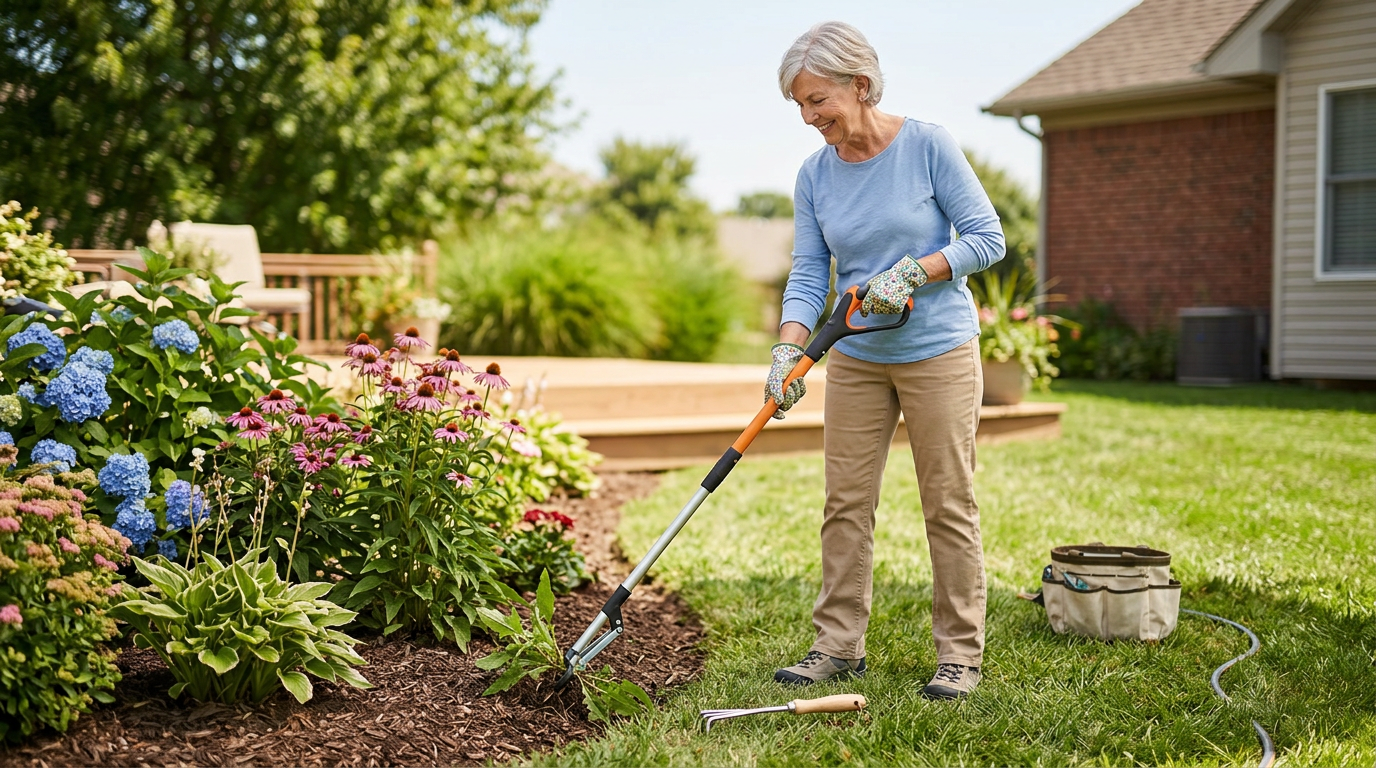
If you want the shortest answer, start with a stand-up weed puller.
It is usually the easiest tool on the back and knees because it lets you remove many lawn weeds while standing. For beds and tight spaces, add one lightweight ergonomic hand weeder. If you have larger garden rows or open mulch-free areas, a stirrup hoe is often the next best tool.
The most useful weeding tools for older homeowners are:
- Stand-up weed puller
- Ergonomic hand weeder
- Stirrup hoe
- Long-handled cultivator or weeder
- Crack weeder for walks and edges
- Garden kneeler and seat as a support tool
What Makes a Weeding Tool Easier to Use?
Older homeowners usually do better with tools that reduce strain instead of just trying to be extra sharp or extra heavy-duty.
A good weeding tool should feel stable, easy to grip, and comfortable to control. It should also match the job. A tool that works great in a lawn may be frustrating in a crowded flower bed.
Ergonomic means the tool is shaped to put less stress on your body. In plain English, it is designed to feel easier on your hands, wrists, back, or knees.
Look for these features first:
- Long handles to reduce bending
- Lightweight materials
- Handles with a comfortable grip
- Simple step-in or rocking motion
- Easy weed release
- A tool shape that matches your yard type
Best Overall: Stand-Up Weed Puller
For many older homeowners, a stand-up weed puller is the best place to start.
This type of tool lets you stay upright while removing common lawn weeds. Most models use claws or prongs that grab the weed near the root when you step down and tilt the handle.
That matters because bending over again and again is often the hardest part of weeding, not the pulling itself.
A stand-up weed puller works especially well for weeds like dandelions in a lawn. A dandelion has a taproot, which is one long main root that goes deep into the soil. If you leave too much of that root behind, the weed may come back.
This tool is best for:
- Dandelions in the lawn
- Larger single weeds
- Homeowners who want to avoid kneeling
- People with back or knee discomfort
- Quick spot-weeding around the yard
It is not ideal for:
- Dense flower beds
- Tight spaces between plants
- Very rocky soil
- Tiny weeds growing in a thick patch
Best for Flower Beds: Ergonomic Hand Weeder
A hand weeder is still one of the most useful tools you can own, especially in flower beds and vegetable gardens.
The difference is that older homeowners should look for a hand weeder with a comfortable grip and a shape that lets the tool do more of the work. A curved or hooked blade often helps slide into the soil and lift weeds out with less twisting.
This type of tool is especially helpful around flowers, shrubs, and other plants where a larger tool would be too clumsy.
An ergonomic hand weeder is best for:
- Weeds close to flowers
- Raised beds
- Vegetable gardens
- Mulched areas
- Small jobs where precision matters
Features that help most:
- Thick handle for easier gripping
- Lightweight design
- Narrow blade for tight spaces
- Strong metal tip that can get under roots
- A shape that works with a pulling or scooping motion
If you are also trying to decide whether mulch alone is enough to keep those beds under control, read our guide on landscape fabric vs mulch for weed control in flower beds.
Best for Open Garden Soil: Stirrup Hoe
A stirrup hoe is one of the easiest tools for clearing many small weeds in open soil.
It has a loop-shaped blade that moves back and forth just below the soil surface. That slicing action cuts off small weeds before they get established.
This works well in vegetable rows, open beds, and wider garden spaces. It is not usually the right tool for tightly planted flower beds, but it can save a lot of effort in open ground.
A stirrup hoe is sometimes called a scuffle hoe. It is meant to skim the surface instead of digging deep.
A stirrup hoe is best for:
- Open vegetable rows
- Newly sprouted weeds
- Wide planting areas
- Homeowners who want less pulling and tugging
- Maintaining loose soil areas regularly
It works best when:
- Weeds are still small
- The soil surface is fairly open
- You use light repeated passes instead of forceful chopping
Best for Less Bending in Beds: Long-Handled Weeder or Cultivator
A long-handled weeder or cultivator can be a great middle ground between a stand-up weed puller and a short hand tool.
These tools help you reach into beds and loosen surface weeds with less bending. They are especially useful when you want more control than a stand-up puller but do not want to kneel for every weed.
Some use a hooked blade. Others use narrow tines to loosen soil and lift small weeds.
This type of tool is best for:
- Raised beds
- Border gardens
- Beds with moderate plant spacing
- Homeowners who want to work standing up
- Light maintenance weeding
Best for Sidewalks and Edges: Crack Weeder
Weeds often show up where the lawn meets the driveway, along sidewalks, or between pavers.
A crack weeder is a narrow tool designed to reach into those tight spaces and lift out roots with less scraping and prying. It is useful for homeowners who get tired of using a screwdriver or a random old trowel for the job.
This tool will not replace your main weeder, but it is helpful in the spots where other tools do not fit.
A crack weeder is best for:
- Sidewalk edges
- Paver joints
- Driveway cracks
- Narrow hardscape gaps
- Small weed clusters in tight spaces
Best Support Tool: Garden Kneeler and Seat
This is not a weeding tool by itself, but it can make weeding much easier.
A garden kneeler and seat gives you a padded place to kneel or sit and often includes side handles that help you stand back up. For older homeowners, that support can matter just as much as the tool in your hand.
If kneeling is still comfortable for short periods, using a kneeler with a good hand weeder can make flower-bed work much more manageable.
A garden kneeler and seat helps with:
- Reducing knee pressure
- Giving you a place to sit during bed work
- Helping you stand up more safely
- Making longer weeding sessions less tiring
Best Tool by Weed Type
The right tool depends a lot on the kind of weed you are dealing with.
For deep-rooted lawn weeds
- Stand-up weed puller
- Ergonomic hand weeder for smaller areas
For tiny weeds in open soil
- Stirrup hoe
- Long-handled cultivator
For weeds in flower beds
- Ergonomic hand weeder
- Long-handled narrow weeder
For cracks and edges
- Crack weeder
- Narrow hand tool with a pointed tip
A root system matters here. Some weeds sit shallow near the surface, while others send down a deeper root that has to be removed more completely.
Best Tool by Yard Area
Thinking by location makes shopping easier.
For the lawn
- Stand-up weed puller is usually the best first tool
For raised beds
- Ergonomic hand weeder
- Long-handled narrow cultivator
For vegetable rows
- Stirrup hoe
- Lightweight long-handled hoe
For flower beds around the house
- Ergonomic hand weeder
- Kneeler and seat for support
For patios and walkways
- Crack weeder
If a lot of your weeding happens in foundation beds or borders, our guide on best mulch for flower beds around the house will help you reduce future weed pressure with the right mulch choice.
What to Avoid if Comfort Is the Priority
Some tools still work, but they are not always the best fit for older homeowners.
Heavy digging hoes, short rigid tools with thin handles, and tools that require a lot of force can wear you out quickly. Very cheap tools can also be frustrating because they flex, slip, or make you use more effort than necessary.
When people search for the best weeding tools for older homeowners, they often focus only on the blade shape. Comfort, weight, and reach usually matter just as much.
Tools that are often harder to use comfortably include:
- Very short-handled weeders
- Heavy full-size hoes for light weed work
- Thin metal handles with poor grip
- Tools that require repeated twisting motions
- Oversized digging tools for small weeds
How to Choose the Right Tool for You
The best tool is the one that matches both your yard and your body.
A homeowner with back discomfort may do best with a stand-up tool. Someone with hand pain may need a thicker grip and lighter weight. Someone with a lot of flower beds may need a precise hand tool more than a lawn puller.
Ask these questions before buying:
- Do I want to stand, sit, or kneel while weeding
- Are most of my weeds in the lawn, beds, or cracks
- Do I need precision around plants or broad coverage in open areas
- Is gripping strength a challenge
- Do I need a tool that works with light motions instead of force
- Will I actually use this tool every week in season
Safe DIY Checks Before You Start Weeding
A few simple habits make weeding easier and safer.
Safe DIY checks
- Weed after light rain or watering when the soil is softer
- Start with the easiest area instead of the most overgrown spot
- Wear gloves for better grip and hand protection
- Check that handles are tight and not loose
- Take short sessions instead of one long tiring session
- Watch your footing on slopes, wet grass, and uneven ground
- Stop if a tool requires repeated forceful twisting or yanking
Softer soil often makes weeds easier to pull. That means less strain on your hands, wrists, shoulders, and back.
When It Makes Sense to Call a Professional
Most homeowners can handle regular light weeding on their own. But some situations are better turned over to a pro.
Call a professional if:
- The weeds cover a large area and are badly overgrown
- You are dealing with poison ivy or another irritating plant
- The area is steep, uneven, or hard to walk safely
- You have severe pain, balance issues, or limited mobility
- The weeds are mixed into thorny shrubs or dense ground cover
- You need larger landscape cleanup, not just routine weeding
A landscaper can help reset the area so future maintenance is easier. In some cases, reducing the amount of hand weeding needed is the best long-term solution.
Common Mistakes to Avoid
A good tool helps, but technique still matters.
Avoid these common mistakes
- Buying one tool and expecting it to work everywhere
- Choosing heavy-duty tools when a lighter tool would do
- Waiting until weeds are large and deeply rooted
- Weeding in hard dry soil when pulling will be much tougher
- Overreaching instead of repositioning yourself
- Trying to finish the whole yard in one session
- Ignoring support tools like kneelers or seats
Small, regular weed control is usually much easier than occasional marathon cleanup.
Final Verdict
For most homeowners, the best first purchase is a stand-up weed puller for lawn weeds and an ergonomic hand weeder for beds.
That combination covers the most common weed problems without forcing as much bending, kneeling, or gripping strain. If you also maintain a vegetable garden or open planting rows, adding a stirrup hoe makes the setup even better.
The best weeding tools for older homeowners are not the most aggressive or most complicated tools. They are the ones that let you keep up with weeds comfortably, safely, and without turning routine yard care into a painful job.