
Best Paintable Caulk for Trim and Baseboards
The best paintable caulk for most interior trim and baseboard projects is a paintable acrylic latex caulk or another paintable formula specifically labeled for the surfaces and joint involved. Acrylic latex is popular because it is generally easy to apply, tool, clean up, and paint. However, joints that experience more movement, moisture, or exterior exposure may call for a siliconized acrylic, hybrid, or exterior-rated paintable product instead.
No single caulk is automatically best for every trim project. Check the product label for surface compatibility, interior or exterior use, movement capability, permitted joint size, cleanup method, application conditions, and paint-ready instructions before buying.
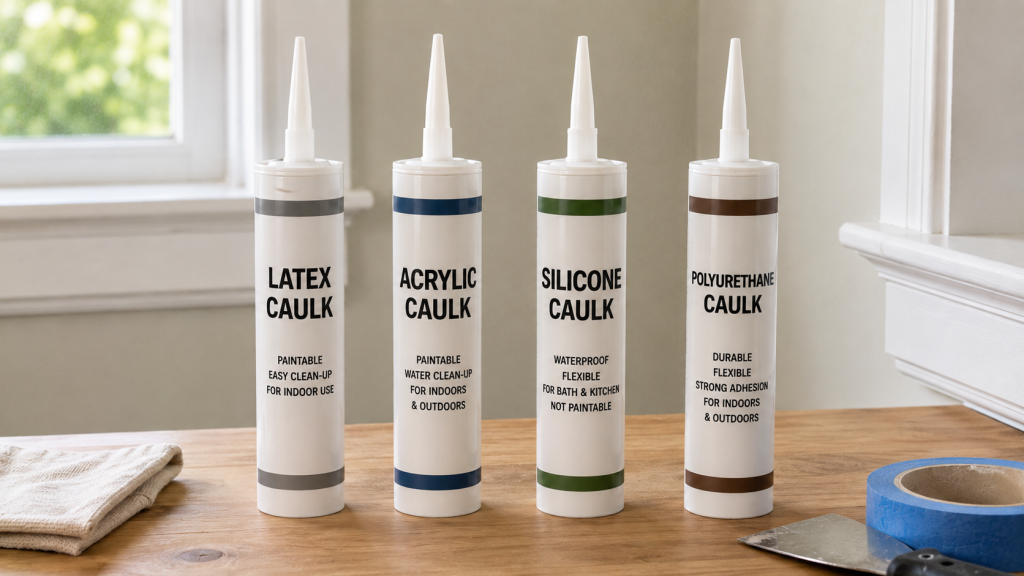
| Caulk type | Best use | Main advantage | Main limitation | Cleanup/application note |
|---|---|---|---|---|
| Paintable acrylic latex | Interior baseboards, casing, crown molding, small trim joints | Easy to apply and commonly paintable | May not suit joints with significant movement or moisture exposure | Many formulas offer convenient cleanup while fresh; check the label |
| Siliconized acrylic latex | Painted joints needing somewhat different flexibility or moisture performance | Can combine paintability with added performance, depending on formula | Properties vary substantially by product | Confirm paintability and cleanup method |
| Hybrid or advanced polymer | Joints where greater movement capability or durability is needed | Some formulas offer higher-performance sealing while remaining paintable | Can cost more and may handle or clean up differently | Follow product-specific tooling and cleanup instructions |
| Exterior-rated paintable caulk | Exterior trim and other painted outdoor joints | Formulated for weather exposure when properly matched to the application | An exterior rating does not make every product suitable for every material or joint | Verify surfaces, temperature range, joint size, and paint instructions |
What Makes the Best Paintable Caulk?
A good trim caulk needs to do more than accept a coat of paint. It also needs to remain suitable for the joint as the surrounding materials experience normal movement.
For most homeowners, the important buying criteria are:
- Paintability: The label should specifically state that the caulk can be painted.
- Surface compatibility: Confirm that the product is suitable for the trim and adjoining wall, window, door, or other material.
- Flexibility: The caulk needs enough movement capability for the intended joint.
- Shrink and crack resistance: A bead that shrinks excessively can reveal the joint again after finishing.
- Interior or exterior rating: Exterior exposure requires a product specifically approved for it.
- Joint size: Caulks have limits on the gaps and joint configurations they are designed to fill.
- Paint-ready time: Some formulas allow relatively quick painting, while others require a longer wait.
- Cleanup: Water-cleanup products can be convenient for interior work, while other formulations may require different cleanup methods.
Ease of tooling, odor, ventilation requirements, application temperature, and cure conditions may also influence your choice.
The key is to compare actual labels rather than assuming that two products with similar chemistry will perform identically.
Acrylic Latex Caulk for Interior Trim
Paintable acrylic latex caulk is a common choice for interior trim because its characteristics fit many ordinary finishing jobs.
It is frequently used where baseboards, door casing, window trim, or crown molding meet a painted wall. Many formulations are designed to be easy to dispense and tool, and water cleanup is common among acrylic latex products while they are still fresh.
That combination makes acrylic latex a practical starting point for narrow, stable interior joints.
It is not automatically the right choice everywhere. A basic interior formula may not be intended for exterior exposure, persistent moisture, unusually large joints, or areas that experience substantial movement.
Before buying, check whether the label specifically lists the materials and conditions involved in your project.
When Other Paintable Caulk Types Make Sense
Acrylic latex is not the only option. The demands placed on the joint can make another paintable formulation more appropriate.
Siliconized Acrylic Latex
Siliconized acrylic and similar blended formulations can offer different flexibility, moisture resistance, or durability characteristics than basic acrylic latex, depending on the specific product.
They can be useful when you want the convenience of a paintable trim caulk but the joint needs performance beyond what a basic interior product offers.
The word “siliconized” should not be treated as a guarantee of any particular performance level. Check the manufacturer’s claims for the individual product, including whether it is paintable and suitable for your surfaces.
Hybrid and Advanced Polymer Caulks
Some hybrid and advanced polymer sealants are paintable and designed to accommodate greater movement or demanding conditions.
They may make sense around certain windows, doors, or other joints where movement capability is a bigger consideration. Some are also suitable for applications or surfaces beyond those handled by basic interior acrylic caulk.
The tradeoff is that application, tooling, cleanup, paint-ready timing, and cost can differ from familiar water-cleanup acrylic products.
Choose these products because their labeled capabilities match the joint, not because “advanced” automatically means better.
Exterior-Rated Paintable Caulk
Exterior trim requires a caulk specifically rated for the exposure and materials involved.
Outdoor joints can experience rain, sunlight, larger temperature changes, and more movement than typical interior trim joints. A caulk designed only for dry interior use should not be substituted simply because it is paintable.
For an exterior project, verify weather exposure, substrate compatibility, application temperature, movement capability, joint-size limits, and paintability on the label.
Choosing Caulk for Baseboards, Casing, and Crown Molding
The location of the joint helps narrow the choice.
Baseboards: A paintable acrylic latex caulk is often appropriate for narrow, stable gaps where painted baseboard meets a painted wall. Check the product’s suitability if moisture exposure is possible.
Door casing: Small joints between casing and a finished wall commonly suit paintable trim caulk. Movement, surface material, and whether the door is interior or exterior can change the requirements.
Window trim: Interior window casing may have needs similar to door casing, but exterior window joints can face much more moisture and movement. Do not assume the same interior caulk is appropriate outside.
Crown molding: Narrow gaps along painted crown molding often call for a paintable caulk that tools cleanly and tolerates normal movement. Large or recurring gaps may indicate movement that caulk alone will not solve.
These are starting points rather than universal product prescriptions. The actual surfaces and joint conditions should determine the final choice.
Paintability, Flexibility, and Shrinkage Matter Together
It is easy to focus on the word “paintable” and overlook everything else.
Paintability only tells you that the product is intended to accept paint when used according to its instructions. It does not tell you whether that caulk has the right flexibility, adhesion, durability, or joint-size capability for your project.
Flexibility matters because trim and adjoining materials can move slightly as temperature and moisture conditions change. A product needs to accommodate the amount of movement expected in its intended application.
Shrink resistance matters because a bead that loses significant volume as it dries can leave a visible depression or reopen the appearance of the joint. Check the manufacturer’s description rather than assuming all acrylic or hybrid formulas have the same shrink characteristics.
Traditional 100% silicone deserves particular attention. Many conventional silicone sealants are not paintable with ordinary architectural paints unless the product is specifically labeled otherwise. Do not use a non-paintable silicone where the finished joint needs to match painted trim.
Consider Paint-Ready Time and Cleanup Before Buying
Paint-ready time can affect which caulk is most convenient for your project, especially if you plan to caulk and paint on the same day.
Some paintable caulks are labeled for painting after a relatively short period. Others require several hours or longer. A fast paint-ready claim can be useful, but it should not outweigh suitability for the joint.
For a detailed explanation, see How Long Does Caulk Take to Dry Before Painting?.
Cleanup deserves similar attention. Many acrylic latex products allow convenient cleanup while fresh, but do not assume the same method applies to siliconized, hybrid, or specialty sealants. Check the label before using water, solvents, or other cleaners.
Follow the manufacturer’s directions for ventilation, skin contact, application temperature, cleanup, paint-ready timing, and cure conditions.
Match the Caulk to the Joint Size and Surface
Caulk works best when it is used within the joint dimensions and applications specified by its manufacturer.
A narrow cosmetic gap between painted trim and drywall is different from a deep opening, a moving construction joint, or deteriorated material. Buying a higher-priced caulk does not turn it into a universal gap filler.
Surface compatibility matters as well. Painted wood, MDF, drywall, masonry, vinyl, metal, and other materials do not necessarily call for the same product.
Check the label for both surfaces whenever the caulk bridges two different materials. If one surface is unusual, glossy, damp, contaminated, or exposed to weather, confirm compatibility rather than relying on a broad “multi-purpose” description.
When Caulk Is Not the Right Repair
Caulk can conceal and seal narrow, stable joints, but it should not be used to disguise a repair problem.
Do not rely on caulk as a substitute for:
- Securing loose or poorly fastened trim
- Replacing rotten or badly deteriorated material
- Finding and correcting active water intrusion
- Repairing large structural gaps
- Correcting joints that continue to move significantly
- Filling openings outside the product’s permitted joint dimensions
If a gap repeatedly opens after being caulked, determine why the materials are moving rather than continually adding more caulk.
Caulk is most useful after the underlying materials are sound and the joint itself is appropriate for a flexible sealant.
Common Paintable Caulk Buying Mistakes
One common mistake is choosing by product name or chemistry alone. Two acrylic latex or hybrid caulks can have different performance characteristics, application limits, and paint-ready instructions.
Another is buying the most flexible or heavy-duty product available even when a straightforward interior trim caulk would suit the joint. More performance is useful only when the application needs it.
Other mistakes include choosing an interior-only product for outdoor trim, overlooking joint-size limits, assuming every silicone-containing caulk is non-paintable or every acrylic is paintable under all conditions, and ignoring cleanup requirements until the tube is already open.
Finally, do not choose caulk without considering when it will be painted. Paintable caulk normally needs to be applied and allowed to reach its specified paint-ready stage before the final painted finish. For more context on that sequence, see Caulk Before or After Painting? The Correct Order.
Final Thoughts
For typical interior baseboards, door casing, crown molding, and similar painted joints, paintable acrylic latex caulk is often a practical starting point because it combines paintability with homeowner-friendly application and cleanup. Silicone-based acrylic, hybrid, or specialty paintable products may be a better fit when the joint needs different flexibility, moisture performance, or exterior durability.
The best paintable caulk is ultimately the one whose labeled uses match your surfaces, joint size, exposure, movement, cleanup needs, and painting schedule. Compare those requirements first, then choose the formulation that fits the job rather than relying on brand claims or chemistry alone.