Best sanding sponge for drywall patches
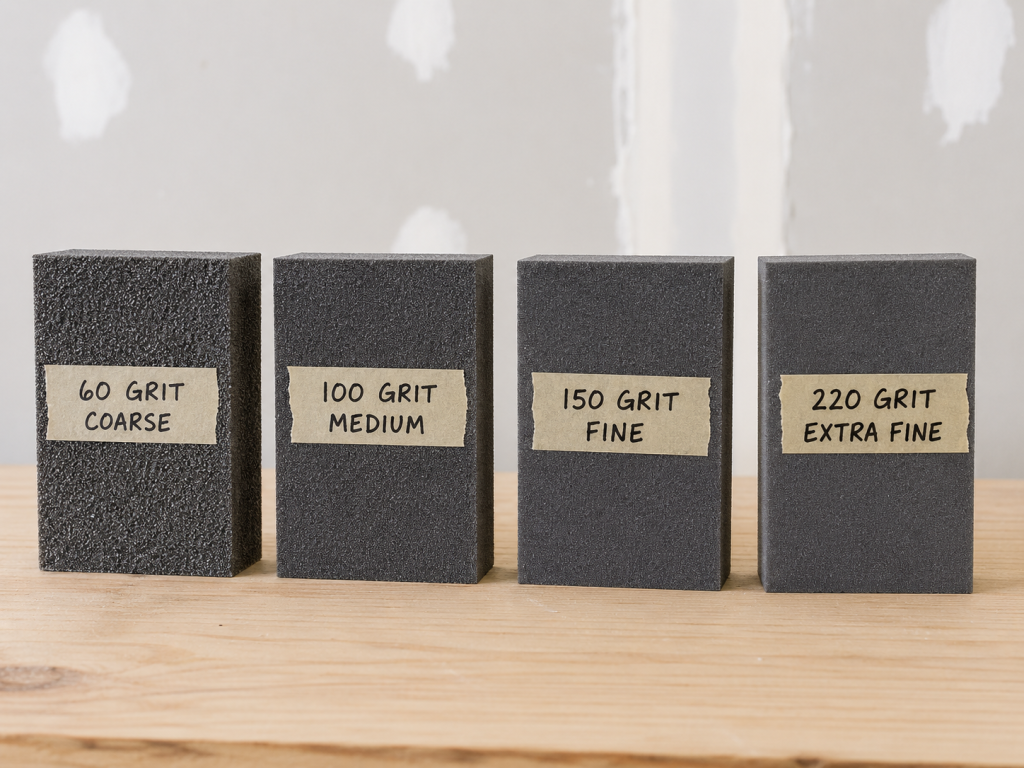
The best sanding sponge for drywall patches depends on how much material you need to remove and how close the repair is to its final finish. For many ordinary patches, a fine-grit sponge is a practical choice for final smoothing and feathering. Medium grit can help with raised compound or rough edges, while extra-fine grit is better reserved for a very light finishing pass. Aggressive sanding is rarely necessary for a small drywall patch.
| Sanding option | Best use | Control | Beginner fit | Main caution |
|---|---|---|---|---|
| Medium-grit sponge | Raised compound, rough patch edges | Good | Good | Can remove material quickly |
| Fine-grit sponge | Final smoothing and feathering | High | Excellent | Too much sanding can expose drywall paper |
| Extra-fine sponge | Very light final finishing | High | Good | Too fine for significant shaping |
| Angled sanding sponge | Corners, edges, detail areas | High | Good | Shape is less important on broad flat areas |
| Firm sanding block | Broader, flatter repairs | Moderate to high | Good | Requires care around patch edges |
Grit descriptions and exact grit numbers vary among manufacturers, so use the product’s stated purpose as well as the grit label when comparing options.
Choosing the Best Sanding Sponge for Drywall Patches
Start by looking at the condition of the patch rather than automatically reaching for the finest or coarsest sponge available.
If the joint compound is already close to flush with the wall, you generally need only enough abrasion to remove minor ridges and blend the transition into the surrounding surface. A fine sanding sponge offers useful control for that job.
If the dried compound has obvious high spots, tool marks, or raised edges, medium grit can remove material more efficiently before you switch to a finer finishing pass.
Extra-fine abrasives have a narrower role. They can refine an already smooth repair, but they are inefficient for removing significant imperfections.
The best choice should let you correct the surface with light pressure rather than forcing you to scrub aggressively.
Medium, Fine, or Extra-Fine Grit?
Grit affects how quickly a sanding sponge removes material and how refined a surface it leaves behind.
There is no single grit that is right for every drywall patch.
Medium grit for shaping rough areas
A medium-grit sanding sponge can be useful when dried compound has noticeable ridges, raised edges, or other areas that need more than light finishing.
It removes material more quickly than fine or extra-fine grit, which can save effort on an uneven patch.
That additional cutting ability also makes it easier to remove too much material. Use light pressure and check the surface frequently rather than continuing until the entire patch has been heavily abraded.
Once the major high spots are gone, a finer sponge may provide better control for final smoothing.
Fine grit for everyday final smoothing
Fine grit is a practical choice for many drywall patch repairs because most properly applied patches do not require aggressive sanding.
It works well for smoothing small imperfections and feathering the transition between joint compound and the surrounding wall before primer.
For small nail holes and minor repairs, fine grit may be all you need.
The objective is not to sand away the patch. Stop when the repaired area feels flush, and the transition at its edges is smooth.
Extra-fine grit for a light finishing pass
Extra-fine grit is most useful when the patch is already smooth and needs only minor refinement.
It removes material slowly, making it unsuitable for efficiently flattening substantial ridges or heavy tool marks. Its strength is control during a final light pass.
Do not assume that finer always means better. If the patch still needs shaping, starting with an excessively fine abrasive can lead to unnecessary work.
Sponge Shape and Firmness Matter
Grit receives most of the attention, but the physical construction of a sanding sponge also affects how it behaves.
A flexible sponge can conform slightly to the surface and can be comfortable to control around small repairs. Too much flexibility, however, is not always desirable when the goal is maintaining a broad, flat surface.
A firmer sponge or sanding block can provide a more stable backing on larger repairs. That firmness can make it easier to identify and reduce high areas without following every small contour.
Consider sponge density and durability as well. A sponge that breaks down quickly or loses its abrasive surface unevenly can become less predictable as you work.
For occasional patching, comfort and control are often more useful buying criteria than choosing the largest or most aggressive sanding product.
When an Angled Sanding Sponge Helps
Angled sanding sponges have shaped edges that can make them easier to position near corners, trim, or other detailed areas.
They can be useful when a patch approaches an inside corner or another location where a standard rectangular face is awkward to control.
For a broad patch in the middle of a flat wall, the angled profile provides less advantage. In that situation, grit, firmness, and a flat sanding face usually matter more.
Choose a shaped sponge because the repair location benefits from it, not because an angled design is automatically better for drywall.
Match the Sanding Tool to the Patch Size
Patch size and condition help determine how much firmness and cutting ability you need.
Small nail holes and minor patches often require very little sanding. If the compound was applied smoothly, a light pass with fine grit may be sufficient.
Larger compound repairs can have broader high spots or tool marks. Medium grit may help with initial shaping, followed by finer sanding as the repair approaches its final surface.
Broad flat repairs may benefit from a firmer sanding block or firm-backed sponge that helps maintain flatness across the repair.
The larger the patch, the more important it becomes to check the overall surface rather than concentrating only on individual ridges.
If a repair requires extensive sanding to become flat, the problem may be the compound application rather than the sanding tool. Sanding away large amounts of hardened compound creates unnecessary dust and increases the chance of damaging the surrounding wall.
If you are deciding between a sponge and traditional sandpaper, see our comparison of a sanding sponge for drywall vs sandpaper.
Use Light Pressure and Check Your Progress
A sanding sponge works best when the abrasive does the cutting.
Pressing hard can remove compound faster than intended and make it difficult to maintain a smooth transition around the repair. It can also increase the chance of scuffing or damaging the drywall paper surrounding the patch.
Use light, controlled pressure and stop frequently to inspect and feel the surface.
Concentrate first on obvious high spots, then feather the outer edges so the patch transitions gradually into the wall. Avoid repeatedly sanding the center once it is already flush.
The repair does not need to look dramatically different in color before it is ready. What matters is whether the surface is flat and smooth enough for the next finishing step.
Avoid Oversanding the Drywall Paper
One of the most common patching mistakes is continuing to sand after the compound is already smooth.
The paper facing on drywall is not intended to be aggressively abraded. Sanding beyond the patch can scuff, fuzz, or damage that surface.
Pay particular attention around feathered edges, where the compound becomes thin, and the surrounding drywall is easier to contact.
Stop when:
- Raised compound has been leveled
- Obvious ridges have been removed
- Patch edges transition smoothly into the wall
- The repair feels flush under light hand pressure
If you discover a low area, sanding the surrounding surface will not correct it. The repair may need another thin application of compound instead.
Control Drywall Dust Before Priming
Drywall sanding produces fine dust, even on small repairs.
Limit unnecessary dust spread by sanding only as much as the repair requires. Use appropriate eye protection, and use respiratory protection when the amount of airborne dust or the product instructions call for it. Provide suitable ventilation without deliberately spreading dust into other rooms.
After sanding, remove residual dust using a method appropriate for the drywall surface and the primer or coating you plan to apply. Dust left on the repair can interfere with the quality of the finished surface.
Follow the sanding product, joint compound, primer, and paint manufacturers’ instructions for use, cleanup, personal protection, and application conditions.
If the repair involves sanding an older painted surface and lead-based paint may be present, do not use uncontrolled sanding that can create hazardous lead dust. Determine an appropriate lead-safe approach before disturbing the suspect coating.
Once the patch is smooth and dust-free, see our guide to the best primer for drywall and patched surfaces before painting.
Common Sanding Sponge Buying Mistakes
Choosing the most aggressive sponge available is rarely necessary for routine patch work. Coarse abrasion can remove compound quickly but also gives a beginner less margin for error.
Other common mistakes include:
- Buying by grit alone without considering sponge firmness
- Using medium grit after the patch is already nearly smooth
- Expecting extra-fine grit to flatten significant ridges efficiently
- Choosing a very flexible sponge for a broad area that needs to remain flat
- Buying an angled sponge when the repair has no corners or detailed edges
- Ignoring the size and shape of the sponge relative to the patch
- Continuing to sand after the patch is already flush
- Treating sanding as a substitute for correcting a low or poorly filled repair
Price alone is not a reliable measure of suitability. A useful sanding sponge should have consistent abrasive coverage, enough durability for the intended repair, and a shape and firmness you can comfortably control.
Final Thoughts
The best sanding sponge for drywall patches is the one that removes only as much material as the repair requires. Fine grit is a practical everyday choice for smoothing and feathering many ordinary patches, while medium grit can help shape raised compound and extra-fine grit is useful for light final refinement.
Choose firmness and shape along with grit. Use light pressure, check the repair frequently, and stop once the patch is flush and smooth. Good control matters more than aggressive sanding when preparing a drywall patch for primer.