Sanding Sponge for drywall vs sandpaper
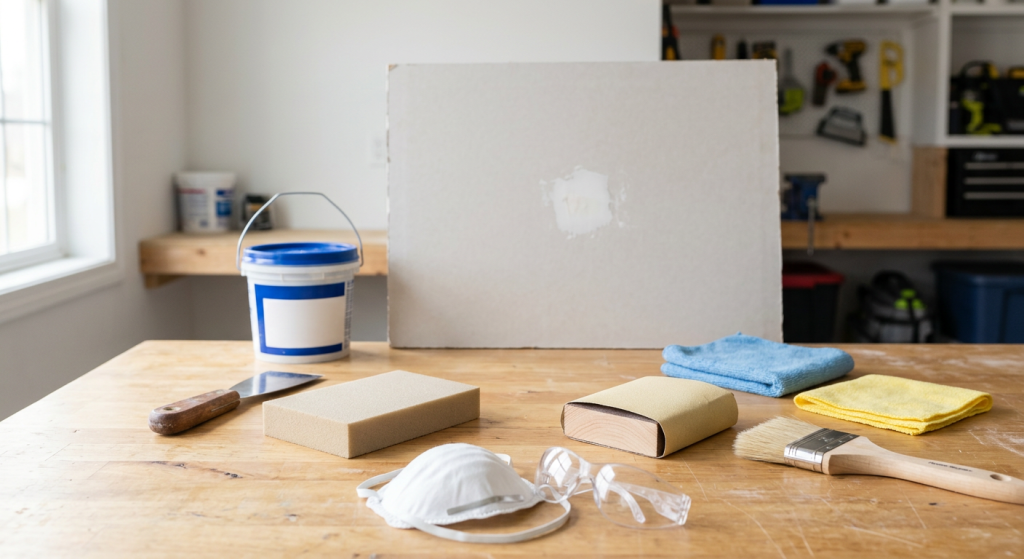
A sanding sponge for drywall is often the easiest choice for small patches, edges, and areas where comfortable hand control matters. Sandpaper can be more flexible and inexpensive, while sandpaper supported by a sanding block often makes it easier to keep broader repairs flat. None is automatically better for every drywall job—the right sanding format depends on the size, shape, and stage of the repair.
| Sanding format | Best use | Control | Flatness | Corners/edges | Main limitation |
|---|---|---|---|---|---|
| Sanding sponge | Small patches and detail work | High | Moderate | Very good | Can flex or round edges |
| Loose sandpaper | Small or irregular areas | Moderate | Low | Good | Finger pressure can sand unevenly |
| Sandpaper on a block | Broad, flat repairs | High | High | Limited | Less convenient in tight areas |
Sanding Sponge for Drywall vs Sandpaper: What Changes?
The biggest difference is not the abrasive itself. It is what supports the abrasive while you work.
A sanding sponge combines an abrasive surface with a foam backing. That backing spreads pressure across the sponge and conforms slightly to small variations in the surface. It is comfortable to grip and easy to reposition, which can make it especially useful for small drywall repairs.
Loose sandpaper has no built-in support. It bends easily and can reach areas where a rigid tool would be awkward, but your fingertips become the backing. Pressing too hard with individual fingers can create grooves or low spots in joint compound.
Putting sandpaper on a sanding block changes its behavior. The block creates a broader, firmer backing surface that can help keep a flat repair flat as you smooth it.
The practical choice is therefore about flexibility versus firmness. More flexibility helps with positioning and irregular areas. More firmness helps maintain a consistent plane.
When a Sanding Sponge Makes Sense
A sanding sponge is particularly convenient for small drywall patches, such as filled nail holes and localized repairs. Its size and shape make it easy to hold without folding abrasive paper around your fingers.
The foam backing also spreads hand pressure over a larger area. For beginners, that can make controlled, light sanding easier than working with loose sandpaper.
A sponge can be useful around edges and corners because you can position an edge of the sponge where a larger sanding block may not fit comfortably. Depending on its shape, it may also be easier to control along transitions between the patch and the surrounding wall.
That flexibility has a tradeoff. A soft sponge can follow surface variations instead of leveling them. On a broad repair that needs to remain very flat, excessive flexibility can work against you.
Sanding aggressively with an edge of the sponge can also round a corner or create a depression. Use the broad abrasive surface when possible and check the repair frequently instead of trying to remove everything in one pass.
If you are specifically choosing among sponge grits, shapes, or firmness levels for patch work, see best sanding sponge for drywall patches. Those product-selection questions are separate from deciding whether a sponge or sandpaper is the better sanding format.
When Sandpaper Works Better
Loose sandpaper has two straightforward advantages: it is flexible and easy to change when you need a different abrasive.
That flexibility can be useful in small spaces or on areas where a rigid sanding surface is inconvenient. You can fold or position the sheet as needed without carrying another tool.
The weakness of loose sandpaper is also its lack of backing. If you press directly behind the paper with your fingertips, pressure becomes concentrated in a few small areas. Joint compound is relatively easy to sand, so concentrated pressure can remove more material than intended.
Loose paper can also crease, bunch, or fold while you work. That does not make it unsuitable for drywall, but it requires more attention to hand pressure.
For broad, flat compound repairs, sandpaper often becomes more useful when paired with a sanding block.
Why a Sanding Block Helps on Flat Drywall Repairs
A sanding block provides a firm surface behind the sandpaper. Instead of the abrasive following every small dip under your fingertips, the block bridges a wider area.
That can be valuable when smoothing a broader joint-compound repair where maintaining flatness matters. The block makes it easier to move the abrasive across the surface with consistent support.
A sanding block is not automatically the better choice, however. Firm backing can be awkward on a very small patch, near an inside corner, or anywhere the sanding surface needs to conform slightly.
Think of the three formats this way:
- Choose a sanding sponge when convenient control and some flexibility are useful.
- Choose loose sandpaper when you need maximum flexibility or a quick abrasive change.
- Choose sandpaper on a sanding block when maintaining a broad, flat surface is the priority.
The repair itself should determine the backing—not a rule that one sanding tool is always superior.
Match the Sanding Format to the Drywall Repair
For a small nail hole or minor patch, a sanding sponge is often convenient. You can work across the repaired area with light pressure while feathering the transition into the surrounding wall.
For a broad, flat compound repair, backed sandpaper may provide better support. A sanding block can help prevent your fingers from digging into softer areas of compound and creating an uneven surface.
For corners and tight edges, a sanding sponge can be easier to position. Its shape gives you useful working surfaces without requiring you to fold loose paper repeatedly.
For heavy ridges or poorly applied compound, the problem may be the repair rather than the sanding format. Do not assume prolonged sanding is the best way to correct excessive buildup. If a large amount of compound must be removed to produce a flat repair, reconsider the surface before endlessly grinding it down.
The goal is not to sand as much as possible. It is to leave a smooth, flush repair without unnecessarily removing compound or damaging the drywall around it.
If you are repairing small nail holes before sanding, this guide on how to spackle nail holes before painting explains how to fill them cleanly so there is less excess material to sand afterward.
Grit Still Matters, but Keep the Choice Simple
Whether you use a sponge or sandpaper, the abrasive needs to match what you are trying to accomplish.
A more aggressive abrasive removes compound faster, but it also gives you less margin for error. A finer abrasive removes material more slowly and offers greater control during final smoothing.
Grit numbers, descriptions, and abrasive configurations can vary among products, so there is little value in treating one number as a universal answer for every drywall repair.
A practical rule is to use the least aggressive abrasive that efficiently corrects the surface. If the repair already needs only minor smoothing, there is no advantage in removing compound faster than necessary.
Use Light Pressure and Check the Repair Often
Drywall sanding usually benefits more from control than force. Let the abrasive do the work and use light, even pressure.
Move across the patch rather than repeatedly concentrating on one small spot. As the high areas disappear, check the surface from different angles. Good lighting across the wall can make remaining ridges and depressions easier to notice.
Feather the outer edges so the transition between compound and the surrounding surface feels smooth rather than abrupt. Stop once the repair is flush and ready for the next finishing stage.
Be especially careful as you approach the drywall paper. Sanding through or heavily scuffing the paper creates another surface problem instead of improving the repair.
Common sanding mistakes include:
- Pressing harder to make the work go faster
- Sanding one spot repeatedly without checking progress
- Using fingertips behind loose paper on a broad flat patch
- Tilting a sponge or block and digging in with an edge
- Using an unnecessarily aggressive abrasive
- Continuing to sand after the repair is already smooth
- Trying to correct poor compound application entirely through sanding
Frequent checks are more useful than aggressive sanding. Once material is removed, you cannot put it back without another application of compound.
Control Drywall Dust While You Work
Even a small drywall repair can create fine dust. Keep the work area contained as much as practical, protect your eyes, and avoid spreading dust into adjoining rooms. Appropriate respiratory protection may also be warranted when sanding creates airborne dust.
Ventilation can help control ordinary remodeling dust when it can be arranged without blowing contamination through the home. Clean the work area thoroughly afterward rather than allowing fine dust to migrate onto furnishings and other surfaces.
Take additional precautions if the repair overlaps an older painted surface. Do not treat sanding suspect older paint like ordinary drywall-compound sanding. Homes built before 1978 may contain lead-based paint, and disturbing that coating can create hazardous lead dust. If lead-based paint may be present, determine the appropriate lead-safe approach before disturbing the painted surface.
This distinction matters because the tool comparison in this article assumes you are sanding ordinary drywall joint compound or another surface that is safe to sand—not an unidentified hazardous coating.
Which Sanding Format Should You Choose?
Start with the shape and size of the repair.
For a small patch where easy handling and precise positioning matter, a sanding sponge is often the most convenient format. It spreads hand pressure and provides enough flexibility to work around edges and other confined areas.
For a larger, flatter repair, sandpaper supported by a sanding block may make it easier to preserve a flat surface. The firmer backing becomes more useful as the area you are trying to level grows.
Loose sandpaper remains useful when flexibility matters most, but it demands more care because your hand provides the backing.
Experience also changes the equation. Someone accustomed to sanding drywall may control loose paper easily, while a beginner may appreciate the predictable grip of a sponge or the firm support of a block.
There is no need to commit to only one format. A broader repair may benefit from backed sandpaper across the main flat area and a sponge for careful work near an edge. The important point is to change tools for a reason rather than expecting one abrasive format to handle every part of the repair equally well.
Final Thoughts
A sanding sponge for drywall is a practical choice for small patches, edges, and repairs where easy handling and controlled flexibility are useful. Loose sandpaper offers flexibility and simple grit changes, while sandpaper on a sanding block can provide better support when maintaining a broad, flat surface matters.
Whichever format you use, light pressure and frequent checks matter more than aggressive sanding. Choose the backing that fits the repair, remove only the compound that needs to come off, and stop when the patch is smooth and flush with the surrounding surface.