
how to fix nail pops in drywall so they stay fixed
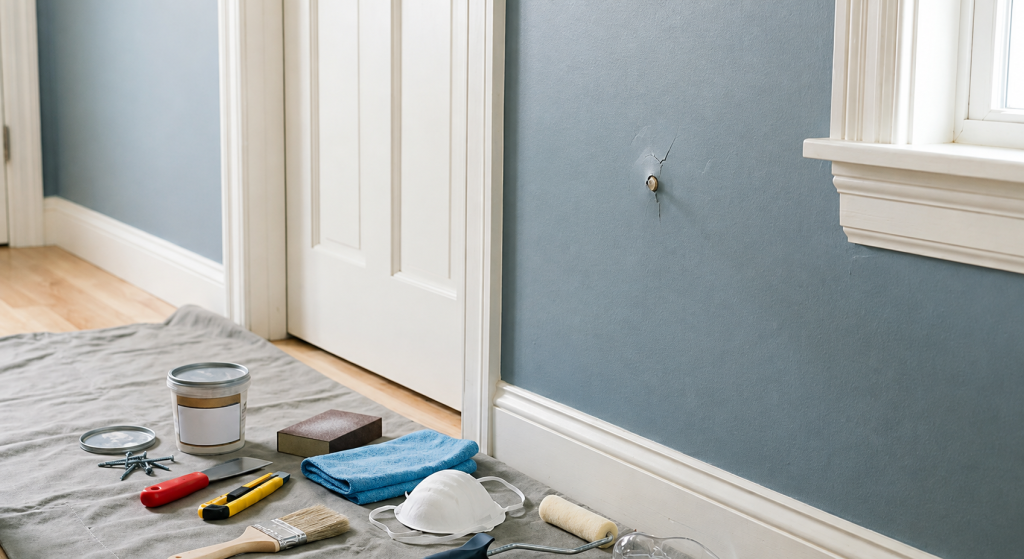
If you are asking how do i fix nail pops in drywall, the important step is to secure the drywall before covering the bump. For a typical isolated nail pop, inspect the area, secure the panel to appropriate framing or backing with drywall screws, address the loose nail, patch the fastener depressions, let the material dry, sand lightly, prime, and repaint. Simply covering the raised nail with compound can allow the pop to return.
| What you see | Possible cause | Best next step |
|---|---|---|
| One isolated nail pop | Loose fastener or minor drywall movement | Inspect and re-secure the panel |
| Same pop keeps returning | Fastener or panel was not adequately secured | Correct the fastening problem before repatching |
| Several pops in one area | Multiple loose fasteners or panel movement | Inspect the broader area before cosmetic repair |
| Ceiling nail pops | Fastening or panel movement | Check for multiple pops, sagging, and safe access |
| Pops with stains or soft drywall | Possible moisture damage | Find and correct the moisture source first |
A nail pop is different from an ordinary nail hole. The visible bump is usually evidence of movement at a fastener, so the repair needs to address that movement rather than merely hide the surface defect.
Why Nail Pops Happen
A drywall nail pop occurs when a fastener moves relative to the drywall surface or the drywall shifts enough for the fastener area to become visible.
Several conditions can contribute.
Wood framing can dry and change dimension after construction. Minor framing movement can also change how tightly drywall sits against the framing. In other cases, an original fastener may loosen or the panel may not be adequately secured in that area.
As the relationship between the fastener, drywall, and framing changes, the nail can push against or through the finished surface. The result may look like a small round bump, cracked patch, or raised spot.
That is why simply spreading spackle over the bump often provides only a cosmetic correction. If movement continues underneath, the repaired surface can crack or push outward again.
An ordinary picture-hanger hole does not have the same underlying problem. For that type of cosmetic repair, see How to Spackle Nail Holes Before Painting.
How Do I Fix Nail Pops in Drywall?
For an isolated nail pop in otherwise sound drywall, the goal is to secure the panel first and restore the finished surface second.
Before adding screws, identify appropriate framing or backing rather than driving fasteners blindly into a wall or ceiling. Be aware that electrical wiring, plumbing, HVAC components, and other utilities may be concealed behind drywall. If you cannot determine a safe fastening location, stop rather than guessing.
Step 1: Inspect the area
Look beyond the visible nail pop before beginning the repair.
Check for moisture stains, soft drywall, sagging, cracks, visible movement, or several nearby fastener pops. Pressing aggressively on the wall is unnecessary; a visual inspection and gentle check for obvious looseness can tell you whether the problem appears localized.
One isolated pop in dry, otherwise sound drywall is different from a row of fastener pops accompanied by movement or cracking.
If the drywall is wet or soft, address the source of the moisture and determine the extent of the damage before making a cosmetic repair.
If several pops are clustered together, inspect the larger area rather than treating each bump independently.
Step 2: Re-secure the drywall
Drywall screws are commonly used near a popped fastener to pull the panel securely back against appropriate framing or backing.
The new screw needs to engage suitable framing or backing. Do not assume that any location beside the nail is safe for a screw, and do not drive fasteners blindly where concealed electrical wiring, plumbing, ductwork, or other components could be present.
Drive the screw so it secures the panel without tearing through the drywall face. The screw head should form a controlled depression that can be covered with patching material rather than breaking the paper and losing its holding ability.
The exact fastener length and placement depend on the wall or ceiling assembly and what is behind the drywall, so a universal screw specification is not appropriate for every repair.
The objective is simple: stop the drywall from moving at the repair before hiding the evidence of the old fastener.
Step 3: Deal with the loose nail
Once the drywall has been properly secured, address the original popped nail rather than simply burying its raised head under patching compound.
Depending on its condition and accessibility, the nail may be carefully driven below the finished surface or removed after the panel has been secured.
Avoid aggressive hammering. Heavy blows can crush the gypsum, tear the drywall paper, enlarge the damaged area, or loosen the surrounding finish.
If removing the nail would unnecessarily damage otherwise sound drywall, a controlled recessed fastener can be patched after the panel is secure.
The critical point is that the original nail should no longer be pushing against the finished surface.
Step 4: Patch the fastener depressions
After correcting the fastening problem, cover the resulting fastener depressions with an appropriate drywall patching material.
Apply only enough material to fill and smooth the depressions. Creating a large mound over a small repair adds unnecessary drying and sanding work.
Depending on the repair and material, more than one controlled application may be appropriate. Follow the patching product’s instructions rather than trying to complete the repair with an excessively thick coat.
For a broader explanation of common patching materials, see Spackle vs Joint Compound for Wall Repairs.
Step 5: Let the patch dry
Allow the patching material to dry or set according to its instructions.
There is no single drying time that applies to every product or application. Material type, application thickness, temperature, humidity, and other conditions can affect when the repair is ready for finishing.
Do not rush to sand or paint simply because the surface appears dry.
Step 6: Sand lightly
Once the patch is ready, sand only enough to create a smooth transition between the repaired area and the surrounding wall.
Use light pressure and check the surface frequently. Aggressive sanding can expose the fastener, create a low spot, or damage the drywall paper around the repair.
If the surrounding painted surface is old enough that lead-based paint may be present, do not use uncontrolled sanding or scraping on the suspect coating. Determine an appropriate lead-safe approach before disturbing it.
Step 7: Prime the repair
Remove sanding dust and apply an appropriate primer to the repaired area.
Patching material can absorb finish paint differently from an already painted wall. Spot priming seals the repair and helps reduce visible differences in absorption and sheen.
Follow the primer instructions for application, drying, ventilation, and recoating.
Step 8: Paint
Once the primer is ready, repaint the repair with matching wall or ceiling paint where possible.
Matching the existing color is only part of making the repair disappear. Existing surface texture and paint sheen can also affect how noticeable the patched area looks under normal lighting.
Use an application method that helps reproduce the surrounding finish rather than building a noticeably heavy spot over the repair.
Why Nail Pops Keep Coming Back
A recurring nail pop does not automatically indicate a major structural problem. It does, however, suggest that repeatedly covering the surface is not solving whatever is allowing movement at that location.
A repaired pop may return when:
- The original loose fastener was covered but not addressed
- The drywall was patched without being adequately re-secured
- More than one fastener in the area is loose
- Framing continues to move
- Moisture is affecting the drywall or framing
- A broader drywall or framing problem is present
This is why a surface-only patch can fail. Compound can hide the evidence temporarily, but it cannot reliably correct movement between a drywall panel and its support.
If the same location returns after the drywall has been properly secured and finished, investigate further rather than repeatedly adding patching material.
What If Several Nail Pops Appear Together?
Several nail pops concentrated in one area deserve more attention than a single isolated blemish.
A cluster may indicate that more than one fastener has loosened or that a section of drywall is moving relative to its framing. Look for accompanying cracks, visible panel movement, sagging, or changes along seams.
Do not assume that every group of nail pops means the structure is failing. Drywall fastening and ordinary framing movement can produce multiple visible defects without indicating a major structural problem.
At the same time, treating each pop as an unrelated cosmetic bump can miss the underlying pattern.
If many pops appear suddenly, continue returning after appropriate repairs, or occur along with significant cracking or visible movement, further evaluation is appropriate.
Be More Cautious With Ceiling Nail Pops
The same basic fastening issue can occur on a ceiling, but ceiling repairs deserve additional caution.
Gravity continually acts on the drywall panel. Several ceiling fastener pops, particularly when accompanied by sagging or visible movement, can indicate that a broader section needs attention rather than individual cosmetic patches.
Safe access is another concern. Do not stretch sideways from a ladder, stand on unsuitable furniture, or work overhead from an unstable position. If the repair cannot be reached while maintaining safe ladder positioning, use safer access equipment or have the work handled professionally.
Before adding ceiling fasteners, the same concealed-utility caution applies. Know what the screw will engage and what may be behind the drywall.
A ceiling that is visibly sagging, wet, soft, or moving should be investigated before patching.
When to Get Further Help
An isolated nail pop in sound, accessible drywall can often be handled as a focused homeowner repair. Broader symptoms can change the situation.
Consider further evaluation when you find:
- Many nail pops developing together
- The same pops returning after a proper fastening repair
- Noticeable drywall sagging
- Significant or expanding cracks
- Visible wall or ceiling movement
- Moisture stains or recurring dampness
- Soft or deteriorated drywall
- Suspected framing movement or damage
- A ceiling repair that cannot be reached safely
- Uncertainty about concealed wiring, plumbing, or other utilities
Moisture-related damage should not be covered until the moisture source has been identified and corrected. Likewise, a recurring movement problem should not be hidden under repeated layers of compound without determining why the drywall continues to move.
Final Thoughts
The lasting answer to how do i fix nail pops in drywall is to correct the fastening problem before repairing the surface. Inspect the area, secure sound drywall to appropriate framing or backing, deal with the loose nail, and only then patch, sand, prime, and repaint.
If nail pops repeatedly return, appear in groups, or occur with sagging, cracking, moisture, or visible movement, look beyond the cosmetic bump. A nail pop is often a small repair, but the repair lasts best when the underlying movement is addressed first.