Bathroom sink drains slow but is not clogged
Bathroom sink drains slow not clogged is a common homeowner problem, and it usually means the drain is partially restricted even though you cannot see a full blockage. The water still moves, but something is slowing it down inside the stopper area, pop-up assembly, P-trap area, venting path, or nearby bathroom drain line.
Start with the simple checks first. Look for hidden buildup around the stopper, clean the visible drain opening, and pay attention to clues from nearby fixtures. A sink can look clear from above and still have enough soap scum, toothpaste residue, hair, or grime inside the drain assembly to slow the flow.
Quick Checks for a Bathroom Sink That Drains Slowly
| What You Notice | Possible Cause | First Check | Beginner-Safe Next Step |
|---|---|---|---|
| Sink drains slowly but never fully backs up | Partial buildup near stopper | Stopper and drain opening | Clean visible debris and flush with hot tap water |
| Drain looks clear from above | Hidden buildup in pop-up assembly | Around and below the stopper | Use a flashlight and hair removal tool gently |
| Sink gurgles or drains unevenly | Venting or deeper drain issue | Nearby fixtures | Stop if other drains are also slow |
| Slow drain keeps returning | Buildup farther down the sink drain | Under-sink area and P-trap signs | Avoid force and call a plumber if needed |
Why a Bathroom Sink Drains Slow Not Clogged
A sink does not need a solid clog to drain poorly. A narrow layer of buildup inside the drain can slow the water without stopping it completely.
Bathroom sinks collect a sticky mix of hair, soap scum, toothpaste, shaving residue, skin oils, and minerals from water. This material can cling to the stopper, coat the inside of the pop-up assembly, or collect around bends in the drain path.
From above, the drain may look open. Under the surface, the opening may be partly narrowed. That is the difference between “not visibly clogged” and “not restricted.”
A fully clogged sink usually holds standing water for a long time. A partially restricted sink drains, but slowly. It may also drain faster right after cleaning and then slow down again within days or weeks.
Check for Hidden Stopper Buildup First
The stopper is one of the most common places for hidden buildup. Hair can wrap around the stopper stem, while soap and toothpaste residue can collect below the visible drain opening.
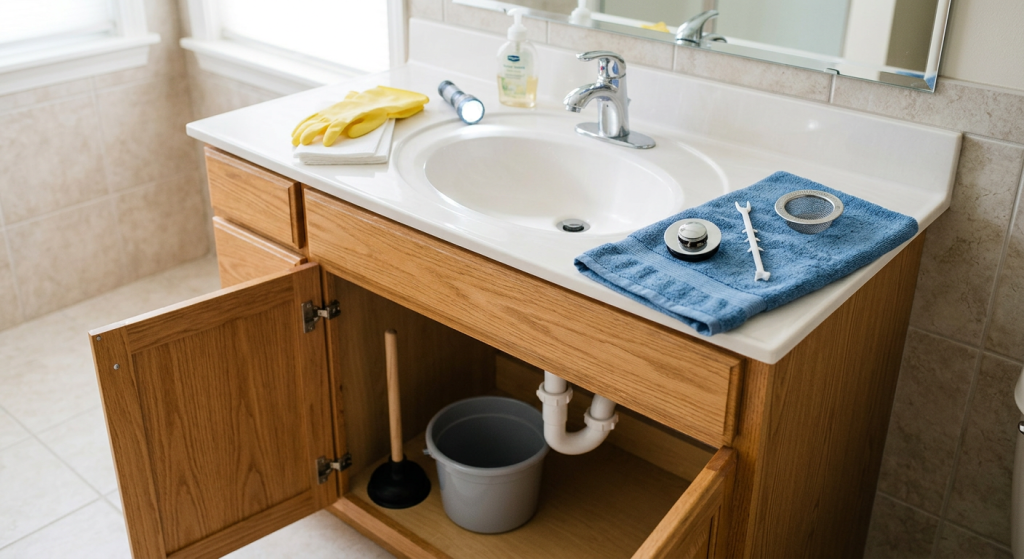
Before using tools, clear the counter and place a towel in the cabinet below the sink. Put on gloves so you are not handling drain debris directly. A flashlight can help you see buildup that is not obvious from above.
Helpful supplies for this check:
- Rubber gloves
- Flashlight
- Old towel
- Small bucket
- Paper towels or rags
- Mild dish soap
- Hair removal tool
- Drain strainer for prevention
If your stopper lifts out easily, remove it and clean it with warm water and mild dish soap. If it does not come out easily, do not force it. Some pop-up stoppers are connected below the sink, and forcing them can damage the linkage.
Safe steps for checking the stopper area:
- Remove loose hair or debris around the drain opening.
- Shine a flashlight into the drain.
- Wipe any visible grime from the stopper.
- Use a hair removal tool only near the upper drain area.
- Pull debris upward instead of pushing it deeper.
- Rinse with hot tap water.
- Test the sink again at normal faucet flow.
Do not use harsh force. The goal is to clear soft buildup near the top, not shove a partial restriction farther down the drain.
If water is also backing up in the shower, this may connect to a broader shower drain keeps clogging problem.
Look for Pop-Up Assembly Buildup
Many bathroom sinks have a pop-up drain assembly. This is the mechanism that raises and lowers the stopper. It can trap grime even when the top of the drain looks clean.
Hair, soap film, and toothpaste residue can catch on the stopper stem or the internal parts of the pop-up assembly. This can make the sink drain slowly without looking clogged from above.
You do not need to disassemble the whole drain to do a beginner-safe check. Focus on what you can see and reach from the top.
Signs the pop-up area may be restricted:
- The stopper looks slimy or coated.
- Water swirls slowly before draining.
- The drain smells musty.
- Hair comes up when using a removal tool.
- The sink improves after cleaning but slows again later.
If the stopper mechanism seems stuck, loose, or difficult to move, do not force it. That may be a better point to stop and have a plumber inspect the assembly.
If the drain is simply slow and you are still working through the first checks, start with our slow bathroom sink drain guide.
Try Hot Tap Water and Basic Drain Maintenance
Hot tap water can help soften soap scum and toothpaste residue. It is a simple first step after visible debris is removed.
Do not pour boiling water into the sink. Boiling water may be too harsh for some sink materials, older plumbing, or plastic drain parts. Use hot water from the faucet instead.
Basic maintenance steps to try:
- Remove visible debris first.
- Run hot tap water for one to two minutes.
- Let the sink drain fully.
- Repeat once if the drain improves.
- Clean the stopper again if more debris appears.
- Add a drain strainer to catch future hair.
This is not a cure for every slow drain, but it can help when the restriction is mostly soft residue.
A drain strainer is a simple prevention tool. It does not fix a deeper restriction, but it can reduce the amount of hair and debris entering the drain after you clean it.
Use Tools Only After Simple Checks
If the sink still drains slowly after cleaning the stopper area, a tool may help. Use the least aggressive option first.
A hair removal tool is best for debris close to the drain opening. A sink plunger can help with a partial restriction below the drain. A small hand drain snake may help if the buildup is slightly deeper, but it should be used carefully.
Do not use a plunger or drain snake if liquid drain cleaner is already in the sink. Chemical water can splash or coat the tool, creating a safety risk.
Before using a plunger or small hand drain snake, check that:
- The visible drain area has been cleaned.
- The stopper has been checked as much as possible.
- No liquid drain cleaner has been used.
- The cabinet under the sink is dry.
- Other bathroom fixtures are draining normally.
- You are not seeing water leak under the sink.
For a sink plunger, use a small cup plunger. Keep a little water over the drain, cover the overflow opening with a damp rag if the sink has one, and use short, controlled plunges. Avoid hard plunging because it can loosen weak drain connections.
For a small hand drain snake, feed the cable slowly. Turn the handle gently and stop if you feel firm resistance. Pull the cable back carefully and clean off any hair or buildup. If the tool gets stuck or the sink starts leaking below, stop.
Why Liquid Drain Cleaner Should Not Be the First Choice
Liquid drain cleaner can seem like an easy fix, but it should not be the first choice for a bathroom sink that drains slowly. These products may not fully remove hair or thick residue, and they can leave harsh chemicals sitting in the sink if the drain does not clear.
They also make later work more dangerous. If you plunge, snake, or reach into a drain after using chemical cleaner, you may expose yourself to splashes or chemical residue.
Never mix drain chemicals with bleach, vinegar, other cleaners, or another drain product. Mixing chemicals can create dangerous reactions or fumes.
Avoid liquid drain cleaner when:
- The sink has standing water.
- You may need to use a plunger or hand snake.
- The drain has already been treated with another cleaner.
- You smell strong chemical fumes.
- There is leaking under the sink.
- You are unsure what was used in the drain before.
For beginner homeowners, it is usually safer to start with cleaning, hot tap water, and gentle tools.
The P-Trap Area May Be Slowing the Drain
The P-trap is the curved drain section under the sink. It holds water to help block sewer gases, but it can also collect soap residue, hair, grime, and small objects.
A slow sink with no visible clog may have buildup near this area. You do not need to remove the P-trap to check for warning signs. In fact, beginner homeowners should be careful about taking drain parts apart because loose reconnections can cause leaks.
Look under the sink for:
- Drips or wet spots
- Damp cabinet flooring
- Staining or swelling
- Loose-looking drain connections
- Bad odor near the drain
- Water appearing after plunging
If you see leaking, stop using the sink and do not keep plunging or snaking. A small slow drain can become a cabinet water problem if a connection is disturbed.
Check Nearby Fixture Clues
Sometimes the bathroom sink is not the only issue. If the tub, shower, or another sink also drains slowly, the restriction may be farther down the bathroom drain line.
This is where the problem moves beyond a simple sink drain check. A slow main bathroom drain line can make one fixture seem like the problem even though the restriction is shared.
Watch for these nearby fixture clues:
- The tub drains slowly too.
- The shower backs up when the sink runs.
- The toilet bubbles or gurgles.
- Another bathroom sink is also slow.
- Water backs up into a different fixture.
- Drain odors come from more than one place.
If more than one fixture is affected, do not keep working on only the sink. The issue may require professional drain inspection.
Poor Venting Can Make a Sink Drain Slowly
Plumbing vents help air move through the drain system so water can flow properly. When venting is poor or blocked, a sink may drain slowly even if the visible drain opening is clear.
Venting problems are not usually beginner repairs. They can involve parts of the plumbing system that are hidden in walls or connected to roof venting.
Possible venting signs include:
- Gurgling after the sink drains
- Slow draining with no obvious debris
- Bubbles in nearby fixtures
- Sewer-like odors
- Slow drains that return after basic cleaning
Do not attempt roof vent work or major plumbing changes. If venting seems likely, call a plumber.
Common Mistakes to Avoid
A slow bathroom sink can be frustrating, especially when it does not look clogged. The biggest mistake is treating it like a full blockage before checking for partial buildup.
Avoid these common mistakes:
- Assuming “not clogged” means “not restricted”
- Pouring liquid drain cleaner in first
- Mixing chemical drain products
- Forcing a hair tool or snake
- Plunging hard enough to loosen connections
- Ignoring leaks under the sink
- Taking apart drain parts without a plan
- Treating a multi-fixture problem as a sink-only issue
A careful step-by-step approach is safer and usually more effective.
When to Stop and Call a Plumber
Some slow drains can be improved with simple cleaning. Others are signs of a deeper restriction, venting problem, or drain assembly issue.
Call a plumber if:
- More than one fixture drains slowly.
- Water backs up into a tub, shower, or another sink.
- You hear frequent gurgling.
- There is a sewer-like smell.
- The sink leaks underneath.
- A tool gets stuck or hits hard resistance.
- The slow drain returns soon after cleaning.
- Liquid drain cleaner was used and the sink is still slow.
- You are not comfortable working around the drain parts.
Stopping early can prevent leaks, chemical exposure, or damage to drain connections.
Final Thoughts
A bathroom sink can drain slowly even when it does not look clogged. Most of the time, the issue is hidden buildup around the stopper, pop-up assembly, upper drain, or P-trap area.
Start with gloves, a flashlight, simple cleaning, hot tap water, and gentle tool use only when needed. A hair removal tool, sink plunger, small hand drain snake, towel, bucket, drain strainer, and basic drain maintenance supplies can help with minor restrictions, but they should not be used with harsh force.
Avoid liquid drain cleaner as the first step, never mix chemicals, and stop if there is leaking under the sink. If nearby fixtures are also slow, the drain gurgles, odors appear, or the problem keeps coming back, call a plumber.
The safest fix is to treat the sink as partially restricted until proven otherwise, then stop before a simple slow drain turns into a bigger plumbing problem.