
toilet not flushing but not clogged: what to check
If your toilet not flushing but not clogged is the problem, and the bowl is not backing up, the cause is often inside the tank rather than the drain. A loose handle, disconnected chain, flapper problem, low tank water level, or fill valve or float issue can prevent a normal flush. If bowl water rises significantly, stop flushing and treat it as a possible clog instead.
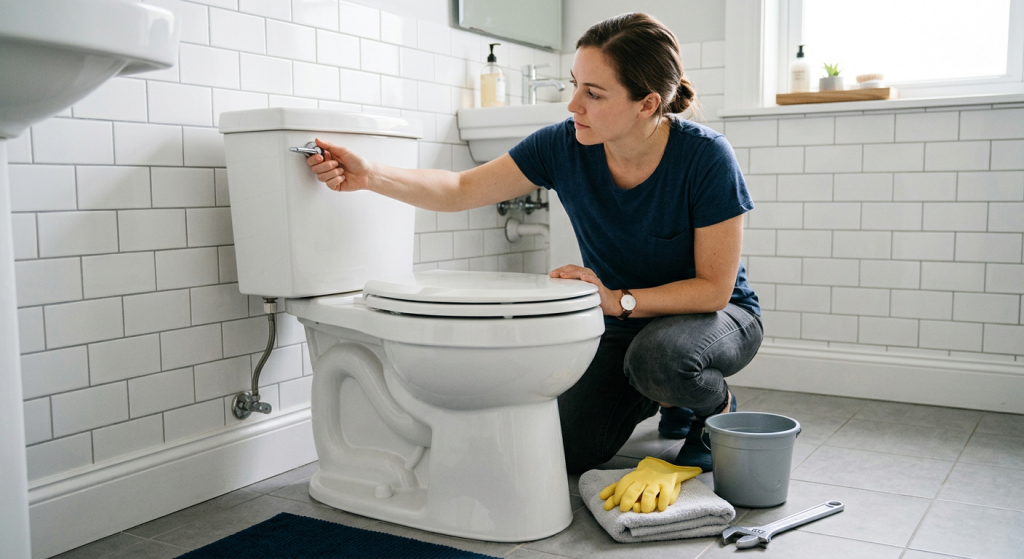
| What you notice | Likely area to check | What it may mean |
|---|---|---|
| Handle feels loose or floppy | Handle and flush lever | Handle may not operate the chain |
| Handle moves but nothing happens | Lift chain | Chain may be disconnected or caught |
| Flapper barely lifts | Chain or flapper | Tank cannot release enough water |
| Tank water is unusually low | Water supply, float, fill valve | Not enough water for a normal flush |
| Tank is empty after a previous flush | Refill system | Toilet is not refilling normally |
| Bowl water rises when you try to flush | Drain or toilet trap | Stop flushing; a clog may be present |
First, Confirm the Toilet Is Not Clogged
Before removing the tank lid, make sure the symptoms actually fit a non-clog flushing problem.
If you press the handle and the bowl water rises substantially instead of draining normally, stop flushing. That behavior can indicate a blockage even if the toilet did not previously seem clogged.
Repeated flushing can cause the bowl to overflow.
A different pattern points toward the tank. If the bowl remains around its normal level but pressing the handle produces little or no flushing action, inspect the tank mechanism.
You may also notice that the handle feels unusually loose or that you do not hear the normal rush of tank water entering the bowl.
Chemical drain cleaner is not an appropriate response to a toilet that shows no evidence of a clog. Do not add drain-cleaning chemicals to the toilet as an exploratory troubleshooting step.
Remove the Tank Lid and Check the Water Level
Carefully lift the toilet tank lid and place it on a stable surface where it cannot fall or crack.
Look at the water level before operating the handle.
A gravity-flush toilet depends on releasing a substantial amount of tank water into the bowl. If the tank is nearly empty or the water level is much lower than normal, the toilet may not have enough stored water to create a proper flush.
That immediately changes the troubleshooting direction.
If the tank has a normal amount of water, concentrate first on the handle, lift chain, and flapper.
If the tank is unusually low or empty, investigate why the toilet is not refilling properly rather than adjusting the flush mechanism.
Check the Toilet Handle
Press the handle while watching the mechanism inside the tank.
The outside handle connects to a lever inside the tank, and that lever normally pulls the lift chain attached to the flapper.
A handle problem may be obvious if it feels:
- Loose
- Floppy
- Unusually easy to move
- Disconnected from the internal lever
- Unable to move the lift chain
Watch what happens when you press it. The lever should move and transfer that motion to the chain.
If the handle moves but the internal lever does not operate normally, the problem may be with the handle assembly rather than the drain.
Keep the inspection gentle. Older tank components can become brittle or corroded, so do not force a handle or lever that is stuck.
Inspect the Lift Chain
If the handle and lever move, follow the mechanism to the lift chain.
The chain connects the flush lever to the flapper at the bottom of the tank. When you press the handle, the chain should lift the flapper so tank water can rush into the bowl.
Several simple chain problems can interfere with that action:
- The chain has disconnected from the lever or flapper
- Excessive slack prevents the flapper from lifting enough
- The chain has become caught on another tank component
- The chain is so tight that it interferes with normal flapper seating
If the chain has simply come loose from an obvious attachment point, reconnecting it may restore normal operation. Keep any adjustment conservative.
The chain needs enough movement to let the flapper close normally after the flush. Removing all slack can create a different problem by preventing proper seating.
Do not bend, force, or aggressively manipulate brittle or badly corroded parts.
Check Whether the Flapper Lifts Properly
The flapper is the rubber or similar sealing component covering the flush-valve opening at the bottom of many toilet tanks.
Watch it while someone operates the handle, or operate the handle while you observe from above.
The flapper should lift far enough to release tank water rapidly into the bowl. If it barely moves, immediately falls back into place, or does not lift at all, the toilet may produce little or no flushing action.
A flapper that does not lift properly can be related to the chain adjustment, the flapper itself, or interference with its movement.
Inspect it for obvious deterioration or damage without turning this diagnosis into a full replacement project. A flapper that is badly warped, cracked, deteriorated, or no longer moving normally may need replacement.
If the flapper itself appears to be the likely problem, How to Replace a Toilet Flapper: Beginner Homeowner Guide covers that repair separately.
If the flapper moves normally and releases a full tank of water but the bowl rises instead of flushing, reconsider the assumption that the toilet is not clogged.
Check the Tank Water Level
If the handle, chain, and flapper operate normally, look again at how much water the tank contains before each flush.
A toilet cannot produce its intended gravity flush when the tank does not hold enough water.
Low tank water can make a toilet appear to have a flushing-mechanism problem even when the handle and flapper work correctly. You may see the flapper open normally, but only a small amount of water enters the bowl.
If the tank starts full but does not release its water properly, concentrate on the flush mechanism.
If the tank never reaches its normal water level, move your attention to the refill side of the toilet.
That distinction prevents unnecessary adjustments to parts that are already working.
Check Whether the Tank Refills Normally
After a flush, the fill valve should allow water into the tank until the proper water level is restored.
If the tank remains empty, fills very slowly, or stops at an unusually low level, the underlying problem may be the water supply or refill mechanism rather than the handle, chain, or flapper.
Possible causes include a supply problem, shutoff valve issue, float problem, or fill-valve malfunction.
Keep this check diagnostic. You do not need to dismantle the fill valve to determine that the tank is failing to refill.
If poor or absent refilling is the main symptom, follow Toilet Not Filling With Water: Beginner Checks rather than continuing to troubleshoot the flush mechanism.
Do not force the toilet’s shutoff valve if it is stiff, corroded, or leaking. A valve that does not operate safely is a reason to stop before disconnecting or replacing water-supply components.
Watch the Float and Fill Valve
The float and fill valve control how the tank refills and when incoming water stops.
Float designs vary, but the basic relationship is similar: as tank water drops, the mechanism should allow the fill valve to supply water. As the water reaches the intended level, the float signals the valve to stop.
If the float sticks or is positioned so the tank stops filling too early, the toilet may not store enough water for a normal flush.
Watch the refill cycle rather than immediately adjusting parts. Look for a float that does not move freely or a tank that consistently stops filling at an unusually low level.
A fill valve can also become restricted, worn, or otherwise fail to provide normal refill flow.
This article is not a fill-valve repair or replacement guide. If the tank continues filling or running rather than failing to reach the water level needed for a flush, that is also a different troubleshooting problem.
What the Tank Mechanism Should Do During a Flush
Watching one normal attempt can help connect the symptoms.
When you press the handle, the internal lever should pull the chain. The chain should lift the flapper, allowing stored tank water to enter the bowl rapidly.
Afterward, the flapper should return to its seat, and the fill valve should refill the tank to its normal level.
If that sequence stops at a particular point, you have a useful diagnostic clue.
If the handle does not move the chain, investigate the handle or lever. If the chain moves but the flapper does not lift correctly, investigate the chain and flapper. If everything operates but the tank starts with too little water, investigate the refill side.
This sequence is more useful than replacing parts based only on the symptom that the toilet won’t flush.
Avoid Forcing or Replacing Parts Without a Diagnosis
When a toilet will not flush, but not clogged symptoms point inside the tank, most initial checks can be made visually.
Avoid forcing corroded hardware, bending brittle plastic components, or adjusting several parts at once. Changing multiple things makes it harder to determine what was actually wrong and can introduce a second problem.
Do not remove the toilet or begin drain-line work when the evidence points to a handle, chain, flapper, or low-water issue.
Likewise, do not repeatedly flush if the bowl begins rising. That symptom moves the problem out of the simple non-clog troubleshooting path.
When to Call a Plumber
Call a qualified plumber if the bowl backs up, multiple drains are affected, or you cannot determine whether the problem is in the toilet mechanism or drainage system.
Professional help is also appropriate when the toilet leaks, the shutoff valve is unreliable, or internal components are badly corroded, damaged, or difficult to operate safely.
If basic observation shows that the tank is not refilling but safely correcting the water-supply or fill-valve problem requires work beyond your comfort level, stop there rather than disassembling components.
Final Thoughts
When a toilet not flushing but not clogged is the problem, first verify that the bowl is not rising or backing up. If the bowl remains normal but little or no flush occurs, remove the tank lid carefully and follow the mechanism from the handle to the chain, flapper, tank water level, float, and fill valve.
The key distinction is whether the tank cannot release its water or does not contain enough water to begin with. Identifying that difference usually points you toward the right next step without unnecessary drain work or random part replacement.