plunger not working on toilet: what to try next
If your plunger not working on toilet is the problem, do not keep flushing or simply plunge harder. Common reasons include using the wrong plunger, getting a poor seal, having too little water around the cup, using uncontrolled technique, or dealing with a clog that is too firm, deep, or unsuitable for a plunger.
| What happens | Likely issue | What to try next |
|---|---|---|
| Plunger will not seal | Wrong plunger or poor positioning | Use a flange plunger and improve the seal |
| Bowl water is very low | Cup may not stay submerged | Make sure enough water surrounds the cup |
| Water starts draining slowly | Clog may be partially moving | Continue with controlled plunging |
| Nothing changes | Firm or deeper blockage | Stop adding force and reassess |
| Solid object may be involved | Plunger may worsen the obstruction | Stop plunging and get appropriate help |
Start With the Right Type of Plunger
Before changing your technique, check the plunger itself.
A flat cup plunger is generally better suited to sinks and other relatively flat drain openings. A toilet bowl has a different shape, so a flat cup can struggle to form an effective seal.
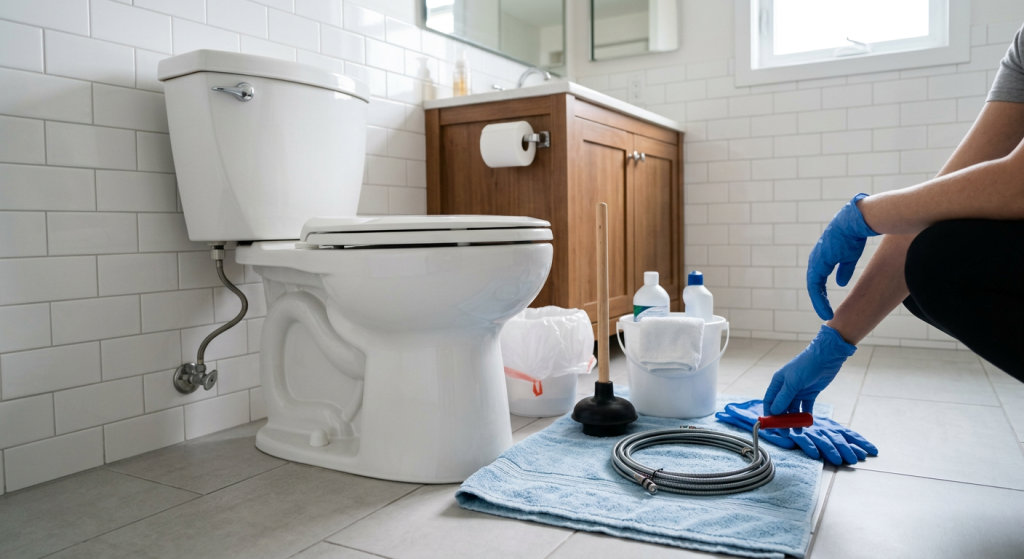
A flange plunger has an extended rubber flange beneath the main cup. That flange fits into the toilet drain opening and helps the larger cup seal against the bowl.
If your toilet plunger not working problem involves a flat cup that keeps slipping, leaking air, or failing to seal, changing to a flange-style plunger may make a bigger difference than applying more force.
The goal is not to buy the most aggressive tool available. It is to use a tool that can create controlled pressure through the toilet trap.
For a broader explanation of where plungers fit among basic drain-clearing tools, see Drain Snake vs Plunger: Which Should Homeowners Use?.
Check the Bowl Water Level Before Plunging
A plunger needs water around its rubber cup to work effectively. The water helps transmit the pressure changes created by the plunging motion.
If the bowl contains very little water, the plunger may move air instead of effectively acting on the clog.
The opposite situation requires more caution.
If the toilet bowl is already close to overflowing, do not add more water and do not flush again. Allow the level to fall if it is doing so on its own before attempting anything further.
Repeated flushing is especially risky because a clogged toilet may accept additional tank water faster than it can drain. One unnecessary flush can turn a manageable clog into contaminated water on the bathroom floor.
Before plunging, make sure the bowl is stable enough to work without creating an overflow or splash hazard.
Create a Good Seal Over the Toilet Drain
Poor sealing is one of the most common reasons a plunger seems ineffective.
Place the flange into the toilet drain opening so the main rubber cup can sit securely against the surrounding bowl surface. The cup should be submerged enough for water rather than mostly air to fill the working area.
Begin by pressing down gently. This helps remove trapped air from the plunger without creating a large splash.
Once the cup is seated, keep the seal intact.
If the plunger repeatedly slips sideways or breaks contact with the bowl, reposition it instead of increasing force. Powerful strokes accomplish little if pressure simply escapes around the edge of the cup.
A good seal allows controlled push-pull movement to act on the obstruction.
Use Controlled Plunging Technique
Effective plunging does not require violent movement.
Step 1: Position the flange
Place the flange into the toilet drain opening and center the main cup over it.
Make sure the rubber cup is surrounded by enough water to work effectively.
Step 2: Press down gently
Make the first downward movement slowly. The goal is to remove trapped air and establish the seal without splashing toilet water.
If air escapes around the cup, reposition the plunger.
Step 3: Maintain the seal
Keep the cup seated against the bowl as you work.
Avoid lifting the entire plunger away from the drain between strokes because that breaks the pressure cycle.
Step 4: Use steady push-pull strokes
Move the handle with controlled pressure in both directions while maintaining the seal.
Avoid violent plunging. Excessive force can break the seal and splash contaminated water without improving the clearing action.
Step 5: Reassess after several attempts
Stop and observe what the bowl water is doing rather than plunging indefinitely.
If the water level begins dropping more normally, the clog may be moving. If nothing changes despite a good seal and controlled technique, more force is unlikely to be the best next step.
Partial Movement Is Different From No Movement
How the water responds can help you decide whether continued careful plunging is reasonable.
If the bowl initially drains very slowly but begins draining somewhat faster after controlled plunging, the blockage may be partially clearing.
You may continue cautiously while there is clear improvement and no overflow risk.
If there is no change at all despite using a suitable flange plunger, adequate bowl water, a good seal, and controlled strokes, the obstruction may be too firm or too deep for the plunger.
A plunger can also fail when the obstruction is not the type of material that pressure changes can readily move.
Do not interpret zero progress as a reason to plunge harder.
If the toilet still clogged after plunging remains completely unchanged, reassess the blockage and the next appropriate tool.
When a Toilet Auger May Be the Next Tool
A toilet auger can be a reasonable next step when careful plunging fails and the problem still appears limited to the toilet.
Unlike a general-purpose drain snake, a toilet auger is designed specifically for use through a toilet’s trap. It can reach an obstruction that a plunger cannot move while helping protect the toilet bowl when used appropriately.
Consider moving to a toilet auger when:
- A flange plunger forms a good seal but produces no progress
- Careful plunging does not clear the obstruction
- The blockage appears to be beyond the immediate bowl opening
- The problem remains isolated to one toilet
This article is not an auger-use tutorial. Before choosing the next tool, see Toilet Auger vs Drain Snake: What Is the Difference? for the important distinction between the two.
Do not escalate from a hand plunger to powered drain-cleaning equipment as a beginner troubleshooting step.
Stop Plunging if a Hard Object May Be Stuck
A toilet clog caused by ordinary waste and paper is different from an obstruction involving a solid object.
If you know or strongly suspect that a toy, hygiene product, or another non-flushable object entered the toilet, stop increasingly forceful plunging.
Pressure may move the object farther into the toilet trap or drainage system rather than bringing it back within reach.
Do not reach deeply into the toilet where you cannot safely see or retrieve the object, and do not attempt toilet removal as the next beginner step.
A suspected solid object may require an appropriate toilet auger or qualified plumbing help, depending on what entered the fixture and where it is lodged.
Do Not Add Chemical Drain Cleaner
Do not respond to a plunger not unclogging toilet blockage by pouring chemical drain cleaner into the bowl.
Chemical drain cleaners can remain in standing toilet water and create a splash or contact hazard during later plunging, auger use, or professional service.
Do not mix drain-cleaning products or add another chemical because the first attempt failed.
If chemical drain cleaner is already present in the toilet, stop plunging and avoid direct contact with the water. Do not insert another tool into chemically contaminated standing water.
If you call a plumber, tell them that chemical cleaner may be present.
Know the Signs of a Larger Drain Problem
A toilet that will not clear with a plunger does not always have a blockage confined to that fixture.
Stop ordinary plunging and consider a larger drainage problem if:
- Another fixture backs up when the toilet is used
- Several drains in the home are unusually slow
- Water rises in another fixture
- The clog repeatedly returns
- Sewage odor accompanies the backup
- The toilet cannot be used without a serious overflow risk
These symptoms can indicate a blockage farther into shared drainage piping rather than something immediately inside the toilet trap.
Continuing to plunge one toilet is unlikely to resolve a deeper system problem and may increase the chance of contaminated water backing up elsewhere.
Keep the Area Safe While Troubleshooting
Toilet water can contain contaminants, especially when the bowl is clogged or has begun backing up.
Wear appropriate gloves for basic cleanup, keep children and pets away from spilled toilet water, and avoid plunging so aggressively that water splashes out of the bowl.
If the bowl is close to overflowing, stop. Do not flush again to test whether the clog has cleared.
If sewage begins backing up through another fixture or contaminated water spreads beyond the immediate toilet area, ordinary homeowner plunging is no longer the appropriate troubleshooting step.
When to Call a Plumber
Call a qualified plumber if the toilet remains clogged after appropriate plunging, a suspected hard object cannot be safely addressed, or the obstruction appears beyond the fixture.
Professional help is also appropriate when multiple fixtures back up, water rises elsewhere, sewage is involved, the clog repeatedly returns, or the toilet cannot be tested without significant overflow risk.
Do not escalate to increasingly aggressive plunging, powered drain equipment, or toilet removal simply because a basic plunger did not clear the blockage.
Final Thoughts
When a plunger not working on toilet is the problem, check the tool, bowl water level, and seal before assuming the clog requires more force. A flange plunger, enough water around the cup, and controlled push-pull strokes can make a substantial difference.
If a good seal and careful technique produce no progress, stop plunging harder. A toilet auger may be the logical next tool for an isolated toilet clog, while suspected solid objects, recurring clogs, multiple affected fixtures, or sewage backup are reasons to get qualified plumbing help.