
Drain Snake vs Plunger: Which Should Homeowners Use?
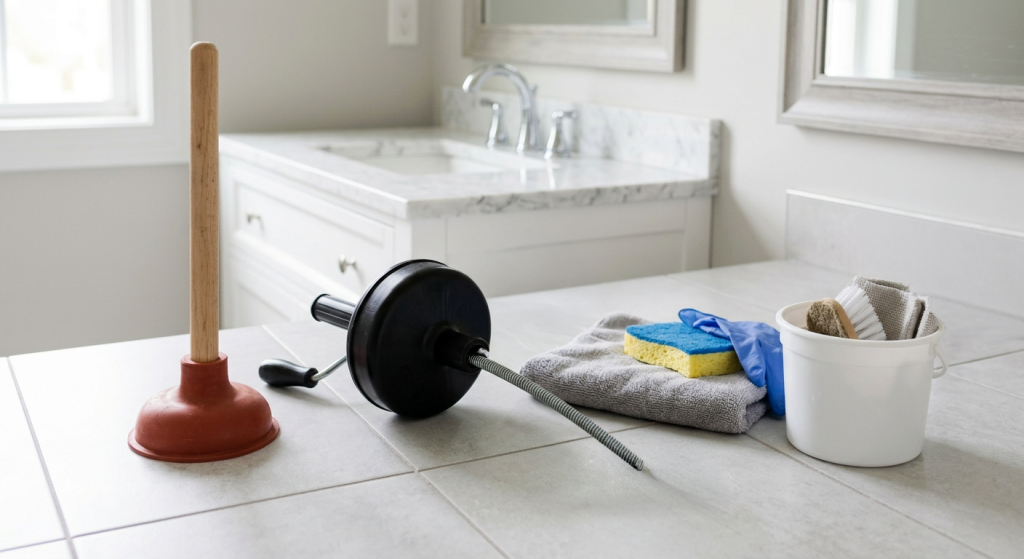
When comparing drain snake vs plunger, a plunger is often the better first tool for a soft, localized clog when it can form a good seal. A small manual drain snake may be more useful for reachable hair, debris, or buildup farther inside an appropriate sink, tub, or shower drain. The fixture and likely clog matter more than choosing the more aggressive tool.
| Situation | Better first option | Main limitation |
|---|---|---|
| Soft clog with a good seal | Plunger | May not reach deeper obstructions |
| Visible or shallow hair | Hair-removal tool | Limited reach |
| Reachable hair or debris farther in | Small manual drain snake | Must not be forced |
| Toilet clog | Flange plunger | General sink snakes are not appropriate |
| Multiple fixtures backing up | Neither | Possible deeper drainage problem |
| Chemical cleaner in standing water | Neither | Splash and chemical exposure risk |
Drain Snake vs Plunger: Start With the Fixture and Clog
A plunger and drain snake work differently.
A plunger uses pressure changes to move a blockage. It is most useful when the fixture can hold enough water for effective plunging, and the plunger can seal around the drain opening.
A manual drain snake works mechanically. Its cable reaches into an appropriate drain and may loosen or retrieve material farther from the opening.
Neither tool is automatically better.
A plunger may be a reasonable first choice for a soft, localized blockage. A small hand snake becomes more useful when hair or similar material is beyond easy reach but still accessible through a suitable drain.
Before using either, consider:
- Which fixture is clogged
- Whether one or several fixtures are affected
- Whether the clog is likely soft material, hair, or a hard object
- Whether standing water contains chemical drain cleaner
- Whether plumbing is leaking or damaged
Several slow or backed-up fixtures can indicate a problem beyond a single fixture. In that situation, repeated plunging or snaking is not a good beginner troubleshooting strategy.
Choose the Correct Type of Plunger
Plungers are not all designed for the same fixtures.
A flat cup plunger has a simple rubber cup and is generally suited to relatively flat drain openings, such as those found in sinks.
A flange plunger includes an extended rubber section beneath the cup. The flange is designed to fit more effectively into a toilet’s drain opening and create a better seal.
Using the wrong shape can make plunging ineffective even when a plunger would otherwise be an appropriate tool.
A plunger also depends on sealing against the fixture. If the cup repeatedly allows air or water to escape around its edge, simply applying more force will not necessarily improve the result.
Do not treat unsuccessful plunging as a reason to plunge more aggressively. The clog may be too firm, too deep, or unsuitable for pressure alone.
Match the Tool to the Fixture
The best choice between a plunger or drain snake changes depending on where the clog occurs.
Bathroom Sink
Start by looking for visible hair or debris near the drain opening. A simple hair-removal tool may solve a shallow blockage without requiring either a plunger or a longer snake.
For a soft clog where a flat cup plunger can form an effective seal, plunging may be a reasonable early step.
If hair or buildup appears to be slightly farther into an appropriate drain, a small manual snake may be useful.
Sink designs vary, and stoppers or other components can affect access. Do not force a cable through an opening that is not suitable for the tool.
Tub or Shower
Hair is a common consideration with tub and shower drainage problems.
If hair is visible or reachable near the opening, use a simple hair-removal tool before reaching for a longer cable.
A plunger may help with a soft blockage when the drain configuration allows an effective seal. Some fixtures have additional openings that can make that seal difficult.
A small manual drain snake may make more sense when the likely hair or buildup is farther into an accessible drain.
Keep the goal limited to a localized, reachable clog. Persistent resistance or recurring drainage problems deserve reassessment rather than increasing force.
Kitchen Sink
A plunger may help with a localized soft kitchen-sink clog when it can create an effective seal.
Be more cautious with sinks connected to garbage disposals or more complex drain configurations. Make sure the tool and access point are appropriate before proceeding.
Recurring grease-related drainage problems should not automatically be treated as something that needs more force. Repeated slow drainage can indicate buildup or a restriction farther into the system that requires deeper diagnosis.
If the garbage disposal itself is malfunctioning, diagnose that problem separately rather than assuming the drain needs to be snaked.
Toilet
For an ordinary toilet clog, a flange plunger is generally the appropriate first manual tool.
Do not feed a regular sink drain snake through a toilet bowl. A general-purpose cable can be inappropriate for the toilet’s trap and may damage visible porcelain.
For certain stubborn toilet clogs, the next tool category is a toilet auger, which is designed specifically for toilet use. Toilet Auger vs Drain Snake: What Is the Difference? explains that distinction separately.
This article is not a toilet-auger tutorial. The important point is that choosing between a plunger vs drain snake does not mean a regular hand snake should replace a toilet-specific tool.
Standing Water Does Not Automatically Decide the Tool
Standing water can make a plunger useful because the water helps transmit pressure to the blockage. That does not mean every fixture containing standing water should be plunged.
First consider why the water is standing and what has already been added to it.
If the fixture is appropriate for plunging, no chemical cleaner is present, and the plunger can create a good seal, a plunger may be a reasonable option.
If chemical drain cleaner has already been poured into the blocked fixture, stop.
Do not plunge chemically contaminated standing water. Do not insert a drain snake into it, and do not begin disconnecting traps or other plumbing that may contain the chemical.
Plunging or inserting tools can splash contaminated liquid onto skin or eyes. Plumbing disassembly can unexpectedly release it.
If you need professional service, tell the plumber that chemical cleaner was used and identify the product if you know it.
Hair May Need a Simpler Tool
Visible hair near a bathroom drain does not necessarily require either a plunger or a long drain snake.
A basic hair-removal tool can be a better match for material that is immediately inside the drain and easy to reach.
This provides a useful progression based on location rather than force.
Visible or shallow hair may be reachable with a hair tool. Material somewhat farther into an appropriate sink, tub, or shower drain may justify a small hand snake.
A plunger is more useful when pressure can move a soft blockage and a reliable seal can be formed.
This source-first approach helps avoid using a longer or more aggressive tool when a simpler one fits the problem.
Know the Limits of a Manual Drain Snake
A small manual drain snake can reach farther into some drains, but extra reach does not make it suitable for every obstruction.
Use a snake only through an appropriate access point. If the cable repeatedly encounters hard resistance, stop rather than increasing force.
Hard resistance may mean the cable has reached an unsuitable path, fitting, solid obstruction, or another condition that needs to be identified.
Forcing a cable can damage plumbing or cause the tool to become lodged.
If your snake is already binding, kinking, refusing to advance, or repeatedly hitting resistance, see Drain Snake Not Working: What to Check First Before Forcing It rather than escalating force.
Do not move from a small manual snake to powered drain-cleaning equipment as a beginner homeowner troubleshooting step.
Know the Limits of a Plunger
Plungers are simple tools, but they still depend on the right conditions.
A plunger may not work when:
- The cup cannot form a good seal
- The obstruction is too firm
- The clog is too deep
- A hard foreign object is present
- The blockage is farther into shared drainage piping
- The fixture requires a different tool
A hard object deserves particular caution. If a toy, cap, hygiene product, or another solid object may be lodged in the drain, do not simply plunge harder.
Pressure may move the object deeper rather than clearing it.
Similarly, repeated plunging is unlikely to solve a drainage problem affecting several fixtures.
When Neither Tool Is the Right Choice
Some symptoms move the problem beyond an ordinary drain snake vs plunger decision.
Stop routine homeowner drain clearing if:
- Several fixtures are slow or backing up
- Water rises in another fixture
- Sewage is backing up
- A sewage odor accompanies drainage problems
- Plumbing is visibly damaged or leaking
- A snake repeatedly encounters hard resistance
- A solid foreign object is suspected and cannot be safely retrieved
- Chemical cleaner is sitting in standing water
- The same clog repeatedly returns
These conditions can point to a deeper blockage, damaged plumbing, or another problem that requires diagnosis rather than repeated tool attempts.
What to Look for Before Buying a Tool
If you need a basic manual tool, match it to the fixture rather than buying the most aggressive option.
For a sink plunger, look for a cup shape that fits the drain area, a sturdy handle, and a design capable of forming a reliable seal.
For a toilet, choose a flange-style plunger designed to fit a toilet bowl.
For a manual drain snake, check the fixtures the tool is intended for along with its cable length, cable thickness, and handle design. A longer or thicker cable is not automatically better for household fixtures.
Powered drain machines are not a necessary progression for beginner homeowners when a hand tool fails.
When to Call a Plumber
Qualified plumbing help is appropriate when several fixtures back up, sewage is involved, plumbing is damaged, or a clog repeatedly returns.
Stop as well if a manual snake repeatedly hits hard resistance, becomes stuck, or a suspected foreign object cannot be safely addressed.
If chemical drain cleaner is already sitting in blocked water, do not continue with plunging, snaking, or plumbing disassembly. Tell the plumber what was used, if known.
Final Thoughts
For the drain snake vs plunger decision, start with the fixture and likely clog. A plunger is often a sensible first tool for a soft blockage when it can create a good seal, while a small manual drain snake may be more useful for reachable hair or debris farther inside an appropriate drain.
Neither tool should be forced into a problem it cannot solve. Multiple affected fixtures, sewage backup, chemical contamination, hard resistance, damaged plumbing, or a suspected solid object are reasons to stop ordinary homeowner drain clearing and get the problem properly diagnosed.