drain snake not working: what to check first before forcing it
Drain snake not working problems should not be handled by applying more force. The tool may be wrong for the fixture, the cable may not be reaching or engaging the clog, or it may be hitting a pipe bend or hard obstruction. A blockage farther down the line may also be beyond what a beginner hand tool should handle.
Disclosure: Home Repair Atlas may earn a commission if you buy through links on this page, at no extra cost to you.
| What happens | Possible reason | What to do |
|---|---|---|
| Cable will not enter far | Stopper, strainer, bend, or wrong tool | Check access and tool type |
| Cable meets firm resistance | Bend, trap, or hard obstruction | Stop pushing and pull back |
| Cable spins but drain stays clogged | Cable may be missing the blockage | Feed and retrieve slowly |
| Cable starts looping or binding | Cable may be kinking | Stop and retract it |
| Cable comes back clean repeatedly | Clog may be deeper or tool may be unsuitable | Reassess before continuing |
Confirm the Drain and Tool Type First
A drain snake is not a universal tool. Before feeding the cable farther, make sure the tool is appropriate for the fixture you are trying to clear.
A small hand-operated drain snake may work for some sink, tub, or shower clogs. It may be poorly suited to a toilet or a blockage farther down a larger drain line.
For a toilet, use a tool designed for the fixture rather than feeding a general-purpose drain snake through the bowl. A toilet auger is shaped to travel through the toilet trap while reducing the risk of damaging the fixture. See Toilet Auger vs Drain Snake: What Is the Difference? if you are unsure which tool fits the job.
The type of blockage matters too. A drain snake is intended to reach or engage material inside the drain. If the clog is soft and relatively close to the fixture, a plunger may sometimes be a better first choice.
For a quick comparison of those approaches, see Drain Snake vs Plunger: Which Should Homeowners Use?.
Once you have confirmed that the snake is appropriate for the fixture, check the drain opening before assuming the cable needs more force.
Check Whether the Drain Opening Is Blocking Access
If the drain snake won’t go down drain openings easily, the problem may be at the entrance rather than deep inside the pipe.
A stopper, strainer, crossbar, or other fixture component can prevent the cable from entering at the correct angle. Hair and debris near the opening can also make access difficult.
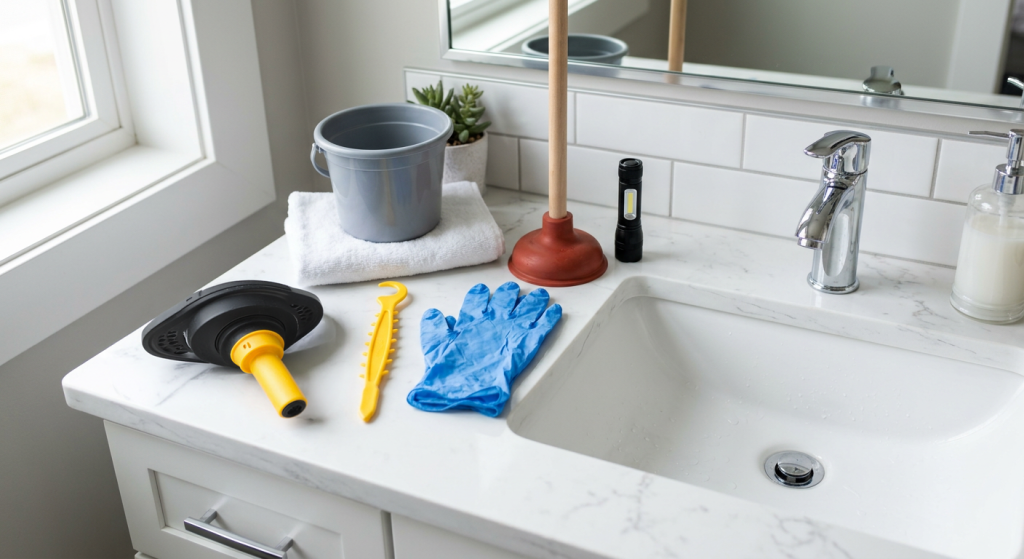
Use a flashlight to inspect the accessible opening. If visible hair is wrapped around a stopper or sitting immediately below the drain, a simple hair-removal tool may be more appropriate than trying to force a snake past it.
Do not push aggressively against a fixture component you cannot clearly identify. You could damage the stopper mechanism, scratch the fixture, or kink the cable without getting any closer to the clog.
If the opening is clear and the tool is appropriate, begin feeding the cable slowly.
Feed the Drain Snake Slowly
A hand drain snake works better with controlled movement than brute force.
Feed a short length of cable at a time while keeping the exposed cable reasonably controlled. Depending on the tool design, gentle rotation can help the cable follow the drain and engage soft material.
Pay attention to how the cable feels as it advances. You are looking for a change in resistance, not trying to drive the cable through anything that stops it.
If the cable advances several feet without affecting the drain, it may be traveling beside the clog, reaching only part of it, or failing to engage the blockage. The clog may also be farther away than the tool can effectively reach.
More pressure does not necessarily solve any of those problems.
Watch for Cable Binding or Kinking
Stop feeding the snake if the cable begins twisting, bowing, looping, or binding instead of advancing.
A cable under excessive twisting force can kink. Once damaged, it may become harder to feed and retrieve, and continuing to rotate it can make the situation worse.
Keep the exposed portion of the cable controlled rather than allowing a long section to loop between the drain and the tool.
If the cable stops advancing, ease off. Pull it back slowly and inspect it before trying again.
Do not respond to a stuck or binding cable with aggressive twisting. The resistance itself is useful information about what may be happening inside the drain.
Decide Whether You Are Feeling a Bend or a Clog
Not every resistance point is the blockage.
Drain piping changes direction, and fixture traps contain bends. A snake can encounter that geometry and feel as though it has reached something solid.
A soft clog may produce resistance that changes as the cable moves or rotates. You may feel the cable begin to work into the material, and pulling it back may retrieve hair or other debris.
Hard, unchanging resistance is different. It could indicate:
- A tight pipe bend or trap
- A solid obstruction
- The cable entering an unsuitable path
- A blockage the tool cannot penetrate safely
- A tool that is poorly matched to the drain
You do not need to identify the hidden obstruction by feel alone. If the cable repeatedly stops at the same hard point and gentle manipulation does not help it advance, stop rather than applying progressively more force.
Forcing the cable can kink it, damage a fragile drain component, or leave the snake stuck inside the piping.
If the Cable Spins but the Clog Remains
A rotating cable does not necessarily mean it is clearing the blockage.
The snake may pass beside soft material without grabbing it. A small cable may make an opening through part of a clog without removing enough material to restore normal drainage. In other cases, the cable reaches the general area but does not have the right end or size to engage the obstruction effectively.
Instead of increasing force, use a slow feed-and-retrieve approach. Advance the cable carefully, then pull it back and inspect what comes out.
If the cable retrieves hair or other clog material, clean it safely and repeat only while it continues to move normally.
If the cable repeatedly comes back clean and drainage does not improve, reconsider the diagnosis. The blockage may be farther down the line, the cable may be bypassing it, or a different tool may be needed.
Pull the Cable Back and Inspect It
Retrieving the snake gives you another opportunity to understand why it is not working.
Pull the cable back gradually while maintaining control of it. Do not jerk or violently pull on a cable that resists removal.
Look for material caught on the end or wrapped around the cable. Hair and soft debris suggest that you have at least reached part of the blockage.
A clean cable after repeated attempts may indicate that the clog is beyond the snake’s reach or that the cable is taking a path that does not engage the obstruction.
Also inspect the cable itself. Stop using it if it has developed a severe kink, damaged section, or other condition that prevents normal operation.
If the cable becomes stuck and does not come back with gentle, controlled retrieval, stop. Aggressive pulling or twisting can make a stuck-cable problem harder to resolve.
Know When Another Tool Is More Appropriate
A drain snake is only one option for a slow or clogged fixture.
For some soft fixture clogs, a plunger can create pressure changes that move the blockage without inserting a cable into the drain. Visible hair close to a tub or shower opening may be easier to remove with a simple hair-removal tool.
A toilet calls for a toilet auger rather than treating the bowl like a sink or tub drain.
The point is not to cycle through every available tool. If one or two appropriate beginner-safe approaches do not improve the drain, repeatedly escalating the force or equipment can create more risk without identifying the underlying problem.
Powered drain-cleaning machines are not the next beginner step. Their rotating cables can create significant injury and plumbing-damage risks and are better left to people trained to use them.
Do Not Snake a Drain Containing Chemical Cleaner
Do not insert or continue operating a drain snake in standing water that contains chemical drain cleaner.
Snaking can move or splash contaminated water, increasing the chance of chemical contact with skin or eyes. A cable can also carry the chemical back out of the drain as you retrieve it.
Never mix drain-cleaning products, and do not add chemical drain cleaner after an unsuccessful snaking attempt.
If chemical cleaner may already be present, avoid direct contact with the water and treat the situation cautiously. If professional help becomes necessary, tell the plumber that drain cleaner may be in the line.
Signs the Problem Is Deeper Than the Fixture
A stubborn fixture clog does not always originate close to that fixture.
Stop repeated snaking attempts if:
- More than one drain is backing up
- Using one fixture causes water to appear in another
- The same clog keeps returning
- You notice a sewage odor associated with the backup
- The cable repeatedly hits hard resistance
- The snake becomes stuck
- The drain clogs again shortly after apparently clearing
- You suspect damaged, deteriorated, or fragile piping
Multiple affected fixtures are especially important. They can point to a blockage in piping shared by those fixtures rather than a simple clog immediately below one drain.
At that point, continuing to feed a small hand snake through the same fixture may not address the actual problem.
When to Call a Plumber
Call a qualified plumber when the blockage appears deeper than the fixture, multiple drains are affected, sewage is backing up, or a clog repeatedly returns after basic clearing attempts.
Professional help is also appropriate if the cable is stuck, repeatedly encounters hard resistance, or you are concerned about the condition of the piping.
Stop rather than escalating to powered drain-cleaning equipment or applying more force to a hand snake. A plumber can determine where the blockage is located and choose equipment appropriate for the drain and piping condition.
Final Thoughts
When a drain snake is not working, more force should not be the next step. Confirm that the tool matches the fixture, make sure the drain opening is accessible, feed the cable slowly, and pay attention to binding, kinking, and the type of resistance you encounter.
Pull the cable back and inspect what it retrieved before deciding what to do next. If it repeatedly hits hard resistance, becomes stuck, or the symptoms suggest a deeper or shared drain blockage, stop and get qualified plumbing help rather than forcing the cable farther.