Toilet Auger vs Drain Snake: What Is the Difference?
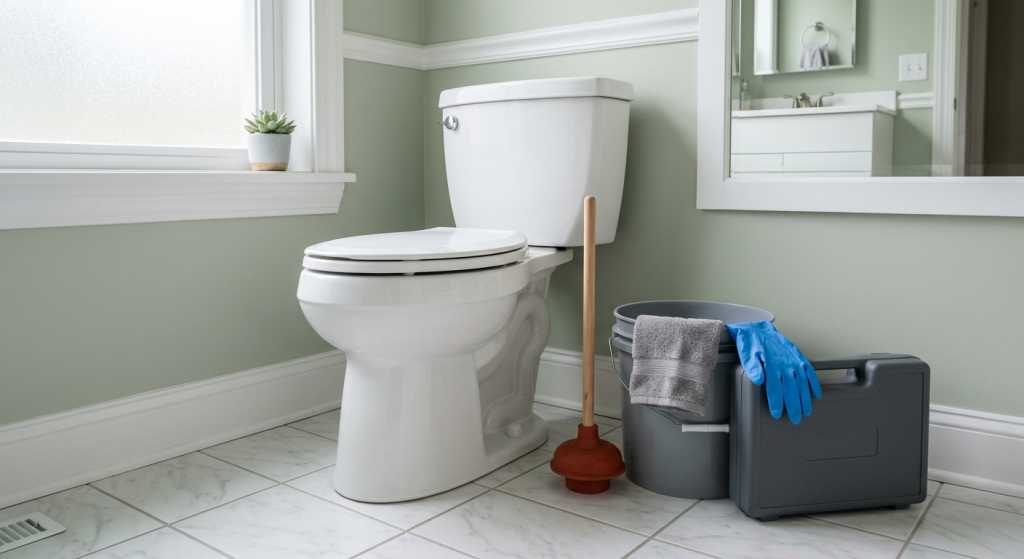
When comparing toilet auger vs snake, the key difference is the fixture each tool is designed to handle. A toilet auger is made to pass through a toilet trap and typically includes a protective guide or tube that helps limit cable contact with visible porcelain. A general hand drain snake is better suited to appropriate sink, tub, or shower drains.
| Tool | Best suited for | Main limitation |
|---|---|---|
| Flange plunger | Ordinary toilet clog | May not move a firm or deeper obstruction |
| Toilet auger | Stubborn clog isolated to a toilet | Should not be forced through hard resistance |
| General hand drain snake | Suitable sink, tub, or shower drains | Not designed for use through a toilet bowl |
| Neither | Multiple backups, sewage, chemical contamination | Problem may require professional diagnosis |
Toilet Auger vs Snake: Why the Tool Design Matters
Homeowners sometimes use the terms “toilet auger” and “toilet snake” interchangeably. A toilet auger may informally be called a toilet snake, but it is different from the typical hand drain snake sold for other household drains.
A toilet auger is designed specifically for the shape and function of a toilet trap. It generally combines a flexible cable with a rigid or semi-rigid guide that helps direct the cable through the toilet.
That guide also helps reduce direct contact between the cable and visible porcelain when the tool is used correctly.
A general hand drain snake typically consists of a flexible cable and handle or drum. Depending on its design, it may be suitable for reaching hair, debris, or buildup inside certain sink, tub, or shower drains.
It does not have the same toilet-specific geometry and protection.
That is why the toilet auger vs drain snake decision should be based on the fixture, not simply which cable is longer or appears stronger.
Use a Flange Plunger Before a Toilet Auger
For an ordinary toilet clog, a toilet auger usually should not be the first tool you reach for.
Start by avoiding additional flushing if the bowl is already rising or draining poorly. Repeated flushing can cause an overflow.
If the water level is safe and no chemical drain cleaner is present, a flange plunger is generally the appropriate first manual tool.
A flange plunger has an extended section designed to fit into the toilet drain opening and create a better seal than a flat sink plunger.
If controlled plunging clears the blockage, there is no reason to move to a cable tool.
If you cannot get an effective seal or the toilet remains clogged after appropriate plunging, see Plunger Not Working on Toilet: What to Try Next before escalating the amount of force you use.
When plunging has failed, and the problem still appears isolated to one toilet, a toilet auger may become the logical next tool.
When a Toilet Auger May Be Appropriate
A toilet auger is intended to reach into the toilet trap farther than a plunger can act effectively.
It may be a reasonable next step when:
- A flange plunger has not cleared the clog
- The toilet remains clogged or drains poorly
- The problem appears limited to one toilet
- The bowl water is at a safe level for working
- No chemical drain cleaner is present
- There is no evidence of a larger drainage backup
The auger’s toilet-specific design is the important distinction. Its guide helps route the cable into the trap while limiting unnecessary contact with the visible bowl surface.
This does not mean an auger can safely clear every toilet obstruction.
If the cable repeatedly encounters hard resistance, a solid object is suspected, or the tool becomes stuck, stop rather than applying more force.
Why a General Drain Snake Is Different
A small general-purpose hand drain snake can be useful for appropriate non-toilet drains.
Depending on the fixture and access point, it may help reach:
- Hair
- Soap-related buildup
- Soft debris
- Other reachable localized material
Bathroom sinks, tubs, and showers are common places where a suitable hand snake may be considered after simpler removal methods are not enough.
The cable is intended to travel through compatible drain piping. It does not normally include the same type of toilet-bowl guide found on a toilet auger.
A drain snake is therefore not simply a cheaper or more universal version of a toilet auger.
Using the right tool for the fixture matters both for effectiveness and for avoiding damage.
Do Not Use a Regular Sink Snake Through a Toilet Bowl
Do not feed a standard sink drain snake through the toilet bowl as a substitute for a toilet auger.
The exposed cable can contact visible porcelain and scratch the bowl. The cable may also be poorly suited to negotiating the toilet’s internal trap.
An inappropriate cable can:
- Scratch visible porcelain
- Follow an unsuitable path
- Bind inside the toilet
- Become difficult to retrieve
- Fail to reach the obstruction effectively
Using more force does not correct a tool mismatch.
For a stubborn toilet clog that has not responded to appropriate plunging, use a toilet-specific auger rather than improvising with a general sink snake.
Likewise, do not assume a toilet auger is the best tool for ordinary sink, tub, or shower clogs. Match the tool to the fixture it was designed to service.
What if You Suspect a Hard Object?
A soft toilet-paper or waste clog is different from a toy, cap, hygiene product, or another solid object lodged in the toilet.
If you know or strongly suspect that a hard object entered the fixture, do not keep plunging harder.
Do not blindly force an auger against it either.
A cable can potentially push an object into a more difficult position, become tangled around it, or become stuck.
The appropriate response depends on the object and where it is lodged. Some obstructions may require professional removal.
Do not move directly to toilet removal as a beginner troubleshooting step just because a plunger or auger cannot clear the obstruction.
Stop if the Cable Meets Hard Resistance
Whether you are dealing with a toilet auger or a hand snake in an appropriate non-toilet drain, persistent hard resistance is a reason to stop.
Do not respond by aggressively cranking the handle or pushing harder.
Resistance can mean the cable has encountered an obstruction, unsuitable path, fitting, or another condition that requires reassessment.
Forcing a cable can damage plumbing, damage the fixture, kink the cable, or leave the tool lodged in the drain.
If a general drain snake is already binding, kinking, refusing to advance, or repeatedly meeting resistance in an appropriate drain, follow Drain Snake Not Working: What to Check First Before Forcing It rather than escalating force.
A stuck cable is also a stop condition. Avoid pulling or twisting aggressively enough to damage the fixture or piping.
Chemical Drain Cleaner Changes the Situation
Do not use chemical drain cleaner as the next step for a clogged toilet.
If chemical cleaner has already been poured into the toilet, do not plunge the bowl and do not insert either a toilet auger or drain snake.
Standing toilet water may now contain the chemical product. Inserting or operating a tool can splash contaminated liquid onto skin or eyes.
Avoid contact with the water and do not add another cleaner, bleach, or other chemical.
If professional service is needed, tell the plumber that chemical drain cleaner was used and identify the product if you know it.
The presence of chemical cleaner changes the safety situation from ordinary mechanical drain clearing to potential chemical exposure.
A Toilet Clog Can Be Part of a Larger Drain Problem
Before moving from a plunger to an auger, check whether the problem is actually limited to one toilet.
A toilet auger is designed to address an obstruction in or near the toilet’s own trap and drain path. It is not a solution for every drainage-system blockage.
Stop ordinary homeowner drain clearing if:
- Multiple fixtures are backing up
- Several drains have become slow
- Water rises in another fixture
- Sewage backs up into a toilet, tub, or shower
- The clog repeatedly returns after being cleared
These symptoms can indicate a restriction farther into shared drainage piping.
Repeatedly plunging or inserting a toilet auger will not necessarily address that deeper problem and may delay proper diagnosis.
What to Look for When Choosing a Tool
For a toilet auger, look for a product clearly designated by its manufacturer for toilet use.
Useful characteristics can include:
- A protective bowl guide or tube
- A sturdy, manageable handle
- A cable length appropriate for toilet use
- Clear toilet-use designation
- A design that can be controlled without excessive force
For a general hand drain snake, consider the fixtures the manufacturer identifies as appropriate, along with cable length, cable thickness, and handle design.
Longer and heavier are not automatically better. The tool needs to match the fixture, access point, and type of work.
Beginner homeowners should not treat a powered drain machine as the automatic next purchase when a hand tool fails. Powered equipment introduces additional risks and may be inappropriate for the fixture or blockage.
When Neither Tool Is Appropriate
Sometimes the correct choice in a toilet snake vs drain snake comparison is neither.
Stop ordinary DIY drain clearing when:
- Several fixtures are affected
- Sewage is backing up
- A hard foreign object is suspected
- A cable becomes stuck
- Persistent hard resistance prevents safe progress
- Chemical drain cleaner is present
- Plumbing or the toilet appears damaged
- The clog repeatedly returns
A recurring clog can indicate that the immediate blockage is not the whole problem. Clearing the toilet temporarily does not diagnose why the obstruction keeps returning.
Similarly, sewage backup or problems affecting several fixtures point beyond a simple toilet-trap obstruction.
When to Call a Plumber
Qualified plumbing help is appropriate when a toilet remains blocked after reasonable manual attempts, particularly when a suspected hard object cannot be safely addressed.
Stop and call for help if a cable becomes stuck, persistent hard resistance prevents safe use, or the toilet or surrounding plumbing appears damaged.
Professional diagnosis is also appropriate when multiple fixtures back up, sewage is involved, or the clog repeatedly returns. If chemical drain cleaner has already been added, avoid inserting tools and tell the plumber what product was used, if known.
Final Thoughts
For the toilet auger vs snake decision, match the tool to the fixture. A toilet auger is specifically designed to navigate a toilet trap while helping protect visible porcelain. A general hand drain snake is intended for appropriate non-toilet drains such as certain sinks, tubs, and showers.
For an ordinary toilet clog, start with the correct flange plunger when conditions are safe. If controlled plunging fails and the blockage remains isolated to the toilet, a toilet auger may be the appropriate next tool. Stop rather than adding force when a hard object, chemical contamination, persistent resistance, sewage backup, or a larger drainage problem is involved.