Outlet Not Working Breaker Not Tripped: What to Check First
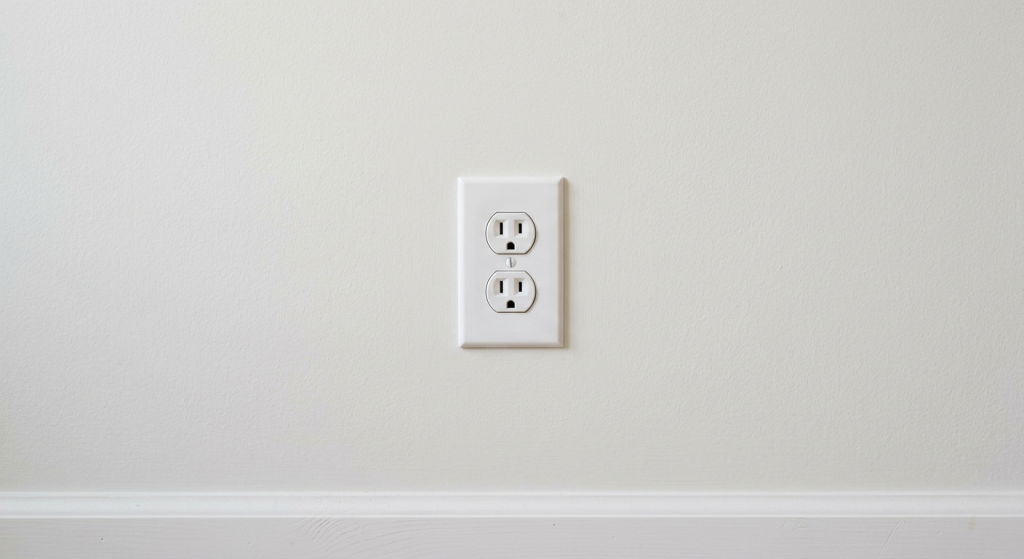
If you are dealing with an outlet not working breaker not tripped situation, start with the safest, simplest checks rather than assuming the receptacle itself has failed. Unplug the connected device, test whether that device works elsewhere, check nearby outlets and lights, look for an accessible tripped GFCI, and check nearby wall switches. A breaker can also trip without appearing obviously out of position.
| What you notice | What it may mean | Safe next step |
|---|---|---|
| Known-good device works | Original device, plug, or power strip may be faulty | Stop using the suspect device |
| Nearby outlets are also dead | Shared GFCI, switch, breaker, or circuit problem | Check accessible GFCIs, switches, and breaker |
| GFCI is tripped | GFCI protection interrupted power | Reset once if dry, cool, and undamaged |
| Wall switch controls outlet | Receptacle may be intentionally switched | Test the nearby switch |
| Breaker appears normal | Breaker may still have tripped or another fault exists | Check the identified breaker from outside the closed panel |
| Heat, burning, buzzing, crackling, or moisture | Possible electrical hazard | Stop using the circuit and call an electrician |
Start With Safety
A dead outlet is sometimes caused by something simple, but certain signs mean troubleshooting should stop.
Stop using the outlet or affected circuit and arrange for a qualified electrician if you notice:
- burning smell
- smoke
- sparks
- buzzing or crackling
- unusual heat
- discoloration or melted plastic
- moisture at or near the receptacle
- a loose or visibly damaged receptacle
- intermittent power
Do not remove the outlet cover, pull the receptacle from the wall, touch terminals or wiring, perform live-voltage testing, or remove the electrical-panel cover.
If none of those warning signs are present, the following checks stay on the homeowner-safe side of troubleshooting.
What to Check When an Outlet Is Not Working but the Breaker Is Not Tripped
Work through these checks in order. The goal is to rule out external causes before assuming there is a hidden electrical defect.
1. Unplug the Connected Device
Disconnect whatever was plugged into the dead outlet.
If you were using a power strip, extension cord, lamp, charger, or appliance, remove it from the equation before checking anything else. A failed device, damaged plug, or faulty power strip can look like a dead receptacle.
Do not continue using a plug or cord that is scorched, melted, loose, cracked, or unusually hot.
2. Determine Whether the Device Is the Problem
Try a known-good, low-power device in the suspect outlet. A small lamp or another simple device you already know is working is a better test than a high-demand appliance.
Then, if appropriate, test the original device in a different known-working outlet.
This can help separate four possibilities:
- the connected device has failed
- its plug or cord has a problem
- a power strip or extension cord has failed
- the outlet or circuit has lost power
If the known-good device works in the outlet, the receptacle probably was not the original problem.
Check Nearby Outlets and Lights
Next, see whether the problem is limited to one receptacle.
Without removing covers or testing wiring, check nearby outlets and lights that would normally be powered. This gives you a useful clue about how broad the outage is.
If one outlet has no power but everything around it works, the problem may be isolated to that receptacle or an electrical connection behind it. That is not something a homeowner should open and inspect.
If several outlets are dead, do not immediately assume that wiring has failed. A single upstream GFCI, a wall switch, or a breaker can interrupt power to multiple receptacles.
Look for an Accessible GFCI Outlet
One of the most common explanations for a dead outlet breaker not tripped is a GFCI receptacle that has opened the circuit.
A GFCI can protect other outlets downstream, so the GFCI that shut off power may not be in the same room as the dead outlet. Look at accessible GFCI receptacles in places such as bathrooms, kitchens, garages, basements, laundry areas, or outdoor locations.
Reset an accessible GFCI only if it is dry, undamaged, cool to the touch, not discolored, and not buzzing or crackling. Press the reset control using the receptacle’s normal built-in mechanism.
If power returns, the GFCI was likely interrupting power to the downstream outlet.
If the GFCI immediately trips again or will not reset, stop. Do not repeatedly press the reset button or bypass GFCI protection.
For more detail on recurring GFCI problems, see why a GFCI outlet keeps tripping.
Check Whether a Wall Switch Controls the Outlet
A nearby wall switch can control an outlet even when the connection is not obvious.
Try the switches in the room while checking the receptacle with your known-good small device. Depending on the installation, a switch may control the entire receptacle or only one half of a split receptacle.
This is especially worth checking in bedrooms, living rooms, and other spaces where switched receptacles may have been intended for lamps.
If one half of the outlet works while the other changes with a wall switch, that may be normal operation. Do not remove the cover to investigate how it is wired.
Check the Breaker From Outside the Closed Panel
An outlet stopped working but breaker is not tripped can still involve the breaker. Some breaker handles do not move to a position that is immediately obvious from a quick glance.
Identify the correct breaker and keep the electrical-panel cover closed. Only proceed if the panel area is dry and none of the warning signs listed earlier are present.
If the breaker is clearly tripped or sitting between ON and OFF, move it fully to OFF. Then move it once to ON.
If it trips again, leave it OFF and stop troubleshooting.
Do not force the breaker handle, repeatedly reset it, remove the panel cover, inspect wiring, test voltage inside the panel, or attempt to replace the breaker. See what to do when a breaker keeps tripping for more information about that separate problem.
What Multiple Dead Outlets Can Mean
Several dead receptacles usually point to something shared rather than several outlets failing independently.
The appropriate homeowner sequence is still limited:
- check an accessible upstream GFCI
- check whether a nearby wall switch controls the affected receptacles
- observe and, when appropriate, operate the correctly identified breaker using only its normal exterior handle
If several outlets remain dead after those checks, stop troubleshooting.
Do not try to trace the circuit through walls, open receptacles, remove covers, or search for loose wiring. Multiple outlets without power can result from a failed connection or another circuit defect that requires proper electrical testing.
When to Call an Electrician
Call a licensed electrician if power does not return after the safe external checks, or if the problem keeps coming back.
Professional diagnosis is also appropriate when:
- a GFCI trips again or will not reset
- a breaker trips again after one normal reset
- several outlets remain dead
- only one outlet remains dead with surrounding power working
- the receptacle is loose or visibly damaged
- power is intermittent
- you cannot confidently identify the correct breaker
- any troubleshooting would require removing a receptacle or panel cover
If any of the warning signs listed earlier appear, stop using the affected outlet or circuit.
A qualified electrician can determine whether the problem involves the receptacle, a connection elsewhere on the circuit, the breaker, or another electrical fault without requiring you to expose energized components.
Final Thoughts
When you have an outlet with no power and the breaker looks normal, start outside the wiring: disconnect the device, test with a known-good small device, check nearby outlets, check or reset an accessible GFCI once, check wall switches, and inspect the correctly identified breaker using only its normal exterior control.
If those checks do not restore power, or a breaker or GFCI trips again, stop there. Hidden electrical problems require proper testing, and opening the receptacle or electrical panel is not a safe next troubleshooting step for a homeowner.