
Breaker Keeps Tripping: Beginner Checks Before Calling an Electrician
When a breaker keeps tripping, the safest first step is to identify what was running when the trip occurred, reduce the electrical load, and then attempt one normal reset. A tripped breaker may be responding to an overloaded circuit, a faulty appliance, a ground fault, a short circuit, or another electrical problem. Repeatedly resetting the breaker is not a repair.
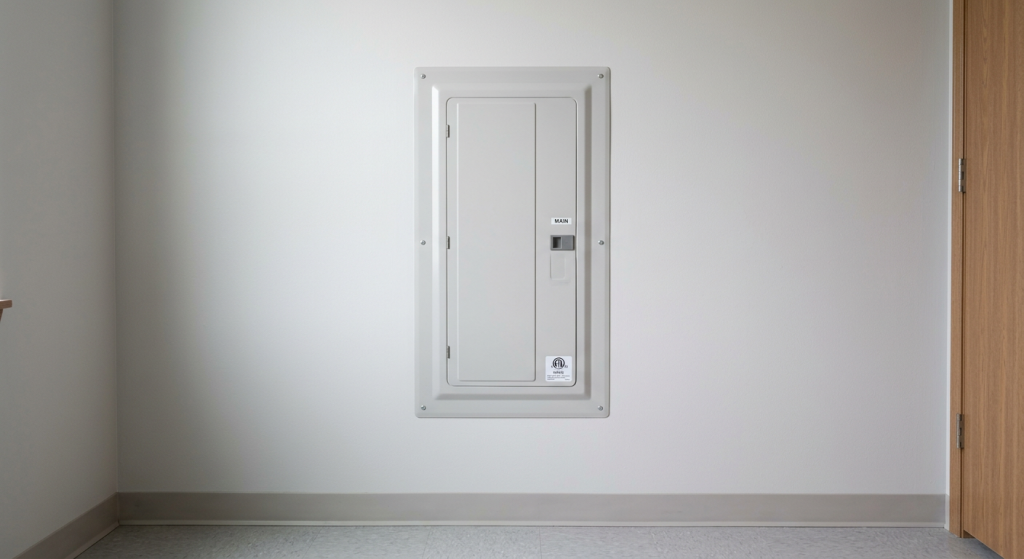
| What you notice | What it may mean | Safe first step |
|---|---|---|
| Breaker trips when several devices are running | Possible circuit overload | Turn off or unplug some devices |
| Breaker trips when one appliance starts | Faulty appliance or high starting load | Stop using that device |
| Breaker trips immediately after reset | Possible short circuit, ground fault, or wiring issue | Leave the breaker off |
| Breaker trips randomly | Intermittent appliance or circuit problem | Note what was operating each time |
| Breaker will not stay on | Persistent fault or breaker/circuit problem | Stop resetting it |
| Breaker trips with burning smell, buzzing, heat, or damage | Possible serious electrical defect | Stop troubleshooting and call an electrician |
Safety First: Know When to Stop
Stop homeowner troubleshooting if you notice a burning smell, smoke, sparks, buzzing, crackling, unusual heat, discoloration, melted plastic, moisture near electrical equipment, damaged receptacles, switches, cords, or appliances, or a breaker handle that is damaged or unusually hot.
Also stop if the breaker trips immediately after one normal reset.
Keep all panel checks external. Do not remove the electrical panel cover, touch internal panel components, tighten breaker or neutral connections, perform live-voltage testing, use a meter inside the panel, replace a breaker, move circuits, alter wiring, bypass a breaker, or defeat GFCI or AFCI protection.
Never replace a breaker with a higher-amp breaker to stop tripping. The breaker size is part of the circuit’s protection and should not be increased as a troubleshooting shortcut.
1. Identify What Was Running When the Breaker Tripped
Before resetting anything, think about what was happening when the power went off.
Note which room or area lost power and which lights, outlets, or appliances were operating. Pay particular attention to whether a higher-draw device had just started or whether several appliances were running at the same time.
Common examples include:
- Space heaters
- Microwaves
- Toasters
- Hair dryers
- Vacuums
- Portable air conditioners
- Power tools
The timing matters. If the circuit breaker keeps tripping only when several appliances operate together, overload becomes more likely.
If the breaker trips whenever one particular appliance starts, the device itself may deserve more attention.
Do not assume the breaker is defective simply because it opened the circuit. Its job is to interrupt power when certain electrical conditions occur.
2. Reduce the Electrical Load
If several plug-in devices were operating on the affected circuit, turn them off or unplug them where they are safely accessible.
You do not need to calculate the exact electrical load or inspect anything inside the panel. The practical question is whether several higher-draw devices were competing for the same circuit.
For example, a space heater, hair dryer, microwave, toaster, or portable air conditioner can use a substantial portion of a typical household circuit’s available capacity.
If removing some of those loads prevents further trips, overload becomes a stronger possibility.
Do not use a power strip or extension cord as a way to increase circuit capacity. Moving several devices onto one strip does not reduce the electrical demand on the branch circuit.
If you need power in another location, use only properly installed outlets supplied by circuits suitable for the intended load.
3. Reset the Breaker Once
After reducing the load and confirming there are no safety warning signs, one normal breaker reset may be reasonable.
Keep the panel cover closed.
Identify the correct breaker for the affected area. If the handle is visibly tripped or sitting between ON and OFF, move it fully to OFF first, then move it once to ON.
Do not force the handle.
If the breaker trips again immediately or soon afterward, move it to OFF and leave it there. Stop troubleshooting at that point.
Repeatedly resetting a breaker can expose the circuit to the same fault over and over without solving the underlying problem.
If the breaker remains on after the reset, continue only with simple external checks.
4. Reconnect Devices One at a Time
If the breaker reset successfully and there are no warning signs, reconnect accessible plug-in devices one at a time.
Turn on one device, observe whether the circuit remains stable, then move to the next.
You are looking for a clear pattern, such as the breaker trips when the appliance turns on and remains stable when that appliance is disconnected.
If one specific appliance, tool, charger, or extension cord consistently causes the trip, stop using it.
Do not repeatedly reproduce the trip once the pattern is clear. Repeatedly forcing the same failure provides little additional information and may increase risk.
Do not take the appliance apart. A device that repeatedly trips a breaker may have an internal electrical fault that requires repair or replacement.
5. Consider an Overloaded Circuit
An overloaded circuit is more likely when:
- Several high-draw devices are operating at once.
- The breaker trips after the devices have been running for a while.
- Reducing the number of connected loads stops the tripping.
- The problem happens only during certain combinations of appliance use.
An overload is different from a short circuit or ground fault.
With an overload, the total electrical demand is too high for the circuit. A short circuit or ground fault involves an abnormal electrical path and may cause the breaker to trip very quickly.
That distinction matters because a circuit that works normally after some loads are removed may have a different problem from one that immediately trips with almost nothing connected.
If an outlet has lost power but the breaker does not appear tripped, see the guide to an outlet not working breaker not tripped for that separate troubleshooting path.
6. When One Appliance or Device May Be the Cause
A single appliance can sometimes be responsible for repeated breaker trips.
Clues include:
- The breaker trips every time one appliance starts.
- The problem follows the same tool or device to different outlets.
- The cord or plug is damaged.
- The appliance smells burnt.
- The appliance becomes unusually hot.
- The device behaves abnormally just before the trip.
If the problem clearly follows one device, remove it from service.
Do not keep trying it on additional outlets just to confirm the same result. Once the pattern is established, repeated testing is unnecessary.
A damaged cord, plug, or appliance should be repaired or replaced appropriately before being used again.
7. When a Short Circuit, Ground Fault, or Wiring Problem May Be Involved
A breaker that trips repeatedly or immediately may be responding to something more serious than excess load.
Possible causes include:
- Damaged wiring
- A short circuit
- A ground fault
- A faulty receptacle or switch
- A hidden wiring problem
- Another fault elsewhere on the circuit
Warning patterns include a breaker that trips immediately after reset, a breaker that trips with little or nothing plugged in, or repeated unexplained trips.
Burning smells, sparks, buzzing, heat, discoloration, or damaged electrical equipment make the situation more concerning.
A breaker that trips with nothing plugged in does not prove the breaker itself is defective. Hardwired fixtures, downstream wiring, receptacles, switches, or other equipment may still be connected to the circuit.
Do not open receptacles, switches, fixtures, junction boxes, or the electrical panel to look for the cause. Identifying short circuits, ground faults, or wiring defects can require specialized testing and access to energized or potentially energized components.
8. GFCI and AFCI Breakers
Some circuit breakers provide additional protection beyond ordinary overcurrent protection.
A GFCI breaker can trip when it detects current flowing along an unintended path that could present a shock hazard. An AFCI breaker is designed to respond to certain electrical arcing conditions.
Because these breakers monitor more than simple overload, repeated trips do not necessarily mean too many appliances are being used.
If the breaker has a manufacturer-provided indicator, test function, or normal homeowner reset procedure, you may observe or use only those intended controls.
Do not defeat the protective function or replace the breaker simply to see whether the trips stop.
If a receptacle-style GFCI is involved instead of a breaker, the guide to a GFCI outlet keeps tripping covers that symptom in more detail.
A GFCI or AFCI breaker that repeatedly trips after one normal reset should be professionally diagnosed.
9. When to Call an Electrician
Call a qualified electrician when the breaker trips again after one normal reset or when the cause cannot be safely identified through external observations.
Professional diagnosis is also appropriate when:
- The breaker trips with little or nothing connected.
- The breaker will not stay reset.
- Trips are frequent or unexplained.
- Heat, buzzing, crackling, burning smells, sparks, or discoloration are present.
- Multiple circuits are affected.
- A GFCI or AFCI breaker repeatedly trips.
- The breaker or panel appears damaged.
- Further diagnosis would require opening electrical equipment.
An electrician can determine whether the problem is an overload, faulty appliance, breaker issue, damaged wiring, ground fault, short circuit, or another circuit defect without relying on repeated resets.
Final Thoughts
When a breaker keeps tripping, start by noting what was running, reducing the electrical load, and attempting one normal reset with the panel cover closed. If the breaker remains on, reconnect accessible devices one at a time only long enough to identify an obvious problem appliance.
If the breaker trips again, will not stay on, trips with little connected, or the problem comes with heat, buzzing, sparks, burning smells, or damage, leave the breaker off. Repeated trips can indicate a fault that requires professional electrical diagnosis.