Light switch gets hot: causes and safety warnings
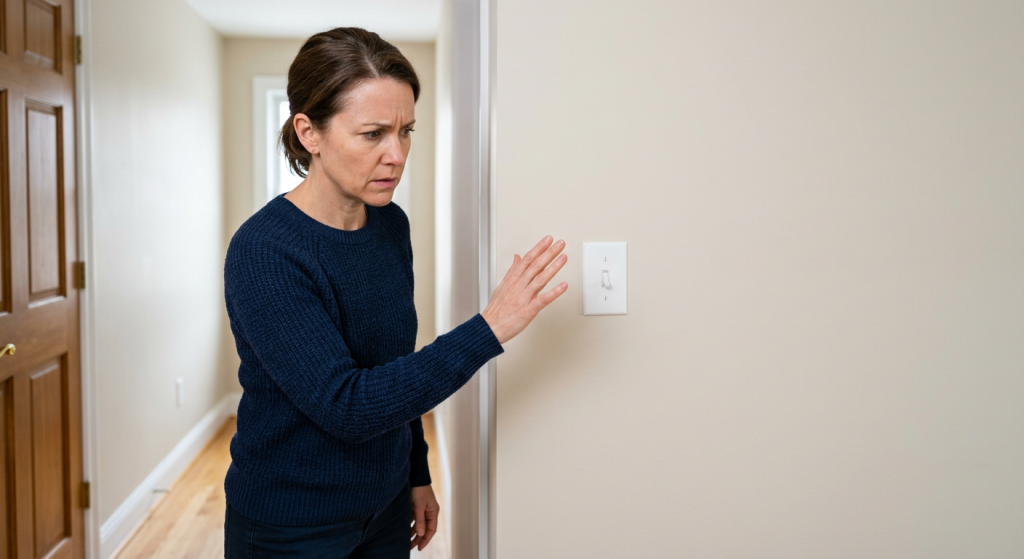
If a light switch gets hot, treat it as a safety warning, especially if it feels more than mildly warm. Stop using the switch if it feels hot, smells burnt, buzzes, crackles, sparks, flickers, or shows discoloration. If you can safely turn the light off without touching heat, smoke, or damaged parts, do that. If the area smells strongly burnt, shows smoke, or feels unsafe, move away and call for help.
A slightly warm dimmer switch can sometimes happen during normal use, but a hot standard switch is not something to ignore. Do not remove the cover, pull the switch from the wall, test wires, or try to replace the switch yourself. The safest step is to stop using it and call a licensed electrician.
Why a Light Switch Gets Hot
A light switch may get hot when too much electrical load is passing through it, when the switch is failing, or when something in the circuit is not making safe contact. The heat may also come from a dimmer switch, a fan/light combination, an older fixture, or a bulb setup that does not match what the switch or fixture is designed to handle.
Some switches control more than one light. Others control ceiling fans, bathroom fans, outdoor lights, recessed lights, or older fixtures. More load can mean more heat, especially if the switch or dimmer is not the right match for the lights or devices it controls.
A dimmer switch is a little different from a regular on/off switch. Some dimmers may feel slightly warm because they manage the power going to the lights. But “slightly warm” is not the same as hot, buzzing, smelling burnt, or causing flickering.
You do not need to diagnose the exact cause. Your job is to notice the warning signs, stop using the switch when heat seems unsafe, and call a licensed electrician when the switch feels hot or acts wrong.
| Heat clue | What it may mean | Safest next step |
|---|---|---|
| Slight warmth on a dimmer | May be normal if no other warning signs appear | Watch for changes |
| Hot standard switch | Possible overload, failing switch, or wiring issue | Stop using the switch |
| Heat with buzzing or smell | Possible arcing, overheating, or poor contact | Call an electrician |
| Heat with smoke or sparks | Possible active electrical hazard | Move away and get urgent help |
When Warm Is Different From Too Hot
A switch that feels slightly warm is not always an emergency, especially if it is a dimmer switch. Dimmers often handle power differently than a simple on/off switch, so mild warmth may happen.
But a switch should not feel hot enough to make you pull your hand away. It should not keep getting warmer the longer the light stays on. It should not smell burnt, make noise, or cause lights to flicker.
Do not keep touching the switch over and over to check the temperature. One careful observation is enough. If it feels uncomfortably hot, treat it as unsafe.
A regular toggle or rocker switch that feels hot deserves extra caution. Standard switches usually should not build noticeable heat during normal use. If a regular light switch gets hot, stop using it until a professional checks it.
Also pay attention to changes. A switch that was always cool but suddenly feels warm or hot may be developing a problem. A dimmer that used to be only mildly warm but now feels hot should also be checked.
Warning Signs That Mean Stop Using the Switch
Heat is not the only clue. A hot switch with other warning signs should be treated as more urgent.
Stop using the switch if you notice any of these signs:
- Burning smell, smoke, or a hot plastic odor
- Buzzing, crackling, popping, or sizzling sounds
- Flickering lights when the switch is on
- Sparks near the switch or wall plate
- Brown marks, scorch marks, melted plastic, or discoloration
- Loose switch movement, repeated breaker trips, or moisture nearby
Do not ignore these signs because the light still works. A switch can keep working while a problem is developing behind the wall.
A burning smell is especially important. It may mean plastic, insulation, dust, or electrical parts are overheating. If the smell is strong, getting worse, or comes with smoke, leave the area and call emergency services.
A hot switch near moisture also deserves caution. Bathrooms, laundry rooms, kitchens, basements, garages, and outdoor switch locations can carry extra risk when dampness is involved.
If you see sparks, hear crackling, or smell burning, do not test the switch again. Leave it off if it is already off. If it is on and you cannot turn it off safely, move away and call for help.
If the switch also stops working or behaves unpredictably, this guide on light switch not working explains safe checks homeowners can make before calling an electrician.
Safe Checks Homeowners Can Make
You can make a few safe observations without opening the switch or touching wiring. These checks are not repairs. They help you decide when to stop use and what to tell the electrician.
First, notice what the switch controls. Is it a regular light, a dimmer, a ceiling fan, a fan/light combo, recessed lighting, outdoor lights, or several fixtures at once? More fixtures or fan loads can matter.
Next, think about recent changes. Did you install new bulbs, change to LED bulbs, add brighter bulbs, replace a fixture, or start using the fan more often? A dimmer and bulb mismatch can sometimes cause heat, buzzing, or flickering.
Look only for safe outside clues:
- Whether the switch is a dimmer or a standard on/off switch
- Whether the switch controls one fixture or several
- Whether lights flicker, buzz, or act differently than before
- Whether the wall plate looks discolored, cracked, or warped
- Whether the switch feels loose, sticky, or unusual when used
- Whether heat happens with certain bulbs, fixtures, or fan settings
You can also check bulb labels if the bulbs are easy and safe to access after they are off and cool. Make sure bulbs do not exceed the fixture’s listed wattage. If you use LED bulbs with a dimmer, check that the bulbs and dimmer are meant to work together.
Do not treat bulb changes as a repair for a hot switch. If the switch felt hot, smelled burnt, buzzed, crackled, sparked, or showed damage, call an electrician before using it again.
If you know the exact switch or breaker that controls the circuit and can turn it off safely without opening anything, you may do so. Do not open the electrical panel cover or remove any parts.
If heat comes with flickering in the room, this guide on lights flicker in one room can help you compare common causes and warning signs.
What Not to Touch or Try
A hot light switch is not a beginner repair project. The problem may be inside the switch box, inside the switch, at the fixture, or somewhere else on the circuit.
Do not remove the switch cover. Do not pull the switch from the wall. Do not tighten screws, move wires, test live parts, or use a multimeter on the switch. Do not replace the switch, replace a dimmer, replace a breaker, open the electrical panel, or try to trace hidden wiring.
Also avoid workarounds that let the problem continue. If a switch is hot, the goal is not to keep the lights working. The goal is to stop heat from building until the cause is checked safely.
Avoid these unsafe shortcuts:
- Ignoring heat because the light still turns on
- Pressing or wiggling the switch to make it work
- Holding a loose switch in one position
- Covering smells with air freshener
- Swapping bulbs repeatedly while the switch still gets hot
- Using the switch again after burning smells, sparks, or crackling
Do not assume the problem is harmless because the breaker has not tripped. Some electrical problems can create heat before a breaker responds.
Do not assume a dimmer is safe just because dimmers can run warm. Mild warmth may be normal, but heat with smell, sound, flickering, damage, or discomfort is not something to brush off.
When to Call an Electrician
Call a licensed electrician if the switch feels hot, not just mildly warm. You should also call if the switch buzzes, smells burnt, crackles, sparks, flickers, feels loose, shows discoloration, controls a heavy load, or has changed behavior recently.
When you call, describe the issue in simple terms. Say which switch is affected, what it controls, whether it is a dimmer, and when the heat happens. Mention any recent bulb or fixture changes. Also mention buzzing, burning smell, flickering, sparks, breaker trips, moisture, or visible damage.
Call an electrician before using the switch again if:
- A standard light switch feels hot
- A dimmer feels hotter than usual
- Heat comes with buzzing, smell, flickering, or crackling
- The switch or wall plate looks discolored or warped
- The switch controls several lights, a fan, or older fixtures
- The problem repeats after you stop using the switch
If there is active smoke, fire, a strong burning smell, repeated sparks, or a wall that feels very hot, call emergency services instead of waiting for a regular appointment.
For non-emergency cases, an electrician can safely check the switch, fixture, load, dimmer compatibility, and wiring. They can decide whether the switch, dimmer, fixture, or circuit needs correction.
Do not use the switch again until a licensed electrician says it is safe.
Final Thoughts
A light switch gets hot for several possible reasons, including overload, a dimmer mismatch, a failing switch, loose contact, an older fixture, fan/light load, or wiring trouble. You do not need to figure out which one is happening.
A mildly warm dimmer may not be urgent if there are no other warning signs. But a hot switch, burning smell, buzzing, crackling, flickering, sparks, discoloration, or repeated breaker trips should stop you from using it.
Do not open the switch or touch wiring. Stop use, keep the area clear, and call a licensed electrician before using the switch again.