Light Switch Not Working: Safe Checks Before You Touch Anything
Light switch not working problems can be as simple as a burned-out bulb or as serious as a damaged switch, fixture, or hidden wiring issue. Before you assume the switch itself is bad, start with safe checks you can make without opening anything.
If a light switch feels hot, smells burned, sparks, buzzes, crackles, or shows discoloration, stop using it and call a licensed electrician.
This guide is for beginner-safe observation only. You should not remove the switch cover, open the switch box, touch wires, test live wiring, replace the switch, or open the electrical panel. Your goal is to check the easy outside causes, watch for warning signs, and know when the problem needs a professional.
| What you notice | Safe first check | What it may mean | What to do next |
|---|---|---|---|
| Light does not turn on | Try a known-good bulb | Bad or loose bulb | Replace bulb if safe |
| Several lights or outlets are dead | Check nearby power | GFCI or breaker issue | Call if power does not return |
| Switch buzzes, sparks, or feels hot | Stop using it | Possible switch or wiring problem | Call an electrician |
| Light flickers when switch is touched | Do not keep using it | Loose switch, fixture, or wiring issue | Call for service |
Light Switch Not Working: Start With Safety
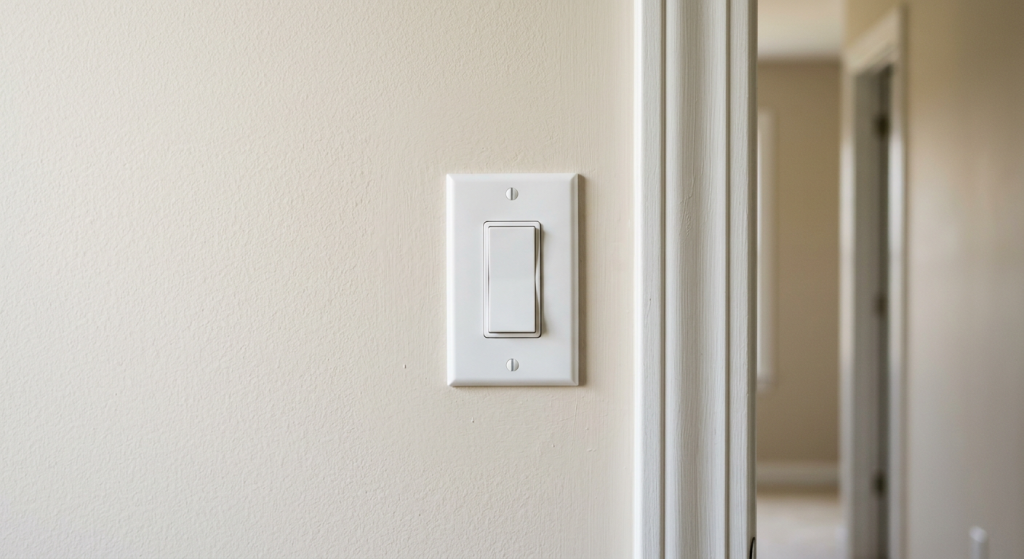
A wall switch may look simple, but it controls live electrical wiring inside the wall. When it stops working, the safest first step is to stay outside the switch box and look for obvious clues.
A nonworking switch may be caused by a bad bulb, a loose bulb, a fixture setting, a tripped GFCI, a tripped breaker, a worn switch, a damaged fixture, or a wiring issue hidden behind the wall. Some of those are easy to rule out. Others are not homeowner-level repairs.
Do not keep flipping a switch that acts unusual. A normal switch should feel stable, quiet, and cool. It should not buzz loudly, crackle, spark, smell burned, or feel hot to the touch.
Stop using the switch right away if you notice:
- Burning smell, smoke, sparks, or popping
- Heat from the switch or nearby wall plate
- Buzzing, crackling, or arcing sounds
- Brown, black, or melted-looking discoloration
- Flickering that changes when you touch the switch
- More than one switch, light, or outlet affected
If any of these signs are present, leave the switch off if you can do so safely and call a licensed electrician.
Check the Bulb, Fixture, and Nearby Power First
Start with the simplest cause: the bulb. A burned-out bulb can make it look like the switch failed when the switch is fine. If the fixture is easy and safe to reach, make sure the bulb is seated properly and try a known-good bulb of the correct type for that fixture.
Do not climb unsafely, stand on furniture, or reach near a damaged fixture. If the light is high, loose, wet, cracked, or difficult to access, skip this check.
Some fixtures also have their own controls. A ceiling fan light may have a pull chain, remote, wall control, or small setting that affects whether the light turns on. A lamp plugged into a switched outlet may have its own switch turned off. A smart bulb or smart fixture may be offline, disconnected from Wi-Fi, or turned off at the fixture.
Next, check whether nearby power is affected. Look around the same room and nearby rooms. Are other lights working? Do nearby outlets have power? Did a bathroom, garage, kitchen, basement, or outdoor GFCI trip and shut off part of the area?
A switch can seem dead when the problem is actually upstream. For example, a tripped GFCI may affect a bathroom light or outlet area. A breaker issue may affect several lights or outlets on the same circuit. You can observe what else is working, but do not open the electrical panel or replace breakers as part of this beginner check.
Safe checks before blaming the switch:
- Try a known-good bulb if the fixture is safe to reach
- Confirm the bulb is the correct type for the fixture
- Check pull chains, remotes, or fixture settings
- See whether nearby lights and outlets still work
- Look for a tripped GFCI in nearby wet or utility areas
- Note whether the problem affects more than one room
If a new bulb works and no warning signs are present, the issue may have been only the bulb. If the light still does not work, keep the switch off and continue with observation only.
Warning Signs That Mean Stop Using the Switch
Some light switch problems are not safe to troubleshoot further. Heat, burning smells, sparks, buzzing, crackling, or visible damage can point to a failing switch, loose connection, damaged wiring, or fixture problem.
A small click when a switch turns on or off can be normal. A loud buzz, sizzle, pop, or crackle is different. Do not ignore it. Electricity can create heat at a poor connection, and that heat may damage the switch, wall plate, fixture, or wiring around it.
Discoloration is another warning sign. Brown marks, black marks, melted plastic, warped plates, or a switch that looks scorched should be treated as unsafe. Do not remove the plate to inspect deeper. What matters is that the visible part already shows enough concern to stop using it.
Moisture also changes the situation. A switch near a bathroom, kitchen, basement, laundry area, garage, or exterior door should not be used if the wall, plate, or surrounding area is wet. Water and electricity are a serious safety concern.
Intermittent operation also matters. If the light works only when the switch is held a certain way, flickers when the switch is touched, or turns on and off unpredictably, stop using it. That is not a normal switch behavior and is not a beginner DIY repair.
If the switch feels warm or hot, this guide on why a light switch gets hot explains the safety warning signs homeowners should not ignore.
When the Problem May Be the Switch or Wiring
After the bulb, fixture setting, and nearby power are checked, the problem may be inside the switch, fixture, or wiring. This is where beginner-safe troubleshooting should stop.
A worn switch may fail after years of use. It may feel loose, weak, sticky, or different from other switches in the home. It may stop making reliable contact inside. A damaged fixture can also prevent the light from working even when the switch is sending power correctly.
Hidden wiring issues can also cause a light switch not working problem. Wiring inside a switch box, fixture box, wall, attic, ceiling, or junction area may be loose, damaged, incorrectly connected, or affected by age. None of that can be confirmed safely from the outside.
It is also possible for more than one device to be involved. A three-way switch setup, dimmer, smart switch, ceiling fan control, switched outlet, or shared circuit can make the symptoms harder to read. A hallway or stair light controlled from two locations may fail in a way that seems random to a homeowner.
Do not assume that replacing the switch is the next step. A new switch will not fix a fixture problem, missing power, damaged wiring, incorrect wiring, or a bad connection elsewhere. It can also create a hazard if installed incorrectly.
The safest handoff point is when the easy outside checks do not explain the problem. At that stage, a licensed electrician can test the switch, fixture, and circuit properly without guesswork.
If the light flickers in only one room, this guide on lights flicker in one room can help you compare common causes and warning signs.
What Homeowners Should Not Touch
A beginner-safe light switch check should not involve opening anything electrical. The wall plate and switch box are not inspection areas for an untrained homeowner.
Do not remove the switch cover. Do not loosen switch screws. Do not pull the switch out of the wall. Do not touch wires, terminals, wire connectors, or anything inside the box. Do not use a meter on live wiring unless you are trained to do so.
Do not replace the switch as a guess. This includes basic switches, dimmers, smart switches, three-way switches, fan controls, and timer switches. Those devices can have different wiring requirements, and an incorrect connection can create a shock or fire hazard.
Also do not open the electrical panel, replace breakers, increase amperage, install new circuits, or work on hardwired fixtures as part of this problem. If the issue is not solved by a safe bulb or setting check, it is no longer a simple homeowner observation task.
Be especially cautious in older homes. Old wiring, damaged insulation, ungrounded systems, mixed wiring types, or previous incorrect repairs can make a simple-looking switch problem more complicated.
When to Call an Electrician
Call a licensed electrician when a light switch has warning signs, works intermittently, affects more than one fixture, or still does not work after the safe outside checks. You should also call if you are unsure whether a GFCI, breaker, fixture, switch, or wiring issue is involved.
Call an electrician if you see or suspect:
- Burning smell, sparks, heat, buzzing, or discoloration
- Flickering tied to touching or moving the switch
- Repeated failure after replacing a known-good bulb
- Moisture near the switch, fixture, or wall
- More than one light, switch, or outlet affected
- Loose, cracked, old, or unreliable switch behavior
When you call, describe the symptoms clearly. Mention which switch is affected, what fixture it controls, whether the bulb was checked, whether nearby outlets work, and whether the switch feels hot, buzzes, flickers, or smells unusual.
That information helps the electrician narrow the problem without you opening the switch or touching wiring.
Final Thoughts
A light switch not working may be caused by a bad bulb, fixture setting, tripped GFCI, nearby power issue, worn switch, damaged fixture, or hidden wiring problem. Start with the safe checks you can make from the outside only.
Try a known-good bulb if the fixture is safe to reach, check nearby lights and outlets, and watch for warning signs. Do not remove covers, touch wires, or guess-replace the switch.
If the switch feels hot, buzzes, sparks, smells burned, flickers, or still fails after basic checks, stop using it and call a licensed electrician.