
Garage Door Threshold Seal: When It Works and How to Choose
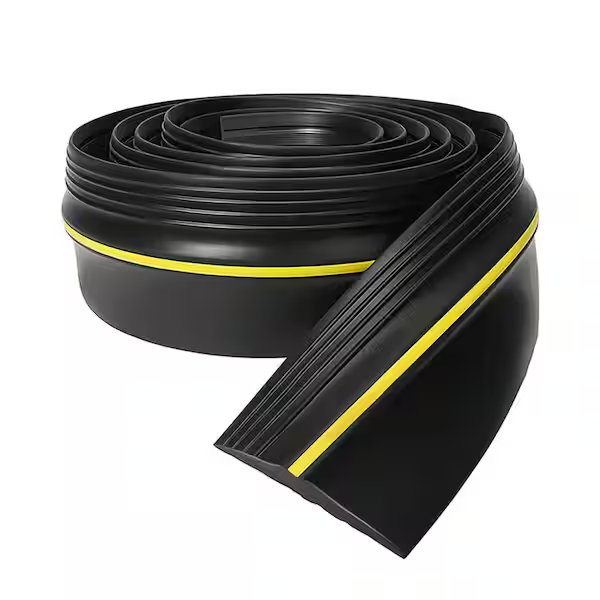
A garage door threshold seal is a stationary strip that mounts to the garage floor and meets the existing bottom gasket when the door closes. It can help with a small, stable floor-level gap, but it should not interfere with normal door operation or drainage. It is not waterproofing or flood control, and it works best when the door, floor, and bottom gasket are already in reasonably good condition.
| Garage condition | Is a threshold seal suitable? | Main concern |
|---|---|---|
| Small, reasonably even gap | Often | Choose the lowest practical profile |
| Minor wind-driven water | Sometimes | Preserve drainage away from the garage |
| Severely sloped or cracked floor | Usually not | Threshold cannot correct major floor problems |
| Door does not close evenly | Usually not | Mechanical or alignment problem may exist |
| Active flooding or major drainage issue | No | Water source and drainage need separate correction |
| Damaged bottom gasket or mechanical door problem | No, not first | Repair the moving door system first |
What a Garage-Door Threshold Seal Does
A garage-door threshold seal attaches to the floor rather than the moving door. It remains stationary while the existing bottom gasket closes against or compresses lightly onto it.
When the floor-level gap is small and reasonably consistent, this added contact can reduce airflow, visible light, dust, leaves, insects, and small amounts of wind-driven water. The threshold can sometimes help where the garage floor has modest irregularities that leave the door-bottom gasket with incomplete contact.
The product should not be treated as an airtight seal, complete pest barrier, waterproofing system, or flood-control device. It also cannot correct major floor slope or make an unevenly operating garage door close properly.
The best use is to improve contact between a sound floor and a serviceable bottom gasket without creating a new obstruction.
Threshold Seal vs. Door Bottom Seal
A threshold seal and a garage-door bottom seal are installed in different places.
The threshold attaches to the garage floor and stays stationary. The bottom gasket is attached to the moving garage door and travels with it each time the door opens.
Inspect the moving gasket first. If it is torn, hardened, flattened, missing, or pulling out of its retainer, adding a floor threshold may simply cover the symptom rather than repair the damaged component.
Some garages can use both products successfully, but each must be appropriate for the opening. If the moving gasket needs attention, review the garage door bottom seal before deciding whether a floor threshold is also necessary.
When a Threshold Seal May Work
A garage threshold seal is most useful when the floor-level gap is small, stable, and reasonably even. The garage door should already reach its normal closed position without binding, stopping early, or reversing unexpectedly.
The floor should be structurally sound and suitable for the adhesive specified by the threshold manufacturer. The existing door-bottom gasket should also be serviceable so it can meet the new threshold with light contact.
Drainage is equally important. A threshold may help reduce minor wind-driven rain only when water still has a safe path away from the opening.
Do not install a raised barrier that traps water against the garage door, wall, framing, or adjacent structure. A successful threshold improves contact without creating a water-management problem somewhere else.
When It Will Not Solve the Problem
A floor-mounted threshold cannot repair garage-door mechanical problems. Broken springs, damaged cables, bent tracks, damaged rollers, door imbalance, damaged panels, opener problems, or a door that closes unevenly require separate attention.
It also cannot correct a severely sloped floor, settlement, large concrete cracks, or a door that reverses or stops before reaching the proper closed position.
Water problems have similar limits. A threshold will not solve active flooding, heavy runoff, poor exterior grading, blocked drainage, or a failed drainage system.
Choosing a taller barrier is not automatically safer or more effective. An oversized threshold can redirect water toward garage walls, framing, adjoining rooms, or other vulnerable areas.
Vertical daylight or airflow along the jambs is a different problem from a floor-level gap. If the opening is on the sides of the door, see garage door gap on sides rather than trying to correct it with a taller floor threshold.
How to Choose a Threshold Seal
Garage-Door Width
Measure the full garage-door opening so the threshold can cover the intended sealing area.
Follow the manufacturer’s instructions for trimming, joining sections, and positioning the ends. Some products are designed to be trimmed to length, while others have specific installation requirements.
Width is only the first measurement. It does not tell you whether the threshold is the correct height or shape for the actual floor gap.
Threshold Height and Floor Gap
Threshold height is one of the most important choices. The profile should be high enough for the door-bottom gasket to meet it with light compression but not so high that it prevents the garage door from reaching its proper closed position.
Taller is not automatically better.
An oversized threshold can over-compress the bottom gasket, make the door bind, or cause the automatic opener to reverse unexpectedly.
Choose the lowest practical height that closes the ordinary gap while allowing normal door operation.
Threshold Width and Profile
Thresholds are available in narrow, rounded, ramped, and wider profiles.
A wider ramped shape may be easier for vehicle tires and foot traffic to cross than a tall, narrow ridge. This becomes especially important when bicycles, carts, lawn equipment, strollers, wheelchairs, or other mobility aids regularly pass through the opening.
A steep profile may be more noticeable underfoot and more likely to become an obstacle.
The threshold should improve sealing without creating an unnecessary vehicle or pedestrian hazard.
Bottom-Gasket Shape
Look at the shape of the existing garage-door bottom gasket. Some gaskets compress mainly downward, while bulb-shaped or U-shaped seals may contact a threshold differently.
The threshold should meet the gasket evenly. It should not force the flexible material sideways, fold it sharply, or hold the door above its correct closed position.
If the gasket already shows significant wear or damage, repair that problem first rather than using a floor threshold to compensate.
Floor Condition and Weather Exposure
A flexible rubber threshold can follow modest variations in a garage floor, but it cannot bridge severe cracks, settlement, or large changes in elevation.
Consider the conditions the material will face, including sunlight, temperature swings, rain, road salt, vehicle traffic, and repeated crossing.
Vinyl and rubber products differ in flexibility and durability, so material alone should not determine the choice. The shape and fit of the profile matter just as much.
Adhesive Compatibility
The threshold must remain securely attached to the concrete, which means the adhesive has to be compatible with both the threshold material and the floor surface.
Painted, sealed, coated, or previously repaired concrete may require different surface preparation or adhesive than ordinary bare concrete.
Do not assume that any general construction adhesive is acceptable. Follow the threshold and adhesive manufacturer’s instructions for compatibility, preparation, application, and curing.
Measure Before Buying
Measure with the garage door in its normal closed position. Do not push the door downward by hand to make the gap appear smaller.
Record:
- The full opening width.
- The gap beneath the door at several locations.
- Variations in the garage floor.
- The shape and condition of the bottom gasket.
- Vehicle and equipment clearance.
- Pedestrian clearance.
- The location where water enters.
- The direction water should drain.
Measure at both ends, near the center, and at visible low spots.
If the floor gap varies dramatically from one side to the other, stop before buying a threshold. That condition may indicate floor settlement or a problem with how the garage door closes.
Before permanent installation, removable tape or chalk can help mark the proposed threshold position. Use that temporary layout to check gasket contact, drainage, crossing clearance, and door operation.
Material and Profile Choices
Flexible rubber is common because it can follow modest floor irregularities. Vinyl thresholds are also available, although their flexibility and performance vary by product.
Low-profile thresholds are generally easier for vehicles and people to cross. Taller profiles require more careful clearance checks because they create a larger obstruction at the garage entrance.
Rounded or ramped profiles can make the transition less abrupt. Grooved or textured surfaces are also common, although texture alone does not guarantee slip resistance.
Regardless of material, the selected profile should provide light contact with the door-bottom gasket. The garage door should not have to climb over a large obstruction every time it closes.
Installation Expectations
Threshold installation is appropriate only when the concrete is clean, dry, sound, and compatible with the specified adhesive.
Before applying adhesive, position the threshold dry in its proposed location. Carefully close the garage door and inspect how the bottom gasket meets the profile.
Also check vehicle clearance, pedestrian movement, and drainage before making the placement permanent.
Final installation should follow the manufacturer’s instructions for alignment, surface preparation, adhesive application, and curing time.
Do not install a threshold over wet or oily concrete, loose material, severe cracks, deteriorated substrate, or coatings that are incompatible with the adhesive.
Keep floor drains and other intended drainage paths open.
Test After Installation
After the threshold is positioned and the adhesive has fully cured according to the manufacturer’s instructions, test the entire garage-door system.
Confirm that:
- The door opens normally.
- The door closes normally.
- The door reaches its correct closed position.
- The opener does not reverse unexpectedly.
- The bottom gasket meets the threshold evenly.
- The threshold remains secure.
- Vehicles can cross safely.
- People can cross safely.
- Wheelchairs and other mobility aids are not obstructed.
- Water is not redirected toward walls or interior areas.
- Intended drainage still works.
Stop automatic operation if the door begins binding, jerking, reversing unexpectedly, or closing unevenly.
Do not increase opener force settings, bypass safety sensors, or alter other safety components to make the door overcome a poorly sized threshold.
Common Mistakes
Buying by garage-door width alone is a common mistake. The correct length does not guarantee that the threshold height or profile will work with the floor and bottom gasket.
Choosing a threshold that is too tall can interfere with normal door closure and automatic opener operation.
Installing on dirty, damp, oily, cracked, or deteriorated concrete can lead to poor adhesion. Ignoring floor slope can also create unexpected contact or leave parts of the opening unchanged.
Another serious mistake is blocking drainage. The threshold should not be used as a small dam without understanding where the displaced water will go.
A floor threshold should also not be installed over a damaged bottom gasket simply to avoid repairing the moving seal.
Expectations matter as well. This product is not intended to stop flooding or compensate for major runoff and grading problems.
Finally, check how the profile affects foot traffic, vehicle tires, bicycles, carts, strollers, and mobility devices. A useful seal should not introduce an avoidable access hazard.
Safety and When to Call a Professional
Garage doors are heavy moving systems. Professional evaluation is appropriate when:
- Springs are damaged.
- Cables are damaged.
- Tracks are damaged.
- Rollers are damaged.
- Brackets are damaged.
- Door panels are damaged.
- Opener components are damaged.
- The door is unstable or unbalanced.
- The door is crooked.
- Door movement is unpredictable.
- The floor is severely cracked.
- The floor has settled significantly.
- The floor is badly sloped.
- Water entry is substantial or recurring.
- Exterior grading or drainage appears inadequate.
- Structural movement is visible.
- The threshold would create unsafe vehicle or pedestrian access.
- The correct height or placement cannot be determined.
- Safe door and opener operation cannot be confirmed.
Do not adjust garage-door springs, touch or adjust lift cables, adjust tracks or rollers, alter brackets, repair damaged panels, change opener force settings, bypass safety sensors, alter structural concrete, or blindly block or redirect drainage as part of a threshold-seal project.
Final Thoughts
A garage door threshold seal works best when the opening has a small, stable floor-level gap, the concrete is sound, the bottom gasket is serviceable, and drainage can remain functional.
Choose the lowest practical profile that provides light gasket contact while preserving normal garage-door and opener operation. Also consider vehicles, pedestrians, and mobility access before installation.
A threshold can improve a suitable opening, but it is not a substitute for repairing mechanical garage-door problems, severe floor damage, structural movement, or major water and drainage issues.